1
/
of
10
Zeze-yaki Chawan by Kagerou-en Kiln, Otsu — Signed Box
Zeze-yaki Chawan by Kagerou-en Kiln, Otsu — Signed Box
Regular price
Dhs. 1,055.00 AED
Regular price
Sale price
Dhs. 1,055.00 AED
Taxes included.
Shipping calculated at checkout.
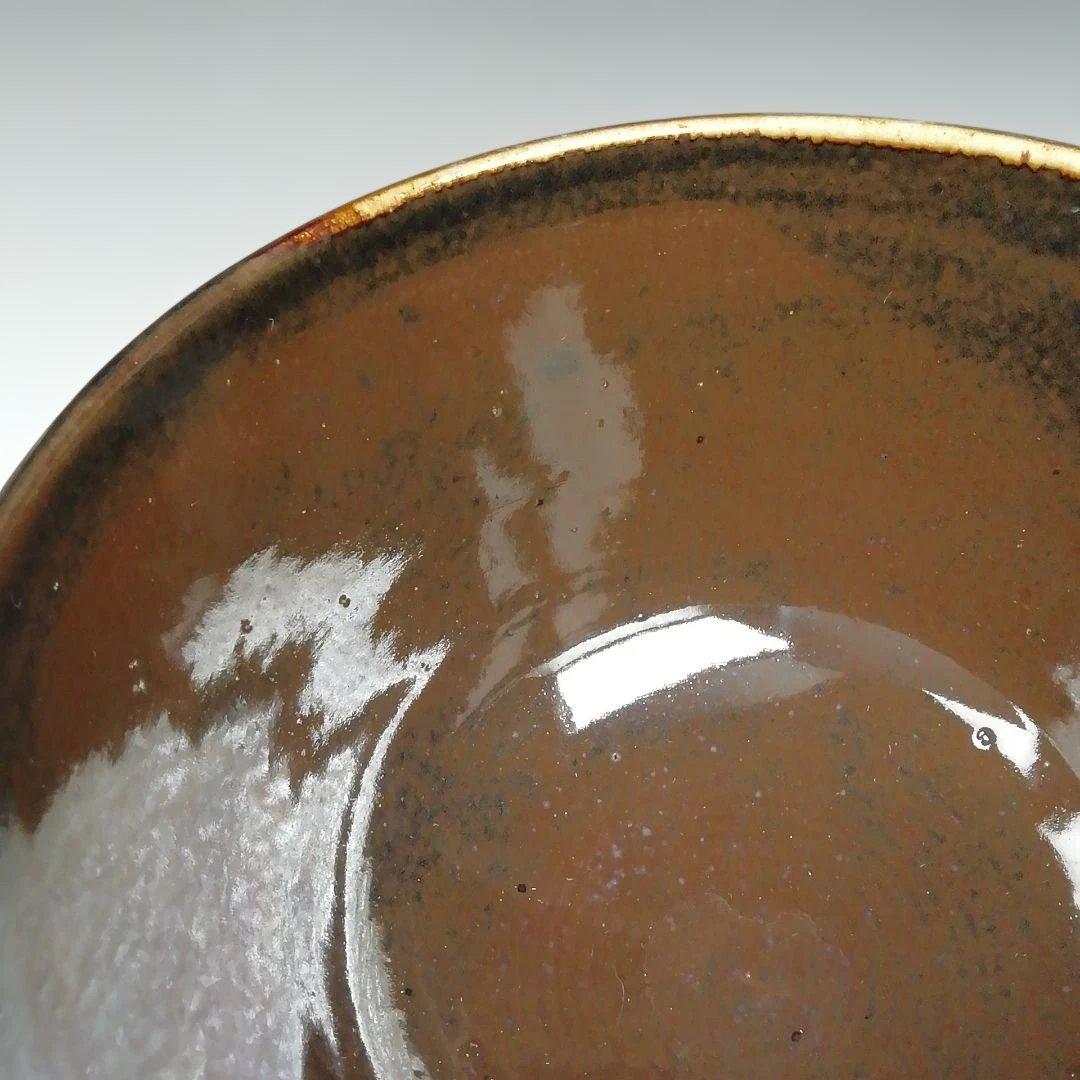
A chawan from Zeze-yaki, thrown at the Kagerou-en kiln on the shore of Lake Biwa in Otsu, Omi province. A near-black iron glaze holds the rim and interior, and beneath it an ash glaze descends in one wide run — grey cooling toward violet where the two meet, pooling short of the foot. The clay stands pale and dry at the unglazed base, the single quiet interruption in an otherwise fluid surface. The bowl is accompanied by its original signed wooden box.
🔹 [ BASIC DETAILS ]
• Artist / Kiln: Zeze-yaki, Kagerou-en kiln (workshop production, not an individually signed potter)
• Technique: Kuro-yu (black iron glaze) with a kaki-gusuri (ash glaze) run over it, wheel-thrown
• Era: Modern workshop production (20th–21st century)
• Origin: Zeze, Otsu, Shiga Prefecture (former Omi province), on the shore of Lake Biwa
• Dimensions: Height approx. 7.5 cm, Diameter approx. 12.5 cm
• Box: Original signed wooden box (共箱), inscribed with the kiln name and "chawan"
• Condition: No chips or cracks; wear consistent with age and handling
🔹 [ CULTURAL & ARTISTIC INSIGHT ]
Historical Context: Zeze-yaki traces back to the early Edo period near Otsu, on the western shore of Lake Biwa. It is counted among the Enshu Nanagama — seven kilns favored by tea master and aesthete Kobori Enshu for surfaces that stayed quiet and unforced under the eye of the tea room. Production lapsed and was later revived, continuing today through small lakeshore workshops, Kagerou-en among them.
Technique & Aesthetic: The bowl's near-black glaze is overlaid with an ash glaze that moves under gravity during firing. Where the two meet, iron and ash mix into a band of grey easing toward violet, its edge never quite the same twice. The wall rises in a direct cone from a compact foot, giving the bowl a weight that settles into the palm. Nothing here is symmetrical by design — the interest sits in the glaze's unrepeatable path, not in an even hand.
Philosophical Reflection: Where the dark glaze slows, the grey answers — the way mist settles before it decides to become rain.
🔹 [ DEEP-DIVE COMMENTARY ]
Zeze-yaki takes its name from Zeze, a former castle town on the western shore of Lake Biwa in Otsu, Shiga Prefecture — the old province of Omi. Its kilns were named among the Enshu Nanagama, seven workshops favored by Kobori Enshu (1579–1647) for a restrained, unforced surface suited to his taste in the tea room.
The glaze on this bowl is built in two passes: a dark iron glaze applied first, an ash glaze poured or brushed over it before firing. In the kiln, the ash glaze thins and travels, and where it slows against the darker ground beneath, the two mix into a band of grey shading toward violet — a variable the firing itself controls, so no two results repeat exactly.
Collectors of regional tea ceramics look to Zeze-yaki for its historical link to Enshu's circle and for the particular palette this two-glaze method produces — distinct from the iron-only surfaces associated with Seto or the ash-only surfaces of Bizen. The line from Edo-period production through small modern workshops like Kagerou-en keeps that palette in active use, rather than confined to museum cases.
In practical terms, the bowl's conical rise and the weight of ash glaze gathered at its widest point suit it to whisking tea directly. It performs as intended at a tea gathering, not only as an object set aside for display.
🔹 [ 日本語解説 ]
膳所焼の茶碗。滋賀県大津市、琵琶湖畔にある陽炎園窯で轆轤挽きされたもの。口縁と見込みには黒に近い鉄釉がかかり、その下からは灰釉が一筋、大きく流れ落ちる——二つの釉薬が重なる境目は灰色から紫がかった色へと冷えていき、高台の手前で止まる。露胎の高台だけが、流れるような釉相の中で唯一静かな中断となっている。共箱に収められた状態で届く。
🔹 [ 基本情報 ]
• 作家/窯: 膳所焼 陽炎園窯(個人作家名ではなく窯元による製作)
• 技法: 黒釉(鉄釉)に柿釉(灰釉)を流し掛けした轆轤成形
• 年代: 現代の窯元製作(20〜21世紀)
• 産地: 滋賀県大津市膳所(旧近江国)、琵琶湖畔
• 寸法: 高さ約7.5cm、直径約12.5cm
• 箱: 共箱(窯名と「茶碗」の墨書あり)
• 状態: 割れや欠けなし、経年相応の使用感
🔹 [ 文化的・芸術的考察 ]
歴史的背景: 膳所焼は近江国大津・膳所に江戸初期から続く窯で、茶人・小堀遠州が好んだとされる「遠州七窯」の一つに数えられる。遠州の美意識は、茶室にふさわしい静かで作為の少ない表情を茶碗に求めた。生産は一時途絶えたが近代に再興され、陽炎園をはじめとする湖畔の小さな窯元によって受け継がれている。
技法と美意識: この茶碗の黒に近い釉は、焼成中に重力で動く灰釉と重なり合い、境目は鉄と灰が混ざり合う柔らかな紫がかった灰色へと落ち着く。円錐形に立ち上がる胴は、締まった高台から直接立ち上がり、手のひらに収まる重みを生む。整った左右対称よりも、釉の一度きりの流れそのものに価値が置かれている——侘び寂びの読み方である。
哲学的な一行: 暗い釉が緩むところに、灰色が応える——霧が雨になる前に、そこに留まるように。
🔹 [ 深掘り解説 ]
膳所焼は滋賀県大津市膳所(近江国)、琵琶湖西岸のかつての城下町に由来する窯である。遠州七窯の一つに数えられ、小堀遠州(1579-1647)が茶室にふさわしいとした、抑制の効いた作為の少ない表情を特徴とする。
この茶碗の釉薬は二層で構成される——先に施される黒い鉄釉、その上に焼成前に掛けられる灰釉。窯の中で灰釉は薄く流れ、暗い地色に触れるところで両者が混ざり合い、紫がかった灰色の帯を生む。二度と同じ形にはならない、焼成という制御しきれない変数の痕跡である。
茶道具の収集家が膳所焼に注目する理由は、遠州の周辺との歴史的なつながりに加え、この二層掛けの手法が生む独自の色調にある。瀬戸の鉄釉のみの表情とも、備前の灰のみの表情とも異なる。江戸期の生産から陽炎園のような現代の小規模な窯元へと続くこの連続性が、その色調を美術館の中だけでなく実際の使用の場に留め続けている。
碗の円錐形の立ち上がりと、最も広がった部分に留まる灰釉の重みは、実際に茶を点てる用途にも適しており、鑑賞のためだけでなく茶席の道具として機能する。
🔹 [ SHIPPING & PACKAGING ]
• Dispatch: Within 1-6 business days
• Carrier: Japan Post EMS / UPS / FedEx (with tracking)
• Packaging: Carefully wrapped with protective materials
Quantity
Couldn't load pickup availability
Low stock: 1 left
View full details