1
/
of
12
Zeze-yaki Chawan, Ashi-ni-Hotaru Motif in Black and White Glaze, Signed Box
Zeze-yaki Chawan, Ashi-ni-Hotaru Motif in Black and White Glaze, Signed Box
Regular price
Dhs. 787.00 AED
Regular price
Sale price
Dhs. 787.00 AED
Taxes included.
Shipping calculated at checkout.
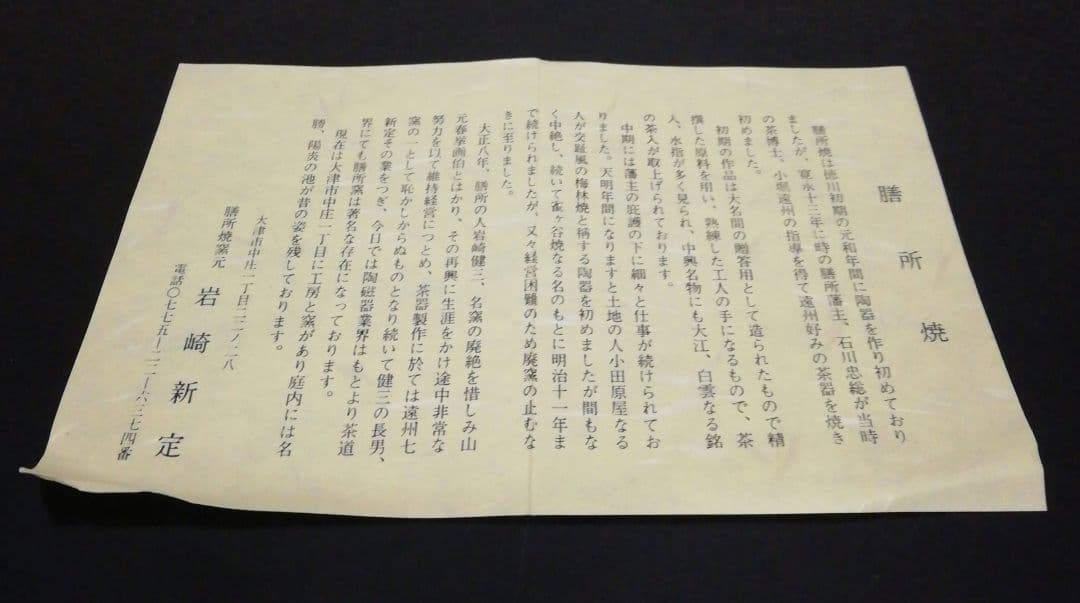
A chawan from Zeze-yaki, the kiln at Zeze on the western shore of Lake Biwa in Otsu. Black amber glaze and white glaze meet across the body in a divided pour, the seam between them left sharp rather than blended. Over that seam, gold enamel traces a single reed and a firefly — ashi ni hotaru, a scene drawn straight from the lake's own summer edge. The bowl is accompanied by its original tomobako and a paper shiori tucked inside.
🔹 [ BASIC DETAILS ]
- Kiln: Zeze-yaki (膳所焼), Otsu, Shiga
- Technique: Kuro-ame (black amber) and white glaze applied in kakewake (divided) style, with iroe gold overglaze enamel
- Era: Modern-era Zeze-yaki production, from the kiln's post-revival lineage
- Origin: Zeze, Otsu, Shiga Prefecture — historic Omi Province
- Dimensions: Width approx. 12 cm, Height approx. 6.5 cm
- Box: Original tomobako (wooden storage box) with paper shiori
- Condition: Good. No damage noted; box and shiori intact
🔹 [ CULTURAL & ARTISTIC INSIGHT ]
Historical Context: Zeze-yaki is counted among the Enshu Nanagama, the seven kilns associated with the tea master Kobori Enshu in the early Edo period, when regional kilns across Japan were guided toward a more refined register of glaze and form for chanoyu use. The original Zeze kiln fell quiet well before the modern era; what continues today under the same name carries the lineage forward rather than replicating a single historical moment.
Technique & Aesthetic: The kakewake method sets two glazes side by side rather than blending them — kuro-ame, an iron-bearing amber-black, meets a plain white ground, and the boundary between them is treated as part of the composition rather than a flaw to disguise. Gold enamel, applied in a second firing, sits lightly over that boundary: a reed stem, a single firefly. The restraint is the point. Nothing crowds the glaze; the decoration marks a moment rather than filling a surface.
Philosophical Reflection: Two glazes meet like dusk settling over water, and one small thread of gold — the firefly — holds where the color changes.
🔹 [ DEEP-DIVE COMMENTARY ]
Zeze-yaki refers to stoneware from kilns at Zeze, on the Otsu shore of Lake Biwa, historically set apart from the more assertive ash-glazed wares of nearby Shigaraki and Bizen by its subdued, iron-based palette and its association with Kobori Enshu's tea aesthetic.
The dual glaze seen here is built in two separate applications rather than a single graduated pour, so the black amber and white meet at a defined line instead of fading into one another. The body is fired once for the stoneware itself, then a second time at lower heat to fix the gold enamel motif onto the finished glaze surface.
Its standing among the Enshu Nanagama ties this ware to kirei-sabi, the more composed, refined register of restraint that Kobori Enshu brought to tea utensils — a departure from the rougher wabi surfaces favored in the preceding Momoyama period. The reed-and-firefly motif also roots the piece in Lake Biwa specifically, rather than in a generic seasonal image.
Kilns working in this name continue to produce chawan and related chanoyu vessels using the same divided-glaze vocabulary, keeping in use a technique that could easily have ended with the closure of its historical predecessor.
🔹 [ 日本語解説 ]
膳所焼の茶碗。琵琶湖畔、大津・膳所の窯で作られたものです。黒飴釉と白釉が器の胴に掛け分けられ、その境目はぼかされることなくはっきりと残されています。その境界の上に、金の絵付けで一本の芦と一匹の蛍が描かれています——芦に蛍、湖畔の夏をそのまま写した景色です。共箱と紙の栞が付属します。
【基本情報】窯:膳所焼(大津・滋賀)/技法:黒飴釉と白釉による掛け分け、金の色絵(赤絵金彩)/年代:近代の膳所焼(復興後の系譜)/産地:滋賀県大津市膳所、旧近江国/寸法:横幅約12cm、高さ約6.5cm/箱:共箱(木箱)、紙の栞付き/状態:良好、共箱・栞ともに欠損なし。
【文化的背景】膳所焼は「遠州七窯」の一つに数えられます。江戸初期、茶人・小堀遠州の指導のもと、各地の窯が茶の湯にふさわしい、より洗練された釉調と器形へと導かれた時期に位置づけられる窯です。膳所の窯そのものは近代よりずっと以前に一度途絶えており、現在「膳所焼」の名で作られる器は、その系譜を引き継ぐものとして存在しています。
【技法と美意識】掛け分けは二つの釉薬を混ぜ合わせず並べて見せる技法です。鉄分を含んだ黒飴釉と、素地の白がそのまま境界線を作り、その線は隠すべき欠点としてではなく、構図の一部として扱われています。金彩は二度目の低温焼成で施され、境界の上に軽く置かれるだけ——一本の芦、一匹の蛍。抑制そのものが主題であり、装飾は釉面を埋めるのではなく、ひとつの瞬間を記すために置かれています。
【詩的な一行】二つの釉薬は水面に落ちる夕暮れのように出会い、色の変わり目に、蛍という一筋の金の糸だけが留まる。
【ディープダイブ解説】膳所焼とは、琵琶湖畔・大津の膳所で焼かれた陶器を指します。近隣の信楽や備前に見られるような力強い灰釉の焼き締めとは一線を画し、抑えた鉄釉の色調と、小堀遠州の茶の美意識との結びつきによって特徴づけられてきました。
ここに見られる掛け分けは、一度の釉掛けで生まれるグラデーションではなく、二つの釉薬を別々に施すことで生まれます。黒飴釉と白釉は境界線ではっきりと出会い、素地は陶器としてまず一度焼成され、その後、金の意匠を釉面に定着させるためにもう一度、低温で焼き直されます。
遠州七窯の一つという位置づけは、この器を「綺麗寂び」——桃山期に好まれたより荒々しい侘びの表情から一歩距離を置いた、より洗練された抑制の美意識——に結びつけます。芦に蛍という意匠も、季節を表す一般的な図柄というより、琵琶湖という土地そのものに根ざした景色です。
膳所焼の名を継ぐ窯は今も、同じ掛け分けの語彙を用いて茶碗をはじめとする茶道具を作り続けており、かつての窯の途絶とともに失われかねなかった技法を、現在にまで保っています。
🔹 [ SHIPPING & PACKAGING ]
• Dispatch: Within 1-6 business days
• Carrier: Japan Post EMS / UPS / FedEx (with tracking)
• Packaging: Carefully wrapped with protective materials
Quantity
Couldn't load pickup availability
Out of stock
View full details