1
/
of
11
Zeze Ware Faceted Matcha Bowl by Yokaien — Amber Glaze with Milky Drips, Signed Wooden Box
Zeze Ware Faceted Matcha Bowl by Yokaien — Amber Glaze with Milky Drips, Signed Wooden Box
Regular price
Dhs. 846.00 AED
Regular price
Sale price
Dhs. 846.00 AED
Taxes included.
Shipping calculated at checkout.
Experience Authentic Japan Art with this Zeze Ware Matcha Bowl. This Japanese Tea Ceremony Bowl serves as a Faceted Tea Bowl and Antique Matcha Chawan, featuring Amber Glaze Drip Effect and Signed Wooden Box—a must-have for any Art Collector. This Yokaien Kiln Pottery offers a timeless Wabi Sabi Tea Bowl with Ame Glaze Ceramic that embodies the spirit of Japanese Zen Ceramics.
🔹 [ BASIC DETAILS ]
• Artist / Kiln: Yokaien (陽炎園), Zeze-yaki tradition, Otsu, Shiga Prefecture
• Technique: Ame-yu (amber glaze) with hakudan-yu (milky white) drip overlay; faceted (面取) thrown form
• Era: Before 2007 (20th century, Showa–Heisei period)
• Origin: Zeze, Otsu, Shiga Prefecture, Japan (Lake Biwa shoreline kiln tradition)
• Dimensions: Diameter approx. 12 cm, Height approx. 7.5 cm
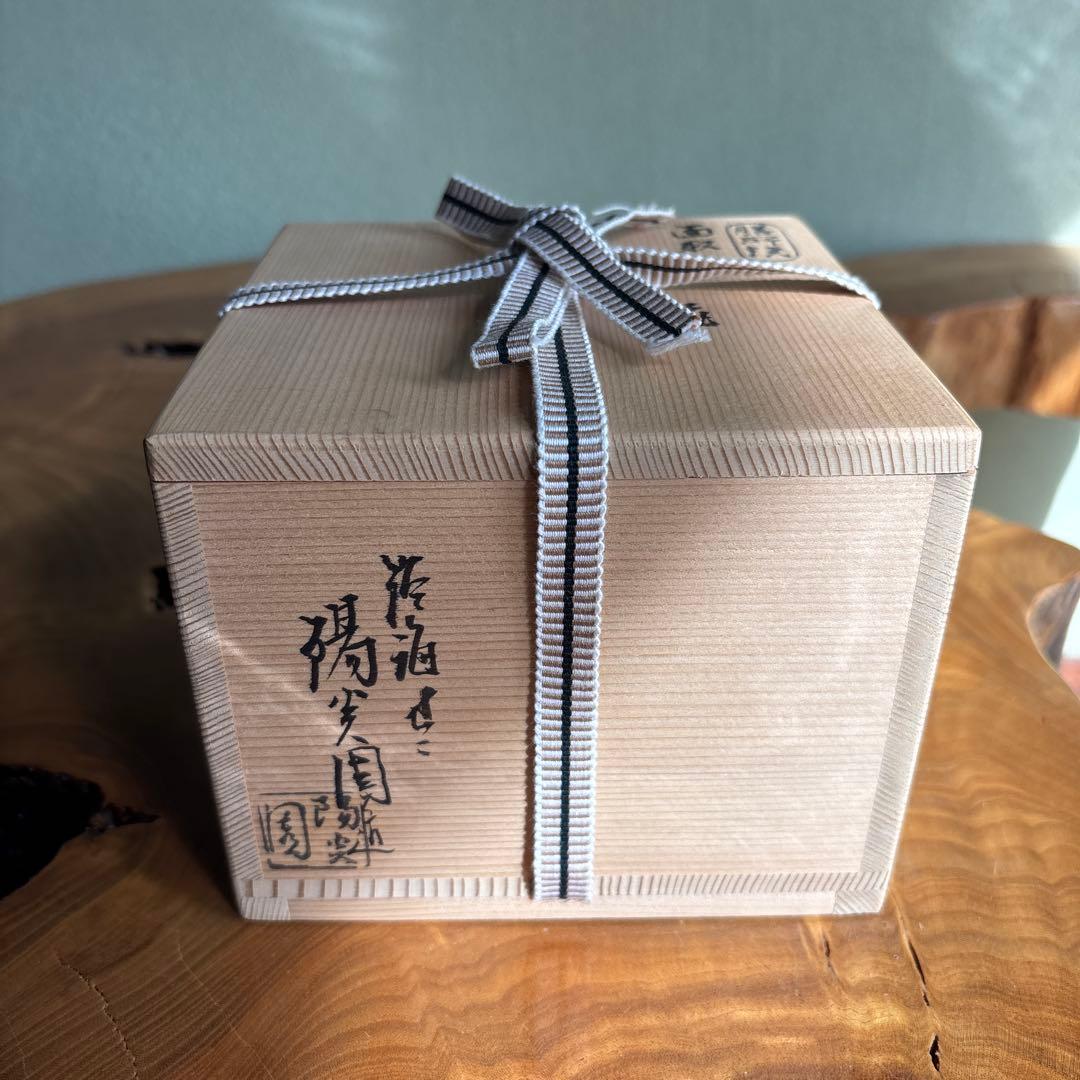
• Box: Signed original wooden box (共箱) inscribed 「膳所焼 面取 茶碗」 with maker's seal
• Condition: Excellent — no chips, no cracks, no repairs
🔹 [ CULTURAL & ARTISTIC INSIGHT ]
Zeze-yaki (膳所焼) is one of the most storied kilns of the Lake Biwa region, its origins reaching back to the early Edo period when the domain lord of Zeze castle patronized the kiln as part of the great daimyo-chado (lordly tea culture) tradition. Situated on the eastern shore of Japan's largest lake, Zeze potters drew their aesthetic from the landscape itself — the deep, still water, the mist that rolls off the surface on cold mornings, the reeds and winter light. The result is a ceramic tradition defined by restrained, deeply atmospheric glazework.
This bowl embodies the quintessential Zeze aesthetic: a base coat of rich ame-yu (amber glaze) in deep mahogany and chestnut tones, over which the potter applied a milky hakudan-yu that has run in dramatic, organic drips from shoulder to foot. The drips do not fall uniformly — they pool, slow, and curve, each following its own path down the faceted surface. In Japanese tea aesthetics, this flowing movement is called keshiki (景色, "scenery"): the idea that a bowl's surface tells a story of fire, gravity, and material meeting in unrepeatable ways.
The face-cutting technique (面取, mentori) carves planar angles into the thrown form before glazing, giving the bowl a geometric strength beneath the soft cascade of glaze. The interior, glazed in deep black-brown with a mirror finish, frames the whisked matcha beautifully — the contrast between the dark interior and the warm amber-and-white exterior is one of the quiet pleasures this bowl offers the hand and eye alike.
The foot ring (高台) is left unglazed in pale stoneware, a deliberate choice that grounds the bowl and reveals the iron-rich clay body — a signature of Zeze-yaki's honest, unfussy approach to materiality.
The flowing white glaze recalls winter reeds bending toward still water — silence given form in fire.
🔹 [ DEEP-DIVE COMMENTARY ]
Zeze-yaki emerged in the early Edo period (circa 1630s) under the patronage of the Toda clan, who governed the Zeze domain on the southern shore of Lake Biwa. The kiln's early masters studied under the influence of Furuta Oribe and the broader Enshu-gonomichi tradition of understated, refined wabi tea aesthetics. Unlike the more exuberant glazework of Oribe or the stark minimalism of Raku, Zeze carved its own niche: controlled atmospheric glaze effects that evoke the moody landscape of Omi Province.
The ame-yu (amber glaze) that defines this bowl is achieved through iron-rich formulations fired in an oxidizing or lightly reducing atmosphere. The amber tones — ranging from pale honey at the edges to deep mahogany at the core — arise from the gradual transformation of iron oxide in the clay and glaze during firing, typically at temperatures between 1200–1280°C. The secondary milky-white drip glaze (hakudan-yu or shiraume-yu) is applied over the unfired amber base; during firing, the two glazes interact at the boundary, creating the soft bluish-grey halos visible where drip meets field. This interglaze chemistry is difficult to control and impossible to precisely repeat, which is why each successful example is considered a unique work.
The mentori (面取) faceting technique requires the potter to trim flat planes into the leather-hard clay body using a flat blade or wire tool. The number and angle of facets determine the final visual rhythm of the piece; this bowl features subtle planar faceting that catches light differently as the bowl is turned in the hand — a quality appreciated in formal tea settings where the host presents the bowl's "front face" to the guest, and the guest turns it before drinking to avoid drinking from the focal point.
For collectors, a Yokaien (陽炎園) piece with a fully intact signed wooden box (共箱) represents a particularly well-documented example. The box inscription confirms attribution and provides a direct chain of authenticity from kiln to collector. Yokaien has maintained the Zeze-yaki tradition through the modern era, producing work that honors the Edo-period aesthetic while meeting the technical expectations of contemporary tea practitioners and collectors.
The bowl's generous interior diameter (12 cm) suits both thin tea (usucha) and thick tea (koicha) preparation, and its moderate height (7.5 cm) provides a comfortable cradle for the hands during the tea ceremony's moments of quiet contemplation.
🔹 [ 日本語解説 ]
■ 基本詳細
本作は、滋賀県大津市(旧膳所藩)の伝統窯「陽炎園」による膳所焼の面取茶碗です。口径約12cm、高さ約7.5cm。飴釉を基調とし、白濁釉が肩から腰にかけて流れ落ちた景色が見所。面取による稜線が器形に力強さを与えています。共箱(桐箱)付属、箱蓋には「膳所焼 面取 茶碗」の墨書と作者印が確認できます。ヒビ・カケ・修復の類は一切なく、保存状態は極めて良好です。
■ 文化的・美術的考察
膳所焼は江戸時代初期(1630年代頃)、膳所藩主・戸田氏の保護のもとに起こった琵琶湖畔の窯業で、遠州好みの「綺麗さび」を基調とする茶陶の系譜に連なります。「飴釉」は鉄分を含む釉薬を酸化炎焼成することで生まれる深みのある飴色から焦げ茶色の釉色であり、その上に流し掛けた白濁釉が自然の重力に従って落ちてゆく様は、まさに「景色」と呼ぶにふさわしい一期一会の造形です。面取の平坦な稜面は光の当たり方によって表情を変え、茶席において拝見の際に器を回す行為に深い意味を加えます。高台は意図的に素地のまま残され、膳所焼特有の鉄分の多い胎土の素朴な肌合いを見せています。
白濁釉の流れは、湖面を渡る冬の霞のように静かで、確かな意志を持っている。
■ 深化解説(上級コレクター向け)
膳所焼における飴釉の発色は、釉薬中の酸化鉄が焼成温度1200〜1280℃の範囲で変容することによって生まれ、焼成雰囲気(酸化・還元・中性)のわずかな変化が最終的な色調と景色に大きく影響します。本作では白濁釉との境界面にわずかな青灰色の暈しが認められ、二種の釉薬が高温下で相互作用した痕跡を示しています。この化学反応は炉内条件に依存するため、同一の配合・施釉であっても全く同じ景色は二度と生まれません。面取技法は、成形後の半乾燥(革硬)状態の素地に平刃やワイヤーで稜面を切り出す工程で、稜の数・角度・深さが仕上がりの視覚的リズムと手取りの感触を左右します。陽炎園は近現代においても膳所焼の伝統を継承し、江戸期の美意識を現代の茶陶に体現し続けている数少ない窯のひとつです。共箱完備の作品はコレクションにおける来歴の透明性を高め、長期的な価値保存において重要な要素となります。
🔹 [ SHIPPING & PACKAGING ]
• Dispatch: Within 1-6 business days
• Carrier: Japan Post EMS / UPS (with tracking)
• Packaging: Carefully wrapped with protective materials
🔹 [ BASIC DETAILS ]
• Artist / Kiln: Yokaien (陽炎園), Zeze-yaki tradition, Otsu, Shiga Prefecture
• Technique: Ame-yu (amber glaze) with hakudan-yu (milky white) drip overlay; faceted (面取) thrown form
• Era: Before 2007 (20th century, Showa–Heisei period)
• Origin: Zeze, Otsu, Shiga Prefecture, Japan (Lake Biwa shoreline kiln tradition)
• Dimensions: Diameter approx. 12 cm, Height approx. 7.5 cm
• Box: Signed original wooden box (共箱) inscribed 「膳所焼 面取 茶碗」 with maker's seal
• Condition: Excellent — no chips, no cracks, no repairs
🔹 [ CULTURAL & ARTISTIC INSIGHT ]
Zeze-yaki (膳所焼) is one of the most storied kilns of the Lake Biwa region, its origins reaching back to the early Edo period when the domain lord of Zeze castle patronized the kiln as part of the great daimyo-chado (lordly tea culture) tradition. Situated on the eastern shore of Japan's largest lake, Zeze potters drew their aesthetic from the landscape itself — the deep, still water, the mist that rolls off the surface on cold mornings, the reeds and winter light. The result is a ceramic tradition defined by restrained, deeply atmospheric glazework.
This bowl embodies the quintessential Zeze aesthetic: a base coat of rich ame-yu (amber glaze) in deep mahogany and chestnut tones, over which the potter applied a milky hakudan-yu that has run in dramatic, organic drips from shoulder to foot. The drips do not fall uniformly — they pool, slow, and curve, each following its own path down the faceted surface. In Japanese tea aesthetics, this flowing movement is called keshiki (景色, "scenery"): the idea that a bowl's surface tells a story of fire, gravity, and material meeting in unrepeatable ways.
The face-cutting technique (面取, mentori) carves planar angles into the thrown form before glazing, giving the bowl a geometric strength beneath the soft cascade of glaze. The interior, glazed in deep black-brown with a mirror finish, frames the whisked matcha beautifully — the contrast between the dark interior and the warm amber-and-white exterior is one of the quiet pleasures this bowl offers the hand and eye alike.
The foot ring (高台) is left unglazed in pale stoneware, a deliberate choice that grounds the bowl and reveals the iron-rich clay body — a signature of Zeze-yaki's honest, unfussy approach to materiality.
The flowing white glaze recalls winter reeds bending toward still water — silence given form in fire.
🔹 [ DEEP-DIVE COMMENTARY ]
Zeze-yaki emerged in the early Edo period (circa 1630s) under the patronage of the Toda clan, who governed the Zeze domain on the southern shore of Lake Biwa. The kiln's early masters studied under the influence of Furuta Oribe and the broader Enshu-gonomichi tradition of understated, refined wabi tea aesthetics. Unlike the more exuberant glazework of Oribe or the stark minimalism of Raku, Zeze carved its own niche: controlled atmospheric glaze effects that evoke the moody landscape of Omi Province.
The ame-yu (amber glaze) that defines this bowl is achieved through iron-rich formulations fired in an oxidizing or lightly reducing atmosphere. The amber tones — ranging from pale honey at the edges to deep mahogany at the core — arise from the gradual transformation of iron oxide in the clay and glaze during firing, typically at temperatures between 1200–1280°C. The secondary milky-white drip glaze (hakudan-yu or shiraume-yu) is applied over the unfired amber base; during firing, the two glazes interact at the boundary, creating the soft bluish-grey halos visible where drip meets field. This interglaze chemistry is difficult to control and impossible to precisely repeat, which is why each successful example is considered a unique work.
The mentori (面取) faceting technique requires the potter to trim flat planes into the leather-hard clay body using a flat blade or wire tool. The number and angle of facets determine the final visual rhythm of the piece; this bowl features subtle planar faceting that catches light differently as the bowl is turned in the hand — a quality appreciated in formal tea settings where the host presents the bowl's "front face" to the guest, and the guest turns it before drinking to avoid drinking from the focal point.
For collectors, a Yokaien (陽炎園) piece with a fully intact signed wooden box (共箱) represents a particularly well-documented example. The box inscription confirms attribution and provides a direct chain of authenticity from kiln to collector. Yokaien has maintained the Zeze-yaki tradition through the modern era, producing work that honors the Edo-period aesthetic while meeting the technical expectations of contemporary tea practitioners and collectors.
The bowl's generous interior diameter (12 cm) suits both thin tea (usucha) and thick tea (koicha) preparation, and its moderate height (7.5 cm) provides a comfortable cradle for the hands during the tea ceremony's moments of quiet contemplation.
🔹 [ 日本語解説 ]
■ 基本詳細
本作は、滋賀県大津市(旧膳所藩)の伝統窯「陽炎園」による膳所焼の面取茶碗です。口径約12cm、高さ約7.5cm。飴釉を基調とし、白濁釉が肩から腰にかけて流れ落ちた景色が見所。面取による稜線が器形に力強さを与えています。共箱(桐箱)付属、箱蓋には「膳所焼 面取 茶碗」の墨書と作者印が確認できます。ヒビ・カケ・修復の類は一切なく、保存状態は極めて良好です。
■ 文化的・美術的考察
膳所焼は江戸時代初期(1630年代頃)、膳所藩主・戸田氏の保護のもとに起こった琵琶湖畔の窯業で、遠州好みの「綺麗さび」を基調とする茶陶の系譜に連なります。「飴釉」は鉄分を含む釉薬を酸化炎焼成することで生まれる深みのある飴色から焦げ茶色の釉色であり、その上に流し掛けた白濁釉が自然の重力に従って落ちてゆく様は、まさに「景色」と呼ぶにふさわしい一期一会の造形です。面取の平坦な稜面は光の当たり方によって表情を変え、茶席において拝見の際に器を回す行為に深い意味を加えます。高台は意図的に素地のまま残され、膳所焼特有の鉄分の多い胎土の素朴な肌合いを見せています。
白濁釉の流れは、湖面を渡る冬の霞のように静かで、確かな意志を持っている。
■ 深化解説(上級コレクター向け)
膳所焼における飴釉の発色は、釉薬中の酸化鉄が焼成温度1200〜1280℃の範囲で変容することによって生まれ、焼成雰囲気(酸化・還元・中性)のわずかな変化が最終的な色調と景色に大きく影響します。本作では白濁釉との境界面にわずかな青灰色の暈しが認められ、二種の釉薬が高温下で相互作用した痕跡を示しています。この化学反応は炉内条件に依存するため、同一の配合・施釉であっても全く同じ景色は二度と生まれません。面取技法は、成形後の半乾燥(革硬)状態の素地に平刃やワイヤーで稜面を切り出す工程で、稜の数・角度・深さが仕上がりの視覚的リズムと手取りの感触を左右します。陽炎園は近現代においても膳所焼の伝統を継承し、江戸期の美意識を現代の茶陶に体現し続けている数少ない窯のひとつです。共箱完備の作品はコレクションにおける来歴の透明性を高め、長期的な価値保存において重要な要素となります。
🔹 [ SHIPPING & PACKAGING ]
• Dispatch: Within 1-6 business days
• Carrier: Japan Post EMS / UPS (with tracking)
• Packaging: Carefully wrapped with protective materials
Quantity
Couldn't load pickup availability
Low stock: 1 left
View full details