1
/
of
10
Yuteki Tenmoku Tea Bowl in Takatori Ware by Kamei Miraku (Masahisa)
Yuteki Tenmoku Tea Bowl in Takatori Ware by Kamei Miraku (Masahisa)
Regular price
Dhs. 1,016.00 AED
Regular price
Sale price
Dhs. 1,016.00 AED
Taxes included.
Shipping calculated at checkout.
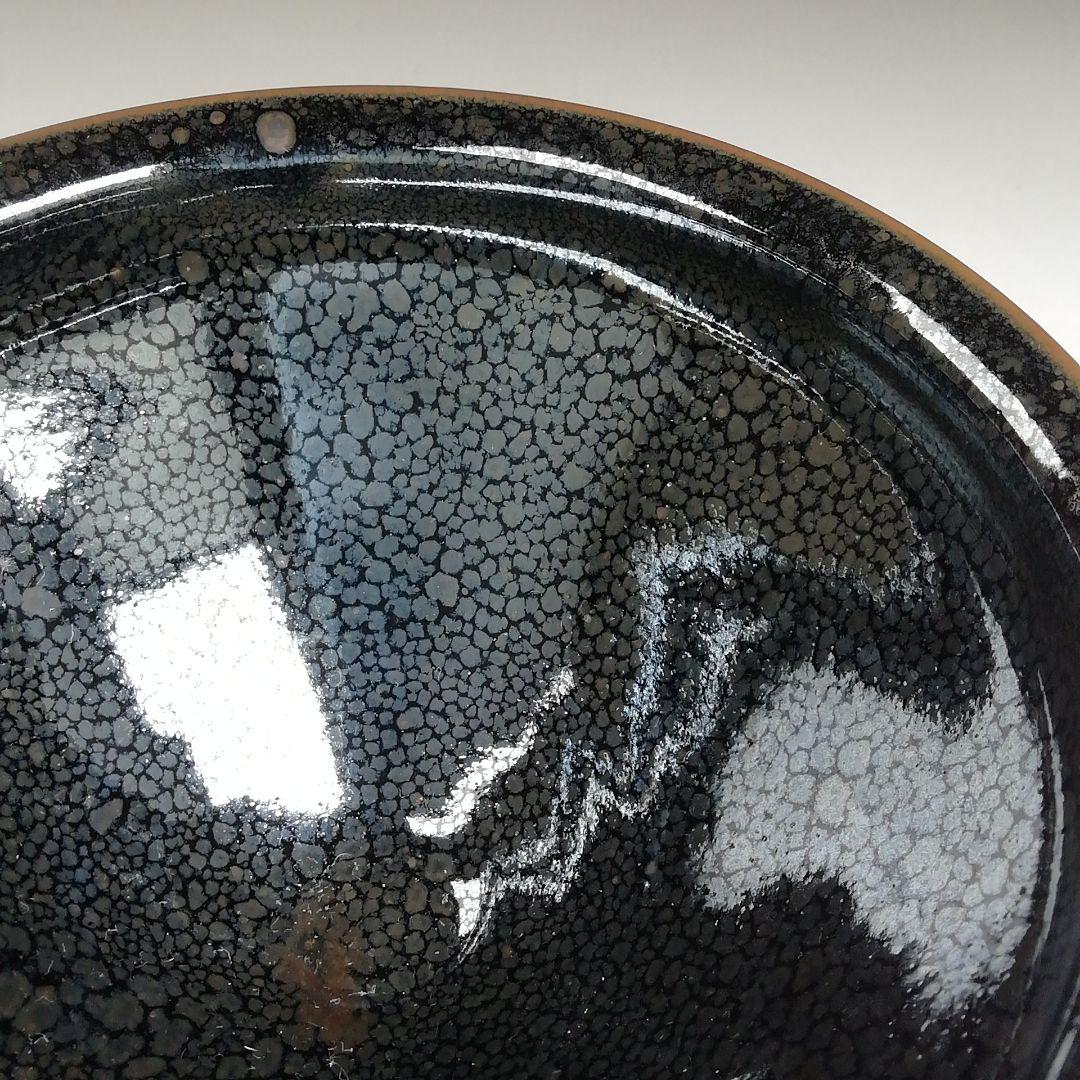
A yuteki tenmoku chawan from the Takatori kilns of Fukuoka, thrown and glazed by Kamei Miraku under the name Masahisa. Across a deep cone-form body, a field of silver oil-spot droplets gathers out of the black iron glaze — dense at the foot, thinning as it climbs, until the rim closes in a thin band of warm iron-brown. The interior holds a darker, glassier pool where the light collects, so that the bowl reads as two weathers at once: a still black sky above, a scattered constellation below.
🔹 [ BASIC DETAILS ]
• Artist: Kamei Miraku (signed Masahisa / 正久造), Takatori lineage, Fukuoka
• Technique: Yuteki tenmoku — oil-spot iron glaze with silver crystalline droplets
• Form: Cone-form chawan (bachi-gata) on a cut stoneware foot
• Era: Late Showa to Heisei, modern studio work
• Origin: Takatori ware (Takatori-yaki), Fukuoka Prefecture, Kyushu
• Dimensions: Height approx. 6.5 cm, Diameter approx. 13.5 cm
• Box: Original signed kiln box (tomobako), inscribed Takatori / Tenmoku Chawan / Kamei Miraku, Masahisa-made
• Condition: No cracks, no chips. Sound and ready for use or display.
🔹 [ CULTURAL & ARTISTIC INSIGHT ]
Takatori ware stands among the Enshu Nanagama — the seven kilns favoured by the tea master Kobori Enshu — and the Kamei Miraku family has carried the Takatori name in Fukuoka for generations as its principal lineage. Tenmoku itself reaches back to the Chinese Jian bowls carried home by monks from Mount Tianmu, prized in the formal tea of the shoin room for their dark, mirror-still glaze.
The yuteki, or oil-spot, effect is the rarest behaviour of this glaze: as iron saturates and lifts during firing, it crystallises into countless silver discs, each one a small fixed star. Here the droplets shift from tight silver scales near the foot to open black where the glaze runs thin at the lip, the iron rim left as a quiet frame. The flowing dark field, broken by suspended light, mirrors a night sky settling over still water — quiet, and alive.
🔹 [ DEEP-DIVE COMMENTARY ]
Takatori is a high-fired stoneware tradition born of Korean potters settled in northern Kyushu in the early seventeenth century, refined under Enshu's taste toward thin walls, restrained form, and glaze worn for its own depth rather than decoration. The cone form of this bowl, narrow at the foot and opening cleanly to the rim, is the classic tenmoku silhouette designed to gather and present the tea.
The oil-spot glaze is not painted but grown. A glaze heavy in iron is fired until saturated iron oxide rises to the molten surface and, on cooling, blooms into crystalline droplets. Their size, density and colour are governed by temperature, atmosphere and timing — the silvered scatter seen here is the mark of a controlled, fully-resolved firing rather than chance.
For the collector, the value lies in the meeting of two lineages: a documented Takatori name, Kamei Miraku, working a glaze tradition more often associated with Seto and the Jian kilns, and bringing to it the thin, disciplined potting of the Enshu canon. The signed kiln box anchors authorship and provenance.
In contemporary practice the bowl reads in either register — held in the hand during temae, where the silver droplets catch the light as the tea is whisked, or set on a shelf as a quiet object whose surface keeps changing with the room.
🔹 [ SHIPPING & PACKAGING ]
• Dispatch: Within 1-6 business days
• Carrier: Japan Post EMS / UPS / FedEx (with tracking)
• Packaging: Carefully wrapped with protective materials
🔹 [ 日本語解説 ]
福岡・高取焼の窯から生まれた油滴天目茶碗。亀井味楽が「正久」の名で作陶・施釉したものです。深い碗形の見込みに、黒い鉄釉から銀色の油滴が一面に立ち上がり、高台の際で密に、上へ向かうにつれて薄れ、口縁は細い鉄褐色の縁で締まります。見込みには光を集める暗くガラス質の溜まりがあり、上は静かな黒い空、下は散らばる星々という二つの景色が一椀のなかに同居しています。
高取焼は、茶人・小堀遠州が好んだ「遠州七窯」の一つに数えられ、亀井味楽家は福岡においてその高取の名を代々受け継ぐ本流です。天目はもともと、僧侶が天目山から持ち帰った中国・建窯の碗に由来し、書院の茶において、その黒く静まった釉景ゆえに尊ばれてきました。
油滴は、この釉のもっとも得難い景色です。焼成中に飽和した鉄分が釉の表面へ浮き上がり、冷めるときに無数の銀の結晶となって留まる——一つひとつが小さな星のように定着します。本作では、高台際の密な銀の鱗から、釉の薄れる口縁の黒へと滴が移ろい、鉄縁が静かな額縁として残されています。流れる黒地に懸かる光は、静水に降りる夜空を映すかのようで、静かでありながら生きています。
高取焼は十七世紀初頭、北九州に渡った朝鮮陶工の技を母体とし、遠州好みのもとで薄づくり・端正な姿・装飾に頼らぬ釉の深みへと洗練された高火度の炻器です。共箱(高取/天目茶碗/亀井味楽 正久造の書付)が作者と伝来を裏づけます。割れ・欠けはなく、点前にも床の眺めにも応える状態です。
🔹 [ BASIC DETAILS ]
• Artist: Kamei Miraku (signed Masahisa / 正久造), Takatori lineage, Fukuoka
• Technique: Yuteki tenmoku — oil-spot iron glaze with silver crystalline droplets
• Form: Cone-form chawan (bachi-gata) on a cut stoneware foot
• Era: Late Showa to Heisei, modern studio work
• Origin: Takatori ware (Takatori-yaki), Fukuoka Prefecture, Kyushu
• Dimensions: Height approx. 6.5 cm, Diameter approx. 13.5 cm
• Box: Original signed kiln box (tomobako), inscribed Takatori / Tenmoku Chawan / Kamei Miraku, Masahisa-made
• Condition: No cracks, no chips. Sound and ready for use or display.
🔹 [ CULTURAL & ARTISTIC INSIGHT ]
Takatori ware stands among the Enshu Nanagama — the seven kilns favoured by the tea master Kobori Enshu — and the Kamei Miraku family has carried the Takatori name in Fukuoka for generations as its principal lineage. Tenmoku itself reaches back to the Chinese Jian bowls carried home by monks from Mount Tianmu, prized in the formal tea of the shoin room for their dark, mirror-still glaze.
The yuteki, or oil-spot, effect is the rarest behaviour of this glaze: as iron saturates and lifts during firing, it crystallises into countless silver discs, each one a small fixed star. Here the droplets shift from tight silver scales near the foot to open black where the glaze runs thin at the lip, the iron rim left as a quiet frame. The flowing dark field, broken by suspended light, mirrors a night sky settling over still water — quiet, and alive.
🔹 [ DEEP-DIVE COMMENTARY ]
Takatori is a high-fired stoneware tradition born of Korean potters settled in northern Kyushu in the early seventeenth century, refined under Enshu's taste toward thin walls, restrained form, and glaze worn for its own depth rather than decoration. The cone form of this bowl, narrow at the foot and opening cleanly to the rim, is the classic tenmoku silhouette designed to gather and present the tea.
The oil-spot glaze is not painted but grown. A glaze heavy in iron is fired until saturated iron oxide rises to the molten surface and, on cooling, blooms into crystalline droplets. Their size, density and colour are governed by temperature, atmosphere and timing — the silvered scatter seen here is the mark of a controlled, fully-resolved firing rather than chance.
For the collector, the value lies in the meeting of two lineages: a documented Takatori name, Kamei Miraku, working a glaze tradition more often associated with Seto and the Jian kilns, and bringing to it the thin, disciplined potting of the Enshu canon. The signed kiln box anchors authorship and provenance.
In contemporary practice the bowl reads in either register — held in the hand during temae, where the silver droplets catch the light as the tea is whisked, or set on a shelf as a quiet object whose surface keeps changing with the room.
🔹 [ SHIPPING & PACKAGING ]
• Dispatch: Within 1-6 business days
• Carrier: Japan Post EMS / UPS / FedEx (with tracking)
• Packaging: Carefully wrapped with protective materials
🔹 [ 日本語解説 ]
福岡・高取焼の窯から生まれた油滴天目茶碗。亀井味楽が「正久」の名で作陶・施釉したものです。深い碗形の見込みに、黒い鉄釉から銀色の油滴が一面に立ち上がり、高台の際で密に、上へ向かうにつれて薄れ、口縁は細い鉄褐色の縁で締まります。見込みには光を集める暗くガラス質の溜まりがあり、上は静かな黒い空、下は散らばる星々という二つの景色が一椀のなかに同居しています。
高取焼は、茶人・小堀遠州が好んだ「遠州七窯」の一つに数えられ、亀井味楽家は福岡においてその高取の名を代々受け継ぐ本流です。天目はもともと、僧侶が天目山から持ち帰った中国・建窯の碗に由来し、書院の茶において、その黒く静まった釉景ゆえに尊ばれてきました。
油滴は、この釉のもっとも得難い景色です。焼成中に飽和した鉄分が釉の表面へ浮き上がり、冷めるときに無数の銀の結晶となって留まる——一つひとつが小さな星のように定着します。本作では、高台際の密な銀の鱗から、釉の薄れる口縁の黒へと滴が移ろい、鉄縁が静かな額縁として残されています。流れる黒地に懸かる光は、静水に降りる夜空を映すかのようで、静かでありながら生きています。
高取焼は十七世紀初頭、北九州に渡った朝鮮陶工の技を母体とし、遠州好みのもとで薄づくり・端正な姿・装飾に頼らぬ釉の深みへと洗練された高火度の炻器です。共箱(高取/天目茶碗/亀井味楽 正久造の書付)が作者と伝来を裏づけます。割れ・欠けはなく、点前にも床の眺めにも応える状態です。
Quantity
Couldn't load pickup availability
Out of stock
View full details