1
/
of
8
Yuki-Shino Snow White Matcha Bowl | Otaru Kiln Chawan | Japanese Tea Ceremony | Tomobako
Yuki-Shino Snow White Matcha Bowl | Otaru Kiln Chawan | Japanese Tea Ceremony | Tomobako
Regular price
Dhs. 650.00 AED
Regular price
Sale price
Dhs. 650.00 AED
Taxes included.
Shipping calculated at checkout.
A vessel that holds silence as naturally as it holds tea. This Yuki-Shino chawan from Otaru-gama arrives in its original tomobako, its snow-white feldspathic glaze fractured into a map of fine crazing that shifts from silver-grey to warm ivory depending on the light. Diameter approx. 10.5 cm / Height approx. 8.5 cm.
🔹 [ BASIC DETAILS ]
Style: Yuki-Shino (雪志野) — Snow Shino ware
Kiln: Otaru-gama (小樽窯)
Dimensions: Diameter approx. 10.5 cm / Height approx. 8.5 cm
Condition: Good vintage condition. Surface crazing and minor glaze variation are inherent characteristics of Shino ware, not damage.
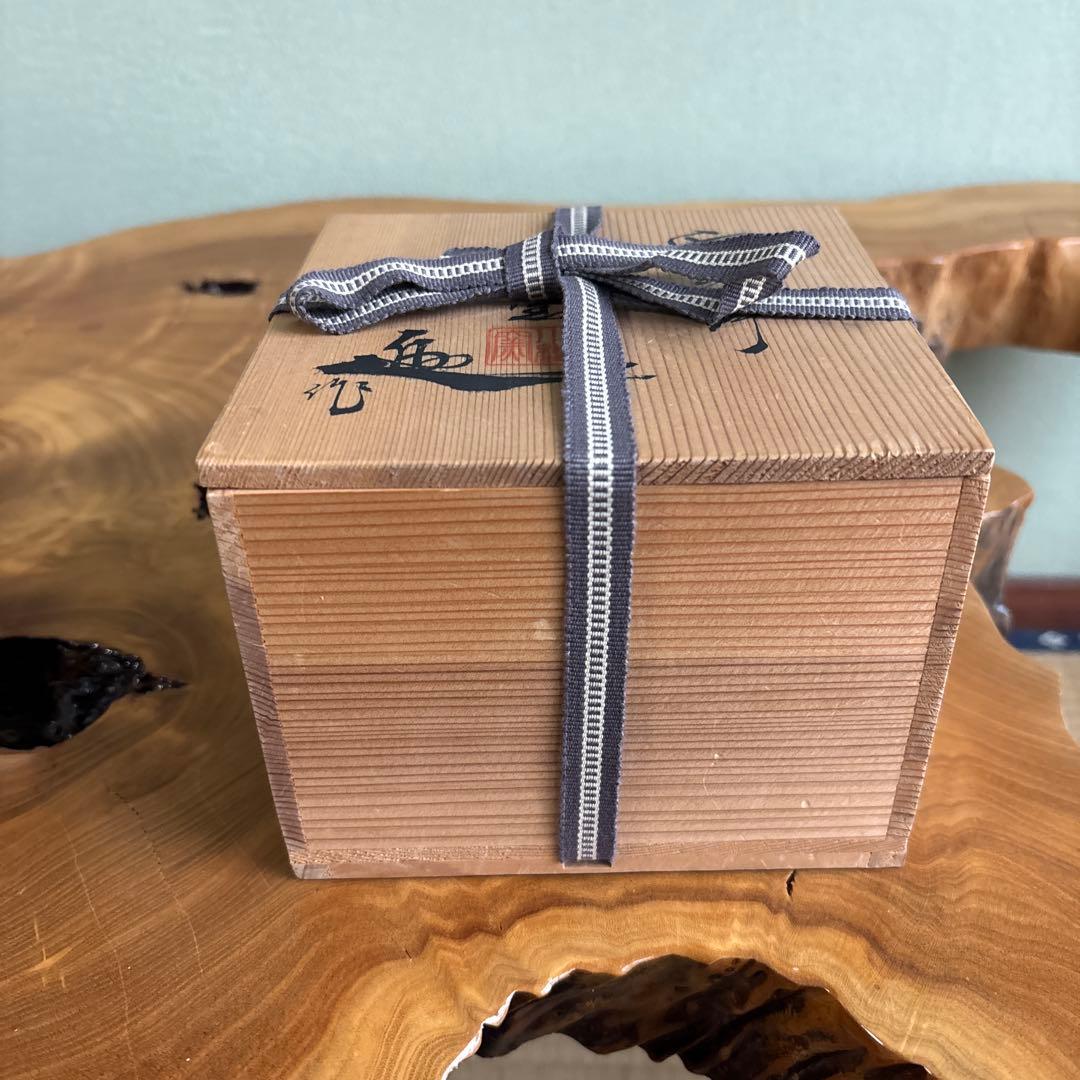
Provenance: Comes with original signed tomobako (wooden storage box)
【 日本語 / Basic Details 】
様式:雪志野
窯:小樽窯
サイズ:直径約10.5cm / 高さ約8.5cm
コンディション:良好。貫入・景色は志野焼の特性であり、傷ではありません。
付属品:共箱
🔹 [ CULTURAL & ARTISTIC INSIGHT ]
Shino ware emerged in the Mino region of present-day Gifu Prefecture during the Momoyama period (late 16th century), when Japanese tea masters were actively seeking a ceramic voice that was unambiguously their own — something that spoke neither of Chinese celadon nor of Korean white ware, but of Japan's particular relationship with impermanence. The potters of Mino answered with thick, porous feldspathic glazes applied over a coarse white clay body, fired in anagama kilns at temperatures that left the glaze soft, undulating, breathing.
Yuki-Shino — Snow Shino — is the variant that strips Shino to its quietest register. Where other Shino glazes carry traces of iron-oxide decoration or patches of hi-iro (fire orange), Yuki-Shino withholds all of this. The surface is given entirely to white. Not the white of clinical absence, but the white of a landscape after snowfall: layered, textured, holding light inside rather than reflecting it back.
This bowl embodies that aesthetic precisely. The glaze pools and thins across the cylindrical wall, accumulating into a soft luminosity near the rim, thinning toward the dark foot ring where the exposed stoneware clay grounds the piece in earth. The dense network of kannyu — crazing lines that formed as glaze and clay contracted at different rates during cooling — spreads across the entire exterior like a map of ice forming on still water. Each line is permanent, frozen at the moment of transformation.
In the tea ceremony, white holds a particular seasonal resonance. Winter usucha — thin tea — is served in bowls that do not compete with the gesture of preparation. A Yuki-Shino chawan asks the practitioner to slow down. The bowl does not announce itself. It waits.
【 日本語 / Cultural & Artistic Insight 】
志野焼は、桃山時代(16世紀後期)に現在の岐阜県・美濃地方で生まれました。当時の茶人たちは、中国磁器でも朝鮮白磁でもない、日本固有の陶芸の声を求めていました。美濃の陶工たちは、粗い白土の上に長石釉を厚く掛け、穴窯で焼くことでその答えを生み出しました。釉薬はやわらかく、たゆたい、呼吸するように仕上がります。
雪志野は、志野の中でも最も静かな表情を持つ様式です。鉄絵や緋色を持たず、白だけで完結する。雪が降り積もった風景のような、内側に光を溜めた白さです。
この茶碗は、その美意識を体現しています。長石釉が器壁をゆっくりと流れ、口縁近くで積み重なり、高台に向かって薄くなることで、露わになった素地の土色が器を大地へとつなぎます。冷却の過程で釉と素地の収縮率の差によって生じた貫入の網目は、静水の上に氷が張るような繊細な模様を全体に広げています。
茶の湯において、白は冬の季節と深く結びついています。雪志野の茶碗は、点前の動作を競うことなく受け止めます。自己主張せず、ただ、待ちます。
🔹 [ DEEP-DIVE COMMENTARY ]
The glaze chemistry of Shino ware distinguishes it from virtually every other ceramic tradition in Japan. Where most Japanese glazes rely on wood ash, iron oxide, or limestone as primary fluxes, Shino glazes are built almost entirely from feldspar — specifically the potassium-rich pegmatite spar mined in the Mino highlands. Feldspar melts at high temperatures but remains viscous even in a fluid state, which is why Shino glazes never run clean: they crawl, they bubble, they settle into thick, uneven skins that look more grown than applied.
Firing in a reduction-atmosphere anagama kiln suppresses the iron content in both glaze and clay, pulling the palette toward white and grey while allowing occasional passages of warm amber — the hi-iro that marks Shino's internal climate. Yuki-Shino achieves its snow-white character by using a clay body with minimal iron content and controlling the reduction atmosphere carefully to prevent the warm blushing that marks other Shino variants. The result is a glaze that reads as white under warm light, silver-grey under cool light, and a faint lavender in the blue hour — as observable in the photographs of this piece.
The kannyu — the network of crazing visible across this bowl's exterior — is not a flaw. It is a structural record of the cooling event. Shino glaze and its stoneware body have different coefficients of thermal expansion; as the kiln cools from around 1280°C, the glaze contracts slightly faster than the clay beneath it, and the tension resolves itself in these hairline fractures. In the vocabulary of 景色 (keishiki, landscape features), kannyu ranks among the most valued: it is the bowl's autobiography written in the language of physics. Over decades of use, tea pigment and handling oils penetrate the crazing, deepening the pattern and making each bowl progressively more individual.
The compressed, slightly cylindrical form — closer to a tsutsu-gata than a shallow hirazukuri — makes this bowl well-suited to winter chakai. The enclosed form retains heat longer than open bowls, allowing the practitioner to receive warm tea without the bowl cooling during the ritual. Shino's porous surface also absorbs trace moisture from the hands, making the grip feel settled rather than slippery — a quality tea practitioners describe as te no nori (手の乗り), the way a bowl receives the palm.
Otaru-gama's work continues a lineage of Mino ceramic inheritance outside the established geographical center of Toki and Tajimi. Kilns operating beyond the ancestral heartland often develop distinct interpretations: less constrained by guild convention, more responsive to local materials and the individual potter's sensibility. This piece carries that independent quality — the glaze is applied with confidence rather than caution, the foot ring cut decisively, the overall form settled in its proportions without being formulaic.
【 日本語 / Deep-Dive Commentary 】
志野焼の釉薬は、日本の陶芸の中でほぼ唯一の化学的特性を持ちます。多くの日本の釉薬が木灰・鉄・石灰を主フラックスとするのに対し、志野釉は美濃高原産の長石を主原料とします。長石は高温でも粘性を保つため、流れずにまとわりつくように仕上がり、塗布されたというよりも育ったかのような厚い肌を形成します。
穴窯の還元炎焼成は、釉薬と素地の鉄分を抑え、白・灰色を中心とした色調を引き出します。雪志野は鉄分の少ない素地と慎重な還元制御によって、他の志野変種に見られる緋色の発色を抑え、雪のような白さを実現します。この茶碗は、暖色光の下で白く、寒色光の下では銀灰色に、薄暮の光では淡い藤色に見えます。
貫入は欠陥ではありません。これは冷却という出来事の構造的な記録です。約1280℃から冷却する過程で、釉薬が素地よりわずかに速く収縮し、その張力が髪の毛より細い亀裂として解放される。景色の語彙において、貫入は最も尊ばれる特徴の一つです。使い込むほど茶渋や手の油脂が貫入に入り込み、模様は深まり、器はより個性的になっていきます。
筒型に近いこの椀形は、冬の茶会に適しています。開いた形状の茶碗よりも熱を長く保ち、点前の所作の中でも茶が冷めにくい。志野の多孔質な肌は手の水分をわずかに吸収し、「手の乗り」と呼ばれる、掌に落ち着くような握り心地を生み出します。
🔹 SHIPPING & PACKAGING
Every item is packed with the care we would give our own collection.
• Double-boxed: item box nested inside a reinforced outer shipping box
• Void fill: acid-free tissue and bubble wrap cushioning
• Fragile label on all sides
• Ships from Tokyo, Japan via Japan Post EMS or FedEx International
• Estimated delivery: USA 5–10 days | Europe 7–14 days | Other regions 10–21 days
• Tracking number provided at dispatch
• Insurance included up to declared value
Questions about this piece are welcome before purchase.
---
[ JAPANESE DESCRIPTION / 日本語解説 ]
雪志野茶碗 小樽窯 共箱
桃山期に美濃で生まれた志野焼の中でも、最も静かな様式——雪志野。小樽窯によるこの茶碗は、厚みのある長石釉が白く柔らかく器壁を覆い、全面に広がる貫入の網目が光の角度によって銀灰色から淡い藤色へと変化します。
【基本情報】
様式:雪志野 / 小樽窯
サイズ:直径約10.5cm / 高さ約8.5cm
コンディション:良好。貫入・景色は志野焼の特性です。
共箱付属。
【文化的背景】
志野焼は16世紀末の桃山時代、美濃の陶工たちが日本固有の陶芸表現を模索する中で誕生しました。雪志野はその中でも白だけで完結する様式。雪景色のような、内側に光を抱えた白さです。茶の湯において白は冬の季節と結びつき、点前の動作を静かに受け止める茶碗として用いられます。
【詳細解説】
長石を主原料とする志野釉は、高温でも粘性を保ち、流れずにまとわりつく独特の肌を形成します。冷却過程の収縮差によって生じる貫入は、器の履歴を物理の言語で記した景色。使い込むほど深まり、より個性的な器へと育ちます。筒型に近い椀形は熱を保ち、多孔質な肌は「手の乗り」のよさをもたらします。
🔹 [ SHIPPING & PACKAGING ]
• Dispatch: Within 1-6 business days
• Carrier: Japan Post EMS / UPS (with tracking)
• Packaging: Carefully wrapped with protective materials
🔹 [ BASIC DETAILS ]
Style: Yuki-Shino (雪志野) — Snow Shino ware
Kiln: Otaru-gama (小樽窯)
Dimensions: Diameter approx. 10.5 cm / Height approx. 8.5 cm
Condition: Good vintage condition. Surface crazing and minor glaze variation are inherent characteristics of Shino ware, not damage.
Provenance: Comes with original signed tomobako (wooden storage box)
【 日本語 / Basic Details 】
様式:雪志野
窯:小樽窯
サイズ:直径約10.5cm / 高さ約8.5cm
コンディション:良好。貫入・景色は志野焼の特性であり、傷ではありません。
付属品:共箱
🔹 [ CULTURAL & ARTISTIC INSIGHT ]
Shino ware emerged in the Mino region of present-day Gifu Prefecture during the Momoyama period (late 16th century), when Japanese tea masters were actively seeking a ceramic voice that was unambiguously their own — something that spoke neither of Chinese celadon nor of Korean white ware, but of Japan's particular relationship with impermanence. The potters of Mino answered with thick, porous feldspathic glazes applied over a coarse white clay body, fired in anagama kilns at temperatures that left the glaze soft, undulating, breathing.
Yuki-Shino — Snow Shino — is the variant that strips Shino to its quietest register. Where other Shino glazes carry traces of iron-oxide decoration or patches of hi-iro (fire orange), Yuki-Shino withholds all of this. The surface is given entirely to white. Not the white of clinical absence, but the white of a landscape after snowfall: layered, textured, holding light inside rather than reflecting it back.
This bowl embodies that aesthetic precisely. The glaze pools and thins across the cylindrical wall, accumulating into a soft luminosity near the rim, thinning toward the dark foot ring where the exposed stoneware clay grounds the piece in earth. The dense network of kannyu — crazing lines that formed as glaze and clay contracted at different rates during cooling — spreads across the entire exterior like a map of ice forming on still water. Each line is permanent, frozen at the moment of transformation.
In the tea ceremony, white holds a particular seasonal resonance. Winter usucha — thin tea — is served in bowls that do not compete with the gesture of preparation. A Yuki-Shino chawan asks the practitioner to slow down. The bowl does not announce itself. It waits.
【 日本語 / Cultural & Artistic Insight 】
志野焼は、桃山時代(16世紀後期)に現在の岐阜県・美濃地方で生まれました。当時の茶人たちは、中国磁器でも朝鮮白磁でもない、日本固有の陶芸の声を求めていました。美濃の陶工たちは、粗い白土の上に長石釉を厚く掛け、穴窯で焼くことでその答えを生み出しました。釉薬はやわらかく、たゆたい、呼吸するように仕上がります。
雪志野は、志野の中でも最も静かな表情を持つ様式です。鉄絵や緋色を持たず、白だけで完結する。雪が降り積もった風景のような、内側に光を溜めた白さです。
この茶碗は、その美意識を体現しています。長石釉が器壁をゆっくりと流れ、口縁近くで積み重なり、高台に向かって薄くなることで、露わになった素地の土色が器を大地へとつなぎます。冷却の過程で釉と素地の収縮率の差によって生じた貫入の網目は、静水の上に氷が張るような繊細な模様を全体に広げています。
茶の湯において、白は冬の季節と深く結びついています。雪志野の茶碗は、点前の動作を競うことなく受け止めます。自己主張せず、ただ、待ちます。
🔹 [ DEEP-DIVE COMMENTARY ]
The glaze chemistry of Shino ware distinguishes it from virtually every other ceramic tradition in Japan. Where most Japanese glazes rely on wood ash, iron oxide, or limestone as primary fluxes, Shino glazes are built almost entirely from feldspar — specifically the potassium-rich pegmatite spar mined in the Mino highlands. Feldspar melts at high temperatures but remains viscous even in a fluid state, which is why Shino glazes never run clean: they crawl, they bubble, they settle into thick, uneven skins that look more grown than applied.
Firing in a reduction-atmosphere anagama kiln suppresses the iron content in both glaze and clay, pulling the palette toward white and grey while allowing occasional passages of warm amber — the hi-iro that marks Shino's internal climate. Yuki-Shino achieves its snow-white character by using a clay body with minimal iron content and controlling the reduction atmosphere carefully to prevent the warm blushing that marks other Shino variants. The result is a glaze that reads as white under warm light, silver-grey under cool light, and a faint lavender in the blue hour — as observable in the photographs of this piece.
The kannyu — the network of crazing visible across this bowl's exterior — is not a flaw. It is a structural record of the cooling event. Shino glaze and its stoneware body have different coefficients of thermal expansion; as the kiln cools from around 1280°C, the glaze contracts slightly faster than the clay beneath it, and the tension resolves itself in these hairline fractures. In the vocabulary of 景色 (keishiki, landscape features), kannyu ranks among the most valued: it is the bowl's autobiography written in the language of physics. Over decades of use, tea pigment and handling oils penetrate the crazing, deepening the pattern and making each bowl progressively more individual.
The compressed, slightly cylindrical form — closer to a tsutsu-gata than a shallow hirazukuri — makes this bowl well-suited to winter chakai. The enclosed form retains heat longer than open bowls, allowing the practitioner to receive warm tea without the bowl cooling during the ritual. Shino's porous surface also absorbs trace moisture from the hands, making the grip feel settled rather than slippery — a quality tea practitioners describe as te no nori (手の乗り), the way a bowl receives the palm.
Otaru-gama's work continues a lineage of Mino ceramic inheritance outside the established geographical center of Toki and Tajimi. Kilns operating beyond the ancestral heartland often develop distinct interpretations: less constrained by guild convention, more responsive to local materials and the individual potter's sensibility. This piece carries that independent quality — the glaze is applied with confidence rather than caution, the foot ring cut decisively, the overall form settled in its proportions without being formulaic.
【 日本語 / Deep-Dive Commentary 】
志野焼の釉薬は、日本の陶芸の中でほぼ唯一の化学的特性を持ちます。多くの日本の釉薬が木灰・鉄・石灰を主フラックスとするのに対し、志野釉は美濃高原産の長石を主原料とします。長石は高温でも粘性を保つため、流れずにまとわりつくように仕上がり、塗布されたというよりも育ったかのような厚い肌を形成します。
穴窯の還元炎焼成は、釉薬と素地の鉄分を抑え、白・灰色を中心とした色調を引き出します。雪志野は鉄分の少ない素地と慎重な還元制御によって、他の志野変種に見られる緋色の発色を抑え、雪のような白さを実現します。この茶碗は、暖色光の下で白く、寒色光の下では銀灰色に、薄暮の光では淡い藤色に見えます。
貫入は欠陥ではありません。これは冷却という出来事の構造的な記録です。約1280℃から冷却する過程で、釉薬が素地よりわずかに速く収縮し、その張力が髪の毛より細い亀裂として解放される。景色の語彙において、貫入は最も尊ばれる特徴の一つです。使い込むほど茶渋や手の油脂が貫入に入り込み、模様は深まり、器はより個性的になっていきます。
筒型に近いこの椀形は、冬の茶会に適しています。開いた形状の茶碗よりも熱を長く保ち、点前の所作の中でも茶が冷めにくい。志野の多孔質な肌は手の水分をわずかに吸収し、「手の乗り」と呼ばれる、掌に落ち着くような握り心地を生み出します。
🔹 SHIPPING & PACKAGING
Every item is packed with the care we would give our own collection.
• Double-boxed: item box nested inside a reinforced outer shipping box
• Void fill: acid-free tissue and bubble wrap cushioning
• Fragile label on all sides
• Ships from Tokyo, Japan via Japan Post EMS or FedEx International
• Estimated delivery: USA 5–10 days | Europe 7–14 days | Other regions 10–21 days
• Tracking number provided at dispatch
• Insurance included up to declared value
Questions about this piece are welcome before purchase.
---
[ JAPANESE DESCRIPTION / 日本語解説 ]
雪志野茶碗 小樽窯 共箱
桃山期に美濃で生まれた志野焼の中でも、最も静かな様式——雪志野。小樽窯によるこの茶碗は、厚みのある長石釉が白く柔らかく器壁を覆い、全面に広がる貫入の網目が光の角度によって銀灰色から淡い藤色へと変化します。
【基本情報】
様式:雪志野 / 小樽窯
サイズ:直径約10.5cm / 高さ約8.5cm
コンディション:良好。貫入・景色は志野焼の特性です。
共箱付属。
【文化的背景】
志野焼は16世紀末の桃山時代、美濃の陶工たちが日本固有の陶芸表現を模索する中で誕生しました。雪志野はその中でも白だけで完結する様式。雪景色のような、内側に光を抱えた白さです。茶の湯において白は冬の季節と結びつき、点前の動作を静かに受け止める茶碗として用いられます。
【詳細解説】
長石を主原料とする志野釉は、高温でも粘性を保ち、流れずにまとわりつく独特の肌を形成します。冷却過程の収縮差によって生じる貫入は、器の履歴を物理の言語で記した景色。使い込むほど深まり、より個性的な器へと育ちます。筒型に近い椀形は熱を保ち、多孔質な肌は「手の乗り」のよさをもたらします。
🔹 [ SHIPPING & PACKAGING ]
• Dispatch: Within 1-6 business days
• Carrier: Japan Post EMS / UPS (with tracking)
• Packaging: Carefully wrapped with protective materials
Quantity
Couldn't load pickup availability
Low stock: 1 left
View full details