1
/
of
10
Yoshida Toshiaki — Inaho Maki-e Dainas | Lacquered Tea Caddy with Gold Rice Ear Design, Tomobako
Yoshida Toshiaki — Inaho Maki-e Dainas | Lacquered Tea Caddy with Gold Rice Ear Design, Tomobako
Regular price
Dhs. 994.00 AED
Regular price
Sale price
Dhs. 994.00 AED
Taxes included.
Shipping calculated at checkout.
A. OBJECT
A dainas — large-format natsume tea caddy — lacquered in deep, mirror-polished kuro-urushi and decorated with flowing gold inaho (rice ear) maki-e across its body and lid. The work belongs to the ceremonial register of autumn chashitsu aesthetics: the season when harvest abundance and the meditative spirit of tea most naturally converge.
🔹 [ BASIC DETAILS ]
• Artist: Yoshida Toshiaki
• Origin: Japan
• Material: Urushi lacquer with gold maki-e
• Motif: Rice Ears (Inaho) - Autumn Harvest
• Era: 1990_2000
• Box: Tomobako (artist's wooden presentation box)
• Condition: Good, carefully inspected
🔹 [ Cultural & Artistic Insight ]
The composition is confident and unhurried. A bound sheaf of ripened rice stalks rises from the lower body, rendered in togidashi and raised maki-e with fine kinpun graduation. The stalks lean and cross in a breeze only the artist can hear. On the flat lid, a gold ogi (folding fan) rests at anchor, trailing two fine gold-twisted cords — a classical seasonal emblem signifying celebration and the moment of reaping. Together, body and lid read as a single scene: field, wind, and abundance stilled into lacquer.
Signed by Yoshida Toshiaki, a maki-e craftsman working in the Kyoto lacquer tradition, with original tomobako (artist's wooden box) bearing his hand-brushed inscription and personal seal.
B. DIMENSIONS & CONDITION
Diameter: approx. 6.7 cm / Height: approx. 7 cm
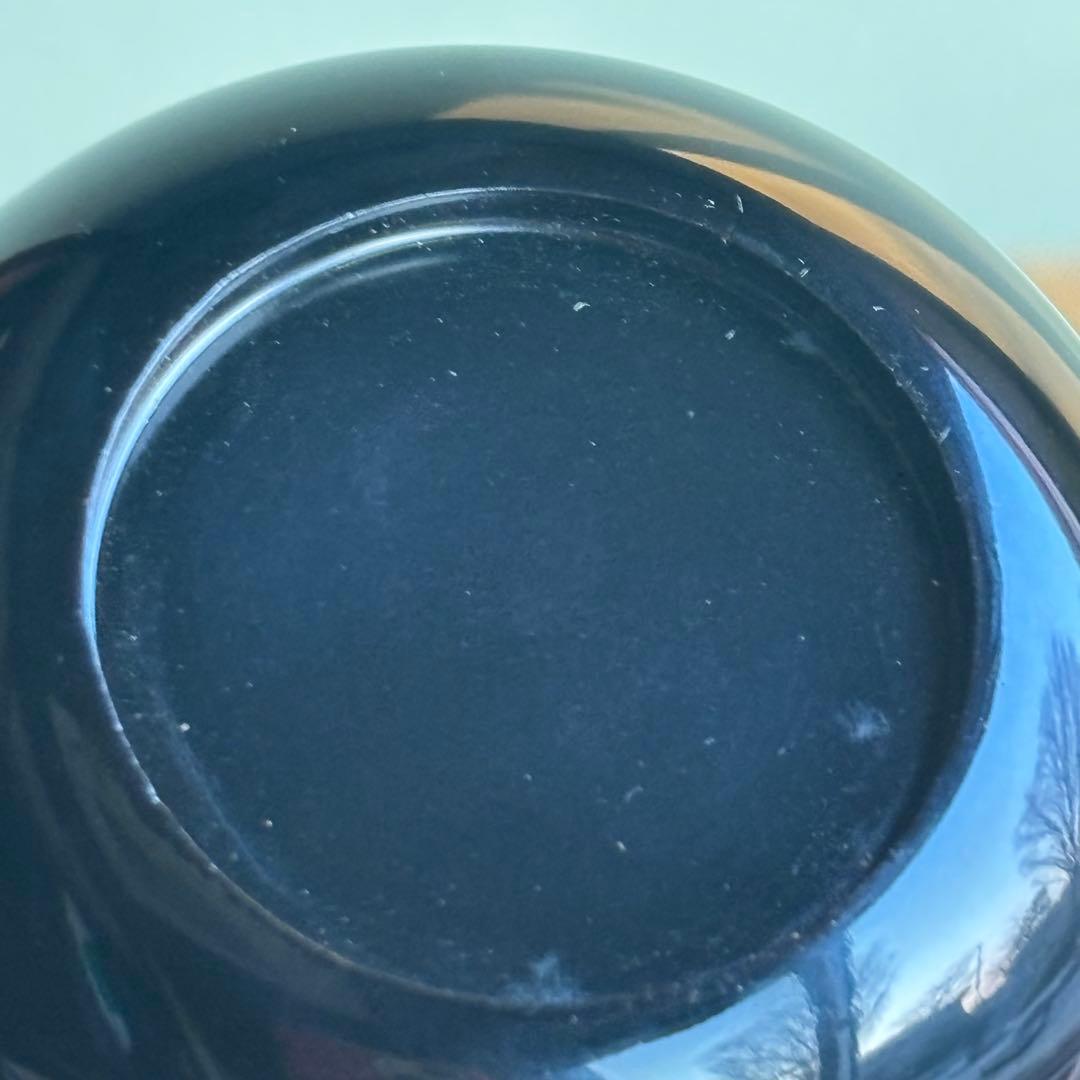
Condition: Excellent. Deep lacquer surface retains full brilliance with no chips, cracks, or significant wear. Gold maki-e intact throughout. Lid seats cleanly. Box clean and structurally sound.
C. CULTURAL & ARTISTIC INSIGHT
The dainas form — broader and taller than the standard chuunas — is used in ceremonies where a larger quantity of thin-tea matcha is prepared, or when the visual weight of the caddy itself is meant to anchor the season's theme in the tokonoma or on the tatami. Autumn chashitsu aesthetics traditionally favor motifs of inaho, kuri (chestnuts), and kiku (chrysanthemum) — motifs that speak to impermanence through abundance rather than through loss.
Inaho maki-e carries a specific symbolic weight within the tea world: rice is the material basis of Japanese civilization, and depicting it in gold on black lacquer transforms a field crop into a meditative object. The contrast — the heaviness of gold against the depth of kuro-urushi — performs the tension between worldly richness and the stripped-back simplicity that chado seeks.
🔹 [ Deep-Dive Commentary ]
The ogi (fan) on the lid reinforces the seasonal reading while adding a layer of classical literary reference, as the folding fan appears repeatedly in waka poetry as a symbol of the opened moment — the instant before autumn turns to winter.
D. DEEP-DIVE COMMENTARY
Yoshida Toshiaki's technique here sits squarely within the Kyoto maki-e tradition that prizes narrative coherence across the object's surface. Unlike purely decorative maki-e that treats lid and body as separate fields, this piece constructs a single landscape that the viewer mentally completes by rotating the caddy. This compositional approach — called rinpai-haichi or circular arrangement — is considered a mark of mature maki-e design.
The use of both togidashi (polished flush) and raised maki-e within the same motif creates tactile and visual depth: the stalks emerge while the background grain of the rice ears recedes, giving the design a quiet three-dimensionality that photographs only partially capture. In hand, the object reads differently from every angle.
For the practitioner who uses this caddy in a November or October temae, it functions as a statement of seasonal literacy — the ability to select an object that speaks the correct temporal language without announcement.
E. SHIPPING & PACKAGING
🔹 [ 日本語解説 ]
深みのある黒漆地に、金蒔絵で稲穂の束を流麗に描いた大棗。蓋には扇面と金緒があしらわれ、秋の実りと茶の精神が一体となった格調高い茶道具です。吉田利昭作、共箱付き、美品。
🔹 [ SHIPPING & PACKAGING ]
• Dispatch: Within 1-6 business days
• Carrier: Japan Post EMS / UPS (with tracking)
• Packaging: Carefully wrapped with protective materials
A dainas — large-format natsume tea caddy — lacquered in deep, mirror-polished kuro-urushi and decorated with flowing gold inaho (rice ear) maki-e across its body and lid. The work belongs to the ceremonial register of autumn chashitsu aesthetics: the season when harvest abundance and the meditative spirit of tea most naturally converge.
🔹 [ BASIC DETAILS ]
• Artist: Yoshida Toshiaki
• Origin: Japan
• Material: Urushi lacquer with gold maki-e
• Motif: Rice Ears (Inaho) - Autumn Harvest
• Era: 1990_2000
• Box: Tomobako (artist's wooden presentation box)
• Condition: Good, carefully inspected
🔹 [ Cultural & Artistic Insight ]
The composition is confident and unhurried. A bound sheaf of ripened rice stalks rises from the lower body, rendered in togidashi and raised maki-e with fine kinpun graduation. The stalks lean and cross in a breeze only the artist can hear. On the flat lid, a gold ogi (folding fan) rests at anchor, trailing two fine gold-twisted cords — a classical seasonal emblem signifying celebration and the moment of reaping. Together, body and lid read as a single scene: field, wind, and abundance stilled into lacquer.
Signed by Yoshida Toshiaki, a maki-e craftsman working in the Kyoto lacquer tradition, with original tomobako (artist's wooden box) bearing his hand-brushed inscription and personal seal.
B. DIMENSIONS & CONDITION
Diameter: approx. 6.7 cm / Height: approx. 7 cm
Condition: Excellent. Deep lacquer surface retains full brilliance with no chips, cracks, or significant wear. Gold maki-e intact throughout. Lid seats cleanly. Box clean and structurally sound.
C. CULTURAL & ARTISTIC INSIGHT
The dainas form — broader and taller than the standard chuunas — is used in ceremonies where a larger quantity of thin-tea matcha is prepared, or when the visual weight of the caddy itself is meant to anchor the season's theme in the tokonoma or on the tatami. Autumn chashitsu aesthetics traditionally favor motifs of inaho, kuri (chestnuts), and kiku (chrysanthemum) — motifs that speak to impermanence through abundance rather than through loss.
Inaho maki-e carries a specific symbolic weight within the tea world: rice is the material basis of Japanese civilization, and depicting it in gold on black lacquer transforms a field crop into a meditative object. The contrast — the heaviness of gold against the depth of kuro-urushi — performs the tension between worldly richness and the stripped-back simplicity that chado seeks.
🔹 [ Deep-Dive Commentary ]
The ogi (fan) on the lid reinforces the seasonal reading while adding a layer of classical literary reference, as the folding fan appears repeatedly in waka poetry as a symbol of the opened moment — the instant before autumn turns to winter.
D. DEEP-DIVE COMMENTARY
Yoshida Toshiaki's technique here sits squarely within the Kyoto maki-e tradition that prizes narrative coherence across the object's surface. Unlike purely decorative maki-e that treats lid and body as separate fields, this piece constructs a single landscape that the viewer mentally completes by rotating the caddy. This compositional approach — called rinpai-haichi or circular arrangement — is considered a mark of mature maki-e design.
The use of both togidashi (polished flush) and raised maki-e within the same motif creates tactile and visual depth: the stalks emerge while the background grain of the rice ears recedes, giving the design a quiet three-dimensionality that photographs only partially capture. In hand, the object reads differently from every angle.
For the practitioner who uses this caddy in a November or October temae, it functions as a statement of seasonal literacy — the ability to select an object that speaks the correct temporal language without announcement.
E. SHIPPING & PACKAGING
🔹 [ 日本語解説 ]
深みのある黒漆地に、金蒔絵で稲穂の束を流麗に描いた大棗。蓋には扇面と金緒があしらわれ、秋の実りと茶の精神が一体となった格調高い茶道具です。吉田利昭作、共箱付き、美品。
🔹 [ SHIPPING & PACKAGING ]
• Dispatch: Within 1-6 business days
• Carrier: Japan Post EMS / UPS (with tracking)
• Packaging: Carefully wrapped with protective materials
Quantity
Couldn't load pickup availability
Low stock: 1 left
View full details