1
/
of
15
Yellow Kochi Ware Mizusashi Water Jar with Arai-iso Carp Design — Seizan Mark, Japanese Tea Ceremony
Yellow Kochi Ware Mizusashi Water Jar with Arai-iso Carp Design — Seizan Mark, Japanese Tea Ceremony
Regular price
Dhs. 1,438.00 AED
Regular price
Sale price
Dhs. 1,438.00 AED
Taxes included.
Shipping calculated at checkout.
Experience Authentic Japan Art with this Yellow Kochi Ware Mizusashi. This Japanese Tea Ceremony Water Jar serves as a Kochi Glazed Ceramic Vessel and Arai-iso Carp Design Jar, featuring Carved Relief Kochi Pottery and Antique Japanese Mizusashi—a must-have for any Art Collector seeking a Seizan Marked Tea Caddy, Traditional Chado Water Container, Japanese Ceramic with Koi Motif, or Hand Carved Kochi Ware for their Zen Tea Room Decor.
🔹 [ BASIC DETAILS ]
• Artist / Inscription: Seizan (靜山) — named artisan mark
• Technique: Ki-kochi (yellow交趾) glaze over carved relief body; arai-iso (荒磯絵 — carp-in-waves) motif incised and painted in contrasting yellow, emerald green, and dark aubergine
• Era: Likely Showa period (1926–1989), consistent with style and glaze character
• Origin: Kochi-yaki (交趾焼) tradition — historically associated with Kyoto craftsmen producing Chinese-influenced sancai-derived polychrome wares
• Dimensions: Height approx. 14.7 cm, Diameter approx. 12.5 cm
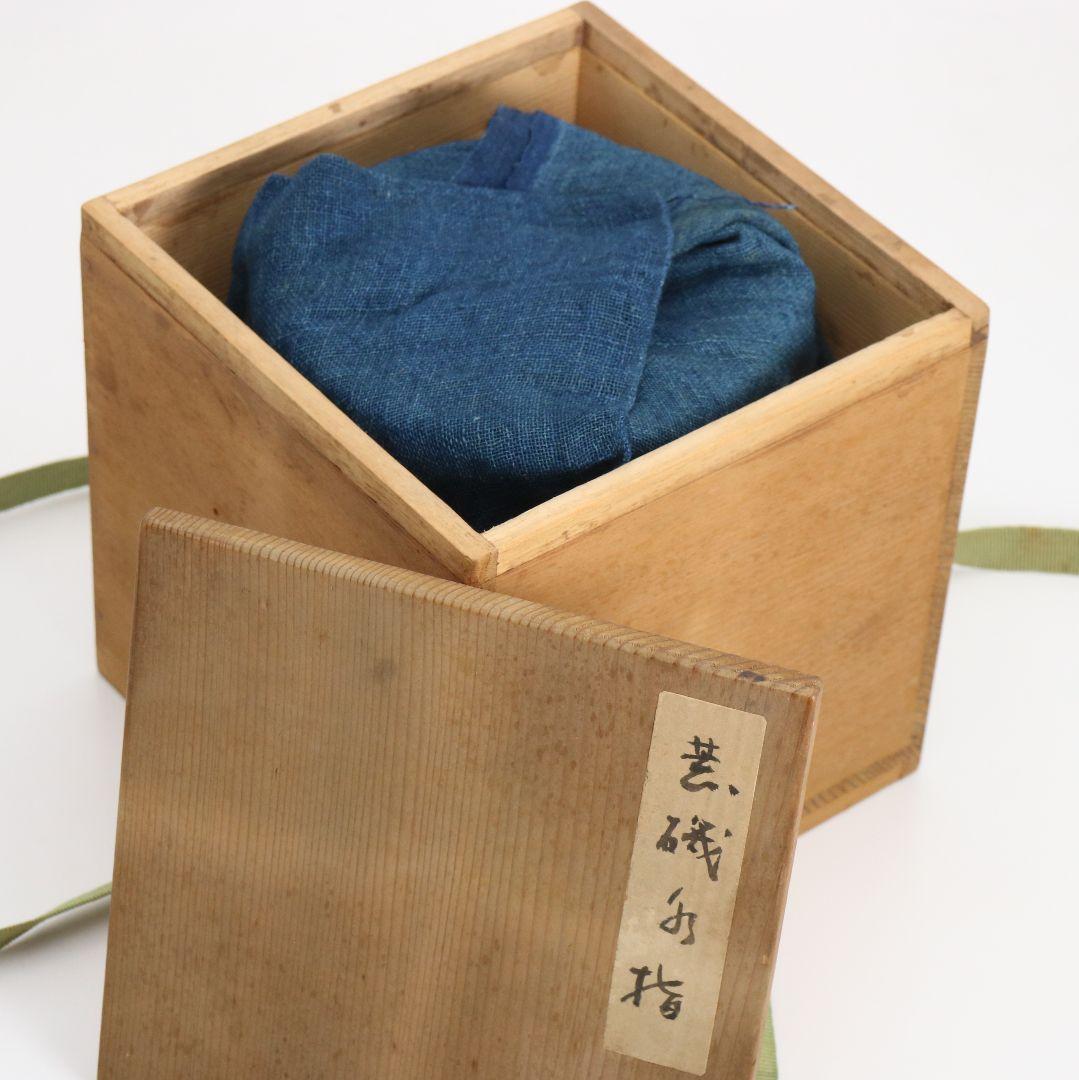
• Box: Tomobako (original wooden storage box) included, tied with green silk ribbon
• Condition: Excellent. Glaze vivid and fully intact; carved relief crisp throughout body and lid; no chips, cracks, or restoration detected
🔹 [ CULTURAL & ARTISTIC INSIGHT ]
The arai-iso (荒磯絵, "rough shore") motif — a carp leaping from turbulent waves — carries deep auspicious resonance in Japanese decorative arts. Derived from Chinese literati painting and the legend of the carp ascending the Dragon Gate (koi no takinobori), it symbolises perseverance, transformation, and the triumph of spirit over adversity. In the tea room, a mizusashi bearing this motif invites the gathered guests to meditate on the courage embedded in stillness.
The three-colour composition here is masterful: a warm, egg-yolk yellow (ki) ground floods the upper body like a summer horizon, while deep jade-green waves — carved in confident, rhythmic relief — surge across the lower register. The lone carp, rendered in dark plum-brown against both fields, achieves a visual tension that is simultaneously bold and serene. On the lid, three fish swim freely among carved aquatic grasses around a simple yellow knob — the same drama played out in a quieter key.
Kochi-yaki's palette derives from the Tang sancai tradition filtered through Ming dynasty import wares that arrived in Japan during the Momoyama and Edo periods. The yellow glaze (ki-yu) was particularly prized in court and temple settings, and its use on tea utensils signals an elevated aesthetic sensibility. The Seizan inscription places this piece within a lineage of named Kyoto craftsmen who maintained and refined the tradition across the modern era.
Poetic Line: "A single carp breaks the golden surface — the wave it leaves behind holds the shape of a season passing."
🔹 [ DEEP-DIVE COMMENTARY ]
Kochi-yaki (交趾焼) is a Japanese interpretation of Chinese sancai (三彩, "three-colour") lead-silicate glazed ceramics. The tradition entered Japan primarily through import wares arriving in Nagasaki during the Edo period, where they were treasured as karamono (唐物 — Chinese objects of prestige) in the tea world. Japanese potters, especially in Kyoto, soon began producing their own versions — lighter in body, more painterly in colour distribution, and increasingly adapted to the formal requirements of chado (茶道).
The defining technical achievement of kochi-yaki is the management of multiple coloured lead glazes on a single fired body without bleeding. Potters use incised or raised clay borders (dote, 土手) to separate colour fields — visible in this piece as the crisp boundary between yellow body and green wave zone. Each glaze zone is filled by hand with coloured glaze slip before a single low-temperature firing (typically 800–900°C), fusing the colours while preserving their distinct boundaries.
The arai-iso motif on this mizusashi is executed with particular care: the carp is individually scaled, its fins and whiskers rendered in fine incised line, and the waves beneath are built in layered relief — shallow at the horizon, deeper at the crest — creating a tactile sense of water in motion. The lid carries a fully independent composition of three carp, reinforcing the auspicious register and demonstrating the maker's commitment to compositional completeness.
For the tea practitioner, a mizusashi of this quality signals formal temae. Its presence in the tokonoma alcove or beside the kama before use sets the seasonal and aesthetic tone for the entire gathering. The yellow-green-aubergine palette evokes late spring or early summer, making this vessel particularly suited to June and July chakai. Collectors of Kyoto polychrome wares will recognise in this piece the same spirit that animates the finest Ninsei and Kenzan productions — colour as ceremony, form as philosophy.
The Seizan mark, while not yet traced to a specific generation or atelier, is consistent with a mid-to-late Showa craftsman working in the sustained kochi-yaki tradition in Kyoto. The overall quality of the carving, the evenness of the yellow glaze, and the confident composition all speak to a practitioner with significant technical mastery.
🔹 [ 日本語解説 ]
【作品詳細】
• 作者 / 銘:靜山銘
• 技法:黄交趾釉(き-こうち)— 素地に荒磯絵(鯉に波濤)を彫り込み、黄・緑・茶紫の三色交趾釉で彩色。共蓋付き
• 年代:昭和時代(推定)
• 産地:交趾焼(京都系)
• 寸法:高さ 約14.7cm、直径 約12.5cm
• 箱:共箱(木箱、緑の紐付き)
• 状態:優良。釉薬の発色鮮やか、彫りの線明快、欠け・割れ・修復の痕跡なし
【文化的背景と美術的洞察】
荒磯絵(あらいそえ)は、波濤を躍り越える鯉を描いた吉祥文様で、中国の「鯉の瀧登り」(登竜門)の故事に基づく。力強い生命力と飛翔の象徴であり、茶室においてはその静寂のなかに「挑戦と超克」という詩的な主題を持ち込む。
本作は、卵黄色(黄交趾釉)の明朗な胴体と、浮き彫りで刻まれた翡翠色の波浪帯が対比する大胆な構成をとる。鯉は深みのある茶紫色で描かれ、金色の空間と緑の海面の双方に鮮明に映え、静と動、空と水の詩的緊張を体現している。蓋には三匹の鯉が水草と波のなかに泳ぎ、独立した構図として完結する。
詩的一句:「黄金の水面を割る一尾の鯉—残る波紋に、季節の移ろいが宿る。」
【ディープダイブ解説】
交趾焼(こうちやき)は、中国の三彩(唐三彩)を源流とし、江戸時代に渡来した明・清代の輸入陶磁器を範として京都の陶工たちが独自に発展させた多彩釉陶です。低温焼成(約800〜900℃)の鉛釉を用い、各色の釉薬が混じり合わないよう素地に土手(仕切り線)を施して隔離し、一度の焼成で鮮明な三色を実現します。
本作の彫刻は精緻で、鯉の鱗・鰭・髭に至るまで個別に線刻されており、波濤は手前ほど高浮き彫りとなって水流の速さと奥行きを表現しています。技術的完成度と構図の明快さは、交趾焼の正統的な美意識を体現するものです。
茶道においてこの水指は、釜の傍らに置かれる清水の器として、点前全体の格調を規定します。黄・緑・茶紫の配色は初夏(五〜七月)の季節感に通じ、青楓や新緑をテーマとした茶会での使用に特に適しています。京焼多彩釉陶の収集家にとって、靜山銘の本作は、仁清・乾山の精神を継承する近代の佳品として、コレクションに格を加える一点です。
🔹 [ SHIPPING & PACKAGING ]
• Dispatch: Within 1-6 business days
• Carrier: Japan Post EMS / UPS (with tracking)
• Packaging: Carefully wrapped with protective materials
🔹 [ BASIC DETAILS ]
• Artist / Inscription: Seizan (靜山) — named artisan mark
• Technique: Ki-kochi (yellow交趾) glaze over carved relief body; arai-iso (荒磯絵 — carp-in-waves) motif incised and painted in contrasting yellow, emerald green, and dark aubergine
• Era: Likely Showa period (1926–1989), consistent with style and glaze character
• Origin: Kochi-yaki (交趾焼) tradition — historically associated with Kyoto craftsmen producing Chinese-influenced sancai-derived polychrome wares
• Dimensions: Height approx. 14.7 cm, Diameter approx. 12.5 cm
• Box: Tomobako (original wooden storage box) included, tied with green silk ribbon
• Condition: Excellent. Glaze vivid and fully intact; carved relief crisp throughout body and lid; no chips, cracks, or restoration detected
🔹 [ CULTURAL & ARTISTIC INSIGHT ]
The arai-iso (荒磯絵, "rough shore") motif — a carp leaping from turbulent waves — carries deep auspicious resonance in Japanese decorative arts. Derived from Chinese literati painting and the legend of the carp ascending the Dragon Gate (koi no takinobori), it symbolises perseverance, transformation, and the triumph of spirit over adversity. In the tea room, a mizusashi bearing this motif invites the gathered guests to meditate on the courage embedded in stillness.
The three-colour composition here is masterful: a warm, egg-yolk yellow (ki) ground floods the upper body like a summer horizon, while deep jade-green waves — carved in confident, rhythmic relief — surge across the lower register. The lone carp, rendered in dark plum-brown against both fields, achieves a visual tension that is simultaneously bold and serene. On the lid, three fish swim freely among carved aquatic grasses around a simple yellow knob — the same drama played out in a quieter key.
Kochi-yaki's palette derives from the Tang sancai tradition filtered through Ming dynasty import wares that arrived in Japan during the Momoyama and Edo periods. The yellow glaze (ki-yu) was particularly prized in court and temple settings, and its use on tea utensils signals an elevated aesthetic sensibility. The Seizan inscription places this piece within a lineage of named Kyoto craftsmen who maintained and refined the tradition across the modern era.
Poetic Line: "A single carp breaks the golden surface — the wave it leaves behind holds the shape of a season passing."
🔹 [ DEEP-DIVE COMMENTARY ]
Kochi-yaki (交趾焼) is a Japanese interpretation of Chinese sancai (三彩, "three-colour") lead-silicate glazed ceramics. The tradition entered Japan primarily through import wares arriving in Nagasaki during the Edo period, where they were treasured as karamono (唐物 — Chinese objects of prestige) in the tea world. Japanese potters, especially in Kyoto, soon began producing their own versions — lighter in body, more painterly in colour distribution, and increasingly adapted to the formal requirements of chado (茶道).
The defining technical achievement of kochi-yaki is the management of multiple coloured lead glazes on a single fired body without bleeding. Potters use incised or raised clay borders (dote, 土手) to separate colour fields — visible in this piece as the crisp boundary between yellow body and green wave zone. Each glaze zone is filled by hand with coloured glaze slip before a single low-temperature firing (typically 800–900°C), fusing the colours while preserving their distinct boundaries.
The arai-iso motif on this mizusashi is executed with particular care: the carp is individually scaled, its fins and whiskers rendered in fine incised line, and the waves beneath are built in layered relief — shallow at the horizon, deeper at the crest — creating a tactile sense of water in motion. The lid carries a fully independent composition of three carp, reinforcing the auspicious register and demonstrating the maker's commitment to compositional completeness.
For the tea practitioner, a mizusashi of this quality signals formal temae. Its presence in the tokonoma alcove or beside the kama before use sets the seasonal and aesthetic tone for the entire gathering. The yellow-green-aubergine palette evokes late spring or early summer, making this vessel particularly suited to June and July chakai. Collectors of Kyoto polychrome wares will recognise in this piece the same spirit that animates the finest Ninsei and Kenzan productions — colour as ceremony, form as philosophy.
The Seizan mark, while not yet traced to a specific generation or atelier, is consistent with a mid-to-late Showa craftsman working in the sustained kochi-yaki tradition in Kyoto. The overall quality of the carving, the evenness of the yellow glaze, and the confident composition all speak to a practitioner with significant technical mastery.
🔹 [ 日本語解説 ]
【作品詳細】
• 作者 / 銘:靜山銘
• 技法:黄交趾釉(き-こうち)— 素地に荒磯絵(鯉に波濤)を彫り込み、黄・緑・茶紫の三色交趾釉で彩色。共蓋付き
• 年代:昭和時代(推定)
• 産地:交趾焼(京都系)
• 寸法:高さ 約14.7cm、直径 約12.5cm
• 箱:共箱(木箱、緑の紐付き)
• 状態:優良。釉薬の発色鮮やか、彫りの線明快、欠け・割れ・修復の痕跡なし
【文化的背景と美術的洞察】
荒磯絵(あらいそえ)は、波濤を躍り越える鯉を描いた吉祥文様で、中国の「鯉の瀧登り」(登竜門)の故事に基づく。力強い生命力と飛翔の象徴であり、茶室においてはその静寂のなかに「挑戦と超克」という詩的な主題を持ち込む。
本作は、卵黄色(黄交趾釉)の明朗な胴体と、浮き彫りで刻まれた翡翠色の波浪帯が対比する大胆な構成をとる。鯉は深みのある茶紫色で描かれ、金色の空間と緑の海面の双方に鮮明に映え、静と動、空と水の詩的緊張を体現している。蓋には三匹の鯉が水草と波のなかに泳ぎ、独立した構図として完結する。
詩的一句:「黄金の水面を割る一尾の鯉—残る波紋に、季節の移ろいが宿る。」
【ディープダイブ解説】
交趾焼(こうちやき)は、中国の三彩(唐三彩)を源流とし、江戸時代に渡来した明・清代の輸入陶磁器を範として京都の陶工たちが独自に発展させた多彩釉陶です。低温焼成(約800〜900℃)の鉛釉を用い、各色の釉薬が混じり合わないよう素地に土手(仕切り線)を施して隔離し、一度の焼成で鮮明な三色を実現します。
本作の彫刻は精緻で、鯉の鱗・鰭・髭に至るまで個別に線刻されており、波濤は手前ほど高浮き彫りとなって水流の速さと奥行きを表現しています。技術的完成度と構図の明快さは、交趾焼の正統的な美意識を体現するものです。
茶道においてこの水指は、釜の傍らに置かれる清水の器として、点前全体の格調を規定します。黄・緑・茶紫の配色は初夏(五〜七月)の季節感に通じ、青楓や新緑をテーマとした茶会での使用に特に適しています。京焼多彩釉陶の収集家にとって、靜山銘の本作は、仁清・乾山の精神を継承する近代の佳品として、コレクションに格を加える一点です。
🔹 [ SHIPPING & PACKAGING ]
• Dispatch: Within 1-6 business days
• Carrier: Japan Post EMS / UPS (with tracking)
• Packaging: Carefully wrapped with protective materials
Quantity
Couldn't load pickup availability
Low stock: 1 left
View full details