1
/
of
16
Yatsuhashi Iris Iro-e Chawan by Sugita Shohei — Seikanji Kiln Kyoto
Yatsuhashi Iris Iro-e Chawan by Sugita Shohei — Seikanji Kiln Kyoto
Regular price
Dhs. 1,895.00 AED
Regular price
Sale price
Dhs. 1,895.00 AED
Taxes included.
Shipping calculated at checkout.
Experience authentic Japanese tea ceramics with this Yatsuhashi Iris Iro-e Chawan by Sugita Shohei. This Tea Bowl serves as a Seikanji Kiln Kyoyaki Masterwork and Overglaze Polychrome Chawan, featuring Gold Bridge Ise Monogatari Design and Kakitsubata Iris Enamel Painting—a must-have for any Art Collector seeking Kyoto Polychrome Ceramics and Japanese Tea Ceremony Art.
━━━━━━━━━━━━━━━━━━━━
🔹 [ BASIC DETAILS ]
• Artist: Sugita Shohei (杉田祥平) — Seikanji Kiln (清閑寺窯)
• Technique: Iro-e (overglaze polychrome enamel) with gold painting
• Era: 2010s
• Origin: Kyoto, Japan
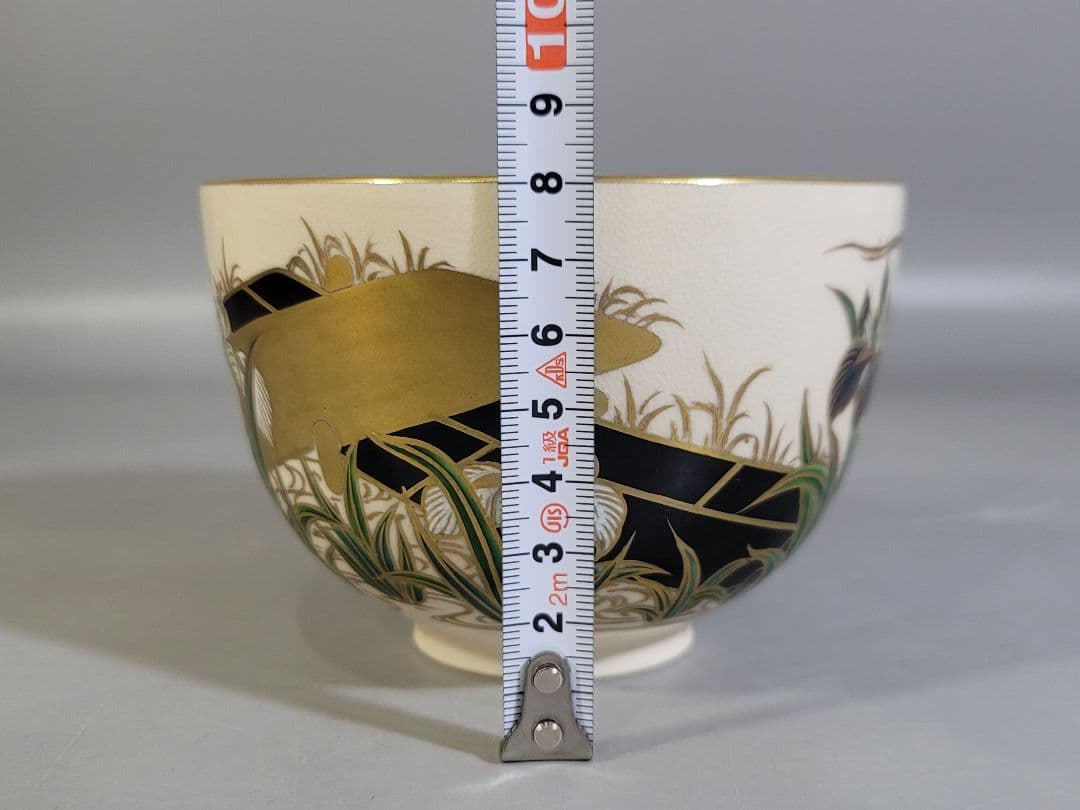
• Dimensions: H 8 cm × W 11.5 cm (3.1" × 4.5")
• Box: Signed tomobako with red seal
• Condition: Excellent — enamel fully intact, gold lines crisp, no chips or repairs
━━━━━━━━━━━━━━━━━━━━
🔹 [ CULTURAL & ARTISTIC INSIGHT ]
Yatsuhashi ni Kakitsubata — Eight Bridges with Irises. The scene is not invented. It arrives from the ninth chapter of Ise Monogatari, where the poet Ariwara no Narihira pauses at a place called Yatsuhashi in Mikawa Province. The bridges zigzag over marshland thick with kakitsubata. He composes a verse, each line beginning with a syllable of ka-ki-tsu-ba-ta. The poem is about distance. About someone left behind. The irises witness this, and continue blooming.
Sugita Shohei paints this literary landscape onto a Kyo-yaki tea bowl with the quiet authority of a kiln that has carried this tradition for generations. The gold bridge spans the bowl's exterior in angular segments — not decorative geometry but the actual structure of a yatsuhashi, each plank rendered in gold and black. Below and around it, kakitsubata rise in white and purple, their narrow leaves threading upward in green. The composition wraps the bowl so that no single vantage point reveals the entire scene. You must turn it. You must travel through it, as Narihira did.
The Seikanji kiln in Kyoto's Higashiyama district has long understood that iro-e is not illustration. It is the act of placing cultural memory onto a surface that will be held in both hands, tilted toward the mouth, and returned to the tatami. Every brushstroke must survive that intimacy.
*"The bridge does not cross the water. It crosses the distance between what is remembered and what remains."*
━━━━━━━━━━━━━━━━━━━━
🔹 [ DEEP-DIVE COMMENTARY ]
**Yatsuhashi — The Zigzag Bridge**: The yatsuhashi (八橋, eight bridges) is one of the most enduring motifs in Japanese art. Its origin in Ise Monogatari gave it literary weight, but Ogata Korin's monumental screen paintings of Kakitsubata zu Byobu (National Treasure, Nezu Museum) elevated the image to iconic status. Korin removed the bridge entirely, leaving only the irises — but every subsequent artist who reintroduces the bridge is engaging in a conversation with that absence. Sugita Shohei's decision to render the yatsuhashi prominently in gold is a declaration: the structure matters.
**Kakitsubata (燕子花) vs. Hanashobu vs. Ayame**: These three irises are frequently confused in Western contexts. Kakitsubata (Iris laevigata) grows in shallow water and marshland — it is the species of Yatsuhashi. Its petals are broader and more pendulous than ayame, and it lacks the yellow signal stripe of hanashobu. In tea ceremony, kakitsubata signals early summer — the fifth month — and carries the literary resonance of Narihira's journey.
**Kyo-yaki Iro-e Tradition**: Overglaze enamel painting (色絵, iro-e) on Kyoto ceramics descends from Nonomura Ninsei and was refined by Ogata Kenzan. The technique requires multiple firings: the base clay is bisque-fired, then glazed and fired again, then each enamel color is painted and fired at progressively lower temperatures to prevent earlier colors from running. Gold is applied last at the lowest firing temperature. A bowl of this complexity may pass through the kiln four to six times.
**Seikanji Kiln Lineage**: The Seikanji kiln (清閑寺窯) takes its name from the Seikanji temple area in Higashiyama, Kyoto. The Sugita family has maintained this kiln's identity through careful transmission of iro-e techniques that emphasize literary and seasonal motifs drawn from classical Japanese culture.
━━━━━━━━━━━━━━━━━━━━
🔹 [ 日本語解説 ]
【基本情報】
• 作家:杉田祥平(清閑寺窯)
• 技法:色絵・金彩
• 時代:2010年代
• 産地:京都
• 寸法:高さ8cm × 径11.5cm
• 付属:共箱(朱印)
• 状態:美品 — 色絵・金彩ともに完全、傷・直しなし
【解説】
八橋に燕子花(やつはしにかきつばた)——伊勢物語第九段、在原業平が三河国八橋で詠んだ歌に由来する意匠です。業平は湿地に咲く燕子花を前に、都に残した人への想いを「かきつばた」の五文字を折り込んだ歌に託しました。以来、八橋と燕子花の組み合わせは日本美術における最も深い文学的意匠のひとつとなっています。
杉田祥平はこの物語を京焼の茶碗に色絵で描きます。金彩の八橋が器面を斜めに横切り、その下に白と紫の燕子花が緑の葉とともに咲き連なります。碗を回すごとに景色が移り変わり、あたかも八橋を渡りながら花を愛でるかのような構成です。清閑寺窯は京都東山に代々続く窯元で、古典文学に根ざした色絵を得意とします。初夏の茶席にふさわしい一碗です。
━━━━━━━━━━━━━━━━━━━━
🔹 [ SHIPPING & PACKAGING ]
• Dispatch: Within 1-6 business days
• Carrier: Japan Post EMS / UPS (with tracking)
• Packaging: Carefully wrapped with protective materials
*A zigzag bridge in gold, irises in silence below — the same scene Narihira saw, held now in both hands.*
━━━━━━━━━━━━━━━━━━━━
🔹 [ BASIC DETAILS ]
• Artist: Sugita Shohei (杉田祥平) — Seikanji Kiln (清閑寺窯)
• Technique: Iro-e (overglaze polychrome enamel) with gold painting
• Era: 2010s
• Origin: Kyoto, Japan
• Dimensions: H 8 cm × W 11.5 cm (3.1" × 4.5")
• Box: Signed tomobako with red seal
• Condition: Excellent — enamel fully intact, gold lines crisp, no chips or repairs
━━━━━━━━━━━━━━━━━━━━
🔹 [ CULTURAL & ARTISTIC INSIGHT ]
Yatsuhashi ni Kakitsubata — Eight Bridges with Irises. The scene is not invented. It arrives from the ninth chapter of Ise Monogatari, where the poet Ariwara no Narihira pauses at a place called Yatsuhashi in Mikawa Province. The bridges zigzag over marshland thick with kakitsubata. He composes a verse, each line beginning with a syllable of ka-ki-tsu-ba-ta. The poem is about distance. About someone left behind. The irises witness this, and continue blooming.
Sugita Shohei paints this literary landscape onto a Kyo-yaki tea bowl with the quiet authority of a kiln that has carried this tradition for generations. The gold bridge spans the bowl's exterior in angular segments — not decorative geometry but the actual structure of a yatsuhashi, each plank rendered in gold and black. Below and around it, kakitsubata rise in white and purple, their narrow leaves threading upward in green. The composition wraps the bowl so that no single vantage point reveals the entire scene. You must turn it. You must travel through it, as Narihira did.
The Seikanji kiln in Kyoto's Higashiyama district has long understood that iro-e is not illustration. It is the act of placing cultural memory onto a surface that will be held in both hands, tilted toward the mouth, and returned to the tatami. Every brushstroke must survive that intimacy.
*"The bridge does not cross the water. It crosses the distance between what is remembered and what remains."*
━━━━━━━━━━━━━━━━━━━━
🔹 [ DEEP-DIVE COMMENTARY ]
**Yatsuhashi — The Zigzag Bridge**: The yatsuhashi (八橋, eight bridges) is one of the most enduring motifs in Japanese art. Its origin in Ise Monogatari gave it literary weight, but Ogata Korin's monumental screen paintings of Kakitsubata zu Byobu (National Treasure, Nezu Museum) elevated the image to iconic status. Korin removed the bridge entirely, leaving only the irises — but every subsequent artist who reintroduces the bridge is engaging in a conversation with that absence. Sugita Shohei's decision to render the yatsuhashi prominently in gold is a declaration: the structure matters.
**Kakitsubata (燕子花) vs. Hanashobu vs. Ayame**: These three irises are frequently confused in Western contexts. Kakitsubata (Iris laevigata) grows in shallow water and marshland — it is the species of Yatsuhashi. Its petals are broader and more pendulous than ayame, and it lacks the yellow signal stripe of hanashobu. In tea ceremony, kakitsubata signals early summer — the fifth month — and carries the literary resonance of Narihira's journey.
**Kyo-yaki Iro-e Tradition**: Overglaze enamel painting (色絵, iro-e) on Kyoto ceramics descends from Nonomura Ninsei and was refined by Ogata Kenzan. The technique requires multiple firings: the base clay is bisque-fired, then glazed and fired again, then each enamel color is painted and fired at progressively lower temperatures to prevent earlier colors from running. Gold is applied last at the lowest firing temperature. A bowl of this complexity may pass through the kiln four to six times.
**Seikanji Kiln Lineage**: The Seikanji kiln (清閑寺窯) takes its name from the Seikanji temple area in Higashiyama, Kyoto. The Sugita family has maintained this kiln's identity through careful transmission of iro-e techniques that emphasize literary and seasonal motifs drawn from classical Japanese culture.
━━━━━━━━━━━━━━━━━━━━
🔹 [ 日本語解説 ]
【基本情報】
• 作家:杉田祥平(清閑寺窯)
• 技法:色絵・金彩
• 時代:2010年代
• 産地:京都
• 寸法:高さ8cm × 径11.5cm
• 付属:共箱(朱印)
• 状態:美品 — 色絵・金彩ともに完全、傷・直しなし
【解説】
八橋に燕子花(やつはしにかきつばた)——伊勢物語第九段、在原業平が三河国八橋で詠んだ歌に由来する意匠です。業平は湿地に咲く燕子花を前に、都に残した人への想いを「かきつばた」の五文字を折り込んだ歌に託しました。以来、八橋と燕子花の組み合わせは日本美術における最も深い文学的意匠のひとつとなっています。
杉田祥平はこの物語を京焼の茶碗に色絵で描きます。金彩の八橋が器面を斜めに横切り、その下に白と紫の燕子花が緑の葉とともに咲き連なります。碗を回すごとに景色が移り変わり、あたかも八橋を渡りながら花を愛でるかのような構成です。清閑寺窯は京都東山に代々続く窯元で、古典文学に根ざした色絵を得意とします。初夏の茶席にふさわしい一碗です。
━━━━━━━━━━━━━━━━━━━━
🔹 [ SHIPPING & PACKAGING ]
• Dispatch: Within 1-6 business days
• Carrier: Japan Post EMS / UPS (with tracking)
• Packaging: Carefully wrapped with protective materials
*A zigzag bridge in gold, irises in silence below — the same scene Narihira saw, held now in both hands.*
Quantity
Couldn't load pickup availability
Out of stock
View full details