1
/
of
8
White Satsuma Matcha Bowl by Kozan — Shiro-Satsuma Chawan with Ivory Crackle Glaze, Signed Wooden Box
White Satsuma Matcha Bowl by Kozan — Shiro-Satsuma Chawan with Ivory Crackle Glaze, Signed Wooden Box
Regular price
Dhs. 611.00 AED
Regular price
Sale price
Dhs. 611.00 AED
Taxes included.
Shipping calculated at checkout.
Experience Authentic Japan Art with this White Satsuma Matcha Bowl. This Shiro-Satsuma Chawan serves as a Japanese Tea Ceremony Bowl and Satsuma Pottery Collector Piece, featuring Ivory Crackle Glaze and Kannyu Crazing Glaze—a must-have for any Art Collector. Crafted by Kozan in the revered Satsuma Pottery tradition, this Signed Artist Chawan arrives with its original Signed Wooden Box, making it an ideal Wabi Sabi Tea Bowl and Japanese Antique Ceramic for the discerning collector.
🔹 [ BASIC DETAILS ]
• Artist: Kozan (晃山) — Satsuma kiln tradition
• Technique: Shiro-Satsuma (白薩摩) — ivory crackle glaze (kannyu/貫入), hand-thrown stoneware
• Era: Estimated late Showa to early Heisei period (1980s–2000s)
• Origin: Satsuma, Kagoshima, Kyushu, Japan
• Dimensions: Height approx. 8.5 cm, Diameter approx. 11.2 cm
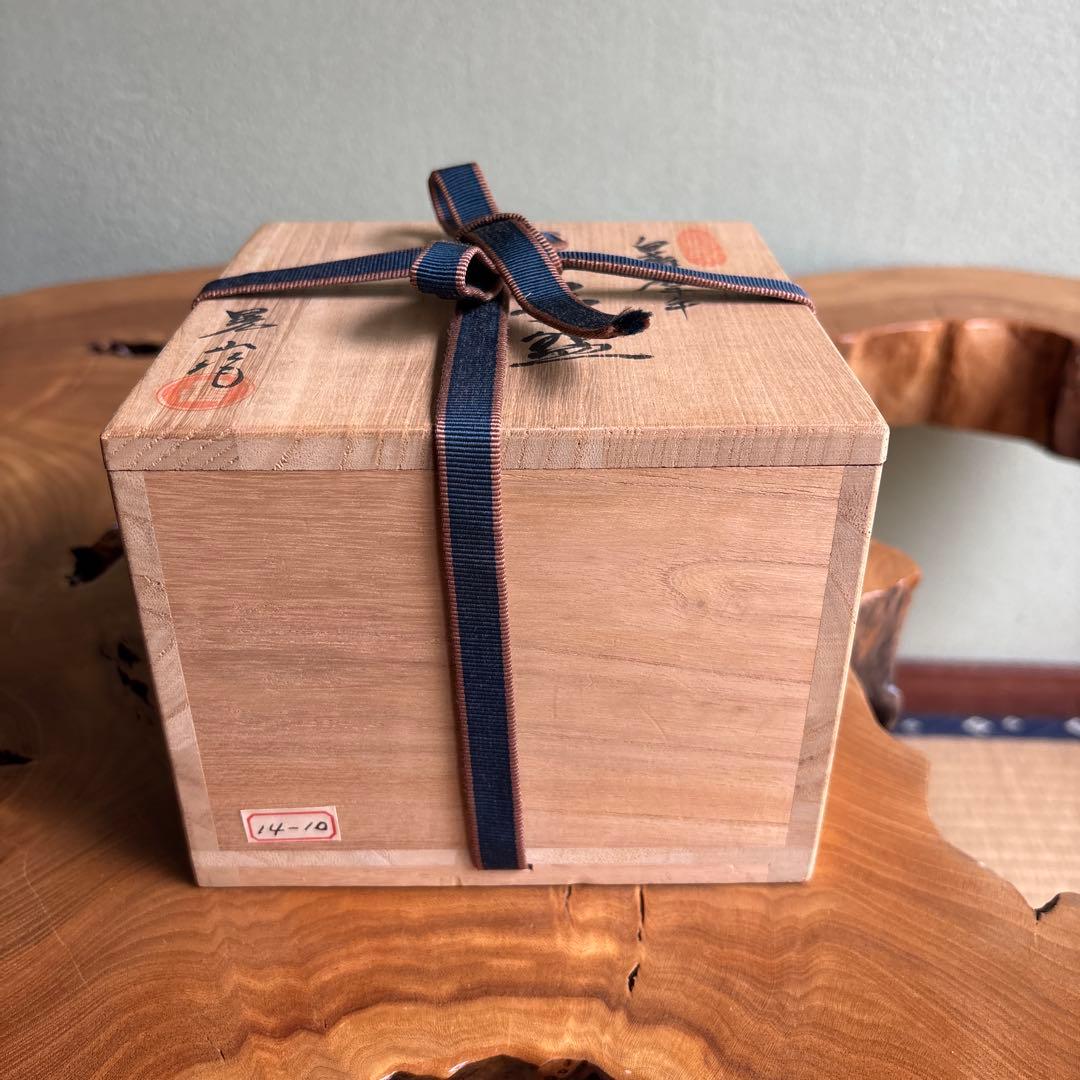
• Box: Original signed wooden tomobako (共箱) with artist's calligraphy and seal
• Condition: Excellent — no chips, cracks, or restoration; glaze crazing is natural and intentional
🔹 [ CULTURAL & ARTISTIC INSIGHT ]
Shiro-Satsuma — the white porcelaneous ware from Kagoshima Prefecture — occupies a singular place in Japan's ceramic history. Unlike the elaborately painted polychrome Satsuma ware exported to the West in the Meiji era, Shiro-Satsuma was reserved for the Shimazu domain lords themselves; commoners were forbidden from using it. The defining characteristic is the fine, all-over crackle glaze known as kannyu (貫入) — a delicate network of fissure lines that forms as the glaze cools at a different rate than the clay body beneath. In this bowl by Kozan, the ivory-warm ground reads almost like aged silk, and the crazing spreads with the quiet density of frost crystals on winter glass.
The form follows the classical chawan proportion: a gently rounded belly that rises to a slightly contracted rim, offering the hands an honest, meditative grip when warming the bowl before whisking matcha. The small, low kodai (foot ring) is clean and unassuming — nothing distracts from the surface's contemplative silence.
"A thousand fine lines hold the silence of winter — the bowl remembers every firing as snow remembers the ground."
🔹 [ DEEP-DIVE COMMENTARY ]
Satsuma ware originates in the Naeshirogawa and Tateno kilns established in Kagoshima around 1600, when Korean potters brought to Japan by Shimazu Yoshihiro introduced their low-fire, high-feldspar clay bodies and translucent cream glazes. Shiro-Satsuma refers specifically to this undecorated or lightly decorated ivory-ground tradition, distinguished from the later Kinran-de (gold-brocade) polychrome export ware.
The kannyu crackle effect is achieved through precise control of silica content in the glaze and the cooling rate inside the kiln. As temperatures fall, the glaze contracts faster than the stoneware body, generating fine tensile fractures. In Shiro-Satsuma, potters calibrate this differential to produce a uniform, dense crackle — a deliberate aesthetic rather than a flaw. Over years of use in tea ceremony, these lines absorb tea pigments and the oils of handling, darkening gradually into a patina that cannot be replicated artificially.
Kozan (晃山) works in this classical Shiro-Satsuma lineage. The shared wooden box (tomobako / 共箱) — signed and sealed by the artist in ink — is an important authentication marker in Japanese ceramics collecting. It indicates that the box and bowl left the kiln together, signed by the maker's hand, not assembled later.
For collectors, a Shiro-Satsuma chawan of this quality and completeness — signed box, no damage, fine kannyu — represents the quiet, meditative wing of the Satsuma tradition: understated, functional, and deeply connected to the wabi-sabi philosophy of finding beauty in simplicity and impermanence. It functions equally well as an active usucha (thin matcha) bowl in contemporary chado practice or as a display piece anchoring a Japanese ceramics collection.
🔹 [ 日本語解説 ]
■ 基本情報
• 作家:晃山(薩摩焼の伝統に連なる陶芸家)
• 技法:白薩摩手 ── 象牙色の貫入釉、手轆轤による成形
• 年代:昭和後期〜平成初期と推定(1980〜2000年代)
• 産地:鹿児島県 薩摩焼
• 寸法:高さ 約8.5cm、口径 約11.2cm
• 付属品:作家直筆・落款入り共箱
• 状態:良好 ── ヒビ・カケ・補修なし。貫入は意図的な景色
■ 美的・文化的解説
白薩摩は、薩摩藩主・島津家のために焼かれた藩御用の陶器として誕生した。明治期に海外へ輸出された金欄手(極彩色絵付け)の薩摩焼とは対照的に、白薩摩は装飾を排した象牙白の地肌を誇りとする。釉薬と素地の収縮率の差異によって生じる貫入は、欠陥ではなく、作行きの核心をなす景色である。この晃山作の茶碗では、細かく均等に広がる貫入が、冬の朝の霜模様を思わせる静謐な美を形成している。
茶碗の形は古典的な碗形で、手に包んだ時の重みと温もりが自然に体へ伝わる。薄い口縁と低く整えられた高台が、使い手を余計な要素から解放し、抹茶の色と香だけに集中させる。白薩摩の名碗が持つ徳とは、沈黙の中に深さがある ── そういう種類の静けさである。
■ 詳細解説(コレクター向け)
薩摩焼の起源は、1600年頃に島津義弘が朝鮮から連れ帰った陶工たちが苗代川・竪野に窯を開いたことに遡る。白薩摩はその系統の中でも、透明感のある象牙白釉を特徴とする格調高い系譜に属する。
貫入釉の生成原理は、釉薬中のシリカ含有量と窯の冷却速度の精密な調整にある。急速な冷却では粗い亀裂が生じ、緩慢な冷却では細かな網目が形成される。白薩摩の名工はこの差を利用して、均質で繊細な貫入を作り出す。使い込まれた茶碗では、この無数の細かい亀裂が茶の渋みや手の脂を吸収し、時間とともに深みのある飴色の景色へと変化する ── それは人工的に再現できない、使用の歴史そのものである。
晃山の共箱は墨書・落款入りで、碗と箱が窯から同時に出てきたことを証明する重要な真作の証拠である。コレクションにおいて、共箱付きの作品は鑑定・保管・譲渡のすべての場面で価値を高める。白薩摩の静かな美学 ── 侘び寂びの哲学が体現された象牙色の器 ── は、茶道の稽古にも書院飾りにも、現代の日本美術コレクションの要として機能する。
🔹 [ SHIPPING & PACKAGING ]
• Dispatch: Within 1-6 business days
• Carrier: Japan Post EMS / UPS (with tracking)
• Packaging: Carefully wrapped with protective materials
🔹 [ BASIC DETAILS ]
• Artist: Kozan (晃山) — Satsuma kiln tradition
• Technique: Shiro-Satsuma (白薩摩) — ivory crackle glaze (kannyu/貫入), hand-thrown stoneware
• Era: Estimated late Showa to early Heisei period (1980s–2000s)
• Origin: Satsuma, Kagoshima, Kyushu, Japan
• Dimensions: Height approx. 8.5 cm, Diameter approx. 11.2 cm
• Box: Original signed wooden tomobako (共箱) with artist's calligraphy and seal
• Condition: Excellent — no chips, cracks, or restoration; glaze crazing is natural and intentional
🔹 [ CULTURAL & ARTISTIC INSIGHT ]
Shiro-Satsuma — the white porcelaneous ware from Kagoshima Prefecture — occupies a singular place in Japan's ceramic history. Unlike the elaborately painted polychrome Satsuma ware exported to the West in the Meiji era, Shiro-Satsuma was reserved for the Shimazu domain lords themselves; commoners were forbidden from using it. The defining characteristic is the fine, all-over crackle glaze known as kannyu (貫入) — a delicate network of fissure lines that forms as the glaze cools at a different rate than the clay body beneath. In this bowl by Kozan, the ivory-warm ground reads almost like aged silk, and the crazing spreads with the quiet density of frost crystals on winter glass.
The form follows the classical chawan proportion: a gently rounded belly that rises to a slightly contracted rim, offering the hands an honest, meditative grip when warming the bowl before whisking matcha. The small, low kodai (foot ring) is clean and unassuming — nothing distracts from the surface's contemplative silence.
"A thousand fine lines hold the silence of winter — the bowl remembers every firing as snow remembers the ground."
🔹 [ DEEP-DIVE COMMENTARY ]
Satsuma ware originates in the Naeshirogawa and Tateno kilns established in Kagoshima around 1600, when Korean potters brought to Japan by Shimazu Yoshihiro introduced their low-fire, high-feldspar clay bodies and translucent cream glazes. Shiro-Satsuma refers specifically to this undecorated or lightly decorated ivory-ground tradition, distinguished from the later Kinran-de (gold-brocade) polychrome export ware.
The kannyu crackle effect is achieved through precise control of silica content in the glaze and the cooling rate inside the kiln. As temperatures fall, the glaze contracts faster than the stoneware body, generating fine tensile fractures. In Shiro-Satsuma, potters calibrate this differential to produce a uniform, dense crackle — a deliberate aesthetic rather than a flaw. Over years of use in tea ceremony, these lines absorb tea pigments and the oils of handling, darkening gradually into a patina that cannot be replicated artificially.
Kozan (晃山) works in this classical Shiro-Satsuma lineage. The shared wooden box (tomobako / 共箱) — signed and sealed by the artist in ink — is an important authentication marker in Japanese ceramics collecting. It indicates that the box and bowl left the kiln together, signed by the maker's hand, not assembled later.
For collectors, a Shiro-Satsuma chawan of this quality and completeness — signed box, no damage, fine kannyu — represents the quiet, meditative wing of the Satsuma tradition: understated, functional, and deeply connected to the wabi-sabi philosophy of finding beauty in simplicity and impermanence. It functions equally well as an active usucha (thin matcha) bowl in contemporary chado practice or as a display piece anchoring a Japanese ceramics collection.
🔹 [ 日本語解説 ]
■ 基本情報
• 作家:晃山(薩摩焼の伝統に連なる陶芸家)
• 技法:白薩摩手 ── 象牙色の貫入釉、手轆轤による成形
• 年代:昭和後期〜平成初期と推定(1980〜2000年代)
• 産地:鹿児島県 薩摩焼
• 寸法:高さ 約8.5cm、口径 約11.2cm
• 付属品:作家直筆・落款入り共箱
• 状態:良好 ── ヒビ・カケ・補修なし。貫入は意図的な景色
■ 美的・文化的解説
白薩摩は、薩摩藩主・島津家のために焼かれた藩御用の陶器として誕生した。明治期に海外へ輸出された金欄手(極彩色絵付け)の薩摩焼とは対照的に、白薩摩は装飾を排した象牙白の地肌を誇りとする。釉薬と素地の収縮率の差異によって生じる貫入は、欠陥ではなく、作行きの核心をなす景色である。この晃山作の茶碗では、細かく均等に広がる貫入が、冬の朝の霜模様を思わせる静謐な美を形成している。
茶碗の形は古典的な碗形で、手に包んだ時の重みと温もりが自然に体へ伝わる。薄い口縁と低く整えられた高台が、使い手を余計な要素から解放し、抹茶の色と香だけに集中させる。白薩摩の名碗が持つ徳とは、沈黙の中に深さがある ── そういう種類の静けさである。
■ 詳細解説(コレクター向け)
薩摩焼の起源は、1600年頃に島津義弘が朝鮮から連れ帰った陶工たちが苗代川・竪野に窯を開いたことに遡る。白薩摩はその系統の中でも、透明感のある象牙白釉を特徴とする格調高い系譜に属する。
貫入釉の生成原理は、釉薬中のシリカ含有量と窯の冷却速度の精密な調整にある。急速な冷却では粗い亀裂が生じ、緩慢な冷却では細かな網目が形成される。白薩摩の名工はこの差を利用して、均質で繊細な貫入を作り出す。使い込まれた茶碗では、この無数の細かい亀裂が茶の渋みや手の脂を吸収し、時間とともに深みのある飴色の景色へと変化する ── それは人工的に再現できない、使用の歴史そのものである。
晃山の共箱は墨書・落款入りで、碗と箱が窯から同時に出てきたことを証明する重要な真作の証拠である。コレクションにおいて、共箱付きの作品は鑑定・保管・譲渡のすべての場面で価値を高める。白薩摩の静かな美学 ── 侘び寂びの哲学が体現された象牙色の器 ── は、茶道の稽古にも書院飾りにも、現代の日本美術コレクションの要として機能する。
🔹 [ SHIPPING & PACKAGING ]
• Dispatch: Within 1-6 business days
• Carrier: Japan Post EMS / UPS (with tracking)
• Packaging: Carefully wrapped with protective materials
Quantity
Couldn't load pickup availability
Low stock: 1 left
View full details