1
/
of
6
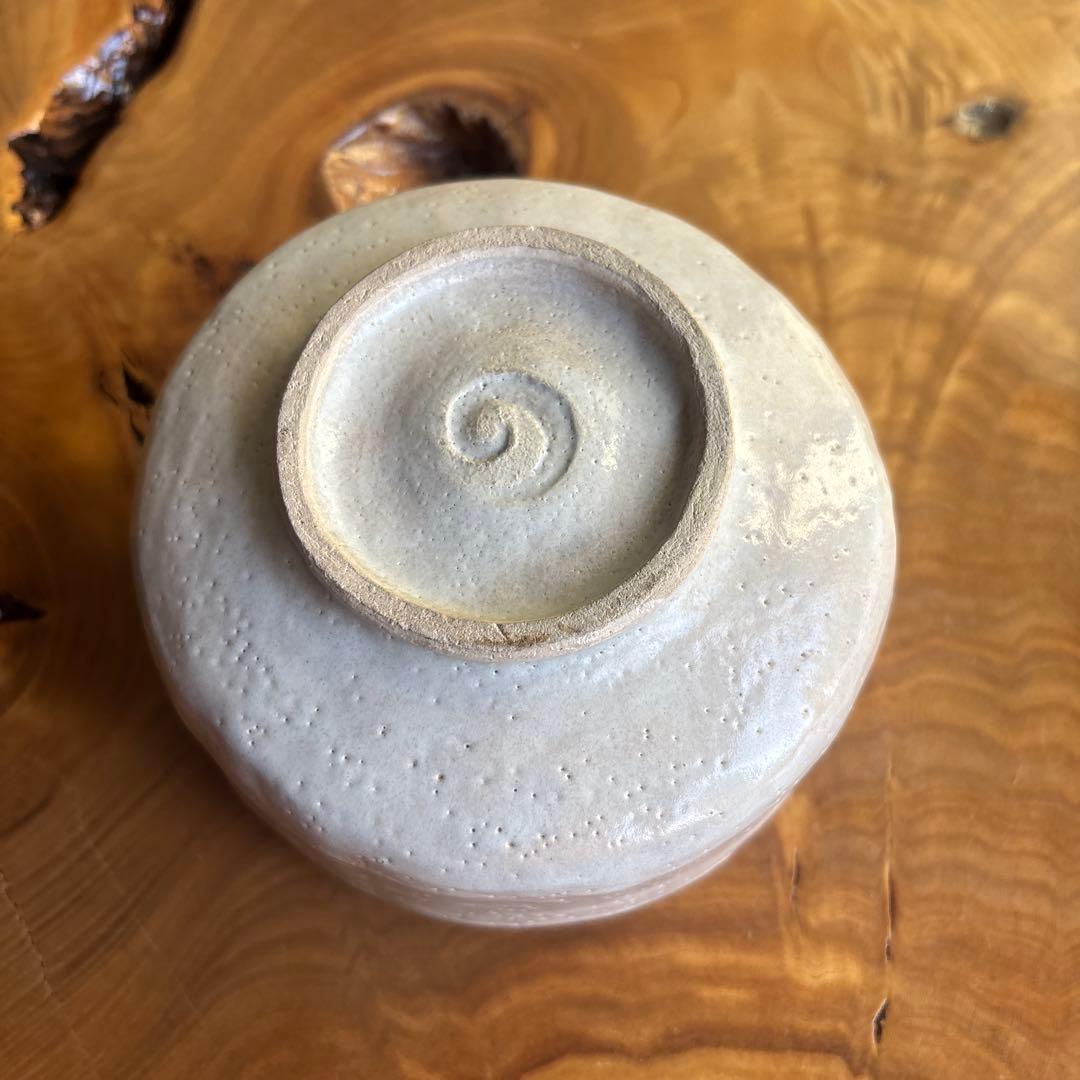
White Glazed Matcha Bowl — Wabi Chawan with Pinhole Glaze and Wheel-Thrown Texture, Japanese Tea Ceremony Bowl
White Glazed Matcha Bowl — Wabi Chawan with Pinhole Glaze and Wheel-Thrown Texture, Japanese Tea Ceremony Bowl
Regular price
Dhs. 474.00 AED
Regular price
Sale price
Dhs. 474.00 AED
Taxes included.
Shipping calculated at checkout.
Experience Authentic Japan Art with this Japanese Matcha Bowl. This Wabi Chawan serves as a White Glazed Tea Bowl and Handmade Pottery Gift, featuring Wheel Thrown Ceramic and Pinhole Glaze Texture—a must-have for any Art Collector seeking Wabi Sabi Home Decor, a Zen Meditation Gift, or an Antique Japanese Pottery piece for a Traditional Tea Ceremony Set.
🔹 [ BASIC DETAILS ]
• Artist: Unknown (unsigned / 無銘)
• Technique: Wheel-thrown stoneware with soft white glaze; visible pinhole surface texture (ピンホール釉) and gentle rokuro-me (wheel ridges)
• Era: Late Showa to early Heisei period (estimated 1980s–2000s)
• Origin: Japan (style consistent with Mino or Shino-adjacent folk kilns)
• Dimensions: Diameter approx. 11.5 cm, Height approx. 8 cm
• Box: No box included
• Condition: Excellent — no chips, no cracks, no restoration. Natural pinholes are part of the kiln character, not damage.
🔹 [ CULTURAL & ARTISTIC INSIGHT ]
The soft white glaze that envelops this chawan is not the pristine white of porcelain — it is the living white of ash, of winter light, of morning mist. Tiny pinholes scatter across the surface like stars seen through thin cloud, each one a breath the clay took during firing. The rim undulates gently, refusing the perfection of machine symmetry, insisting instead on the hand that made it.
In the aesthetics of Japanese tea ceremony (chado), the white glaze tradition traces through Shino ware of the Momoyama period — a tradition born precisely to serve the spirit of wabi-cha as understood by Sen no Rikyu. A bowl that is quiet, undecorated, and entirely present. This bowl carries that lineage without pretension: a humble form with a dignified weight in the hands.
The wheel-thrown ridges (轆轤目, rokuro-me) that travel the body horizontally speak of making — of motion, of the potter's attention in a single unbroken gesture. Where the glaze thinned, a faint blush of lavender-pink emerges, the iron in the clay body breathing through. Where it pooled, there is gloss and depth.
POETIC LINE: "The white that holds all colors — still, like snow before it remembers how to fall."
🔹 [ DEEP-DIVE COMMENTARY ]
White-glazed chawan of this character occupy a distinct and historically significant position in Japanese ceramics. The soft, matte-to-satin white glaze is achieved through wood-ash or feldspar-based glazes fired to around 1250–1300°C in an oxidation or light reduction atmosphere. The result is a glaze that neither shouts nor retreats — it simply exists, absorbing light rather than reflecting it.
The pinhole texture (ピンホール) visible across the entire surface is not a defect but a coveted kiln phenomenon. During the firing process, gasses trapped within the glaze layer escape just as the glaze begins to vitrify, leaving tiny craters that catch light and shadow. In Shino ware tradition, this quality is called "neshiko" or "tobikanna-like" surface and is actively sought by discriminating collectors.
The slightly irregular rim (口縁) of this bowl demonstrates controlled hand-forming at the completion of throwing — the potter allowed the clay's natural memory to assert itself rather than forcing a mechanically even edge. This is the mark of a maker who understood that the bowl's character lives in its imperfections.
For the tea practitioner, a bowl of this size and proportion — deep enough to build a proper chasen (whisk) motion, wide enough at the mouth to allow the tea to breathe — is well-suited to usucha (thin tea) service. The rounded, compact body (筒形傾向) sits stably in the hands and keeps heat effectively.
For the collector without a tea practice, this bowl functions as a contemplative object: a small sculpture that holds winter light and rewards close looking. Its anonymous authorship, far from diminishing its value, positions it within the wabi aesthetic tradition that prizes the work over the name — the thing itself, not its signature.
🔹 [ 日本語解説 ]
【詳細スペック】
• 作家:無銘(不明)
• 技法:轆轤成形。柔らかな白釉、ピンホールの散る肌合い、轆轤目が美しく走る
• 年代:昭和後期〜平成初期(推定)
• 産地・様式:日本。美濃または志野系の民窯様式と推察
• 寸法:直径 約11.5cm、高さ 約8cm
• 共箱:なし
• 状態:良好。ヒビ・カケ・補修なし。ピンホールは窯変の景色であり傷ではない
【文化・美術的解説】
この茶碗を包む白釉は、磁器のような均質な白ではない。灰の白、冬の光の白、朝霧の白だ。表面に散らばる無数のピンホールは、焼成中に土が吐き出した息の痕跡であり、光の角度によって表情を変える。口縁は有機的に揺れ、機械的な真円を拒み、作り手の手の記憶を残している。
日本茶道における白釉の伝統は、桃山期の志野焼に端を発する。千利休が体現した侘び茶の精神——装飾を退け、沈黙の中に美を見出す——を担うために生まれた様式だ。この茶碗はその系譜を静かに引いている。無名ではあるが、品格がある。
轆轤目(ろくろめ)は胴部を水平に走り、一気通貫の制作の運動を伝える。釉薬が薄くなった部分には、胎土の鉄分が滲み出し、淡いラベンダー色が浮かぶ。釉がたまった部分は深い艶をたたえる。
詩的な一文:「すべての色を包む白——降り方を思い出す前の雪のように、静かに」
【ディープダイブ解説】
白釉の茶碗が持つ歴史的位置は、日本陶磁の中でも特別だ。長石や灰を主体とした釉薬は、1250〜1300°Cの酸化または弱還元焼成により、吸光性の高い、静かな白をもたらす。これは光を反射する白ではなく、光を飲み込む白だ。
ピンホールは欠陥ではなく、焼成中に釉薬が溶け始める瞬間、内部のガスが脱出した痕跡だ。志野焼の世界ではこの景色は珍重され、見識ある蒐集家が積極的に求める。この茶碗のピンホールは、全体にまんべんなく分布し、光によって肌理のような陰影を生む。
口縁の揺れは、轆轤成形の仕上げ段階で土の自然な記憶を残した証拠だ。強制的に均す代わりに、それを許容した作り手の意図がある。
使い手の視点から見れば、この茶碗のサイズ——直径11.5cm、高さ8cmという均整——は薄茶に最適だ。茶筅を振るのに十分な深さを持ち、口が開いて茶が呼吸する。丸みを帯びた筒形の胴は手の中で安定し、保温性も高い。
茶道の実践者でない蒐集家にとっては、この茶碗は観照の対象となる小さな彫刻だ。無銘であることは、作家名より作品そのものを尊ぶ侘び美学の中に、この碗を深く位置付ける。
🔹 [ SHIPPING & PACKAGING ]
• Dispatch: Within 1-6 business days
• Carrier: Japan Post EMS / UPS (with tracking)
• Packaging: Carefully wrapped with protective materials
🔹 [ BASIC DETAILS ]
• Artist: Unknown (unsigned / 無銘)
• Technique: Wheel-thrown stoneware with soft white glaze; visible pinhole surface texture (ピンホール釉) and gentle rokuro-me (wheel ridges)
• Era: Late Showa to early Heisei period (estimated 1980s–2000s)
• Origin: Japan (style consistent with Mino or Shino-adjacent folk kilns)
• Dimensions: Diameter approx. 11.5 cm, Height approx. 8 cm
• Box: No box included
• Condition: Excellent — no chips, no cracks, no restoration. Natural pinholes are part of the kiln character, not damage.
🔹 [ CULTURAL & ARTISTIC INSIGHT ]
The soft white glaze that envelops this chawan is not the pristine white of porcelain — it is the living white of ash, of winter light, of morning mist. Tiny pinholes scatter across the surface like stars seen through thin cloud, each one a breath the clay took during firing. The rim undulates gently, refusing the perfection of machine symmetry, insisting instead on the hand that made it.
In the aesthetics of Japanese tea ceremony (chado), the white glaze tradition traces through Shino ware of the Momoyama period — a tradition born precisely to serve the spirit of wabi-cha as understood by Sen no Rikyu. A bowl that is quiet, undecorated, and entirely present. This bowl carries that lineage without pretension: a humble form with a dignified weight in the hands.
The wheel-thrown ridges (轆轤目, rokuro-me) that travel the body horizontally speak of making — of motion, of the potter's attention in a single unbroken gesture. Where the glaze thinned, a faint blush of lavender-pink emerges, the iron in the clay body breathing through. Where it pooled, there is gloss and depth.
POETIC LINE: "The white that holds all colors — still, like snow before it remembers how to fall."
🔹 [ DEEP-DIVE COMMENTARY ]
White-glazed chawan of this character occupy a distinct and historically significant position in Japanese ceramics. The soft, matte-to-satin white glaze is achieved through wood-ash or feldspar-based glazes fired to around 1250–1300°C in an oxidation or light reduction atmosphere. The result is a glaze that neither shouts nor retreats — it simply exists, absorbing light rather than reflecting it.
The pinhole texture (ピンホール) visible across the entire surface is not a defect but a coveted kiln phenomenon. During the firing process, gasses trapped within the glaze layer escape just as the glaze begins to vitrify, leaving tiny craters that catch light and shadow. In Shino ware tradition, this quality is called "neshiko" or "tobikanna-like" surface and is actively sought by discriminating collectors.
The slightly irregular rim (口縁) of this bowl demonstrates controlled hand-forming at the completion of throwing — the potter allowed the clay's natural memory to assert itself rather than forcing a mechanically even edge. This is the mark of a maker who understood that the bowl's character lives in its imperfections.
For the tea practitioner, a bowl of this size and proportion — deep enough to build a proper chasen (whisk) motion, wide enough at the mouth to allow the tea to breathe — is well-suited to usucha (thin tea) service. The rounded, compact body (筒形傾向) sits stably in the hands and keeps heat effectively.
For the collector without a tea practice, this bowl functions as a contemplative object: a small sculpture that holds winter light and rewards close looking. Its anonymous authorship, far from diminishing its value, positions it within the wabi aesthetic tradition that prizes the work over the name — the thing itself, not its signature.
🔹 [ 日本語解説 ]
【詳細スペック】
• 作家:無銘(不明)
• 技法:轆轤成形。柔らかな白釉、ピンホールの散る肌合い、轆轤目が美しく走る
• 年代:昭和後期〜平成初期(推定)
• 産地・様式:日本。美濃または志野系の民窯様式と推察
• 寸法:直径 約11.5cm、高さ 約8cm
• 共箱:なし
• 状態:良好。ヒビ・カケ・補修なし。ピンホールは窯変の景色であり傷ではない
【文化・美術的解説】
この茶碗を包む白釉は、磁器のような均質な白ではない。灰の白、冬の光の白、朝霧の白だ。表面に散らばる無数のピンホールは、焼成中に土が吐き出した息の痕跡であり、光の角度によって表情を変える。口縁は有機的に揺れ、機械的な真円を拒み、作り手の手の記憶を残している。
日本茶道における白釉の伝統は、桃山期の志野焼に端を発する。千利休が体現した侘び茶の精神——装飾を退け、沈黙の中に美を見出す——を担うために生まれた様式だ。この茶碗はその系譜を静かに引いている。無名ではあるが、品格がある。
轆轤目(ろくろめ)は胴部を水平に走り、一気通貫の制作の運動を伝える。釉薬が薄くなった部分には、胎土の鉄分が滲み出し、淡いラベンダー色が浮かぶ。釉がたまった部分は深い艶をたたえる。
詩的な一文:「すべての色を包む白——降り方を思い出す前の雪のように、静かに」
【ディープダイブ解説】
白釉の茶碗が持つ歴史的位置は、日本陶磁の中でも特別だ。長石や灰を主体とした釉薬は、1250〜1300°Cの酸化または弱還元焼成により、吸光性の高い、静かな白をもたらす。これは光を反射する白ではなく、光を飲み込む白だ。
ピンホールは欠陥ではなく、焼成中に釉薬が溶け始める瞬間、内部のガスが脱出した痕跡だ。志野焼の世界ではこの景色は珍重され、見識ある蒐集家が積極的に求める。この茶碗のピンホールは、全体にまんべんなく分布し、光によって肌理のような陰影を生む。
口縁の揺れは、轆轤成形の仕上げ段階で土の自然な記憶を残した証拠だ。強制的に均す代わりに、それを許容した作り手の意図がある。
使い手の視点から見れば、この茶碗のサイズ——直径11.5cm、高さ8cmという均整——は薄茶に最適だ。茶筅を振るのに十分な深さを持ち、口が開いて茶が呼吸する。丸みを帯びた筒形の胴は手の中で安定し、保温性も高い。
茶道の実践者でない蒐集家にとっては、この茶碗は観照の対象となる小さな彫刻だ。無銘であることは、作家名より作品そのものを尊ぶ侘び美学の中に、この碗を深く位置付ける。
🔹 [ SHIPPING & PACKAGING ]
• Dispatch: Within 1-6 business days
• Carrier: Japan Post EMS / UPS (with tracking)
• Packaging: Carefully wrapped with protective materials
Quantity
Couldn't load pickup availability
Low stock: 1 left
View full details