1
/
of
8
Waraku Raku Chawan | Red Raku Tea Bowl | Bold Keshiki Kannyu | Tomobako | Japanese Matcha Bowl
Waraku Raku Chawan | Red Raku Tea Bowl | Bold Keshiki Kannyu | Tomobako | Japanese Matcha Bowl
Regular price
Dhs. 637.00 AED
Regular price
Sale price
Dhs. 637.00 AED
Taxes included.
Shipping calculated at checkout.
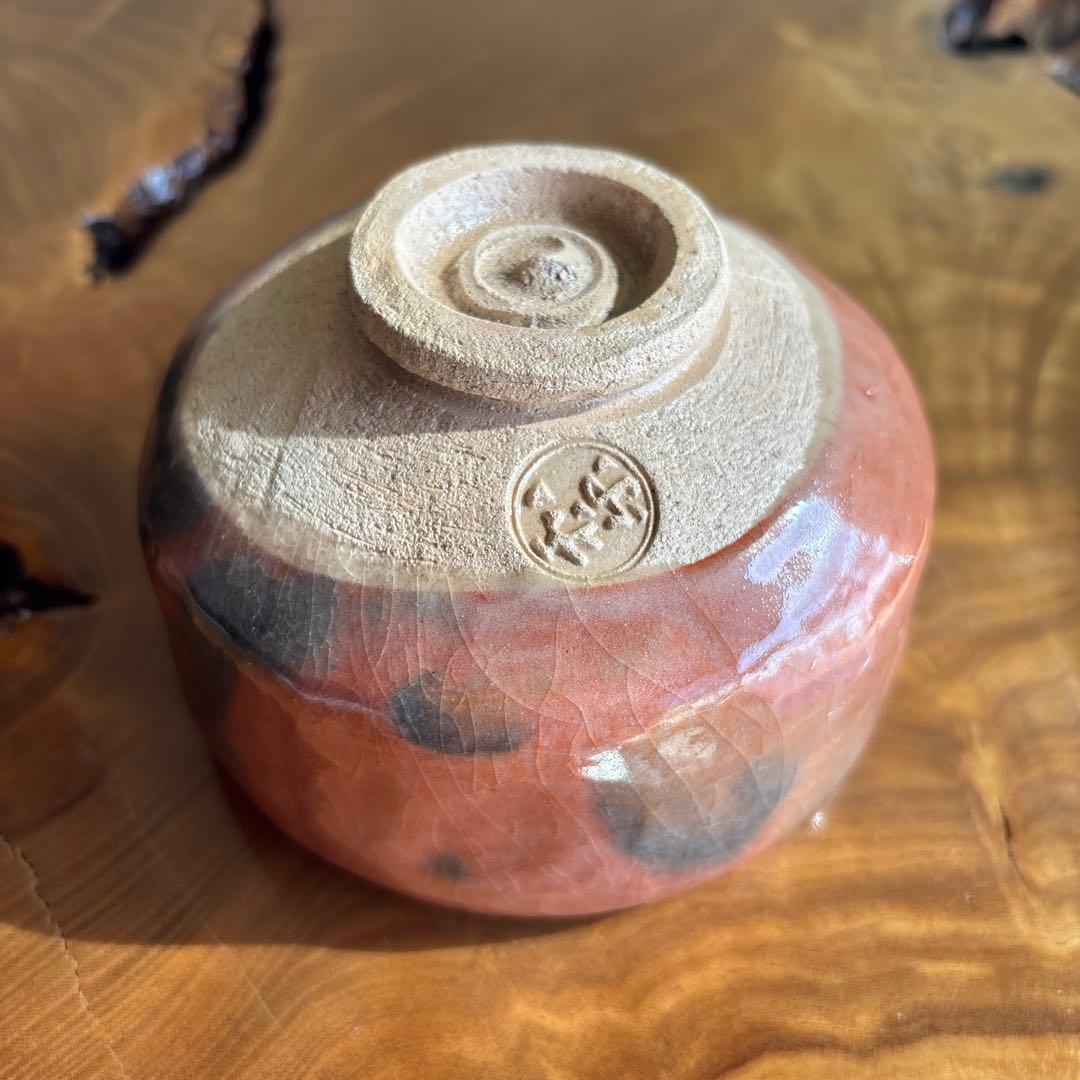
Red raku tea bowl by Waraku — broad hand-sculpted form with bold red-black keshiki and deep crackle (kannyu) throughout. Signed tomobako. A chawan of considerable physical presence and dynamic authorship.
🔹 [ BASIC DETAILS ]
• Artist: Waraku (和楽 / Kawasaki Waraku)
• Type: Aka Raku Chawan (Red Raku Tea Bowl)
• Dimensions: Approx. 10.7 cm diameter × 7.5 cm height
• Condition: No cracks, no chips
• Box: Original signed tomobako (共箱)
• SKU: 260228_a_2181
🔹 [ CULTURAL INSIGHT ]
The keshiki — landscape — of a raku chawan is the record of its firing. Where the red clay met flame, cooled, contracted, and cracked, it left a document. This bowl's keshiki is not subtle. Bold passages of deep crimson give way to pooled black at the shoulder and base. The kannyu — crazing, the network of fine cracks in the glaze surface — maps the thermal history across the entire form.
Waraku worked with an understanding that raku ware allows declaration. The hand-sculpted walls carry movement; the rim is not resolved into symmetry but held in productive tension. The broader, lower form sits differently in the hand than a tall cylindrical chawan — it opens, offers the interior, invites the gaze downward into the bowl where matcha gathers.
🔹 [ DEEP-DIVE ]
Kannyu in raku ceramics carries a different meaning than in high-fire glazed wares. In porcelain, crazing is often considered a flaw — a mismatch between clay body and glaze expansion. In raku, the low-temperature firing and the hand-formed body mean that kannyu is expected, read as character. The network of lines is not a failure of material control. It is what the material chose to do.
This bowl's kannyu is particularly pronounced — the lines run deep and wide, creating a texture that is visible from across a room and palpable in the hand. The sensation of running a finger along the glaze surface locates the viewer in the material's history. That is emotional silence made tangible: no words are necessary to understand that fire moved through this clay.
The keshiki — the bold red-to-black transition — is the bowl's dominant voice. It speaks with the directness that Waraku brought to the tradition. The form does not recede. It holds its ground. For practitioners of tea, a bowl with this quality of presence changes the tempo of the keiko. The ritual slows to meet it.
🔹 [ 日本語解説 ]
川崎和楽(和楽)作の赤楽茶碗です。赤と黒の大胆な景色と、全体に走る重厚な貫入が特徴的な一碗です。手づくねによるダイナミックな造形が、持ったときの重みと存在感に直結しています。赤楽の伝統に則りながら、力強い個性を主張する作品です。共箱付きで、真作確認済みです。
🔹 [ SHIPPING & PACKAGING ]
• Dispatch: Within 1-6 business days
• Carrier: Japan Post EMS / UPS (with tracking)
• Packaging: Carefully wrapped with protective materials
🔹 [ BASIC DETAILS ]
• Artist: Waraku (和楽 / Kawasaki Waraku)
• Type: Aka Raku Chawan (Red Raku Tea Bowl)
• Dimensions: Approx. 10.7 cm diameter × 7.5 cm height
• Condition: No cracks, no chips
• Box: Original signed tomobako (共箱)
• SKU: 260228_a_2181
🔹 [ CULTURAL INSIGHT ]
The keshiki — landscape — of a raku chawan is the record of its firing. Where the red clay met flame, cooled, contracted, and cracked, it left a document. This bowl's keshiki is not subtle. Bold passages of deep crimson give way to pooled black at the shoulder and base. The kannyu — crazing, the network of fine cracks in the glaze surface — maps the thermal history across the entire form.
Waraku worked with an understanding that raku ware allows declaration. The hand-sculpted walls carry movement; the rim is not resolved into symmetry but held in productive tension. The broader, lower form sits differently in the hand than a tall cylindrical chawan — it opens, offers the interior, invites the gaze downward into the bowl where matcha gathers.
🔹 [ DEEP-DIVE ]
Kannyu in raku ceramics carries a different meaning than in high-fire glazed wares. In porcelain, crazing is often considered a flaw — a mismatch between clay body and glaze expansion. In raku, the low-temperature firing and the hand-formed body mean that kannyu is expected, read as character. The network of lines is not a failure of material control. It is what the material chose to do.
This bowl's kannyu is particularly pronounced — the lines run deep and wide, creating a texture that is visible from across a room and palpable in the hand. The sensation of running a finger along the glaze surface locates the viewer in the material's history. That is emotional silence made tangible: no words are necessary to understand that fire moved through this clay.
The keshiki — the bold red-to-black transition — is the bowl's dominant voice. It speaks with the directness that Waraku brought to the tradition. The form does not recede. It holds its ground. For practitioners of tea, a bowl with this quality of presence changes the tempo of the keiko. The ritual slows to meet it.
🔹 [ 日本語解説 ]
川崎和楽(和楽)作の赤楽茶碗です。赤と黒の大胆な景色と、全体に走る重厚な貫入が特徴的な一碗です。手づくねによるダイナミックな造形が、持ったときの重みと存在感に直結しています。赤楽の伝統に則りながら、力強い個性を主張する作品です。共箱付きで、真作確認済みです。
🔹 [ SHIPPING & PACKAGING ]
• Dispatch: Within 1-6 business days
• Carrier: Japan Post EMS / UPS (with tracking)
• Packaging: Carefully wrapped with protective materials
Quantity
Couldn't load pickup availability
Low stock: 1 left
View full details