1
/
of
10
Wajima Lacquer Natsume Tea Caddy with Hydrangea Maki-e by Nakade Shohou — White Ground, Tomobako
Wajima Lacquer Natsume Tea Caddy with Hydrangea Maki-e by Nakade Shohou — White Ground, Tomobako
Regular price
Dhs. 1,572.00 AED
Regular price
Sale price
Dhs. 1,572.00 AED
Taxes included.
Shipping calculated at checkout.
Experience Authentic Japan Art with this Wajima lacquer natsume tea caddy. This Japanese maki-e tea caddy serves as a hydrangea maki-e natsume and signed lacquer tea ceremony piece, featuring white lacquer ground natsume and Wajima maki-e artist work—a must-have for any Japanese tea ceremony collector.
🔹 [ BASIC DETAILS ]
• Artist: Nakade Shohou (中出松峰) — Wajima lacquer / maki-e specialist
• Technique: Togidashi maki-e (research polished maki-e) in ultramarine, gold, and silver on a white lacquer (shiro-urushi) ground; green foliage on the body
• Era: 2010 – 2019
• Origin: Wajima, Ishikawa Prefecture, Japan
• Dimensions: Diameter approx. 6.7 cm / Height approx. 7 cm
• Box: Tomobako (original signed wooden box) with artist seal and inscription
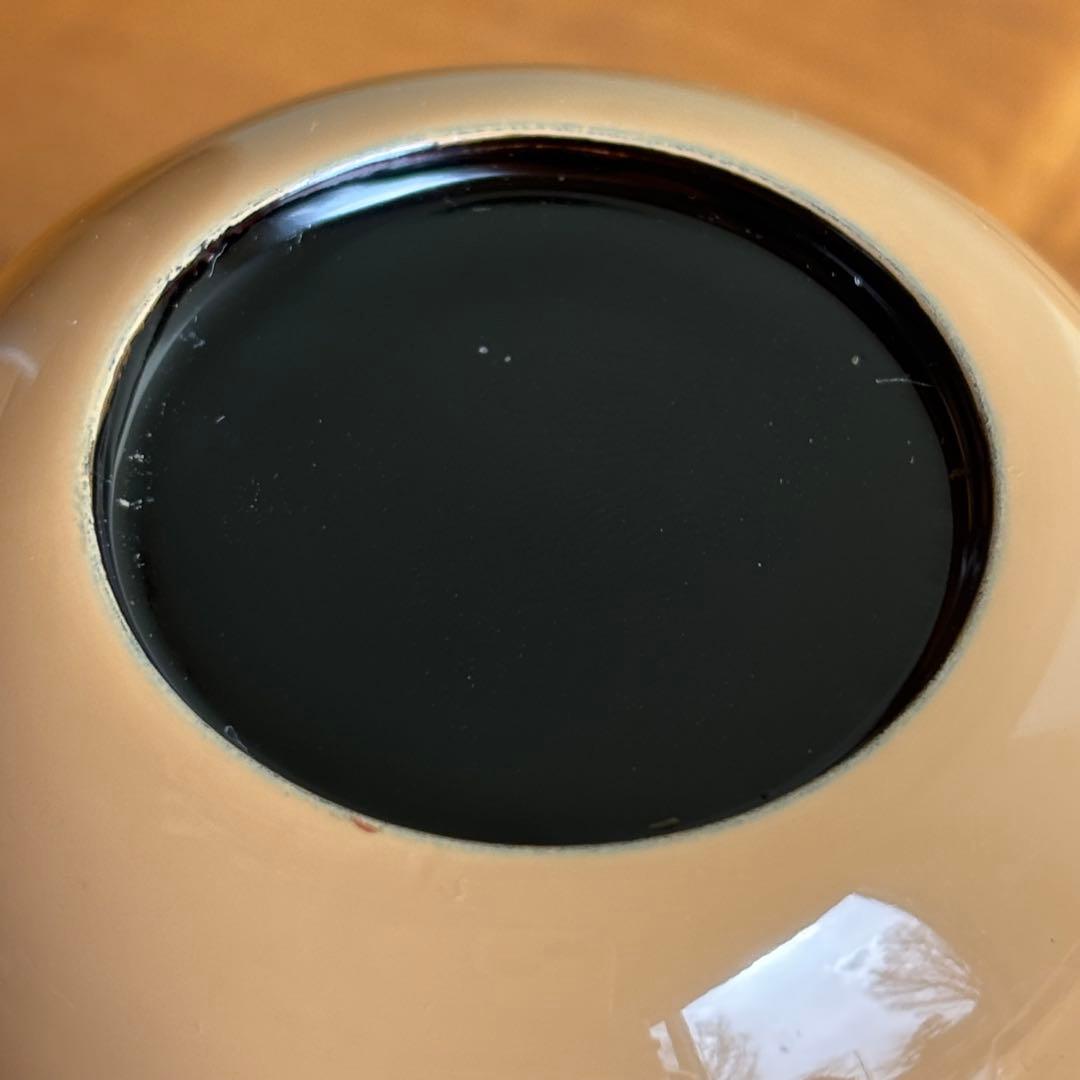
• Condition: Near-unused. No chips, cracks, or scratches. Lacquer surface retains full original clarity.
🔹 [ CULTURAL & ARTISTIC INSIGHT ]
The natsume — named for the jujube fruit its form echoes — holds a particular intimacy within the tea ceremony. It rests in the host's palm, is lifted and turned before guests, and carries the full weight of the gathering in its small interior. This piece by Nakade Shohou brings that intimate form into dialogue with the hydrangea (ajisai): a flower whose blue shifts with the acidity of soil, whose clustered petals suggest both abundance and transience.
On the lid, ultramarine pigment blooms alongside gold and silver in togidashi maki-e — a technique in which lacquer is built up in layers, then carefully polished back until the buried design is revealed through the surface. The effect is not decoration applied atop the object; it is luminosity drawn from within. Against the white lacquer ground, the blues read with a clarity that belongs more to watercolor than to traditional lacquer work. Green lacquer leaves trace the body of the caddy in a quieter register, providing depth without competition.
The shiro-urushi (white lacquer) base is itself an uncommon choice — white in traditional Japanese lacquer requires careful preparation and carries associations of purity, ceremony, and formal restraint. Together, the palette reads: stillness interrupted, briefly, by color.
*The white ground holds the light. The flower accepts it.*
🔹 [ DEEP-DIVE COMMENTARY ]
Nakade Shohou works within the tradition of Wajima-nuri, a lacquerware school from the Noto Peninsula whose reputation rests on meticulous layered construction — typically fifteen to twenty coats of urushi applied, dried, and sanded before decoration begins. This foundation gives Wajima lacquer its characteristic durability and depth, and it is into this tradition that Shohou's maki-e work is situated.
Togidashi maki-e, the technique employed on the lid, is among the most demanding in the maki-e vocabulary. Unlike hira maki-e (flat sprinkled decoration) or taka maki-e (raised relief), togidashi requires the artist to bury the design entirely beneath additional lacquer coats, then gradually expose it through progressive polishing with charcoal and deer-horn powder. The result has no texture to the touch — the image lives at the same plane as the surface — yet the depth of the buried layers gives it a translucency that seems to glow from below.
The choice to depict ajisai (hydrangea) reflects a sensibility attuned to the Japanese aesthetic of mujō — impermanence. The hydrangea blooms in early summer, changes color as the season deepens, and disperses. As a motif in lacquerwork it appears most frequently in objects connected to June and July use in tea gatherings, making this natsume seasonally specific and contextually legible to practitioners of chado.
For the collector, this piece represents the convergence of several values: the prestige of Wajima provenance, the technical difficulty of togidashi maki-e, the understated elegance of white lacquer ground, and the cultural resonance of a seasonal motif handled with restraint. The tomobako with artist seal and inscription confirms attribution and supports long-term archival integrity.
---
【日本語解説】
🔹 [ 詳細 ]
• 作家:中出松峰(輪島塗蒔絵師)
• 技法:白漆地に群青・金・銀の研出蒔絵(蓋面)、胴に緑漆の葉
• 年代:2010年代
• 産地:石川県輪島市
• 寸法:直径約6.7cm/高さ約7cm
• 箱:共箱(作家自筆落款・印)
• 状態:未使用同様。傷・割れ・剥離なし。漆面の艶は完全に保たれる。
🔹 [ 文化的・芸術的背景 ]
棗という形は、棗の実に由来すると言われる。茶席において、棗は亭主の掌に収まり、客の前で持ち上げられ、回され、その内に一服分の薄茶を湛えて場の時間を担う。中出松峰はこの小さな器に、移ろいの花・紫陽花を据えた。
蓋面の研出蒔絵は、漆を幾重にも重ね、埋めた意匠を炭と角粉で磨き出す技法である。表面に凹凸はない。触れても分からない。しかし深部に眠る層が、光に対して透明な応答を返す。白漆の地は稀な選択であり、純粋さと礼的な抑制を示す。群青・金・銀の花弁は、その静けさの上に置かれた言葉のように映える。胴の緑の葉はそれを支え、主張しない。
*白地が光を受け取る。花はそれを認める。*
🔹 [ ディープダイブ解説 ]
中出松峰の仕事は輪島塗の骨格の上に成立している。輪島塗は能登半島の漆器産地として知られ、通常十五から二十層に及ぶ下地を施すことで、その堅牢さと深みが生まれる。研出蒔絵はその土台なしには成立しない技法である。
平蒔絵(平面的に蒔く)や高蒔絵(盛り上げる)とは異なり、研出は意匠を漆の下に完全に埋没させ、乾燥後に段階的に磨き出す。完成した表面に起伏はなく、図様は漆の内部に存在する。この透明感と奥行きが、研出蒔絵の本質的な価値である。
紫陽花という意匠は、無常の感覚と深く結びついている。初夏に咲き、土壌の酸度によって色を変え、やがて散る。茶道では六月・七月に用いる茶道具の意匠として意味を持ち、季節の特定性がこの棗の文脈的な読解を補完する。
共箱・落款・印の完備は、作品の帰属を保証し、長期的な収蔵における証明力を持つ。
🔹 [ SHIPPING & PACKAGING ]
• Dispatch: Within 1-6 business days
• Carrier: Japan Post EMS / UPS (with tracking)
• Packaging: Carefully wrapped with protective materials
🔹 [ BASIC DETAILS ]
• Artist: Nakade Shohou (中出松峰) — Wajima lacquer / maki-e specialist
• Technique: Togidashi maki-e (research polished maki-e) in ultramarine, gold, and silver on a white lacquer (shiro-urushi) ground; green foliage on the body
• Era: 2010 – 2019
• Origin: Wajima, Ishikawa Prefecture, Japan
• Dimensions: Diameter approx. 6.7 cm / Height approx. 7 cm
• Box: Tomobako (original signed wooden box) with artist seal and inscription
• Condition: Near-unused. No chips, cracks, or scratches. Lacquer surface retains full original clarity.
🔹 [ CULTURAL & ARTISTIC INSIGHT ]
The natsume — named for the jujube fruit its form echoes — holds a particular intimacy within the tea ceremony. It rests in the host's palm, is lifted and turned before guests, and carries the full weight of the gathering in its small interior. This piece by Nakade Shohou brings that intimate form into dialogue with the hydrangea (ajisai): a flower whose blue shifts with the acidity of soil, whose clustered petals suggest both abundance and transience.
On the lid, ultramarine pigment blooms alongside gold and silver in togidashi maki-e — a technique in which lacquer is built up in layers, then carefully polished back until the buried design is revealed through the surface. The effect is not decoration applied atop the object; it is luminosity drawn from within. Against the white lacquer ground, the blues read with a clarity that belongs more to watercolor than to traditional lacquer work. Green lacquer leaves trace the body of the caddy in a quieter register, providing depth without competition.
The shiro-urushi (white lacquer) base is itself an uncommon choice — white in traditional Japanese lacquer requires careful preparation and carries associations of purity, ceremony, and formal restraint. Together, the palette reads: stillness interrupted, briefly, by color.
*The white ground holds the light. The flower accepts it.*
🔹 [ DEEP-DIVE COMMENTARY ]
Nakade Shohou works within the tradition of Wajima-nuri, a lacquerware school from the Noto Peninsula whose reputation rests on meticulous layered construction — typically fifteen to twenty coats of urushi applied, dried, and sanded before decoration begins. This foundation gives Wajima lacquer its characteristic durability and depth, and it is into this tradition that Shohou's maki-e work is situated.
Togidashi maki-e, the technique employed on the lid, is among the most demanding in the maki-e vocabulary. Unlike hira maki-e (flat sprinkled decoration) or taka maki-e (raised relief), togidashi requires the artist to bury the design entirely beneath additional lacquer coats, then gradually expose it through progressive polishing with charcoal and deer-horn powder. The result has no texture to the touch — the image lives at the same plane as the surface — yet the depth of the buried layers gives it a translucency that seems to glow from below.
The choice to depict ajisai (hydrangea) reflects a sensibility attuned to the Japanese aesthetic of mujō — impermanence. The hydrangea blooms in early summer, changes color as the season deepens, and disperses. As a motif in lacquerwork it appears most frequently in objects connected to June and July use in tea gatherings, making this natsume seasonally specific and contextually legible to practitioners of chado.
For the collector, this piece represents the convergence of several values: the prestige of Wajima provenance, the technical difficulty of togidashi maki-e, the understated elegance of white lacquer ground, and the cultural resonance of a seasonal motif handled with restraint. The tomobako with artist seal and inscription confirms attribution and supports long-term archival integrity.
---
【日本語解説】
🔹 [ 詳細 ]
• 作家:中出松峰(輪島塗蒔絵師)
• 技法:白漆地に群青・金・銀の研出蒔絵(蓋面)、胴に緑漆の葉
• 年代:2010年代
• 産地:石川県輪島市
• 寸法:直径約6.7cm/高さ約7cm
• 箱:共箱(作家自筆落款・印)
• 状態:未使用同様。傷・割れ・剥離なし。漆面の艶は完全に保たれる。
🔹 [ 文化的・芸術的背景 ]
棗という形は、棗の実に由来すると言われる。茶席において、棗は亭主の掌に収まり、客の前で持ち上げられ、回され、その内に一服分の薄茶を湛えて場の時間を担う。中出松峰はこの小さな器に、移ろいの花・紫陽花を据えた。
蓋面の研出蒔絵は、漆を幾重にも重ね、埋めた意匠を炭と角粉で磨き出す技法である。表面に凹凸はない。触れても分からない。しかし深部に眠る層が、光に対して透明な応答を返す。白漆の地は稀な選択であり、純粋さと礼的な抑制を示す。群青・金・銀の花弁は、その静けさの上に置かれた言葉のように映える。胴の緑の葉はそれを支え、主張しない。
*白地が光を受け取る。花はそれを認める。*
🔹 [ ディープダイブ解説 ]
中出松峰の仕事は輪島塗の骨格の上に成立している。輪島塗は能登半島の漆器産地として知られ、通常十五から二十層に及ぶ下地を施すことで、その堅牢さと深みが生まれる。研出蒔絵はその土台なしには成立しない技法である。
平蒔絵(平面的に蒔く)や高蒔絵(盛り上げる)とは異なり、研出は意匠を漆の下に完全に埋没させ、乾燥後に段階的に磨き出す。完成した表面に起伏はなく、図様は漆の内部に存在する。この透明感と奥行きが、研出蒔絵の本質的な価値である。
紫陽花という意匠は、無常の感覚と深く結びついている。初夏に咲き、土壌の酸度によって色を変え、やがて散る。茶道では六月・七月に用いる茶道具の意匠として意味を持ち、季節の特定性がこの棗の文脈的な読解を補完する。
共箱・落款・印の完備は、作品の帰属を保証し、長期的な収蔵における証明力を持つ。
🔹 [ SHIPPING & PACKAGING ]
• Dispatch: Within 1-6 business days
• Carrier: Japan Post EMS / UPS (with tracking)
• Packaging: Carefully wrapped with protective materials
Quantity
Couldn't load pickup availability
Low stock: 1 left
View full details