1
/
of
19
Wada Juhō Four Seasons Usucha Tea Caddy Set — Natsume Kinrinji Nakatsugi Maki-e
Regular price
Dhs. 1,821.00 AED
Regular price
Sale price
Dhs. 1,821.00 AED
Taxes included.
Shipping calculated at checkout.
A complete shiki-soroi (四季揃) by lacquer artist Wada Juhō — four distinct usucha containers, each embodying a single season through form, surface, and maki-e. Spring arrives in tame-nuri warmth beneath gold sakura and mountain clouds. Summer speaks through roiro black silence — undecorated, absolute. Autumn scatters gold aki-kusa, pampas grass, and a solitary quail across black lacquer. Winter glows in kin-tame-nuri gold, restrained and warm. Together they hold the full arc of the tea year. A signed four-season usuchaki ensemble with tomobako — Japanese tea ceremony art as seasonal practice made visible.
🔹 [ BASIC DETAILS ]
• Artist: Wada Juhō (和田寿峰)
• Type: Shiki Soroi — Four Seasons Usucha Tea Caddy Set (4 pieces)
• Forms: Natsume, Kinrinji, Nakatsugi variations
• Era: Heisei
• Origin: Japan
• Dimensions: Each approximately H 6.5–6.9 cm × Dia. 6.6 cm
• Materials: Urushi lacquer, gold maki-e, tame-nuri, roiro-nuri, kin-tame-nuri
— SPRING (春): Tame-nuri ground with gold and silver maki-e — sakura blossoms, kin-unkaku (gold cloud mountains), branch work in layered metallic tones
— SUMMER (夏): Pure roiro kuro-natsume — mirror-black urushi with no decoration. The aesthetic of mu — emptiness as presence
— AUTUMN (秋): Black ground kinrinji with gold maki-e — aki-kusa (autumn grasses), susuki (pampas grass), hagi (bush clover), and uzura (quail) in gold and warm tones
— WINTER (冬): Kin-tame-nuri ground — golden ochre warmth with minimal surface, light held in lacquer depth
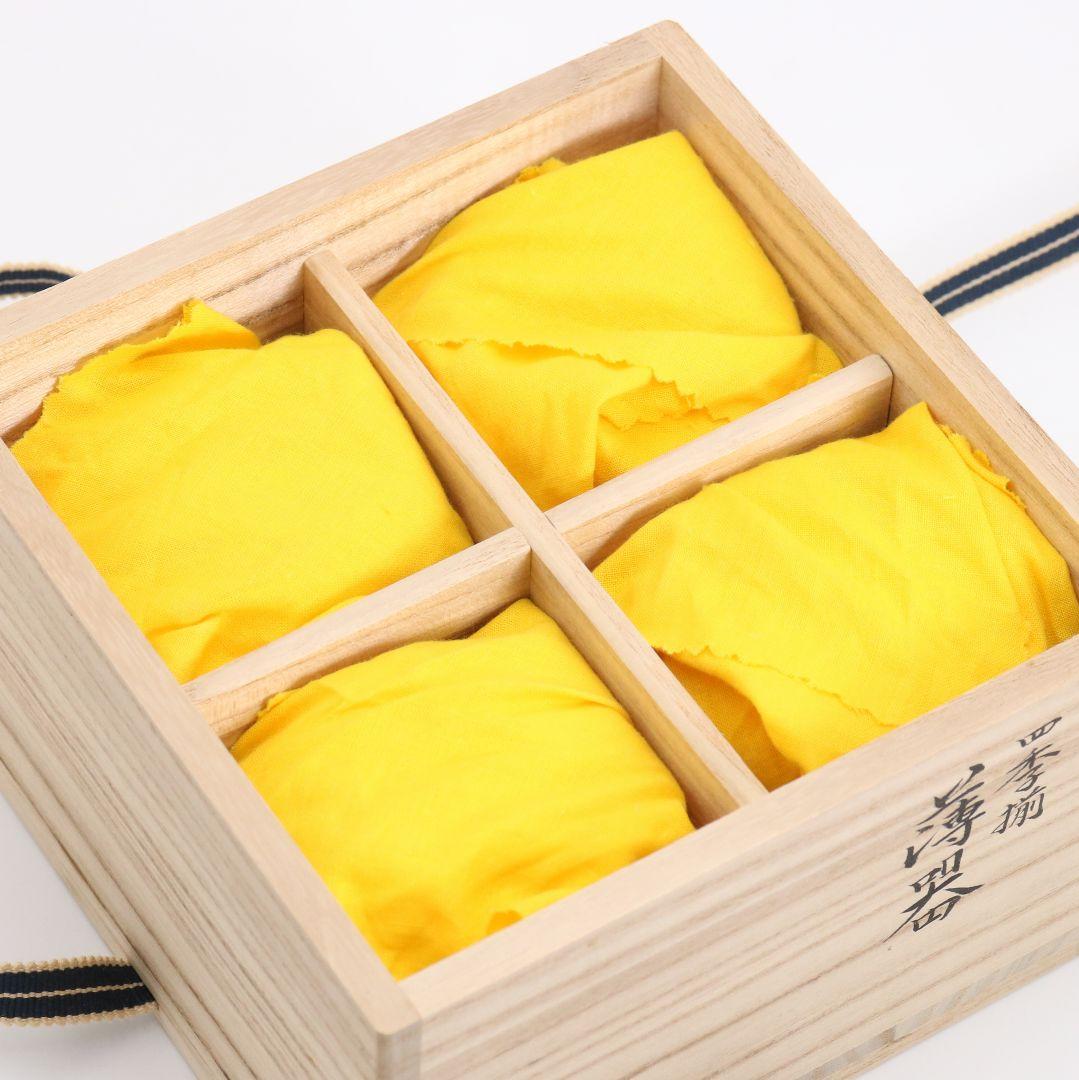
• Box: Tomobako inscribed 四季揃 薄茶器 寿峰 with red artist seal
• Condition: Excellent — all four pieces in pristine state
🔹 [ CULTURAL & ARTISTIC INSIGHT ]
In chanoyu, the seasons are not decoration. They are the architecture of practice itself. A tea gathering exists within a specific moment — the scroll, the flower, the sweet, the caddy all point to the same temporal truth. A shiki-soroi set like this one compresses the entire wheel of the year into the host's hands. Each gathering, the correct vessel is chosen. Each time the lid is lifted, the room enters that season completely.
The four-season set is among the most considered expressions a lacquer artist can undertake. It demands not only technical range — from densely layered maki-e to the discipline of undecorated roiro — but a philosophical understanding of what each season means within the tea room.
Four vessels, one practice — the year turns in the host's palm.
🔹 [ DEEP-DIVE COMMENTARY ]
Wada Juhō's approach reveals deep understanding of seasonal weight. Spring is given the most elaborate surface — sakura and gold clouds rendered with unusual spatial depth, the branches creating a landscape rather than a pattern. Summer is the boldest statement: nothing. The kuro-natsume in pure roiro is the hardest surface to achieve in lacquer — any flaw is exposed — and the hardest to choose for a gathering, because it asks the host to trust emptiness.
Autumn carries narrative — the quail among grasses is a classical motif from Heian poetry, linking tea practice to a thousand years of aesthetic inheritance. Winter's golden ground reverses expectation: where the cold season might suggest severity, Juhō offers warmth, as though the lacquer itself remembers sunlight.
What makes this set significant is the variation in form. These are not four identical natsume with different decoration. Each season receives its own shape — natsume, kinrinji, nakatsugi — meaning the vessel's silhouette changes with the calendar. The host's hand knows the season before the lid is opened.
🔹 [ 日本語解説 ]
漆芸作家・和田寿峰による四季揃の薄茶器セットです。春は溜塗地に金銀蒔絵の桜花と金雲閣、夏は無地の呂色黒棗——「無」の美、秋は黒地に金蒔絵の秋草・薄・萩・鶉、冬は金溜塗の温かな金色。
四器それぞれ異なる器形(棗・金輪寺・中次)を持ち、蓋を開ける前にその季節が手に伝わります。共箱付、「四季揃 薄茶器 寿峰」の箱書と朱印あり。状態良好、四器とも美品です。寸法:各約H6.5〜6.9cm × 径約6.6cm。
🔹 [ SHIPPING & PACKAGING ]
• Dispatch: Within 1-6 business days
• Carrier: Japan Post EMS / UPS (with tracking)
• Packaging: Carefully wrapped with protective materials
🔹 [ BASIC DETAILS ]
• Artist: Wada Juhō (和田寿峰)
• Type: Shiki Soroi — Four Seasons Usucha Tea Caddy Set (4 pieces)
• Forms: Natsume, Kinrinji, Nakatsugi variations
• Era: Heisei
• Origin: Japan
• Dimensions: Each approximately H 6.5–6.9 cm × Dia. 6.6 cm
• Materials: Urushi lacquer, gold maki-e, tame-nuri, roiro-nuri, kin-tame-nuri
— SPRING (春): Tame-nuri ground with gold and silver maki-e — sakura blossoms, kin-unkaku (gold cloud mountains), branch work in layered metallic tones
— SUMMER (夏): Pure roiro kuro-natsume — mirror-black urushi with no decoration. The aesthetic of mu — emptiness as presence
— AUTUMN (秋): Black ground kinrinji with gold maki-e — aki-kusa (autumn grasses), susuki (pampas grass), hagi (bush clover), and uzura (quail) in gold and warm tones
— WINTER (冬): Kin-tame-nuri ground — golden ochre warmth with minimal surface, light held in lacquer depth
• Box: Tomobako inscribed 四季揃 薄茶器 寿峰 with red artist seal
• Condition: Excellent — all four pieces in pristine state
🔹 [ CULTURAL & ARTISTIC INSIGHT ]
In chanoyu, the seasons are not decoration. They are the architecture of practice itself. A tea gathering exists within a specific moment — the scroll, the flower, the sweet, the caddy all point to the same temporal truth. A shiki-soroi set like this one compresses the entire wheel of the year into the host's hands. Each gathering, the correct vessel is chosen. Each time the lid is lifted, the room enters that season completely.
The four-season set is among the most considered expressions a lacquer artist can undertake. It demands not only technical range — from densely layered maki-e to the discipline of undecorated roiro — but a philosophical understanding of what each season means within the tea room.
Four vessels, one practice — the year turns in the host's palm.
🔹 [ DEEP-DIVE COMMENTARY ]
Wada Juhō's approach reveals deep understanding of seasonal weight. Spring is given the most elaborate surface — sakura and gold clouds rendered with unusual spatial depth, the branches creating a landscape rather than a pattern. Summer is the boldest statement: nothing. The kuro-natsume in pure roiro is the hardest surface to achieve in lacquer — any flaw is exposed — and the hardest to choose for a gathering, because it asks the host to trust emptiness.
Autumn carries narrative — the quail among grasses is a classical motif from Heian poetry, linking tea practice to a thousand years of aesthetic inheritance. Winter's golden ground reverses expectation: where the cold season might suggest severity, Juhō offers warmth, as though the lacquer itself remembers sunlight.
What makes this set significant is the variation in form. These are not four identical natsume with different decoration. Each season receives its own shape — natsume, kinrinji, nakatsugi — meaning the vessel's silhouette changes with the calendar. The host's hand knows the season before the lid is opened.
🔹 [ 日本語解説 ]
漆芸作家・和田寿峰による四季揃の薄茶器セットです。春は溜塗地に金銀蒔絵の桜花と金雲閣、夏は無地の呂色黒棗——「無」の美、秋は黒地に金蒔絵の秋草・薄・萩・鶉、冬は金溜塗の温かな金色。
四器それぞれ異なる器形(棗・金輪寺・中次)を持ち、蓋を開ける前にその季節が手に伝わります。共箱付、「四季揃 薄茶器 寿峰」の箱書と朱印あり。状態良好、四器とも美品です。寸法:各約H6.5〜6.9cm × 径約6.6cm。
🔹 [ SHIPPING & PACKAGING ]
• Dispatch: Within 1-6 business days
• Carrier: Japan Post EMS / UPS (with tracking)
• Packaging: Carefully wrapped with protective materials
Quantity
Couldn't load pickup availability
Low stock: 1 left
View full details