1
/
of
10
Umbrella Kogo Incense Box by Takano Shōami — Sometsuke Blue White Kyoto Ware with Tomobako
Umbrella Kogo Incense Box by Takano Shōami — Sometsuke Blue White Kyoto Ware with Tomobako
Regular price
Dhs. 671.00 AED
Regular price
Sale price
Dhs. 671.00 AED
Taxes included.
Shipping calculated at checkout.
Experience Authentic Japanese Tea Ceremony Art with this Kyoto Ware Kogo Incense Box. This Sometsuke Blue White Incense Container serves as a Japanese Tea Ceremony Accessory and Collectible Ceramic Art, featuring Seigaiha Wave Pattern and Fukuju Auspicious Motif—a must-have for any Japanese Art Collector seeking Vintage Kyoto Pottery.
🔹 [ BASIC DETAILS ]
• Artist: Takano Shōami (高野昭阿弥), Kyoto ware ceramicist
• Technique: Sometsuke (染付) — cobalt underglaze blue-and-white porcelain, hand-painted in multiple panel registers
• Form: Kasa-kōgō (傘香合) — umbrella-silhouette incense container with faceted finial lid
• Origin: Kyoto (京焼), Japan
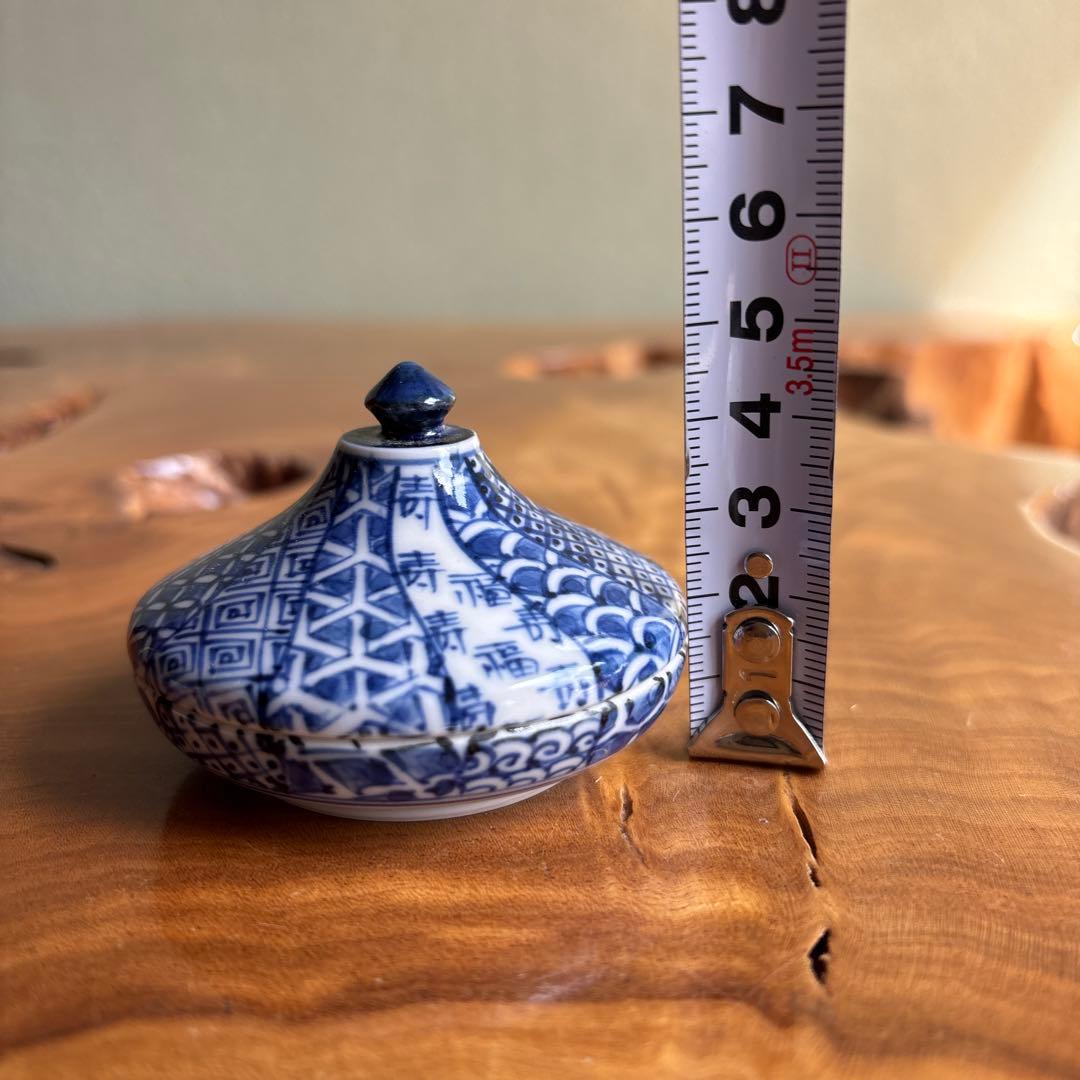
• Dimensions: Approx. height 4 cm (including finial), diameter approx. 7.5 cm
• Box: Tomobako (共箱) — original signed wooden box inscribed 福寿筆/傘香合 with two red artist seals
• Condition: Excellent — no chips, cracks, or repairs; glaze pristine
🔹 [ CULTURAL & ARTISTIC INSIGHT ]
The kōgō — a small lidded vessel that holds fragrant incense wood during the tea gathering — is among the most intimate of all tea utensils. In chanoyu, the act of lifting the kōgō lid to reveal the hidden fragrance is a moment of quiet theater: a pause, a breath, a recognition. Takano Shōami has rendered this moment in ceramic form that is itself a kind of performance.
The piece presents in an umbrella (kasa) silhouette — a form playfully referencing the opened canopy of a Japanese wagasa parasol, its wide, flat disc tapering to a small cobalt finial at the crown. This anthropomorphic silhouette gives the kōgō a character beyond mere function. It sits in the palm with the presence of something animate.
The surface is divided into at least six pictorial registers, each bearing a distinct auspicious motif rendered in deep indigo cobalt on white porcelain ground. Among the motifs visible: seigaiha (青海波 — interlocking wave scales, emblem of endless good fortune), fukuju-mon (福寿文 — written characters for prosperity and longevity cascading in rhythmic registers), and geometric hishi-tsunagi (diamond lattice) that recall Chinese brocade patterns. The cobalt tone is saturated and even — a mark of a practiced brushhand that neither falters nor overloads the pigment. The white porcelain beneath glows with the slight warmth of Kyoto clay.
The tomobako inscription — 福寿筆 傘香合 — reads as a declaration of intent: this box holds a kōgō for the ceremony of good fortune and long life. The two red seals beneath the brushwork confirm the artist's personal mark, grounding this as a documented, attributable work rather than an anonymous piece.
*In the small vessel, the weight of ceremony. In the pattern, the weight of hope. Both held without effort.*
🔹 [ DEEP-DIVE COMMENTARY ]
Kyoto ware (京焼, kyō-yaki) encompasses the broad tradition of ceramics produced in and around Kyoto, a tradition shaped as much by aesthetic patronage as by kiln technique. Unlike the regional kiln traditions of Bizen or Hagi — where a single clay body and firing approach defined the work — Kyoto ware is defined by its eclecticism and its orientation toward the tea ceremony world. Sometsuke, the specific discipline Takano Shōami employs here, is a technique of painting designs in cobalt oxide directly onto the unfired clay body, then applying a clear glaze and firing to high temperature. The result seals the cobalt permanently beneath a glassy surface, producing the crisp, watercolor-like quality that has made blue-and-white ceramics prized across East Asian collecting traditions for six centuries.
What distinguishes a master sometsuke hand from a competent one is the calibration of cobalt density and the confidence of brushwork at the microscopic level. Each of the pattern registers on this kōgō — the seigaiha arcs, the fukuju-character columns, the geometric lattice — requires a distinct brushwork vocabulary. Seigaiha demands a circular motion with a loaded brush that shades from dark at the arc's center to thin at the edge. Fukuju-mon requires a calligraphic command entirely different from decorative painting. That Takano Shōami transitions fluently between these registers across the surface of an object no larger than a child's fist speaks to the depth of his technical foundation.
The kasa (umbrella) form for kōgō belongs to a tradition of playful, figural kōgō shapes in Japanese tea culture — alongside gourd-shapes, pumpkin-shapes, and boat-shapes — where the vessel itself becomes an allusion, a small puzzle for the culturally literate guest. Choosing the umbrella form in sometsuke decoration adds a further layer: the umbrella as shelter, as good-fortune talisman (karakasa), and as a vehicle for the kind of dense, allover pattern-painting that sometsuke rewards. The artist has not simply made a container; he has made an argument in clay for the density of cultural meaning that can be compressed into a small, open palm.
For the collector, the tomobako (共箱) represents a critical provenance anchor: a box made, inscribed, and sealed by the artist's own hand, establishing a direct chain of attribution. In the secondary market for Japanese tea ceramics, attributed tomobako frequently constitute the decisive factor in valuation, distinguishing a documented work from an orphaned piece of equal technical quality.
🔹 [ JAPANESE DESCRIPTION / 日本語解説 ]
【基本情報】
• 作家:高野昭阿弥(京焼)
• 技法:染付(呉須による下絵付け磁器)、各絵付け区画に異なる吉祥文を手描き
• 形状:傘香合(かさこうごう)— 傘を模した扁平な形に、小さな面取りつまみを持つ蓋
• 産地:京都(京焼)
• 寸法:高さ約4cm(つまみ含む)、径約7.5cm
• 箱:共箱付き。「福寿筆 傘香合」の墨書に朱方印二顆
• 状態:良好。ヒビ・カケなし、釉薬の状態も申し分なし
【文化的・芸術的考察】
香合は茶の湯における最も親密な道具のひとつである。炉や風炉の前で香木を収め、その蓋を静かに開く所作のなかに、茶室の空気が一瞬変わる瞬間がある。高野昭阿弥はその刹那を、陶の造形のなかに封じ込めた。
傘の形を模した扁平な胴体に、小さな藍色のつまみを戴くこの香合は、まるで開かれた和傘が手のひらに乗り移ったかのようである。造形それ自体が一つの暗喩として機能している。
表面は複数の絵付け区画に分かれ、それぞれ異なる吉祥文を深い藍色で描く。青海波(吉祥の波文)、福寿の文字を連ねた福寿文、菱繋ぎの幾何文など、各区画の文様は意図的に変化し、見る者の目を飽きさせない。呉須の発色は均一で澄んでおり、熟達した手による確かな仕事であることが一目で分かる。
共箱の墨書「福寿筆 傘香合」は、この作品の制作意図を端的に示している。長寿と福徳を願う茶席の場に供する香合として、作家が意識的に選んだ形と文様であることが伝わってくる。
【深層解説】
染付は、素焼き前の素地に呉須(酸化コバルト)で絵付けを施し、透明釉をかけて高温で本焼きする技法である。焼成後、絵具は釉薬の下に永久に封じられ、水彩画を思わせる清澄な発色が得られる。東アジアにおける青白磁の伝統は六世紀以上に及ぶが、その中で最も高い評価を得てきたのが、この手描き染付の仕事である。
熟練の染付師は、文様ごとに異なる筆遣いを使い分ける。青海波の弧を描く丸筆、福寿の文字を書す書道的な直筆、幾何文を辿る細筆——それぞれが異なる技法的語彙を必要とする。この小さな香合の表面で、高野昭阿弥はそれらすべてを流麗に展開している。
茶の湯における傘形香合は、瓜・瓢箪・舟形などと並ぶ見立て物(figurative form)の一系譜に属し、茶席の席主が文化的教養を持つ客に向けて贈る、静かななぞかけである。染付の緻密な文様を傘形に纏わせるという選択は、この道具が単なる容器を超えた、意味の器であることを示している。
共箱は、作家自身が書き、捺した銘と印により、帰属の確かな拠り所となる。日本の茶器市場において、作家の共箱が残る作品は、技術的に同等の無銘作と比較しても、コレクターの評価において一段高い位置に置かれることが多い。
🔹 [ SHIPPING & PACKAGING ]
• Dispatch: Within 1-6 business days
• Carrier: Japan Post EMS / UPS (with tracking)
• Packaging: Carefully wrapped with protective materials
🔹 [ BASIC DETAILS ]
• Artist: Takano Shōami (高野昭阿弥), Kyoto ware ceramicist
• Technique: Sometsuke (染付) — cobalt underglaze blue-and-white porcelain, hand-painted in multiple panel registers
• Form: Kasa-kōgō (傘香合) — umbrella-silhouette incense container with faceted finial lid
• Origin: Kyoto (京焼), Japan
• Dimensions: Approx. height 4 cm (including finial), diameter approx. 7.5 cm
• Box: Tomobako (共箱) — original signed wooden box inscribed 福寿筆/傘香合 with two red artist seals
• Condition: Excellent — no chips, cracks, or repairs; glaze pristine
🔹 [ CULTURAL & ARTISTIC INSIGHT ]
The kōgō — a small lidded vessel that holds fragrant incense wood during the tea gathering — is among the most intimate of all tea utensils. In chanoyu, the act of lifting the kōgō lid to reveal the hidden fragrance is a moment of quiet theater: a pause, a breath, a recognition. Takano Shōami has rendered this moment in ceramic form that is itself a kind of performance.
The piece presents in an umbrella (kasa) silhouette — a form playfully referencing the opened canopy of a Japanese wagasa parasol, its wide, flat disc tapering to a small cobalt finial at the crown. This anthropomorphic silhouette gives the kōgō a character beyond mere function. It sits in the palm with the presence of something animate.
The surface is divided into at least six pictorial registers, each bearing a distinct auspicious motif rendered in deep indigo cobalt on white porcelain ground. Among the motifs visible: seigaiha (青海波 — interlocking wave scales, emblem of endless good fortune), fukuju-mon (福寿文 — written characters for prosperity and longevity cascading in rhythmic registers), and geometric hishi-tsunagi (diamond lattice) that recall Chinese brocade patterns. The cobalt tone is saturated and even — a mark of a practiced brushhand that neither falters nor overloads the pigment. The white porcelain beneath glows with the slight warmth of Kyoto clay.
The tomobako inscription — 福寿筆 傘香合 — reads as a declaration of intent: this box holds a kōgō for the ceremony of good fortune and long life. The two red seals beneath the brushwork confirm the artist's personal mark, grounding this as a documented, attributable work rather than an anonymous piece.
*In the small vessel, the weight of ceremony. In the pattern, the weight of hope. Both held without effort.*
🔹 [ DEEP-DIVE COMMENTARY ]
Kyoto ware (京焼, kyō-yaki) encompasses the broad tradition of ceramics produced in and around Kyoto, a tradition shaped as much by aesthetic patronage as by kiln technique. Unlike the regional kiln traditions of Bizen or Hagi — where a single clay body and firing approach defined the work — Kyoto ware is defined by its eclecticism and its orientation toward the tea ceremony world. Sometsuke, the specific discipline Takano Shōami employs here, is a technique of painting designs in cobalt oxide directly onto the unfired clay body, then applying a clear glaze and firing to high temperature. The result seals the cobalt permanently beneath a glassy surface, producing the crisp, watercolor-like quality that has made blue-and-white ceramics prized across East Asian collecting traditions for six centuries.
What distinguishes a master sometsuke hand from a competent one is the calibration of cobalt density and the confidence of brushwork at the microscopic level. Each of the pattern registers on this kōgō — the seigaiha arcs, the fukuju-character columns, the geometric lattice — requires a distinct brushwork vocabulary. Seigaiha demands a circular motion with a loaded brush that shades from dark at the arc's center to thin at the edge. Fukuju-mon requires a calligraphic command entirely different from decorative painting. That Takano Shōami transitions fluently between these registers across the surface of an object no larger than a child's fist speaks to the depth of his technical foundation.
The kasa (umbrella) form for kōgō belongs to a tradition of playful, figural kōgō shapes in Japanese tea culture — alongside gourd-shapes, pumpkin-shapes, and boat-shapes — where the vessel itself becomes an allusion, a small puzzle for the culturally literate guest. Choosing the umbrella form in sometsuke decoration adds a further layer: the umbrella as shelter, as good-fortune talisman (karakasa), and as a vehicle for the kind of dense, allover pattern-painting that sometsuke rewards. The artist has not simply made a container; he has made an argument in clay for the density of cultural meaning that can be compressed into a small, open palm.
For the collector, the tomobako (共箱) represents a critical provenance anchor: a box made, inscribed, and sealed by the artist's own hand, establishing a direct chain of attribution. In the secondary market for Japanese tea ceramics, attributed tomobako frequently constitute the decisive factor in valuation, distinguishing a documented work from an orphaned piece of equal technical quality.
🔹 [ JAPANESE DESCRIPTION / 日本語解説 ]
【基本情報】
• 作家:高野昭阿弥(京焼)
• 技法:染付(呉須による下絵付け磁器)、各絵付け区画に異なる吉祥文を手描き
• 形状:傘香合(かさこうごう)— 傘を模した扁平な形に、小さな面取りつまみを持つ蓋
• 産地:京都(京焼)
• 寸法:高さ約4cm(つまみ含む)、径約7.5cm
• 箱:共箱付き。「福寿筆 傘香合」の墨書に朱方印二顆
• 状態:良好。ヒビ・カケなし、釉薬の状態も申し分なし
【文化的・芸術的考察】
香合は茶の湯における最も親密な道具のひとつである。炉や風炉の前で香木を収め、その蓋を静かに開く所作のなかに、茶室の空気が一瞬変わる瞬間がある。高野昭阿弥はその刹那を、陶の造形のなかに封じ込めた。
傘の形を模した扁平な胴体に、小さな藍色のつまみを戴くこの香合は、まるで開かれた和傘が手のひらに乗り移ったかのようである。造形それ自体が一つの暗喩として機能している。
表面は複数の絵付け区画に分かれ、それぞれ異なる吉祥文を深い藍色で描く。青海波(吉祥の波文)、福寿の文字を連ねた福寿文、菱繋ぎの幾何文など、各区画の文様は意図的に変化し、見る者の目を飽きさせない。呉須の発色は均一で澄んでおり、熟達した手による確かな仕事であることが一目で分かる。
共箱の墨書「福寿筆 傘香合」は、この作品の制作意図を端的に示している。長寿と福徳を願う茶席の場に供する香合として、作家が意識的に選んだ形と文様であることが伝わってくる。
【深層解説】
染付は、素焼き前の素地に呉須(酸化コバルト)で絵付けを施し、透明釉をかけて高温で本焼きする技法である。焼成後、絵具は釉薬の下に永久に封じられ、水彩画を思わせる清澄な発色が得られる。東アジアにおける青白磁の伝統は六世紀以上に及ぶが、その中で最も高い評価を得てきたのが、この手描き染付の仕事である。
熟練の染付師は、文様ごとに異なる筆遣いを使い分ける。青海波の弧を描く丸筆、福寿の文字を書す書道的な直筆、幾何文を辿る細筆——それぞれが異なる技法的語彙を必要とする。この小さな香合の表面で、高野昭阿弥はそれらすべてを流麗に展開している。
茶の湯における傘形香合は、瓜・瓢箪・舟形などと並ぶ見立て物(figurative form)の一系譜に属し、茶席の席主が文化的教養を持つ客に向けて贈る、静かななぞかけである。染付の緻密な文様を傘形に纏わせるという選択は、この道具が単なる容器を超えた、意味の器であることを示している。
共箱は、作家自身が書き、捺した銘と印により、帰属の確かな拠り所となる。日本の茶器市場において、作家の共箱が残る作品は、技術的に同等の無銘作と比較しても、コレクターの評価において一段高い位置に置かれることが多い。
🔹 [ SHIPPING & PACKAGING ]
• Dispatch: Within 1-6 business days
• Carrier: Japan Post EMS / UPS (with tracking)
• Packaging: Carefully wrapped with protective materials
Quantity
Couldn't load pickup availability
Low stock: 1 left
View full details