1
/
of
10
Totoya-de Sake Cup by Nawa Hosho — Karatsu-Style Iron Clay with Mottled Gray Glaze, Signed Box
Totoya-de Sake Cup by Nawa Hosho — Karatsu-Style Iron Clay with Mottled Gray Glaze, Signed Box
Regular price
Dhs. 647.00 AED
Regular price
Sale price
Dhs. 647.00 AED
Taxes included.
Shipping calculated at checkout.
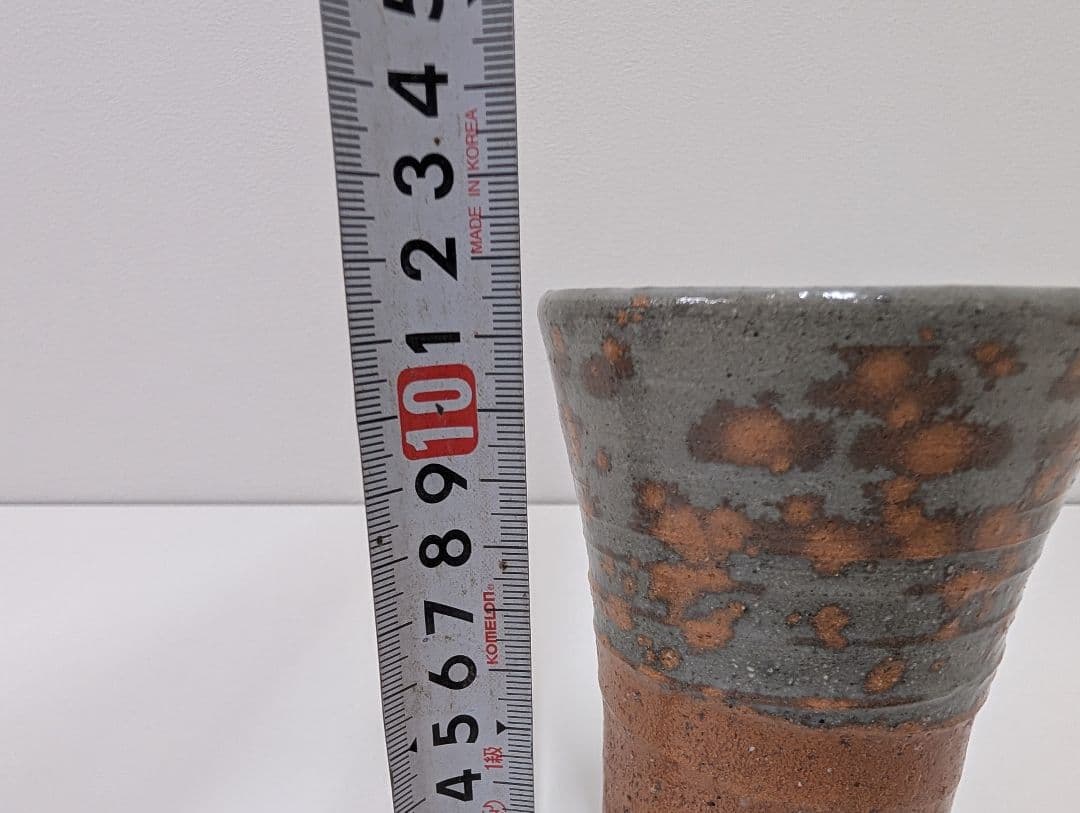
A sake cup (sakazuki) in the Totoya-de manner by Nawa Hosho. The form is a clean truncated cone, the upper body held in a granular, matte gray glaze that breaks open in drifting rust-brown clouds where the iron clay asserts itself beneath. The lower third remains bare — the raw, ochre-sienna body of the clay exposed as structure, not ornament. A signed wooden tomobako accompanies the piece.
🔹 [ BASIC DETAILS ]
• Artist: Nawa Hosho (那波鳳翔)
• Style: Totoya-de (斗々屋手)
• Form: Sake cup / sakazuki
• Glaze: Matte gray iron glaze with natural clay-break mottling
• Clay Body: Iron-rich, exposed on lower half in warm sienna tone
• Origin: Japan (Karatsu / Korean-influenced folk ceramic tradition)
• Era: Late 20th century
• Dimensions: Height approx. 7 cm, Diameter approx. 6 cm (estimated)
• Box: Original signed wooden tomobako included
• Condition: Excellent — no cracks, chips, or repairs visible; interior throwing rings clear and intact
🔹 [ CULTURAL & ARTISTIC INSIGHT ]
Totoya-de — literally "fishmonger's hand" — takes its name from the Korean-style rice bowls once used in the fish markets of Kyoto and Osaka. These functional vessels, brought to Japan through the ceramics migrations of the Azuchi-Momoyama and early Edo periods, were adopted by tea masters who saw in their plain, unaffected forms an embodiment of wabi: beauty that does not insist on itself.
The gray iron glaze of the Totoya tradition is not decorative in any conventional sense. It sits unevenly, breaks at clay junctions, and reveals the earth beneath — each cup a record of the fire's passage rather than the potter's plan. In tea culture, this quality — the yielding of control to material and kiln — is considered a mark of authentic presence.
Nawa Hosho works within this lineage, producing sake cups and tea vessels that carry the weight of the tradition without attempting to replicate it. The mottled gray surface of this cup — part glaze, part exposed iron clay — reads differently in different light: quiet at noon, warm and shifting by lamp.
Poetic line: The gray settles over rust like weather over stone — unhurried, irreversible.
🔹 [ DEEP-DIVE COMMENTARY ]
Totoya-de ware belongs to the broader category of ko-garatsu (old Karatsu) and Korean-influenced folk ceramics that reached their peak in tea-ceremony appreciation during the late Muromachi through early Edo periods. The style is defined by an iron-saturated clay body, a matte ash or iron glaze, and a deliberate absence of surface decoration — the form and the firing are the entire statement.
The glaze behavior characteristic of this tradition — pooling, breaking, retreating — is achieved through iron-oxide-rich feldspathic glazes applied over similarly iron-dense clay. In the kiln, the two iron sources interact: the glaze does not fuse uniformly but separates into zones of coverage and exposure, producing the mottled surface that later tea masters prized as a visual analog to the passing of seasons.
For collectors, pieces in this tradition carry dual significance: they belong to a documented aesthetic lineage that connects Korean Yi-dynasty folk ceramics to the highest levels of Japanese tea culture, and they function — sake, tea, or simply held in the hand — with the directness of objects made without pretense.
Nawa Hosho's signed tomobako places this cup within a traceable provenance. The inscription 斗々屋酒杯 (Totoya sake cup) is itself a form of curation — the artist affirming the piece's lineage in the act of naming it.
[ JAPANESE DESCRIPTION / 日本語解説 ]
那波鳳翔による斗々屋手の酒杯。形は端正な逆台形。上半部を覆う鉄釉は粗く、くすんだ灰色のマットな質感を持ち、下地の鉄分豊かな素地が錆色の雲のように透けて現れる。下半部は施釉を受けず、燃えるようなシエナ色の土が露わになっている。構造としての土、意図としての余白。共箱付き。
🔹 基本情報
• 作家:那波鳳翔
• 様式:斗々屋手
• 形式:酒杯
• 釉薬:鉄灰釉(マット、景色あり)
• 素地:鉄分含有、下半部露胎
• 産地:日本(唐津系・朝鮮民窯の影響)
• 時代:20世紀後期
• 寸法:高さ約7cm、径約6cm(推定)
• 箱:共箱(署名入り)付き
• 状態:良好。割れ・欠け・補修の痕跡なし
🔹 文化・芸術的考察
「斗々屋手」という名称は、かつて京坂の魚市場で使われていた朝鮮渡来の飯碗に由来する。安土桃山から江戸初期にかけて、これらの実用的な器は茶人の目に止まった。飾らぬ形、窯の火に委ねられた釉の表情――それが侘びの器として再発見されたのである。
斗々屋手の灰色鉄釉は、装飾を目的としない。土との境で釉が割れ、素地が顔を出す。その一点一点は、陶工の計画ではなく、炎の通過の記録である。茶の湯において、制御を素材と窯に委ねるこの姿勢は、真の「景色」の証とされる。
那波鳳翔はこの系譜の中に立ち、模倣することなく伝統の重みを引き受けた器を作る。灰と錆の斑は、光の加減によって表情を変える。正午には静かに、燈火のもとでは温かく揺れる。
詩的一句:灰が錆の上に落ちつく、天気が石の上に落ちつくように――急がず、取り消せない。
🔹 深掘り解説
斗々屋手は、古唐津および朝鮮系民窯陶磁器の大きな流れに属し、室町末期から江戸初期の茶会における鑑賞の頂点を極めた様式である。鉄分を多く含む素地、灰や鉄の艶消し釉、そして表面装飾の意図的な排除――形と焼成がすべての表現である。
斗々屋手に特有の釉の振る舞い――溜まり、割れ、退く――は、鉄酸化物を豊富に含む長石釉を同様に鉄分の多い素地に施すことで生じる。窯の中で二つの鉄分は反応し、釉は均一に熔けることなく覆いと露出の帯に分かれる。この斑状の表面こそ、後の茶人たちが四季の移ろいの視覚的類比として珍重したものである。
コレクターにとって、この様式の器は二重の意義を持つ。それは朝鮮李朝の民窯陶磁から日本茶道の最高峰へと連なる文献的な美の系譜に属し、同時に酒でも茶でも――あるいはただ手の中に収めるだけでも――装飾なき物の直接性をもって機能する。
那波鳳翔の共箱は、この杯に辿れる来歴を与える。「斗々屋酒杯」という箱書きそのものが、命名という行為による作家自身の系譜確認である。
🔹 [ SHIPPING & PACKAGING ]
• Dispatch: Within 1-6 business days
• Carrier: Japan Post EMS / UPS / FedEx (with tracking)
• Packaging: Carefully wrapped with protective materials
🔹 [ BASIC DETAILS ]
• Artist: Nawa Hosho (那波鳳翔)
• Style: Totoya-de (斗々屋手)
• Form: Sake cup / sakazuki
• Glaze: Matte gray iron glaze with natural clay-break mottling
• Clay Body: Iron-rich, exposed on lower half in warm sienna tone
• Origin: Japan (Karatsu / Korean-influenced folk ceramic tradition)
• Era: Late 20th century
• Dimensions: Height approx. 7 cm, Diameter approx. 6 cm (estimated)
• Box: Original signed wooden tomobako included
• Condition: Excellent — no cracks, chips, or repairs visible; interior throwing rings clear and intact
🔹 [ CULTURAL & ARTISTIC INSIGHT ]
Totoya-de — literally "fishmonger's hand" — takes its name from the Korean-style rice bowls once used in the fish markets of Kyoto and Osaka. These functional vessels, brought to Japan through the ceramics migrations of the Azuchi-Momoyama and early Edo periods, were adopted by tea masters who saw in their plain, unaffected forms an embodiment of wabi: beauty that does not insist on itself.
The gray iron glaze of the Totoya tradition is not decorative in any conventional sense. It sits unevenly, breaks at clay junctions, and reveals the earth beneath — each cup a record of the fire's passage rather than the potter's plan. In tea culture, this quality — the yielding of control to material and kiln — is considered a mark of authentic presence.
Nawa Hosho works within this lineage, producing sake cups and tea vessels that carry the weight of the tradition without attempting to replicate it. The mottled gray surface of this cup — part glaze, part exposed iron clay — reads differently in different light: quiet at noon, warm and shifting by lamp.
Poetic line: The gray settles over rust like weather over stone — unhurried, irreversible.
🔹 [ DEEP-DIVE COMMENTARY ]
Totoya-de ware belongs to the broader category of ko-garatsu (old Karatsu) and Korean-influenced folk ceramics that reached their peak in tea-ceremony appreciation during the late Muromachi through early Edo periods. The style is defined by an iron-saturated clay body, a matte ash or iron glaze, and a deliberate absence of surface decoration — the form and the firing are the entire statement.
The glaze behavior characteristic of this tradition — pooling, breaking, retreating — is achieved through iron-oxide-rich feldspathic glazes applied over similarly iron-dense clay. In the kiln, the two iron sources interact: the glaze does not fuse uniformly but separates into zones of coverage and exposure, producing the mottled surface that later tea masters prized as a visual analog to the passing of seasons.
For collectors, pieces in this tradition carry dual significance: they belong to a documented aesthetic lineage that connects Korean Yi-dynasty folk ceramics to the highest levels of Japanese tea culture, and they function — sake, tea, or simply held in the hand — with the directness of objects made without pretense.
Nawa Hosho's signed tomobako places this cup within a traceable provenance. The inscription 斗々屋酒杯 (Totoya sake cup) is itself a form of curation — the artist affirming the piece's lineage in the act of naming it.
[ JAPANESE DESCRIPTION / 日本語解説 ]
那波鳳翔による斗々屋手の酒杯。形は端正な逆台形。上半部を覆う鉄釉は粗く、くすんだ灰色のマットな質感を持ち、下地の鉄分豊かな素地が錆色の雲のように透けて現れる。下半部は施釉を受けず、燃えるようなシエナ色の土が露わになっている。構造としての土、意図としての余白。共箱付き。
🔹 基本情報
• 作家:那波鳳翔
• 様式:斗々屋手
• 形式:酒杯
• 釉薬:鉄灰釉(マット、景色あり)
• 素地:鉄分含有、下半部露胎
• 産地:日本(唐津系・朝鮮民窯の影響)
• 時代:20世紀後期
• 寸法:高さ約7cm、径約6cm(推定)
• 箱:共箱(署名入り)付き
• 状態:良好。割れ・欠け・補修の痕跡なし
🔹 文化・芸術的考察
「斗々屋手」という名称は、かつて京坂の魚市場で使われていた朝鮮渡来の飯碗に由来する。安土桃山から江戸初期にかけて、これらの実用的な器は茶人の目に止まった。飾らぬ形、窯の火に委ねられた釉の表情――それが侘びの器として再発見されたのである。
斗々屋手の灰色鉄釉は、装飾を目的としない。土との境で釉が割れ、素地が顔を出す。その一点一点は、陶工の計画ではなく、炎の通過の記録である。茶の湯において、制御を素材と窯に委ねるこの姿勢は、真の「景色」の証とされる。
那波鳳翔はこの系譜の中に立ち、模倣することなく伝統の重みを引き受けた器を作る。灰と錆の斑は、光の加減によって表情を変える。正午には静かに、燈火のもとでは温かく揺れる。
詩的一句:灰が錆の上に落ちつく、天気が石の上に落ちつくように――急がず、取り消せない。
🔹 深掘り解説
斗々屋手は、古唐津および朝鮮系民窯陶磁器の大きな流れに属し、室町末期から江戸初期の茶会における鑑賞の頂点を極めた様式である。鉄分を多く含む素地、灰や鉄の艶消し釉、そして表面装飾の意図的な排除――形と焼成がすべての表現である。
斗々屋手に特有の釉の振る舞い――溜まり、割れ、退く――は、鉄酸化物を豊富に含む長石釉を同様に鉄分の多い素地に施すことで生じる。窯の中で二つの鉄分は反応し、釉は均一に熔けることなく覆いと露出の帯に分かれる。この斑状の表面こそ、後の茶人たちが四季の移ろいの視覚的類比として珍重したものである。
コレクターにとって、この様式の器は二重の意義を持つ。それは朝鮮李朝の民窯陶磁から日本茶道の最高峰へと連なる文献的な美の系譜に属し、同時に酒でも茶でも――あるいはただ手の中に収めるだけでも――装飾なき物の直接性をもって機能する。
那波鳳翔の共箱は、この杯に辿れる来歴を与える。「斗々屋酒杯」という箱書きそのものが、命名という行為による作家自身の系譜確認である。
🔹 [ SHIPPING & PACKAGING ]
• Dispatch: Within 1-6 business days
• Carrier: Japan Post EMS / UPS / FedEx (with tracking)
• Packaging: Carefully wrapped with protective materials
Quantity
Couldn't load pickup availability
Low stock: 1 left
View full details