1
/
of
11
Tosai Kyoto Chawan Hina Dolls Crackle Glaze Tomobako Girls Day
Tosai Kyoto Chawan Hina Dolls Crackle Glaze Tomobako Girls Day
Regular price
Dhs. 862.00 AED
Regular price
Sale price
Dhs. 862.00 AED
Taxes included.
Shipping calculated at checkout.
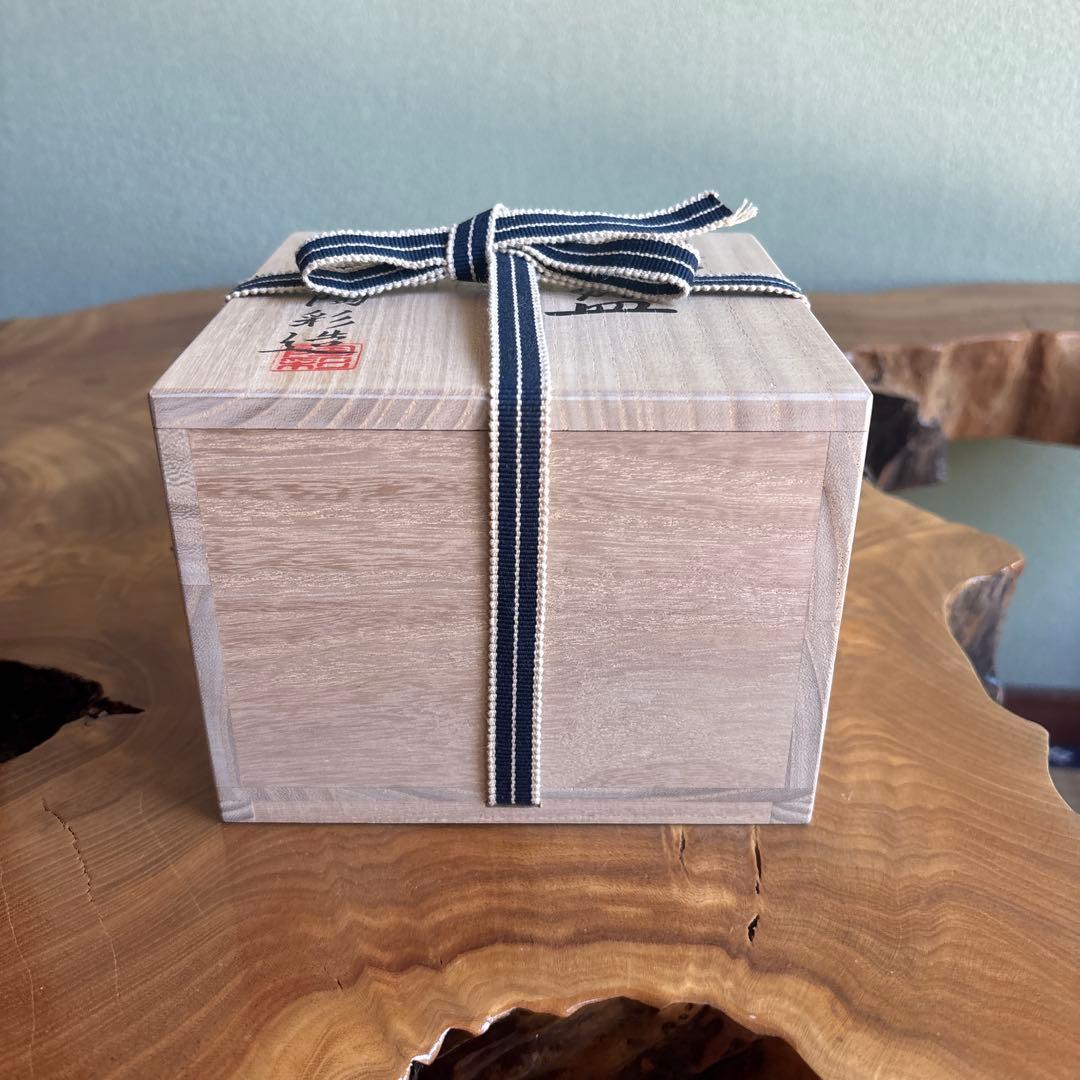
A crackle-glazed chawan, marked by Tosai in a Kyoto-style workshop hand, carries the Emperor and Empress of Hinamatsuri across its bowl. Red, purple, green, gold, and black enamel trace the dolls' court robes against willow branches in fine linework, the interior rim finished with small floral accents. Kannyu — the fine network of crackle across the glaze — runs quietly beneath the painted scene. The piece travels with its signed tomobako, inscribed 雛人形 茶盌 and sealed 陶彩造.
🔹 [ BASIC DETAILS ]
• Artist: Tosai (陶彩), Kyoto-style workshop signature
• Technique: Overglaze enamel (akae) on crackle-glazed porcelain-style body
• Era: Contemporary studio production
• Origin: Kyoto, Japan
• Dimensions: Height approx. 7.3 cm, Diameter approx. 12 cm
• Box: Signed wooden tomobako, inscribed "雛人形 茶盌," red seal "陶彩造"
• Condition: Excellent. No cracks or chips.
🔹 [ CULTURAL & ARTISTIC INSIGHT ]
Hinamatsuri, the Doll Festival held each March 3rd, centers on a pair of dolls representing the Emperor and Empress of the Heian court. Their image has moved freely between textile, print, and ceramic for centuries, carried by artisans who saw in the festival's formality a subject suited to careful, small-scale painting. Overglaze enamel asks for a second firing at lower heat, after the glaze has already set — the pigments sit on the surface rather than within it, which is why the reds and golds here hold such clarity against the white ground. The kannyu crackle beneath the scene was not painted; it arrived on its own, in the kiln.
A bowl that remembers a festival is still, in the end, a bowl for tea.
🔹 [ DEEP-DIVE COMMENTARY ]
Hinamatsuri dolls have occupied a fixed place in Japanese decorative arts since the Edo period, when the display of Emperor and Empress figures on tiered stands became a fixture of March households wishing health and good fortune on their daughters. Painters and potters alike took up the imagery, and the Emperor-Empress pair became one of the more durable seasonal motifs in Kyoto-ware, appearing on incense containers, sweets dishes, and chawan alongside the more common cherry blossoms and pine.
Achieving this kind of figural painting on ceramic is a two-stage process. The vessel is first glazed and fired at high temperature, producing the crackle-glazed ground seen here. Only after this is the scene applied in overglaze enamels — mineral pigments suspended in a low-fire flux — and returned to the kiln at a gentler heat. This second firing fixes the color without disturbing the glaze beneath it, which is why the linework can stay this fine: the artist is painting on a fired, stable surface, not fighting a wet glaze.
Seasonal and narrative chawan occupy a particular place for collectors because they mark time rather than simply decorate it. A bowl bearing plum blossoms speaks to late winter; one bearing Hina dolls speaks to the first days of March. Owning such a piece means having a bowl that asks to be used, or displayed, at a specific point in the year — a discipline that runs counter to how most objects are collected, and one that rewards patience.
The continuity of this practice into contemporary studio work, as with this piece from Tosai, suggests the motif has not become a museum subject alone. Kyoto workshops still produce Hina-themed wares each year, ahead of the festival, for households and collectors who want the scene in hand rather than on a shelf.
This bowl, alongside its tomobako, arrives ready for March use or for year-round display — the Emperor and Empress do not require the calendar's permission to be looked at.
[ JAPANESE DESCRIPTION / 日本語解説 ]
貫入の入った白磁風の抹茶碗に、陶彩の手による雛人形が描かれている。緋色・紫・緑・金・黒の上絵具で、御所人形の装束と柳の枝が細い線で描き込まれ、見込みの縁にも小さな花文が添えられている。器全体を覆う細かな貫入は、絵付けの下で静かに走っている。共箱には「雛人形 茶盌」の銘と「陶彩造」の朱印が入る。
🔹 [ 基本情報 ]
• 作家:陶彩(京焼系工房銘)
• 技法:上絵付け(赤絵)、貫入釉
• 時代:現代作
• 産地:京都
• 寸法:高さ約7.3cm、直径約12cm
• 箱:共箱(雛人形 茶盌、陶彩造の朱印)
• 状態:良好。ひび・欠けなし
🔹 [ 文化的背景と鑑賞点 ]
雛人形は江戸期以来、工芸のあらゆる分野に描かれてきた主題である。上絵付けは本焼き後の釉薬の上に低温で顔料を定着させる技法で、線の繊細さは既に安定した釉面の上に描くからこそ保たれる。貫入は絵付けとは無関係に、窯の中で自然に生まれたものだ。
🔹 [ 深掘り解説 ]
雛人形の図様は京焼の中で長く用いられてきた季節文様のひとつで、桃の節句を迎える家庭のために毎年制作されてきた。上絵付けは、一度焼成した器に絵具を施し、再び低温で焼き付ける二段階の工程を経る。季節や物語を宿した茶碗は、単なる装飾を超えて時間そのものを示すため、蒐集家の間で独自の位置を占めてきた。現代の工房でもこの意匠は引き継がれており、この一椀もその流れの中にある。共箱とともに、三月の使用にも通年の展示にも耐える一品である。
🔹 [ SHIPPING & PACKAGING ]
• Dispatch: Within 1-6 business days
• Carrier: Japan Post EMS / UPS / FedEx (with tracking)
• Packaging: Carefully wrapped with protective materials
🔹 [ BASIC DETAILS ]
• Artist: Tosai (陶彩), Kyoto-style workshop signature
• Technique: Overglaze enamel (akae) on crackle-glazed porcelain-style body
• Era: Contemporary studio production
• Origin: Kyoto, Japan
• Dimensions: Height approx. 7.3 cm, Diameter approx. 12 cm
• Box: Signed wooden tomobako, inscribed "雛人形 茶盌," red seal "陶彩造"
• Condition: Excellent. No cracks or chips.
🔹 [ CULTURAL & ARTISTIC INSIGHT ]
Hinamatsuri, the Doll Festival held each March 3rd, centers on a pair of dolls representing the Emperor and Empress of the Heian court. Their image has moved freely between textile, print, and ceramic for centuries, carried by artisans who saw in the festival's formality a subject suited to careful, small-scale painting. Overglaze enamel asks for a second firing at lower heat, after the glaze has already set — the pigments sit on the surface rather than within it, which is why the reds and golds here hold such clarity against the white ground. The kannyu crackle beneath the scene was not painted; it arrived on its own, in the kiln.
A bowl that remembers a festival is still, in the end, a bowl for tea.
🔹 [ DEEP-DIVE COMMENTARY ]
Hinamatsuri dolls have occupied a fixed place in Japanese decorative arts since the Edo period, when the display of Emperor and Empress figures on tiered stands became a fixture of March households wishing health and good fortune on their daughters. Painters and potters alike took up the imagery, and the Emperor-Empress pair became one of the more durable seasonal motifs in Kyoto-ware, appearing on incense containers, sweets dishes, and chawan alongside the more common cherry blossoms and pine.
Achieving this kind of figural painting on ceramic is a two-stage process. The vessel is first glazed and fired at high temperature, producing the crackle-glazed ground seen here. Only after this is the scene applied in overglaze enamels — mineral pigments suspended in a low-fire flux — and returned to the kiln at a gentler heat. This second firing fixes the color without disturbing the glaze beneath it, which is why the linework can stay this fine: the artist is painting on a fired, stable surface, not fighting a wet glaze.
Seasonal and narrative chawan occupy a particular place for collectors because they mark time rather than simply decorate it. A bowl bearing plum blossoms speaks to late winter; one bearing Hina dolls speaks to the first days of March. Owning such a piece means having a bowl that asks to be used, or displayed, at a specific point in the year — a discipline that runs counter to how most objects are collected, and one that rewards patience.
The continuity of this practice into contemporary studio work, as with this piece from Tosai, suggests the motif has not become a museum subject alone. Kyoto workshops still produce Hina-themed wares each year, ahead of the festival, for households and collectors who want the scene in hand rather than on a shelf.
This bowl, alongside its tomobako, arrives ready for March use or for year-round display — the Emperor and Empress do not require the calendar's permission to be looked at.
[ JAPANESE DESCRIPTION / 日本語解説 ]
貫入の入った白磁風の抹茶碗に、陶彩の手による雛人形が描かれている。緋色・紫・緑・金・黒の上絵具で、御所人形の装束と柳の枝が細い線で描き込まれ、見込みの縁にも小さな花文が添えられている。器全体を覆う細かな貫入は、絵付けの下で静かに走っている。共箱には「雛人形 茶盌」の銘と「陶彩造」の朱印が入る。
🔹 [ 基本情報 ]
• 作家:陶彩(京焼系工房銘)
• 技法:上絵付け(赤絵)、貫入釉
• 時代:現代作
• 産地:京都
• 寸法:高さ約7.3cm、直径約12cm
• 箱:共箱(雛人形 茶盌、陶彩造の朱印)
• 状態:良好。ひび・欠けなし
🔹 [ 文化的背景と鑑賞点 ]
雛人形は江戸期以来、工芸のあらゆる分野に描かれてきた主題である。上絵付けは本焼き後の釉薬の上に低温で顔料を定着させる技法で、線の繊細さは既に安定した釉面の上に描くからこそ保たれる。貫入は絵付けとは無関係に、窯の中で自然に生まれたものだ。
🔹 [ 深掘り解説 ]
雛人形の図様は京焼の中で長く用いられてきた季節文様のひとつで、桃の節句を迎える家庭のために毎年制作されてきた。上絵付けは、一度焼成した器に絵具を施し、再び低温で焼き付ける二段階の工程を経る。季節や物語を宿した茶碗は、単なる装飾を超えて時間そのものを示すため、蒐集家の間で独自の位置を占めてきた。現代の工房でもこの意匠は引き継がれており、この一椀もその流れの中にある。共箱とともに、三月の使用にも通年の展示にも耐える一品である。
🔹 [ SHIPPING & PACKAGING ]
• Dispatch: Within 1-6 business days
• Carrier: Japan Post EMS / UPS / FedEx (with tracking)
• Packaging: Carefully wrapped with protective materials
Quantity
Couldn't load pickup availability
Low stock: 1 left
View full details