1
/
of
15
Tin Guinomi Sake Cup by Nakamura Kouzan — Ishime Textured Pewter Vessel, Signed Box
Tin Guinomi Sake Cup by Nakamura Kouzan — Ishime Textured Pewter Vessel, Signed Box
Regular price
Dhs. 976.00 AED
Regular price
Sale price
Dhs. 976.00 AED
Taxes included.
Shipping calculated at checkout.
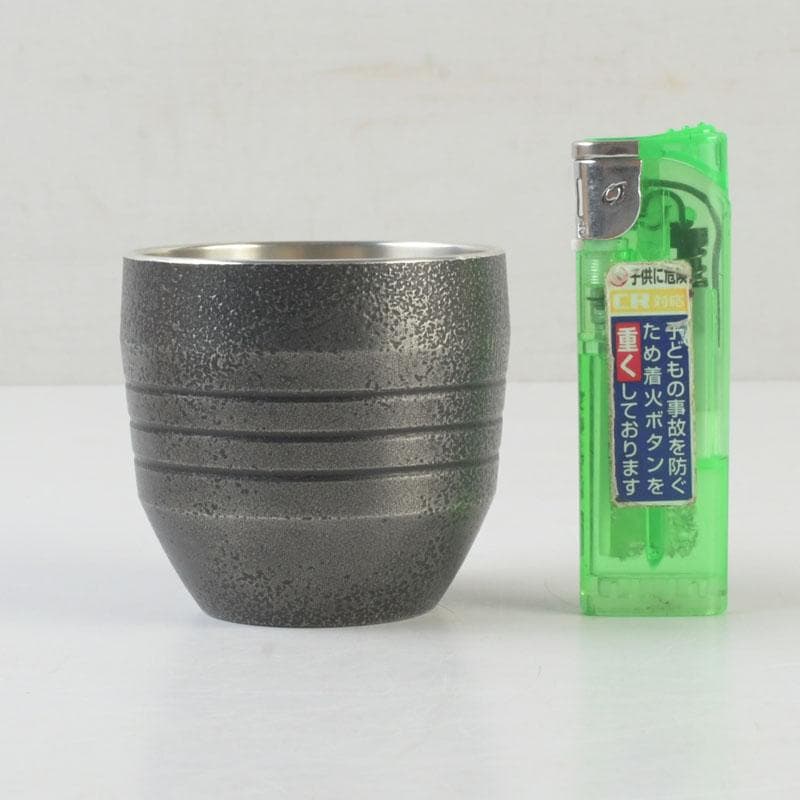
A tin guinomi sake cup named Shikkoh (錫光) by Nakamura Kouzan — Japanese pewter metalwork with stone-hammered exterior, mirror-polished interior, horizontal groove design — signed wooden box, sake vessel from an established tin craftsman. Metal and light in dialogue across the rim.
🔹 [ BASIC DETAILS ]
• Artist: Nakamura Kouzan (中村光山), tin metalwork craftsman
• Series: Shikkoh (錫光 — Pewter Light)
• Technique: Tin casting with ishime (stone-hammered) exterior texture, hand-finished mirror interior
• Era: Contemporary
• Origin: Japan
• Dimensions: Height approx. 6 cm, Width approx. 6.3 cm, Weight approx. 210 g
• Box: Signed wooden box (tomobako)
• Condition: Excellent; includes original certificate card
🔹 [ CULTURAL & ARTISTIC INSIGHT ]
Tin (suzu) occupies a singular position in Japanese craft history. Unlike lacquer or ceramics, tin metalwork developed primarily as a utilitarian tradition — sake flasks, tea caddies, serving vessels — before becoming a vehicle for artistic expression. Tin is antimicrobial, odorless, and has long been prized in Japan for vessels that contact food and drink; a tin sake cup is not decorative first, it is functional first, and its beauty is the beauty of function perfected. Nakamura Kouzan's work demonstrates this hierarchy clearly: the ishime stone-hammered exterior provides grip and visual texture, while the mirror-polished interior serves the sake — cool, reflective, welcoming. The contrast between these two surfaces is the central statement of the piece: exterior for the world's view, interior for the drink's encounter.
🔹 [ DEEP-DIVE COMMENTARY ]
The ishime texture on the exterior is achieved by repeatedly striking the tin surface with a tool bearing a stone-like surface pattern, creating an irregular dimpled landscape that catches light from every angle. In the photographs, the exterior appears nearly black — this is the nature of ishime tin: the irregular surface absorbs direct light while scattering diffuse light, creating a depth that polished metal cannot achieve. Three horizontal grooves encircle the body, creating a rhythmic architectural division of the cylinder — these are wheel-turned or lathe-cut features imposed on the cast and textured form, a meeting of the mechanical and the hand-finished.
The interior is a complete contrast: smooth, polished tin in a warm silver register, curving gently to a flat base. From above, the interior becomes a mirror that reflects the room and the hand holding the cup. This reflective quality changes with the sake: clear sake will catch the reflection; milky nigori sake will turn the interior opaque. The cup responds to its contents.
At 210 grams, this guinomi has presence in the hand without being heavy. Tin has a specific density that feels neither as light as ceramic nor as heavy as iron — it is a material that registers itself without demanding acknowledgment. The weight of the sake inside completes the balance.
The wooden box is inscribed with 錫光 ぐい呑 / 光山 and bears a red seal stamp — the formal presentation format of a Japanese craft object intended for gift-giving or collection. A certificate card accompanies the piece, as is standard for established tin craftsmen.
[ JAPANESE DESCRIPTION / 日本語解説 ]
🔹 [ 基本情報 ]
• 作者:中村光山(錫工芸)
• シリーズ名:錫光(しっこう)
• 技法:錫鋳造・石目仕上げ外面・鏡面仕上げ内面
• 時代:現代
• 産地:日本
• 寸法:高さ約6cm、幅約6.3cm、重さ約210g
• 箱:共箱(光山印・書付)、証明書カード付き
• 状態:優良
🔹 [ 文化・芸術的考察 ]
錫は日本の工芸史において独自の位置を占める。抗菌性・無臭性を持つ錫は古来より食器・酒器として重用されてきた。中村光山の「錫光」シリーズは、石目仕上げの外面と鏡面の内面というコントラストによって、機能の美を体現する。外面は世界と向き合い、内面は酒と向き合う — この二面性が作品の核心だ。
🔹 [ 詳細解説 ]
外面の石目仕上げは、石紋様のツールで表面を繰り返し叩き、不規則な凹凸を作る技法。この凹凸が光を吸収・散乱させて深みのある黒みがかった表情を生む。胴部には3本の横線が旋盤で刻まれ、手仕上げの肌に幾何学的な秩序をもたらす。内面は対照的に滑らかな銀色の鏡面で、酒の色を受け止め反射する。重さ約210gは、陶器より重く鉄器より軽い錫独自の手触りを持ち、酒が注がれた時に重心がちょうど良く落ち着く。共箱には「錫光 ぐい呑 光山」の書付と赤い落款印。証明書カード付きの正式な作家作品。
🔹 [ SHIPPING & PACKAGING ]
• Dispatch: Within 1-6 business days
• Carrier: Japan Post EMS / UPS (with tracking)
• Packaging: Carefully wrapped with protective materials
🔹 [ BASIC DETAILS ]
• Artist: Nakamura Kouzan (中村光山), tin metalwork craftsman
• Series: Shikkoh (錫光 — Pewter Light)
• Technique: Tin casting with ishime (stone-hammered) exterior texture, hand-finished mirror interior
• Era: Contemporary
• Origin: Japan
• Dimensions: Height approx. 6 cm, Width approx. 6.3 cm, Weight approx. 210 g
• Box: Signed wooden box (tomobako)
• Condition: Excellent; includes original certificate card
🔹 [ CULTURAL & ARTISTIC INSIGHT ]
Tin (suzu) occupies a singular position in Japanese craft history. Unlike lacquer or ceramics, tin metalwork developed primarily as a utilitarian tradition — sake flasks, tea caddies, serving vessels — before becoming a vehicle for artistic expression. Tin is antimicrobial, odorless, and has long been prized in Japan for vessels that contact food and drink; a tin sake cup is not decorative first, it is functional first, and its beauty is the beauty of function perfected. Nakamura Kouzan's work demonstrates this hierarchy clearly: the ishime stone-hammered exterior provides grip and visual texture, while the mirror-polished interior serves the sake — cool, reflective, welcoming. The contrast between these two surfaces is the central statement of the piece: exterior for the world's view, interior for the drink's encounter.
🔹 [ DEEP-DIVE COMMENTARY ]
The ishime texture on the exterior is achieved by repeatedly striking the tin surface with a tool bearing a stone-like surface pattern, creating an irregular dimpled landscape that catches light from every angle. In the photographs, the exterior appears nearly black — this is the nature of ishime tin: the irregular surface absorbs direct light while scattering diffuse light, creating a depth that polished metal cannot achieve. Three horizontal grooves encircle the body, creating a rhythmic architectural division of the cylinder — these are wheel-turned or lathe-cut features imposed on the cast and textured form, a meeting of the mechanical and the hand-finished.
The interior is a complete contrast: smooth, polished tin in a warm silver register, curving gently to a flat base. From above, the interior becomes a mirror that reflects the room and the hand holding the cup. This reflective quality changes with the sake: clear sake will catch the reflection; milky nigori sake will turn the interior opaque. The cup responds to its contents.
At 210 grams, this guinomi has presence in the hand without being heavy. Tin has a specific density that feels neither as light as ceramic nor as heavy as iron — it is a material that registers itself without demanding acknowledgment. The weight of the sake inside completes the balance.
The wooden box is inscribed with 錫光 ぐい呑 / 光山 and bears a red seal stamp — the formal presentation format of a Japanese craft object intended for gift-giving or collection. A certificate card accompanies the piece, as is standard for established tin craftsmen.
[ JAPANESE DESCRIPTION / 日本語解説 ]
🔹 [ 基本情報 ]
• 作者:中村光山(錫工芸)
• シリーズ名:錫光(しっこう)
• 技法:錫鋳造・石目仕上げ外面・鏡面仕上げ内面
• 時代:現代
• 産地:日本
• 寸法:高さ約6cm、幅約6.3cm、重さ約210g
• 箱:共箱(光山印・書付)、証明書カード付き
• 状態:優良
🔹 [ 文化・芸術的考察 ]
錫は日本の工芸史において独自の位置を占める。抗菌性・無臭性を持つ錫は古来より食器・酒器として重用されてきた。中村光山の「錫光」シリーズは、石目仕上げの外面と鏡面の内面というコントラストによって、機能の美を体現する。外面は世界と向き合い、内面は酒と向き合う — この二面性が作品の核心だ。
🔹 [ 詳細解説 ]
外面の石目仕上げは、石紋様のツールで表面を繰り返し叩き、不規則な凹凸を作る技法。この凹凸が光を吸収・散乱させて深みのある黒みがかった表情を生む。胴部には3本の横線が旋盤で刻まれ、手仕上げの肌に幾何学的な秩序をもたらす。内面は対照的に滑らかな銀色の鏡面で、酒の色を受け止め反射する。重さ約210gは、陶器より重く鉄器より軽い錫独自の手触りを持ち、酒が注がれた時に重心がちょうど良く落ち着く。共箱には「錫光 ぐい呑 光山」の書付と赤い落款印。証明書カード付きの正式な作家作品。
🔹 [ SHIPPING & PACKAGING ]
• Dispatch: Within 1-6 business days
• Carrier: Japan Post EMS / UPS (with tracking)
• Packaging: Carefully wrapped with protective materials
Quantity
Couldn't load pickup availability
Low stock: 1 left
View full details