1
/
of
11
Tenmoku Tea Bowl Ginkaku Inscription — Oil-Spot Yuteki Glaze Signed Wooden Box
Tenmoku Tea Bowl Ginkaku Inscription — Oil-Spot Yuteki Glaze Signed Wooden Box
Regular price
Dhs. 660.00 AED
Regular price
Sale price
Dhs. 660.00 AED
Taxes included.
Shipping calculated at checkout.
An oil-spot tenmoku tea bowl inscribed 'Ginkaku' (Silver Pavilion) — yuteki tenmoku chawan, Ginkaku inscription tea bowl, oil spot glaze matcha bowl, tenmoku japanese pottery, dark glaze tea ceremony bowl, signed wooden box chawan, collectible tenmoku ware, Japanese art ceramics, vintage tenmoku tea bowl, Song dynasty style glaze, documented japanese pottery, wabi sabi chawan japan, antique style tenmoku bowl.
Diameter: 12.2 cm | Height: 6 cm
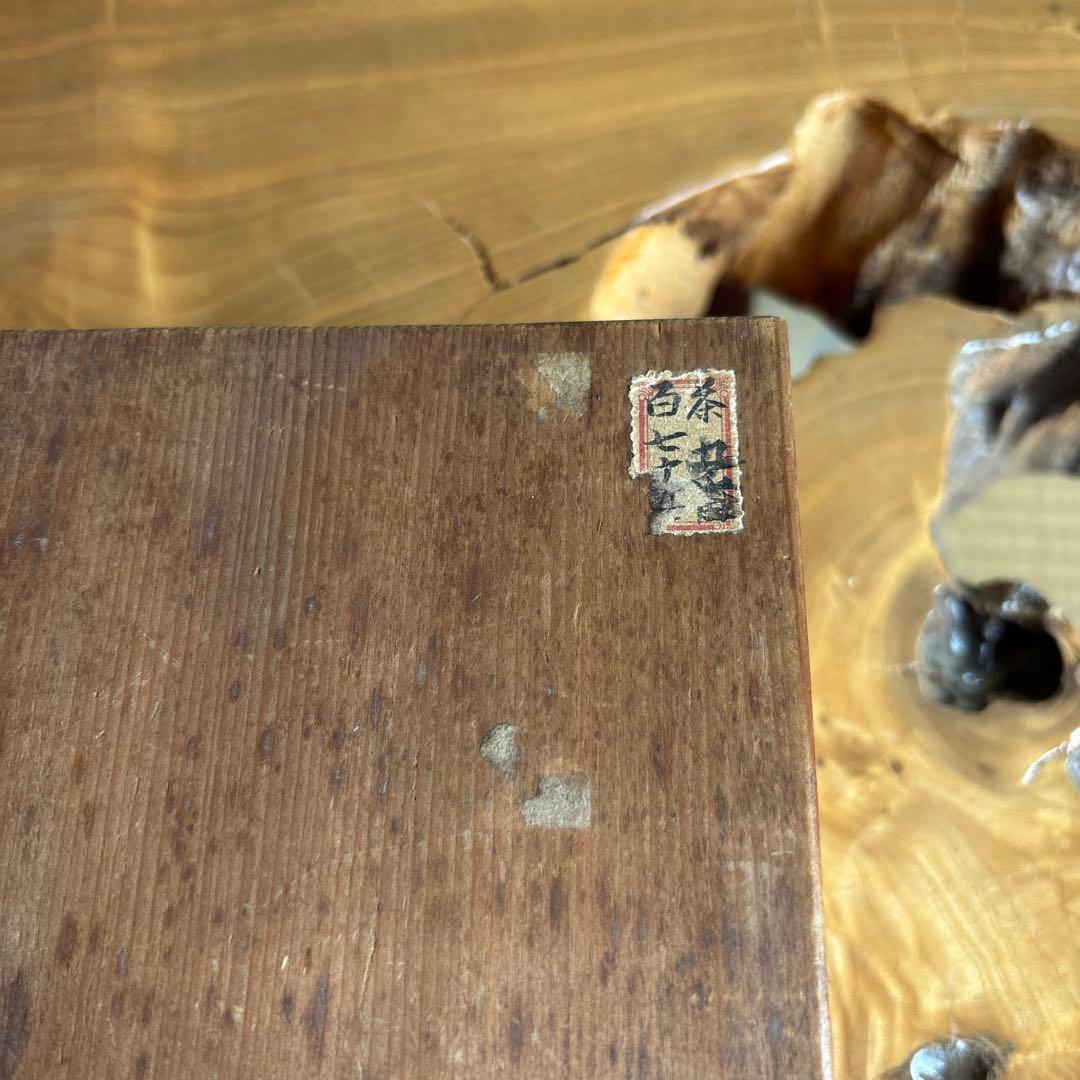
Condition: No cracks or chips. Signed wooden box with detailed provenance inscription included.
Inscription: 銀閣 (Ginkaku — Silver Pavilion)
SKU: 260402_a_2620
🔹 [ BASIC DETAILS ]
• See details above
[ Cultural & Artistic Insight ]
The name 銀閣 (Ginkaku) inscribed on the wooden box of this bowl invokes one of the most concentrated sites of Japanese aesthetic history. The Silver Pavilion — built by shogun Ashikaga Yoshimasa in 1482 as a retreat modeled on Kinkaku-ji — became the nucleus of Higashiyama culture: the refinement of ink painting, flower arranging, landscape gardens, and above all, the tea ceremony as a meditative form. For a tea bowl to carry this inscription is to claim lineage within that specific current of Japanese cultural history — not folk craft, not commercial ware, but the studied practice of beauty as a form of understanding. The oil-spot (yuteki) glaze pattern adds a further layer: these silver-gold spots on a black ground were among the most prized surface effects in Song-period China, and their reappearance in this context is a deliberate act of cultural memory.
[ Deep-Dive Commentary ]
Yuteki tenmoku — oil-spot tenmoku — is among the technically most demanding of all iron glaze effects. The spots form when iron-rich bubbles rise through the molten glaze during peak firing temperature and oxidize at the surface, leaving circular deposits whose color ranges from silver to gold to copper depending on the precise atmosphere in the kiln. The Song Dynasty originals from the Jianyang kilns in Fujian were so prized by Japanese Zen monks that they were classified as meibutsu (famous objects) and housed in the collections of the Ashikaga shoguns. This bowl, with its Ginkaku inscription and detailed wooden box provenance text, positions itself consciously within that tradition of careful attribution and documented ownership — a practice central to the serious connoisseurship of tea utensils (dōgu). The 12.2 cm diameter and 6 cm height place it comfortably within the conventional range for thin tea (usucha).
[ 天目茶碗 銀閣銘 ]
「銀閣」銘を持つ油滴天目茶碗。黒釉中に浮かぶ銀金の油滴文様は、宋代建窯の技法を現代に継承するものであり、その希少性は古来より茶人に珍重されてきた。「銀閣」の銘は東山文化と侘び茶の精髄を示す確かな由緒であり、詳細な来歴が記された共箱は所有の連鎖を伝える貴重な記録でもある。経年を経た落ち着きある景色の一碗。共箱(銘入)付き。
🔹 [ JAPANESE DESCRIPTION / 日本語解説 ]
上記英文に準ずる
🔹 [ SHIPPING & PACKAGING ]
• Dispatch: Within 1-6 business days
• Carrier: Japan Post EMS / UPS (with tracking)
• Packaging: Carefully wrapped with protective materials
Diameter: 12.2 cm | Height: 6 cm
Condition: No cracks or chips. Signed wooden box with detailed provenance inscription included.
Inscription: 銀閣 (Ginkaku — Silver Pavilion)
SKU: 260402_a_2620
🔹 [ BASIC DETAILS ]
• See details above
[ Cultural & Artistic Insight ]
The name 銀閣 (Ginkaku) inscribed on the wooden box of this bowl invokes one of the most concentrated sites of Japanese aesthetic history. The Silver Pavilion — built by shogun Ashikaga Yoshimasa in 1482 as a retreat modeled on Kinkaku-ji — became the nucleus of Higashiyama culture: the refinement of ink painting, flower arranging, landscape gardens, and above all, the tea ceremony as a meditative form. For a tea bowl to carry this inscription is to claim lineage within that specific current of Japanese cultural history — not folk craft, not commercial ware, but the studied practice of beauty as a form of understanding. The oil-spot (yuteki) glaze pattern adds a further layer: these silver-gold spots on a black ground were among the most prized surface effects in Song-period China, and their reappearance in this context is a deliberate act of cultural memory.
[ Deep-Dive Commentary ]
Yuteki tenmoku — oil-spot tenmoku — is among the technically most demanding of all iron glaze effects. The spots form when iron-rich bubbles rise through the molten glaze during peak firing temperature and oxidize at the surface, leaving circular deposits whose color ranges from silver to gold to copper depending on the precise atmosphere in the kiln. The Song Dynasty originals from the Jianyang kilns in Fujian were so prized by Japanese Zen monks that they were classified as meibutsu (famous objects) and housed in the collections of the Ashikaga shoguns. This bowl, with its Ginkaku inscription and detailed wooden box provenance text, positions itself consciously within that tradition of careful attribution and documented ownership — a practice central to the serious connoisseurship of tea utensils (dōgu). The 12.2 cm diameter and 6 cm height place it comfortably within the conventional range for thin tea (usucha).
[ 天目茶碗 銀閣銘 ]
「銀閣」銘を持つ油滴天目茶碗。黒釉中に浮かぶ銀金の油滴文様は、宋代建窯の技法を現代に継承するものであり、その希少性は古来より茶人に珍重されてきた。「銀閣」の銘は東山文化と侘び茶の精髄を示す確かな由緒であり、詳細な来歴が記された共箱は所有の連鎖を伝える貴重な記録でもある。経年を経た落ち着きある景色の一碗。共箱(銘入)付き。
🔹 [ JAPANESE DESCRIPTION / 日本語解説 ]
上記英文に準ずる
🔹 [ SHIPPING & PACKAGING ]
• Dispatch: Within 1-6 business days
• Carrier: Japan Post EMS / UPS (with tracking)
• Packaging: Carefully wrapped with protective materials
Quantity
Couldn't load pickup availability
Low stock: 1 left
View full details