1
/
of
10
Tenmoku-Style Matcha Bowl by Nakano Shohei — Iron Glaze with Golden Scatter, Signed Box
Tenmoku-Style Matcha Bowl by Nakano Shohei — Iron Glaze with Golden Scatter, Signed Box
Regular price
Dhs. 568.00 AED
Regular price
Sale price
Dhs. 568.00 AED
Taxes included.
Shipping calculated at checkout.
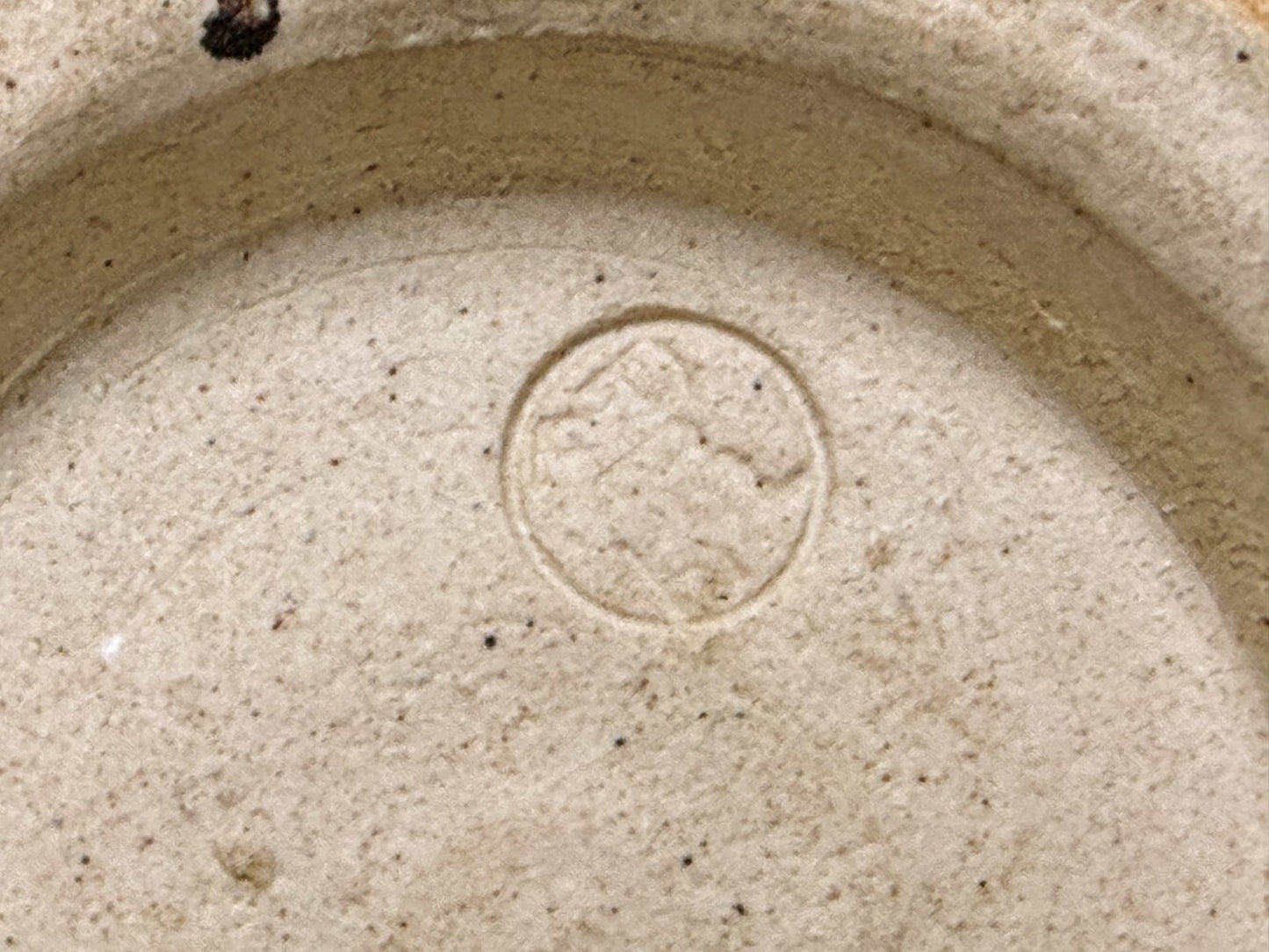
A chawan by Nakano Shohei. The body is covered in a deep iron-black glaze — tenmoku in character — from which a dense scatter of golden-amber flecks emerges across the midsection, as though ash caught mid-fall and stilled. The rim carries a warm amber-rust band where the glaze thins and the iron oxidizes toward warmth. The form is round-shouldered and open, sitting on a compact unglazed foot. It comes in its original paulownia wood box (共箱), signed 昭平作 in brushwork with the artist's red seal.
🔹 [ BASIC DETAILS ]
• Artist: Nakano Shohei (中野昭平)
• Technique: Iron tenmoku-style glaze with golden fleck scatter
• Era: Post-2000 (contemporary)
• Origin: Japan
• Dimensions: Diameter approx. 12.5 cm, Height approx. 8.3 cm
• Box: Original signed paulownia wood box (共箱) included
• Condition: No visible chips, cracks, or repairs
🔹 [ CULTURAL & ARTISTIC INSIGHT ]
The tenmoku tradition descends from Song Dynasty Chinese stonewares — bowls fired in iron-rich reduction atmospheres at Jian kilns in Fujian — imported to Japan by Zen monks returning from China in the 12th and 13th centuries. The aesthetic was transformed through the Japanese tea ceremony, where the dark, glassy surface became the ideal ground for whisked matcha: the green of the tea reads against the iron black with clarity and presence.
What distinguishes this bowl is the golden scatter. In the firing, the iron glaze has separated and crystallized in irregular flecks across the body — neither a manufactured pattern nor a fully predictable result. Each firing determines its own distribution. This particular piece carries the density of its scatter in the middle register, tapering at the foot and intensifying slightly toward the amber rim. The effect reads as movement arrested.
Nakano Shohei works within the Japanese studio ceramics tradition, signing each piece with his personal seal on the lid of the accompanying wooden box. The practice of the 共箱 — the box made and signed by the artist's own hand — is a mark of authorship that extends beyond the ceramic itself: the box is part of the work.
For the tea practitioner, this bowl functions in the round. Its diameter accommodates the chasen comfortably, and the height holds the bowl steady in the hands during temae. For the collector, the glaze surface rewards prolonged looking — its texture shifts with the angle of light.
POETIC LINE: "Dark iron holds the scatter of amber — not decoration, but the memory of fire made still."
🔹 [ DEEP-DIVE COMMENTARY ]
Tenmoku (天目) as a glaze type describes a family of high-iron reduction glazes developed in Song China and transmitted to Japan through Zen Buddhist monasteries. The Jian kilns of Fujian were the primary source of the original yuteki tenmoku (oil-spot) and hare's fur varieties; their Japanese reception shaped the entire aesthetic vocabulary of the wabi tea room. By the Muromachi period, tenmoku tea bowls held the highest rank in the classification of imported utensils (karamono), and their influence on native Japanese ceramic development — particularly at Seto and Mino — was formative.
The technique of iron tenmoku glazing requires a clay body with sufficient iron content or a glaze slip of high iron oxide proportion, applied thickly and fired in a reducing atmosphere at temperatures typically between 1250°C and 1350°C. The precise distribution of heat, oxygen, and iron determines whether the glaze produces uniform depth, runs, crystallizes, or develops surface irregularity. In this bowl, the golden scatter pattern indicates a controlled separation of iron crystals during the cooling phase — a phenomenon related to, though distinct from, the classic yuteki (oil-spot) effect, which requires precise temperature management at the point of crystallization.
Contemporary Japanese studio ceramicists working in this tradition occupy a position that differs from mingei (folk craft) production: they are named artists who study the technical and aesthetic history of a tradition and then submit their own interpretation to the kiln. The signed box is the documentary record of that authorship. For the collector, it establishes both provenance and the artist's own acknowledgment of the piece.
The round-shouldered form of this particular bowl belongs to the group of shapes classified in Japanese tea practice as 筒型に近い (approaching cylindrical) — a form that retains heat effectively and provides a stable grip during the two-handed bowl presentation of chakai or chaji.
---
【日本語解説】
中野昭平による茶碗。胴部には深い鉄黒釉が施され、天目系の質感を持つ。その釉面に金褐色の斑点が降り積もるように散り、中腹にかけてとりわけ密度が高い。口縁には鉄釉が薄くなって酸化した、温かみのある琥珀色の帯が巡る。丸みのある肩から締まった無釉の高台へと続く形は、手のひらに収まるよう設計されている。共箱(桐木箱)付きで、蓋裏には「昭平作」の墨書と朱印がある。
🔹 [ 基本情報 ]
• 作家:中野昭平
• 技法:鉄天目系釉薬、金色の散り斑
• 時代:現代(2000年代以降)
• 産地:日本
• 寸法:口径約12.5cm、高さ約8.3cm
• 付属品:共箱(桐木箱)、昭平作・朱印あり
• 状態:目立った傷・ひび・金継ぎなし
🔹 [ 文化・芸術的背景 ]
天目釉の系譜は、宋代の中国・福建省建窯に始まる。12〜13世紀、禅僧たちが渡来の際に持ち帰った建窯の天目茶碗は、日本の茶の湯に深く受容され、その黒光りする釉面は抹茶の緑色を際立てる理想の器として確立した。
この茶碗の特徴は、金褐色の散り斑にある。焼成中に鉄釉が結晶化・分離して生じたこの斑紋は、製作者の意図と窯の偶然が重なった結果であり、一つひとつの作品に固有の表情をもたらす。中腹にかけて密度を高めるこの散り模様は、まるで火の記憶が静止したように器面に刻まれている。
中野昭平は日本の近現代陶芸の文脈に立つ作家であり、各作品に自らの箱書と落款を施す。「共箱」とは単なる収納ではなく、作家が自ら手がけた作品の証であり、箱そのものが作品の一部をなす。
茶道の実践においてはもちろん、コレクションの観点からも、この茶碗は光の角度によって釉面の表情が変化し、手に取るたびに新たな発見をもたらす器である。
詩的一文:「鉄の黒が琥珀の散りを抱く——それは装飾ではなく、火の記憶が静かに宿った景色。」
🔹 [ 深層解説 ]
天目(tenmoku)という釉薬の系譜は、宋代の中国・建窯(現在の福建省)に発し、禅院を介して日本へ伝来した。室町時代には唐物として最高位に位置づけられ、「曜変」「油滴」「禾目」など、その窯変の多様性が茶人たちを魅了した。この時代の受容が、その後の国産陶芸——瀬戸・美濃の天目作風——の出発点となっている。
天目釉の焼成には鉄分の多い土または釉薬を厚く施し、一般に1250〜1350℃の還元炎で焼成する。焼成時の熱量・酸素量・鉄分の分布が、釉面の均一な深みを生むか、流れを作るか、結晶化するか、あるいは不規則な表情を呈するかを決定する。この茶碗に見られる金色の散り斑は、冷却過程での鉄結晶の分離による現象で、古典的な油滴天目とは技法的に近しいが、異なる制御を経た結果である。
現代の日本陶芸家は、民芸的な匿名性を持たず、歴史的・技術的な系譜を深く研究したうえで個人の解釈を窯に委ねる。共箱への箱書と落款はその作家性の明示であり、コレクターにとっては来歴の証である。
この茶碗の形状は、やや筒型に近い丸肩のフォルムで、保温性が高く、点前での両手持ちが安定しやすい実用的な構造を持つ。
🔹 [ SHIPPING & PACKAGING ]
• Dispatch: Within 1-6 business days
• Carrier: Japan Post EMS / UPS / FedEx (with tracking)
• Packaging: Carefully wrapped with protective materials
🔹 [ BASIC DETAILS ]
• Artist: Nakano Shohei (中野昭平)
• Technique: Iron tenmoku-style glaze with golden fleck scatter
• Era: Post-2000 (contemporary)
• Origin: Japan
• Dimensions: Diameter approx. 12.5 cm, Height approx. 8.3 cm
• Box: Original signed paulownia wood box (共箱) included
• Condition: No visible chips, cracks, or repairs
🔹 [ CULTURAL & ARTISTIC INSIGHT ]
The tenmoku tradition descends from Song Dynasty Chinese stonewares — bowls fired in iron-rich reduction atmospheres at Jian kilns in Fujian — imported to Japan by Zen monks returning from China in the 12th and 13th centuries. The aesthetic was transformed through the Japanese tea ceremony, where the dark, glassy surface became the ideal ground for whisked matcha: the green of the tea reads against the iron black with clarity and presence.
What distinguishes this bowl is the golden scatter. In the firing, the iron glaze has separated and crystallized in irregular flecks across the body — neither a manufactured pattern nor a fully predictable result. Each firing determines its own distribution. This particular piece carries the density of its scatter in the middle register, tapering at the foot and intensifying slightly toward the amber rim. The effect reads as movement arrested.
Nakano Shohei works within the Japanese studio ceramics tradition, signing each piece with his personal seal on the lid of the accompanying wooden box. The practice of the 共箱 — the box made and signed by the artist's own hand — is a mark of authorship that extends beyond the ceramic itself: the box is part of the work.
For the tea practitioner, this bowl functions in the round. Its diameter accommodates the chasen comfortably, and the height holds the bowl steady in the hands during temae. For the collector, the glaze surface rewards prolonged looking — its texture shifts with the angle of light.
POETIC LINE: "Dark iron holds the scatter of amber — not decoration, but the memory of fire made still."
🔹 [ DEEP-DIVE COMMENTARY ]
Tenmoku (天目) as a glaze type describes a family of high-iron reduction glazes developed in Song China and transmitted to Japan through Zen Buddhist monasteries. The Jian kilns of Fujian were the primary source of the original yuteki tenmoku (oil-spot) and hare's fur varieties; their Japanese reception shaped the entire aesthetic vocabulary of the wabi tea room. By the Muromachi period, tenmoku tea bowls held the highest rank in the classification of imported utensils (karamono), and their influence on native Japanese ceramic development — particularly at Seto and Mino — was formative.
The technique of iron tenmoku glazing requires a clay body with sufficient iron content or a glaze slip of high iron oxide proportion, applied thickly and fired in a reducing atmosphere at temperatures typically between 1250°C and 1350°C. The precise distribution of heat, oxygen, and iron determines whether the glaze produces uniform depth, runs, crystallizes, or develops surface irregularity. In this bowl, the golden scatter pattern indicates a controlled separation of iron crystals during the cooling phase — a phenomenon related to, though distinct from, the classic yuteki (oil-spot) effect, which requires precise temperature management at the point of crystallization.
Contemporary Japanese studio ceramicists working in this tradition occupy a position that differs from mingei (folk craft) production: they are named artists who study the technical and aesthetic history of a tradition and then submit their own interpretation to the kiln. The signed box is the documentary record of that authorship. For the collector, it establishes both provenance and the artist's own acknowledgment of the piece.
The round-shouldered form of this particular bowl belongs to the group of shapes classified in Japanese tea practice as 筒型に近い (approaching cylindrical) — a form that retains heat effectively and provides a stable grip during the two-handed bowl presentation of chakai or chaji.
---
【日本語解説】
中野昭平による茶碗。胴部には深い鉄黒釉が施され、天目系の質感を持つ。その釉面に金褐色の斑点が降り積もるように散り、中腹にかけてとりわけ密度が高い。口縁には鉄釉が薄くなって酸化した、温かみのある琥珀色の帯が巡る。丸みのある肩から締まった無釉の高台へと続く形は、手のひらに収まるよう設計されている。共箱(桐木箱)付きで、蓋裏には「昭平作」の墨書と朱印がある。
🔹 [ 基本情報 ]
• 作家:中野昭平
• 技法:鉄天目系釉薬、金色の散り斑
• 時代:現代(2000年代以降)
• 産地:日本
• 寸法:口径約12.5cm、高さ約8.3cm
• 付属品:共箱(桐木箱)、昭平作・朱印あり
• 状態:目立った傷・ひび・金継ぎなし
🔹 [ 文化・芸術的背景 ]
天目釉の系譜は、宋代の中国・福建省建窯に始まる。12〜13世紀、禅僧たちが渡来の際に持ち帰った建窯の天目茶碗は、日本の茶の湯に深く受容され、その黒光りする釉面は抹茶の緑色を際立てる理想の器として確立した。
この茶碗の特徴は、金褐色の散り斑にある。焼成中に鉄釉が結晶化・分離して生じたこの斑紋は、製作者の意図と窯の偶然が重なった結果であり、一つひとつの作品に固有の表情をもたらす。中腹にかけて密度を高めるこの散り模様は、まるで火の記憶が静止したように器面に刻まれている。
中野昭平は日本の近現代陶芸の文脈に立つ作家であり、各作品に自らの箱書と落款を施す。「共箱」とは単なる収納ではなく、作家が自ら手がけた作品の証であり、箱そのものが作品の一部をなす。
茶道の実践においてはもちろん、コレクションの観点からも、この茶碗は光の角度によって釉面の表情が変化し、手に取るたびに新たな発見をもたらす器である。
詩的一文:「鉄の黒が琥珀の散りを抱く——それは装飾ではなく、火の記憶が静かに宿った景色。」
🔹 [ 深層解説 ]
天目(tenmoku)という釉薬の系譜は、宋代の中国・建窯(現在の福建省)に発し、禅院を介して日本へ伝来した。室町時代には唐物として最高位に位置づけられ、「曜変」「油滴」「禾目」など、その窯変の多様性が茶人たちを魅了した。この時代の受容が、その後の国産陶芸——瀬戸・美濃の天目作風——の出発点となっている。
天目釉の焼成には鉄分の多い土または釉薬を厚く施し、一般に1250〜1350℃の還元炎で焼成する。焼成時の熱量・酸素量・鉄分の分布が、釉面の均一な深みを生むか、流れを作るか、結晶化するか、あるいは不規則な表情を呈するかを決定する。この茶碗に見られる金色の散り斑は、冷却過程での鉄結晶の分離による現象で、古典的な油滴天目とは技法的に近しいが、異なる制御を経た結果である。
現代の日本陶芸家は、民芸的な匿名性を持たず、歴史的・技術的な系譜を深く研究したうえで個人の解釈を窯に委ねる。共箱への箱書と落款はその作家性の明示であり、コレクターにとっては来歴の証である。
この茶碗の形状は、やや筒型に近い丸肩のフォルムで、保温性が高く、点前での両手持ちが安定しやすい実用的な構造を持つ。
🔹 [ SHIPPING & PACKAGING ]
• Dispatch: Within 1-6 business days
• Carrier: Japan Post EMS / UPS / FedEx (with tracking)
• Packaging: Carefully wrapped with protective materials
Quantity
Couldn't load pickup availability
Low stock: 1 left
View full details