1
/
of
17
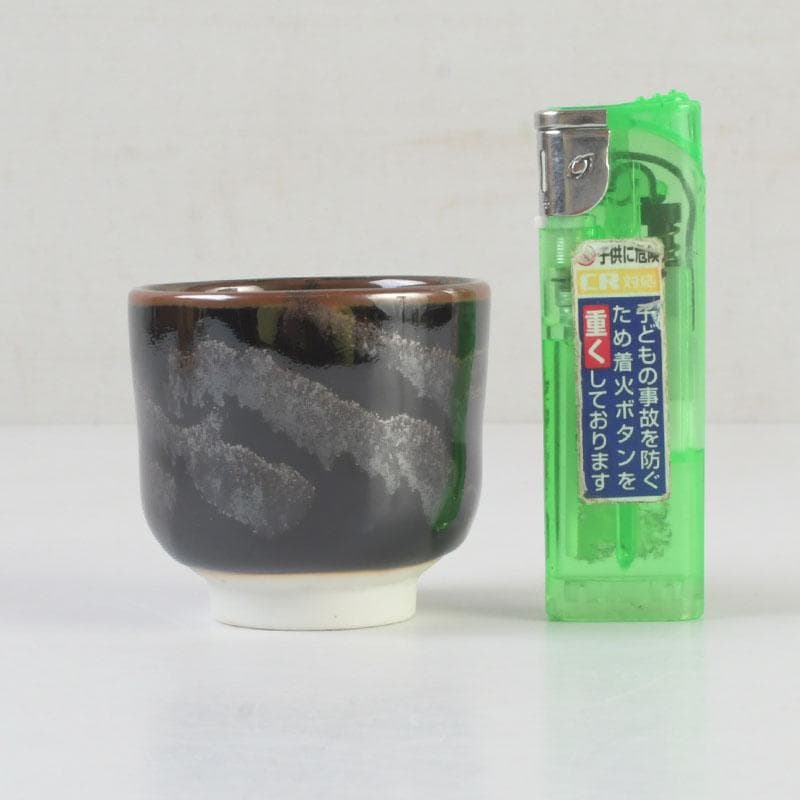
Tenmoku Guinomi Sake Cup by Aoki Ryuzan Order of Culture Laureate Arita Porcelain Signed Tomobako Japan
Tenmoku Guinomi Sake Cup by Aoki Ryuzan Order of Culture Laureate Arita Porcelain Signed Tomobako Japan
Regular price
Dhs. 1,601.00 AED
Regular price
Sale price
Dhs. 1,601.00 AED
Taxes included.
Shipping calculated at checkout.
A tenmoku guinomi sake cup by Aoki Ryuzan (1926-2008), the only Arita porcelain master ever awarded the Order of Culture by the Emperor of Japan. A signed Arita porcelain work from a Cultural Order of Merit laureate, presented in its original paulownia tomobako with iron-oxide tenmoku glaze and yohen landscape. A scholar's guinomi carrying the density of intention of a thousand-year Zen ceramic lineage.
🔹 [ BASIC DETAILS ]
• Artist: Aoki Ryuzan (青木龍山, 1926-2008) — Order of Culture (文化勲章, 2005), Person of Cultural Merit (文化功労者), Member of the Japan Art Academy (日本藝術院会員), Arita Pottery Hall of Fame
• Form: Guinomi (sake cup)
• Technique: Tenmoku (天目) — iron-oxide glaze in the lineage of Song Dynasty Jian ware
• Region: Arita, Saga Prefecture, Japan — Japan's oldest porcelain tradition, founded in 1616
• Era: Late 20th to early 21st century
• Dimensions: Approx. H 5 cm × W 5.5 cm, 73 g
• Box: Original signed paulownia tomobako (共箱) with sanada-himo silk cord
• Condition: Very good — no chips, no cracks, no restoration
🔹 [ CULTURAL & ARTISTIC INSIGHT ]
Aoki Ryuzan occupies a position without peer in the history of modern Arita. In 2005, he became the first — and to this day the only — Arita porcelain master ever to receive the Order of Culture (文化勲章), the highest cultural honor bestowed by the Emperor of Japan upon living individuals for exceptional contribution to the culture of the nation. Before that recognition, he had already been designated a Person of Cultural Merit (文化功労者) and elected a Member of the Japan Art Academy (日本藝術院会員). His entire working life was devoted to one of the most elusive lineages in East Asian ceramics: the revival of tenmoku (天目), and in particular the rarefied yohen tenmoku (窯変天目), the iron-glazed vessel whose origins lie in the Song Dynasty Jian kilns (建窯) of Fujian, whose surviving masterpieces exist in only three examples anywhere in the world — all of them held as National Treasures (国宝) of Japan, none remaining in China. In this small cup, a thousand years of iron, fire, and Zen silence have been caught and stilled.
🔹 [ DEEP-DIVE COMMENTARY ]
Tenmoku takes its name from Mount Tianmu (天目山) in Zhejiang, where Japanese Zen monks training in Song Dynasty China first encountered the dark iron-glazed tea bowls of the Jian kilns. Returning home in the 12th and 13th centuries, they carried these vessels back to their monasteries — Kenninji and Daitokuji among them — and through the tea rituals of the Zen temples and the later formalization of chanoyu by Murata Jukō, Takeno Jōō, and Sen no Rikyū, tenmoku became the paradigmatic tea bowl of the early tea tradition. Of all the tenmoku forms, one stood unmatched: yohen tenmoku, a vessel in which iron-rich glaze under precise kiln conditions produces constellations of iridescent spots ringed in blue and violet halos, as if a night sky had settled inside the bowl. Only three complete yohen tenmoku survive, preserved at Ryūkō-in of Daitokuji, the Seikadō Bunko Art Museum, and the Fujita Museum. All three are designated 国宝 — National Treasures of Japan.
Aoki Ryuzan devoted decades to understanding this technique. Yohen tenmoku is not a style that can be reproduced by recipe. It requires an exact concentration of iron oxide in the glaze slurry, a precise atmospheric shift between oxidation and reduction inside the kiln, and a temperature band measured in the narrowest of degrees at the moment of withdrawal from the fire. A single cooling curve decides whether the surface resolves into static black or unfolds into the living landscape the old Chinese masters called kenshutsu — the moment when the glaze reveals itself. Aoki's persistence through this margin of failure built, year by year, a body of work whose recognition culminated in the Japan Art Academy membership, the Person of Cultural Merit designation, and ultimately the Order of Culture in 2005 — the single highest recognition a Japanese artist can receive in their lifetime.
That this laureate emerged from Arita is itself significant. Arita is Japan's oldest porcelain town: in 1616, the Korean-born potter Yi Sam-pyeong (李参平) discovered kaolin clay at Izumiyama under the patronage of the Nabeshima clan, and from that discovery Japan's entire porcelain tradition — Arita, Imari, Nabeshima, Kakiemon — was born. Arita has historically been the heartland of polychrome overglaze enamel, not of dark iron glaze. For a master of tenmoku to rise from Arita is therefore a rare crossing of two traditions: the refinement and white-body discipline of Arita porcelain fused with the mineral severity of the tenmoku lineage. The unglazed white foot visible on this cup, glimpsed beneath the pooled iron glaze, is the silent signature of that fusion — porcelain body, stoneware spirit.
Within the tea tradition, a tenmoku vessel is understood as a study in contained light. Black iron glaze is not the absence of color but the concentration of it; under candlelight, under morning tea room light, the surface releases russet undertones, grey clouds, and silvered landscapes of precipitated iron. Small-scale forms — guinomi and chawan — concentrate a master's discipline into its most intense form. Connoisseurs have long considered that a maker's guinomi, far from being a lesser object than a larger ceremonial piece, is often the more intimate confession of his hand. It holds the warmth of a single palm. It is drunk from slowly, alone or between two people. At this scale, every gesture of the glaze becomes a landscape in miniature, and nothing can be hidden.
Since Aoki Ryuzan's passing in 2008, his work has been collected by the Museum of Modern Ceramic Art at Gifu, the Kyushu Ceramic Museum, and private collections in Japan, Europe, and the United States. Prices at established Japanese auction houses have risen steadily, and signed examples accompanied by original tomobako have become increasingly scarce on the secondary market. To own a tenmoku signed by Aoki Ryuzan is not to own a decorative object; it is to hold, in the hand, an unbroken chain of transmission that runs from the Jian kilns of Song Dynasty China, through the Zen monasteries of medieval Japan, through the tea rooms of Rikyū, into the hands of the one Arita master whom the Japanese state named bearer of its highest cultural honor.
[ JAPANESE DESCRIPTION / 日本語解説 ]
青木龍山(1926-2008)による有田焼天目ぐい呑。青木龍山は2005年、有田焼の陶芸家として史上唯一、天皇陛下より文化勲章を授与された人物である。文化勲章受章以前にも文化功労者、日本藝術院会員に選ばれ、生涯を通じて天目釉、とりわけ窯変天目の再興に身を捧げた。窯変天目は中国宋代・建窯(建盞)に源流を持ち、完品は日本国内に三椀のみ現存し、いずれも国宝に指定されている。本家中国にすら現存しない。禅僧によって鎌倉期に日本に伝来し、京都建仁寺、大徳寺を経て茶の湯の精神と深く結びついた、東洋陶磁史上最も稀少な技法のひとつである。
青木龍山はこの窯変天目の再現に数十年を費やした。窯変天目は釉中の酸化鉄濃度、窯内の酸化還元雰囲気、そして窯出しの温度帯──そのすべてが寸分違わず揃った時にのみ姿を現す、極めて難易度の高い技法である。一度の冷却曲線の差が、静かな黒釉に留まるか、星空のような景色を孕むかを分ける。青木はその狭い成功の帯をひたすら追い求め、日本藝術院会員、文化功労者、そして2005年の文化勲章受章という日本の美術家に贈られる最高の栄誉に至った。
有田という地から天目の大家が生まれたこと自体、陶磁史的に特異な事象である。有田は1616年、李参平が泉山で磁石を発見したことに始まる、日本最古の磁器産地である。本来は色絵・染付の白磁を本領とする地だが、そこから鉄釉天目の大家が立ち上がったことは、磁土の精緻さと鉄釉の厳しさという二つの伝統の稀有な交差を意味する。本作の高台に残る白磁の素地が、その融合を静かに物語っている。
小品であるぐい呑は、大作以上に作家の手の内を露わにする。掌中に納まる黒釉の景色、内側に凝る鉄の光、口縁にほのかに走る鉄錆色──すべてが一切の装飾性を排し、作家の技術と精神だけがそこに立ち現れる。本品は青木龍山の在銘共箱付、共布付属、状態良好。有田の白磁素地に宋代建窯の精神を宿した、作家晩年期の密度ある一碗である。
🔹 [ SHIPPING & PACKAGING ]
• Dispatch: Within 1-6 business days
• Carrier: Japan Post EMS / UPS (with tracking)
• Packaging: Carefully wrapped with protective materials
🔹 [ BASIC DETAILS ]
• Artist: Aoki Ryuzan (青木龍山, 1926-2008) — Order of Culture (文化勲章, 2005), Person of Cultural Merit (文化功労者), Member of the Japan Art Academy (日本藝術院会員), Arita Pottery Hall of Fame
• Form: Guinomi (sake cup)
• Technique: Tenmoku (天目) — iron-oxide glaze in the lineage of Song Dynasty Jian ware
• Region: Arita, Saga Prefecture, Japan — Japan's oldest porcelain tradition, founded in 1616
• Era: Late 20th to early 21st century
• Dimensions: Approx. H 5 cm × W 5.5 cm, 73 g
• Box: Original signed paulownia tomobako (共箱) with sanada-himo silk cord
• Condition: Very good — no chips, no cracks, no restoration
🔹 [ CULTURAL & ARTISTIC INSIGHT ]
Aoki Ryuzan occupies a position without peer in the history of modern Arita. In 2005, he became the first — and to this day the only — Arita porcelain master ever to receive the Order of Culture (文化勲章), the highest cultural honor bestowed by the Emperor of Japan upon living individuals for exceptional contribution to the culture of the nation. Before that recognition, he had already been designated a Person of Cultural Merit (文化功労者) and elected a Member of the Japan Art Academy (日本藝術院会員). His entire working life was devoted to one of the most elusive lineages in East Asian ceramics: the revival of tenmoku (天目), and in particular the rarefied yohen tenmoku (窯変天目), the iron-glazed vessel whose origins lie in the Song Dynasty Jian kilns (建窯) of Fujian, whose surviving masterpieces exist in only three examples anywhere in the world — all of them held as National Treasures (国宝) of Japan, none remaining in China. In this small cup, a thousand years of iron, fire, and Zen silence have been caught and stilled.
🔹 [ DEEP-DIVE COMMENTARY ]
Tenmoku takes its name from Mount Tianmu (天目山) in Zhejiang, where Japanese Zen monks training in Song Dynasty China first encountered the dark iron-glazed tea bowls of the Jian kilns. Returning home in the 12th and 13th centuries, they carried these vessels back to their monasteries — Kenninji and Daitokuji among them — and through the tea rituals of the Zen temples and the later formalization of chanoyu by Murata Jukō, Takeno Jōō, and Sen no Rikyū, tenmoku became the paradigmatic tea bowl of the early tea tradition. Of all the tenmoku forms, one stood unmatched: yohen tenmoku, a vessel in which iron-rich glaze under precise kiln conditions produces constellations of iridescent spots ringed in blue and violet halos, as if a night sky had settled inside the bowl. Only three complete yohen tenmoku survive, preserved at Ryūkō-in of Daitokuji, the Seikadō Bunko Art Museum, and the Fujita Museum. All three are designated 国宝 — National Treasures of Japan.
Aoki Ryuzan devoted decades to understanding this technique. Yohen tenmoku is not a style that can be reproduced by recipe. It requires an exact concentration of iron oxide in the glaze slurry, a precise atmospheric shift between oxidation and reduction inside the kiln, and a temperature band measured in the narrowest of degrees at the moment of withdrawal from the fire. A single cooling curve decides whether the surface resolves into static black or unfolds into the living landscape the old Chinese masters called kenshutsu — the moment when the glaze reveals itself. Aoki's persistence through this margin of failure built, year by year, a body of work whose recognition culminated in the Japan Art Academy membership, the Person of Cultural Merit designation, and ultimately the Order of Culture in 2005 — the single highest recognition a Japanese artist can receive in their lifetime.
That this laureate emerged from Arita is itself significant. Arita is Japan's oldest porcelain town: in 1616, the Korean-born potter Yi Sam-pyeong (李参平) discovered kaolin clay at Izumiyama under the patronage of the Nabeshima clan, and from that discovery Japan's entire porcelain tradition — Arita, Imari, Nabeshima, Kakiemon — was born. Arita has historically been the heartland of polychrome overglaze enamel, not of dark iron glaze. For a master of tenmoku to rise from Arita is therefore a rare crossing of two traditions: the refinement and white-body discipline of Arita porcelain fused with the mineral severity of the tenmoku lineage. The unglazed white foot visible on this cup, glimpsed beneath the pooled iron glaze, is the silent signature of that fusion — porcelain body, stoneware spirit.
Within the tea tradition, a tenmoku vessel is understood as a study in contained light. Black iron glaze is not the absence of color but the concentration of it; under candlelight, under morning tea room light, the surface releases russet undertones, grey clouds, and silvered landscapes of precipitated iron. Small-scale forms — guinomi and chawan — concentrate a master's discipline into its most intense form. Connoisseurs have long considered that a maker's guinomi, far from being a lesser object than a larger ceremonial piece, is often the more intimate confession of his hand. It holds the warmth of a single palm. It is drunk from slowly, alone or between two people. At this scale, every gesture of the glaze becomes a landscape in miniature, and nothing can be hidden.
Since Aoki Ryuzan's passing in 2008, his work has been collected by the Museum of Modern Ceramic Art at Gifu, the Kyushu Ceramic Museum, and private collections in Japan, Europe, and the United States. Prices at established Japanese auction houses have risen steadily, and signed examples accompanied by original tomobako have become increasingly scarce on the secondary market. To own a tenmoku signed by Aoki Ryuzan is not to own a decorative object; it is to hold, in the hand, an unbroken chain of transmission that runs from the Jian kilns of Song Dynasty China, through the Zen monasteries of medieval Japan, through the tea rooms of Rikyū, into the hands of the one Arita master whom the Japanese state named bearer of its highest cultural honor.
[ JAPANESE DESCRIPTION / 日本語解説 ]
青木龍山(1926-2008)による有田焼天目ぐい呑。青木龍山は2005年、有田焼の陶芸家として史上唯一、天皇陛下より文化勲章を授与された人物である。文化勲章受章以前にも文化功労者、日本藝術院会員に選ばれ、生涯を通じて天目釉、とりわけ窯変天目の再興に身を捧げた。窯変天目は中国宋代・建窯(建盞)に源流を持ち、完品は日本国内に三椀のみ現存し、いずれも国宝に指定されている。本家中国にすら現存しない。禅僧によって鎌倉期に日本に伝来し、京都建仁寺、大徳寺を経て茶の湯の精神と深く結びついた、東洋陶磁史上最も稀少な技法のひとつである。
青木龍山はこの窯変天目の再現に数十年を費やした。窯変天目は釉中の酸化鉄濃度、窯内の酸化還元雰囲気、そして窯出しの温度帯──そのすべてが寸分違わず揃った時にのみ姿を現す、極めて難易度の高い技法である。一度の冷却曲線の差が、静かな黒釉に留まるか、星空のような景色を孕むかを分ける。青木はその狭い成功の帯をひたすら追い求め、日本藝術院会員、文化功労者、そして2005年の文化勲章受章という日本の美術家に贈られる最高の栄誉に至った。
有田という地から天目の大家が生まれたこと自体、陶磁史的に特異な事象である。有田は1616年、李参平が泉山で磁石を発見したことに始まる、日本最古の磁器産地である。本来は色絵・染付の白磁を本領とする地だが、そこから鉄釉天目の大家が立ち上がったことは、磁土の精緻さと鉄釉の厳しさという二つの伝統の稀有な交差を意味する。本作の高台に残る白磁の素地が、その融合を静かに物語っている。
小品であるぐい呑は、大作以上に作家の手の内を露わにする。掌中に納まる黒釉の景色、内側に凝る鉄の光、口縁にほのかに走る鉄錆色──すべてが一切の装飾性を排し、作家の技術と精神だけがそこに立ち現れる。本品は青木龍山の在銘共箱付、共布付属、状態良好。有田の白磁素地に宋代建窯の精神を宿した、作家晩年期の密度ある一碗である。
🔹 [ SHIPPING & PACKAGING ]
• Dispatch: Within 1-6 business days
• Carrier: Japan Post EMS / UPS (with tracking)
• Packaging: Carefully wrapped with protective materials
Quantity
Couldn't load pickup availability
Low stock: 1 left
View full details