1
/
of
8
Tea Scoop "Koiwamatsu" by Former Daitoku-ji Abbot — Bamboo Tube, Wooden Box | 茶杓 銘 古岩松 前大徳
Tea Scoop "Koiwamatsu" by Former Daitoku-ji Abbot — Bamboo Tube, Wooden Box | 茶杓 銘 古岩松 前大徳
Regular price
Dhs. 845.00 AED
Regular price
Sale price
Dhs. 845.00 AED
Taxes included.
Shipping calculated at checkout.
A pine that has held its ground on rock for a thousand years — and a monk who recognized it.
🔹 [ Cultural & Artistic Insight ]
Daitoku-ji (大徳寺) in Kyoto is not simply a Zen temple. It is the ground on which the spirit of Japanese tea ceremony was formed. Sen no Rikyū practiced Zen here under Kokei Sōchin; the relationship between Zen and tea — the insistence that the way of tea is also a way of stillness — was forged within these walls. For five centuries, the abbots of Daitoku-ji have stood at the intersection of monastic life and tea culture. A chashaku carved and named by a former abbot of this temple carries that entire history in its bamboo.
"Mae-Daitoku" (前大徳) is the honorific for a former abbot of Daitoku-ji — a title granted after full completion of abbatial service. The inscription on the wooden box is not simply attribution; it places this object within a lineage of practice that extends backward through Rikyū, through generations of Zen tea masters, to the founding understanding that a tea utensil can be an expression of mind.
🔹 [ Deep-Dive Commentary ]
The mei (銘) — the poetic name given to a tea utensil — is among the most refined aspects of chado. "Koiwamatsu" (古岩松) translates as "ancient pine on rock" — a Zen image of endurance without softness, of something that grows not because the conditions are easy but because it does not require them to be. The pine on bare rock is not merely surviving; it has found the shape that the place demanded of it. The name was chosen by a monk who has spent decades in that quality of attention.
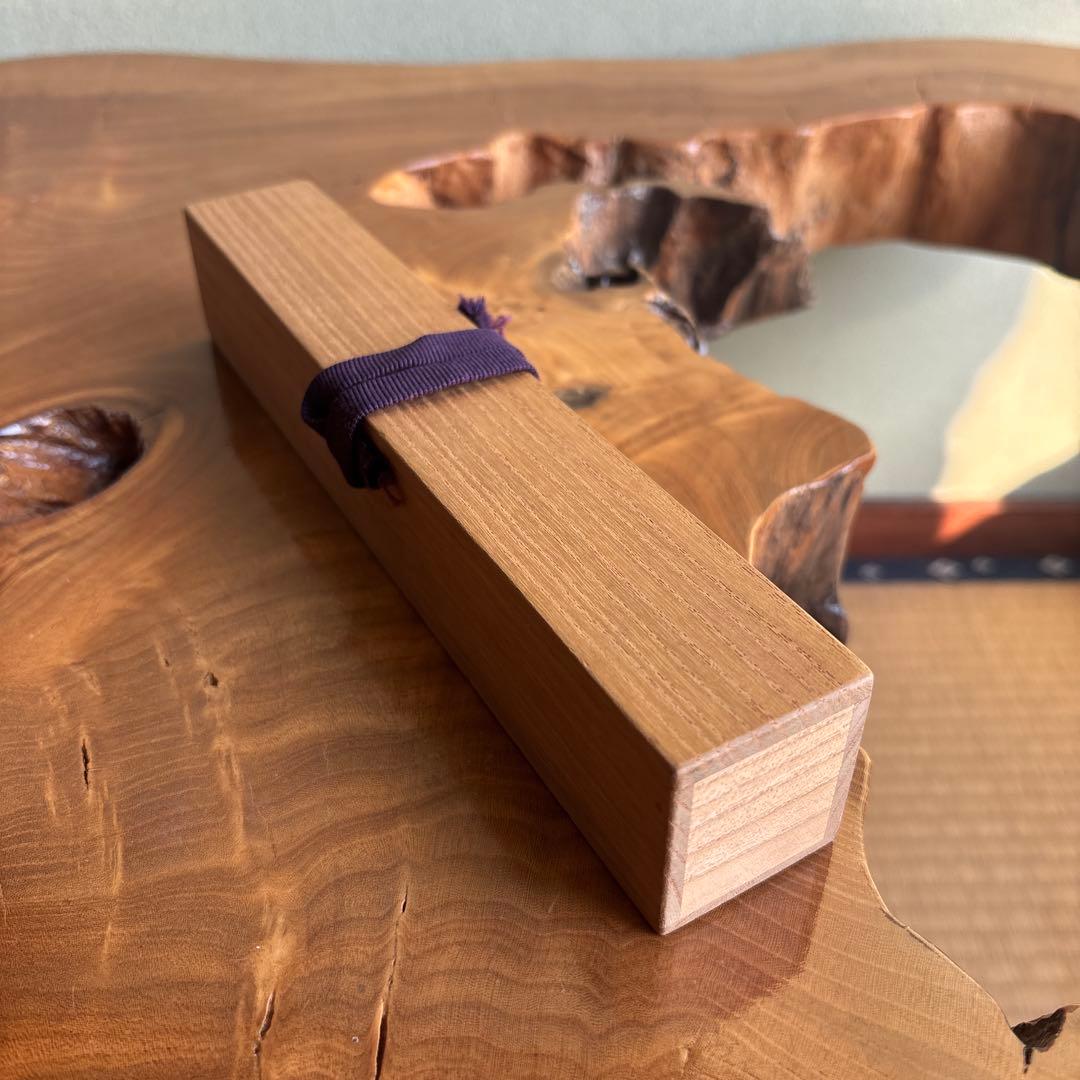
This chashaku arrives with its original bamboo tube (竹筒) and wooden box — the full context of a properly stored and transmitted tea utensil. At L18.4cm, the proportions are classical. The bamboo was selected and shaped by hands that have participated in countless tea gatherings, in Zen liturgy, in the long rhythm of temple life. That participation does not announce itself. It is simply present.
[ JAPANESE DESCRIPTION / 日本語解説 ]
前大徳寺住職の手による茶杓。銘は「古岩松」 — 岩の上に根を張り、長い年月を生き抜く古松の姿。禅的な風景であり、耐久と静寂の象徴である。この銘を付けた僧は、茶と禅の境界を生きた者であり、その眼差しが茶杓の一本に注がれている。
大徳寺は千利休が禅を学んだ地であり、茶の湯の精神的な源泉のひとつ。前大徳の箱書きを持つ茶道具は、その歴史的文脈の中に位置づけられる。竹筒・木箱入り。長さ18.4cm。
🔹 [ BASIC DETAILS ]
- Object: Tea scoop (茶杓 chashaku)
- Mei (銘): 古岩松 Koiwamatsu — "Ancient Pine on Rock"
- Maker: Former abbot of Daitoku-ji (前大徳, Mae-Daitoku)
- Length: L18.4cm
- Material: Bamboo
- Storage: Original bamboo tube (竹筒) and wooden box
- Provenance: Box inscription (箱書き) by the former abbot
🔹 [ Includes ]
- Tea scoop (chashaku)
- Original bamboo tube (竹筒)
- Wooden box with abbot's inscription
🔹 [ SHIPPING & PACKAGING ]
• Dispatch: Within 1-6 business days
• Carrier: Japan Post EMS / UPS (with tracking)
• Packaging: Carefully wrapped with protective materials
🔹 [ Cultural & Artistic Insight ]
Daitoku-ji (大徳寺) in Kyoto is not simply a Zen temple. It is the ground on which the spirit of Japanese tea ceremony was formed. Sen no Rikyū practiced Zen here under Kokei Sōchin; the relationship between Zen and tea — the insistence that the way of tea is also a way of stillness — was forged within these walls. For five centuries, the abbots of Daitoku-ji have stood at the intersection of monastic life and tea culture. A chashaku carved and named by a former abbot of this temple carries that entire history in its bamboo.
"Mae-Daitoku" (前大徳) is the honorific for a former abbot of Daitoku-ji — a title granted after full completion of abbatial service. The inscription on the wooden box is not simply attribution; it places this object within a lineage of practice that extends backward through Rikyū, through generations of Zen tea masters, to the founding understanding that a tea utensil can be an expression of mind.
🔹 [ Deep-Dive Commentary ]
The mei (銘) — the poetic name given to a tea utensil — is among the most refined aspects of chado. "Koiwamatsu" (古岩松) translates as "ancient pine on rock" — a Zen image of endurance without softness, of something that grows not because the conditions are easy but because it does not require them to be. The pine on bare rock is not merely surviving; it has found the shape that the place demanded of it. The name was chosen by a monk who has spent decades in that quality of attention.
This chashaku arrives with its original bamboo tube (竹筒) and wooden box — the full context of a properly stored and transmitted tea utensil. At L18.4cm, the proportions are classical. The bamboo was selected and shaped by hands that have participated in countless tea gatherings, in Zen liturgy, in the long rhythm of temple life. That participation does not announce itself. It is simply present.
[ JAPANESE DESCRIPTION / 日本語解説 ]
前大徳寺住職の手による茶杓。銘は「古岩松」 — 岩の上に根を張り、長い年月を生き抜く古松の姿。禅的な風景であり、耐久と静寂の象徴である。この銘を付けた僧は、茶と禅の境界を生きた者であり、その眼差しが茶杓の一本に注がれている。
大徳寺は千利休が禅を学んだ地であり、茶の湯の精神的な源泉のひとつ。前大徳の箱書きを持つ茶道具は、その歴史的文脈の中に位置づけられる。竹筒・木箱入り。長さ18.4cm。
🔹 [ BASIC DETAILS ]
- Object: Tea scoop (茶杓 chashaku)
- Mei (銘): 古岩松 Koiwamatsu — "Ancient Pine on Rock"
- Maker: Former abbot of Daitoku-ji (前大徳, Mae-Daitoku)
- Length: L18.4cm
- Material: Bamboo
- Storage: Original bamboo tube (竹筒) and wooden box
- Provenance: Box inscription (箱書き) by the former abbot
🔹 [ Includes ]
- Tea scoop (chashaku)
- Original bamboo tube (竹筒)
- Wooden box with abbot's inscription
🔹 [ SHIPPING & PACKAGING ]
• Dispatch: Within 1-6 business days
• Carrier: Japan Post EMS / UPS (with tracking)
• Packaging: Carefully wrapped with protective materials
Quantity
Couldn't load pickup availability
Low stock: 1 left
View full details