1
/
of
15
Tame-nuri Lacquer Kogo Incense Box by Sasaki Reiho — Genjiguruma Maki-e with Aogai & Tin Rim
Tame-nuri Lacquer Kogo Incense Box by Sasaki Reiho — Genjiguruma Maki-e with Aogai & Tin Rim
Regular price
Dhs. 1,170.00 AED
Regular price
Sale price
Dhs. 1,170.00 AED
Taxes included.
Shipping calculated at checkout.
Experience Authentic Japan Art with this Japanese Lacquer Kogo Incense Box. This Tame-nuri Maki-e Kogo serves as a Tea Ceremony Incense Container and Signed Lacquerware Gift, featuring Genjiguruma Wave Maki-e Design and Gold Maki-e Lacquer Art — a must-have for any Art Collector of Japanese Tea Ceremony Accessories.
🔹 [ BASIC DETAILS ]
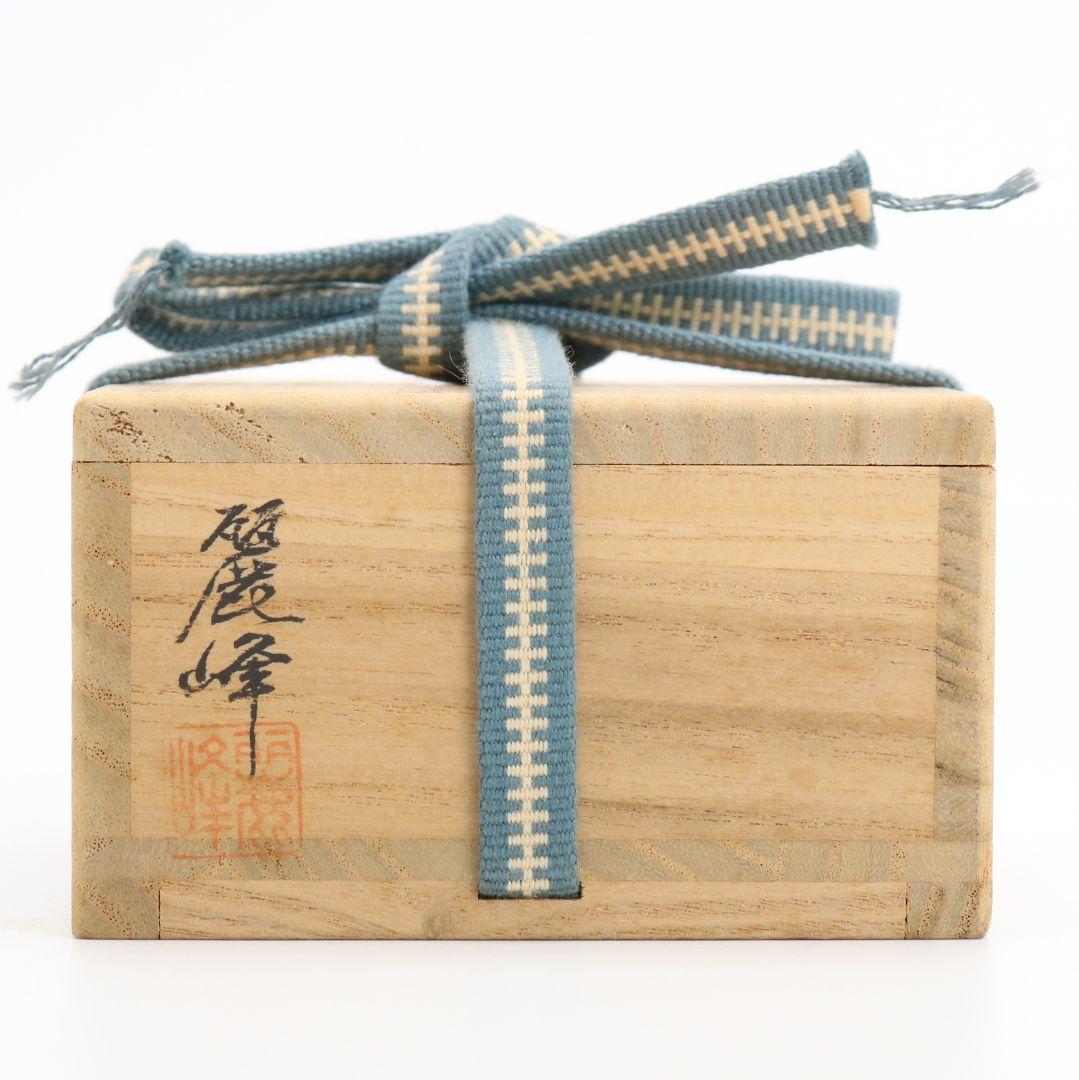
• Artist: Sasaki Reiho (佐々木麗峰) — signed and sealed on the original wooden box
• Technique: Tame-nuri (溜塗) lacquer ground with hiramaki-e gold, silver maki-e, and aogai (abalone shell) inlay accents
• Era: Late Showa to Heisei period (estimated 1980s–2000s)
• Origin: Japan (lacquerware tradition, likely Kyoto school)
• Dimensions: Height approx. 2.4 cm, Diameter approx. 7.3 cm
• Box: Signed original wooden box (共箱) included, with artist's calligraphic inscription and red seal stamp
• Condition: Excellent — no chips, scratches, or lacquer loss; the tin rim (錫縁) is intact and flush
🔹 [ CULTURAL & ARTISTIC INSIGHT ]
The Genjiguruma — ox-cart wheels half-submerged in flowing water — is one of the most storied motifs in Japanese classical art, drawn directly from the world of The Tale of Genji and the aristocratic court culture of Heian-era Kyoto. On this kogo, two great wheels float amid stylized wave crests, their golden spokes rendered in luminous hiramaki-e, the hub caps punctuated by small tablets of aogai whose iridescent teal-green shimmer against the deep amber-red tame-nuri ground like jade stones in a river at dusk. The silver maki-e water spray dots scattered between the waves add a third metallic register, giving the composition a quiet rhythmic life.
Tame-nuri (溜塗) — the "pooled lacquer" finish — is achieved by applying translucent amber lacquer over a base of vermillion, then burnishing to a deep, luminous red-brown that seems to glow from within rather than reflect from the surface. With age and use, tame-nuri develops a profound depth, the base tones shifting and darkening like embers. It is the lacquer finish most associated with quiet refinement: subdued enough for formal tea, rich enough for the most discerning collector.
The tin rim (錫縁) that seals the lid to the body is not merely decorative — it serves a practical tea ceremony function, ensuring the kogo opens and closes with a smooth, controlled resistance, protecting the precious incense within while producing the soft, satisfying sound that connoisseurs of temae (tea procedure) listen for.
POETIC LINE: Two golden wheels drift on endless water — the court is gone, but the journey it made has never stopped.
🔹 [ DEEP-DIVE COMMENTARY ]
The kogo (香合, incense container) occupies a singular place in the Japanese tea ceremony. In the formal ro season (autumn through spring, when the sunken hearth is used), the kogo holds the fragrant wood or incense pellets that perfume the tea space. Its selection, handling, and placement are among the most choreographed moments of the temae, and a lacquer kogo of this caliber — signed, in original box, with a classical motif — represents the kind of utensil that a seasoned practitioner or collector acquires for a lifetime.
The Genjiguruma (源氏車) motif originates in the Heian-period practice of court nobles attending public events in ox-drawn carriages (gosha / goshoguruma). The wheel, partially submerged in water, is thought to have developed as a symbol of aristocratic melancholy — impermanence, the passage of pleasure, the inevitability of change — themes at the very heart of mono no aware, Japan's defining aesthetic of poignant transience. The motif was subsequently absorbed into Noh costume textiles, lacquerware, and ceramics, becoming a canonical design language for the classical arts.
Sasaki Reiho's execution here is technically accomplished across multiple registers simultaneously. The hiramaki-e gold laid for the wheel spokes is flat and matte, creating a contrast against the burnished tame-nuri ground. The aogai inlay — thin sections of iridescent abalone shell set into lacquer recesses — requires precise cutting and laying before the top lacquer coats are applied, then careful sanding-through to reveal the shell surface flush with the surrounding ground. Even in small quantity, as here at the wheel hubs, aogai introduces an optically live element that changes with every angle of light, entirely unlike gold or silver maki-e.
For collectors, three factors converge to make this piece particularly desirable: the classical Genjiguruma motif in excellent condition; the multi-technique maki-e execution (gold hiramaki-e + silver maki-e + aogai inlay) on a superior tame-nuri base; and the presence of the artist's signed original box with red seal, establishing provenance and authenticity. The tin rim, often the first element to show wear on kogo of this type, is fully intact — a sign of careful ownership history.
🔹 [ 日本語解説 ]
■ 基本情報
・作家:佐々木麗峰(共箱に筆書き署名・落款印あり)
・技法:溜塗地・金平蒔絵・銀蒔絵・青貝(アワビ貝)象嵌
・年代:昭和後期〜平成期(推定1980年代〜2000年代)
・産地:日本(京都系漆芸の流れを汲むと推定)
・寸法:高さ約2.4cm、直径約7.3cm
・付属品:共箱(作家直筆署名・落款印入り)
・状態:優良。欠け・塗剥がれなし。錫縁は完全に整い、蓋の開閉はスムーズ。
■ 文化・美術的解説
源氏車とは、平安貴族が牛車の車輪を水に晒して轢れ止めとした風習に由来する古典意匠です。流水に半没する大輪の車輪は、栄華と無常を同時に体現するモチーフとして、のちに能装束・蒔絵・染織の世界に広く根付きました。この香合では、金平蒔絵で描かれた二輪の源氏車が様式化された波濤のなかに浮かび、青貝(アワビ貝の薄板)が車軸部分に嵌め込まれています。青貝は光の角度によって翠色から碧色へと変化し、金蒔絵・銀蒔絵とは異なる生きた輝きを持ちます。
溜塗(ためぬり)は、朱漆の下地に透明な飴色の上塗りを重ね、磨きをかけることで生まれる深みある赤褐色の技法です。時を経るにつれて下の朱が透けはじめ、色調に複雑な奥行きが生まれていきます。静謐でありながら豊かなその表情は、茶席の香合として最もふさわしい仕上げのひとつとされています。
錫縁は単なる装飾ではなく、茶事における実用的な役割を担っています。蓋と身のあいだに適度な抵抗感をもたらし、炉の季節に炭手前で香合を扱う際の所作をより精密なものにします。
■ ディープダイブ解説
香合は炉の季節(秋〜春)の茶事において炭手前に用いられ、香木や練香を収める茶道具のなかでも格別に詩的な存在です。作家の箱書きと落款を備えた本作は、コレクターが終生の一品として手元に置くにふさわしい質と格を持ちます。
佐々木麗峰による本作の蒔絵は、三技法を一面に統合するという技術的な難度を持ちます。金平蒔絵で描かれた車輪の平面的な輝き、銀蒔絵の水飛沫による動的な余白、そして青貝象嵌の有機的な虹彩。これら三者が溜塗の深い地の上で共鳴することで、静寂のなかに複数の時間が流れるような奥行きが生まれています。
コレクターにとって本作の価値は、意匠の格調・多技法の完成度・共箱による来歴の明確さ・錫縁の完存という四点が揃うことにあります。小ぶりながら密度の高い一品です。
🔹 [ SHIPPING & PACKAGING ]
• Dispatch: Within 1-6 business days
• Carrier: Japan Post EMS / UPS (with tracking)
• Packaging: Carefully wrapped with protective materials
🔹 [ BASIC DETAILS ]
• Artist: Sasaki Reiho (佐々木麗峰) — signed and sealed on the original wooden box
• Technique: Tame-nuri (溜塗) lacquer ground with hiramaki-e gold, silver maki-e, and aogai (abalone shell) inlay accents
• Era: Late Showa to Heisei period (estimated 1980s–2000s)
• Origin: Japan (lacquerware tradition, likely Kyoto school)
• Dimensions: Height approx. 2.4 cm, Diameter approx. 7.3 cm
• Box: Signed original wooden box (共箱) included, with artist's calligraphic inscription and red seal stamp
• Condition: Excellent — no chips, scratches, or lacquer loss; the tin rim (錫縁) is intact and flush
🔹 [ CULTURAL & ARTISTIC INSIGHT ]
The Genjiguruma — ox-cart wheels half-submerged in flowing water — is one of the most storied motifs in Japanese classical art, drawn directly from the world of The Tale of Genji and the aristocratic court culture of Heian-era Kyoto. On this kogo, two great wheels float amid stylized wave crests, their golden spokes rendered in luminous hiramaki-e, the hub caps punctuated by small tablets of aogai whose iridescent teal-green shimmer against the deep amber-red tame-nuri ground like jade stones in a river at dusk. The silver maki-e water spray dots scattered between the waves add a third metallic register, giving the composition a quiet rhythmic life.
Tame-nuri (溜塗) — the "pooled lacquer" finish — is achieved by applying translucent amber lacquer over a base of vermillion, then burnishing to a deep, luminous red-brown that seems to glow from within rather than reflect from the surface. With age and use, tame-nuri develops a profound depth, the base tones shifting and darkening like embers. It is the lacquer finish most associated with quiet refinement: subdued enough for formal tea, rich enough for the most discerning collector.
The tin rim (錫縁) that seals the lid to the body is not merely decorative — it serves a practical tea ceremony function, ensuring the kogo opens and closes with a smooth, controlled resistance, protecting the precious incense within while producing the soft, satisfying sound that connoisseurs of temae (tea procedure) listen for.
POETIC LINE: Two golden wheels drift on endless water — the court is gone, but the journey it made has never stopped.
🔹 [ DEEP-DIVE COMMENTARY ]
The kogo (香合, incense container) occupies a singular place in the Japanese tea ceremony. In the formal ro season (autumn through spring, when the sunken hearth is used), the kogo holds the fragrant wood or incense pellets that perfume the tea space. Its selection, handling, and placement are among the most choreographed moments of the temae, and a lacquer kogo of this caliber — signed, in original box, with a classical motif — represents the kind of utensil that a seasoned practitioner or collector acquires for a lifetime.
The Genjiguruma (源氏車) motif originates in the Heian-period practice of court nobles attending public events in ox-drawn carriages (gosha / goshoguruma). The wheel, partially submerged in water, is thought to have developed as a symbol of aristocratic melancholy — impermanence, the passage of pleasure, the inevitability of change — themes at the very heart of mono no aware, Japan's defining aesthetic of poignant transience. The motif was subsequently absorbed into Noh costume textiles, lacquerware, and ceramics, becoming a canonical design language for the classical arts.
Sasaki Reiho's execution here is technically accomplished across multiple registers simultaneously. The hiramaki-e gold laid for the wheel spokes is flat and matte, creating a contrast against the burnished tame-nuri ground. The aogai inlay — thin sections of iridescent abalone shell set into lacquer recesses — requires precise cutting and laying before the top lacquer coats are applied, then careful sanding-through to reveal the shell surface flush with the surrounding ground. Even in small quantity, as here at the wheel hubs, aogai introduces an optically live element that changes with every angle of light, entirely unlike gold or silver maki-e.
For collectors, three factors converge to make this piece particularly desirable: the classical Genjiguruma motif in excellent condition; the multi-technique maki-e execution (gold hiramaki-e + silver maki-e + aogai inlay) on a superior tame-nuri base; and the presence of the artist's signed original box with red seal, establishing provenance and authenticity. The tin rim, often the first element to show wear on kogo of this type, is fully intact — a sign of careful ownership history.
🔹 [ 日本語解説 ]
■ 基本情報
・作家:佐々木麗峰(共箱に筆書き署名・落款印あり)
・技法:溜塗地・金平蒔絵・銀蒔絵・青貝(アワビ貝)象嵌
・年代:昭和後期〜平成期(推定1980年代〜2000年代)
・産地:日本(京都系漆芸の流れを汲むと推定)
・寸法:高さ約2.4cm、直径約7.3cm
・付属品:共箱(作家直筆署名・落款印入り)
・状態:優良。欠け・塗剥がれなし。錫縁は完全に整い、蓋の開閉はスムーズ。
■ 文化・美術的解説
源氏車とは、平安貴族が牛車の車輪を水に晒して轢れ止めとした風習に由来する古典意匠です。流水に半没する大輪の車輪は、栄華と無常を同時に体現するモチーフとして、のちに能装束・蒔絵・染織の世界に広く根付きました。この香合では、金平蒔絵で描かれた二輪の源氏車が様式化された波濤のなかに浮かび、青貝(アワビ貝の薄板)が車軸部分に嵌め込まれています。青貝は光の角度によって翠色から碧色へと変化し、金蒔絵・銀蒔絵とは異なる生きた輝きを持ちます。
溜塗(ためぬり)は、朱漆の下地に透明な飴色の上塗りを重ね、磨きをかけることで生まれる深みある赤褐色の技法です。時を経るにつれて下の朱が透けはじめ、色調に複雑な奥行きが生まれていきます。静謐でありながら豊かなその表情は、茶席の香合として最もふさわしい仕上げのひとつとされています。
錫縁は単なる装飾ではなく、茶事における実用的な役割を担っています。蓋と身のあいだに適度な抵抗感をもたらし、炉の季節に炭手前で香合を扱う際の所作をより精密なものにします。
■ ディープダイブ解説
香合は炉の季節(秋〜春)の茶事において炭手前に用いられ、香木や練香を収める茶道具のなかでも格別に詩的な存在です。作家の箱書きと落款を備えた本作は、コレクターが終生の一品として手元に置くにふさわしい質と格を持ちます。
佐々木麗峰による本作の蒔絵は、三技法を一面に統合するという技術的な難度を持ちます。金平蒔絵で描かれた車輪の平面的な輝き、銀蒔絵の水飛沫による動的な余白、そして青貝象嵌の有機的な虹彩。これら三者が溜塗の深い地の上で共鳴することで、静寂のなかに複数の時間が流れるような奥行きが生まれています。
コレクターにとって本作の価値は、意匠の格調・多技法の完成度・共箱による来歴の明確さ・錫縁の完存という四点が揃うことにあります。小ぶりながら密度の高い一品です。
🔹 [ SHIPPING & PACKAGING ]
• Dispatch: Within 1-6 business days
• Carrier: Japan Post EMS / UPS (with tracking)
• Packaging: Carefully wrapped with protective materials
Quantity
Couldn't load pickup availability
Low stock: 1 left
View full details