1
/
of
10
Suzumushi Maki-e Nasu-gata Chaki by Chikuryō — Black Lacquer Tea Caddy with Bell Cricket Motif, Tomobako
Suzumushi Maki-e Nasu-gata Chaki by Chikuryō — Black Lacquer Tea Caddy with Bell Cricket Motif, Tomobako
Regular price
Dhs. 1,683.00 AED
Regular price
Sale price
Dhs. 1,683.00 AED
Taxes included.
Shipping calculated at checkout.
Experience Authentic Japan Art with this Nasu-gata Chaki, a Japanese lacquer tea caddy, crafted in the eggplant form and decorated with Suzumushi maki-e, the bell cricket motif rendered in gold and silver on deep black urushi lacquer. This Japanese tea ceremony utensil carries the signed work of Chikuryō, a lacquer artist whose brushwork captures the suspended stillness of an autumn night. Housed in its original Tomobako wooden storage box with hand-brushed inscription, this Japanese antique tea caddy is a complete and documented object for the serious collector of Japanese lacquerware, wabi-sabi aesthetics, and traditional craft. Whether displayed in a tokonoma alcove or used in an active tea practice, this Chado tea utensil holds the weight of the season it was made to represent.
🔹 [ BASIC DETAILS ]
• Object: Nasu-gata Chaki (eggplant-form tea caddy / thin-tea container)
• Artist: Chikuryō (筑良) — lacquer artist, signed and sealed
• Technique: Black urushi lacquer body with gold and silver maki-e (sprinkled picture) decoration
• Motif: Suzumushi (鈴虫 / bell cricket) with autumn grasses, rendered in fine-line kinpun and ginpun
• Lid: Natural wood (turned and fitted), with visible grain and dark patina knob
• Interior: Deep mirror-finish black lacquer
• Dimensions: Approx. H 7.2 cm × W 6.3 cm (H 2.8" × W 2.5")
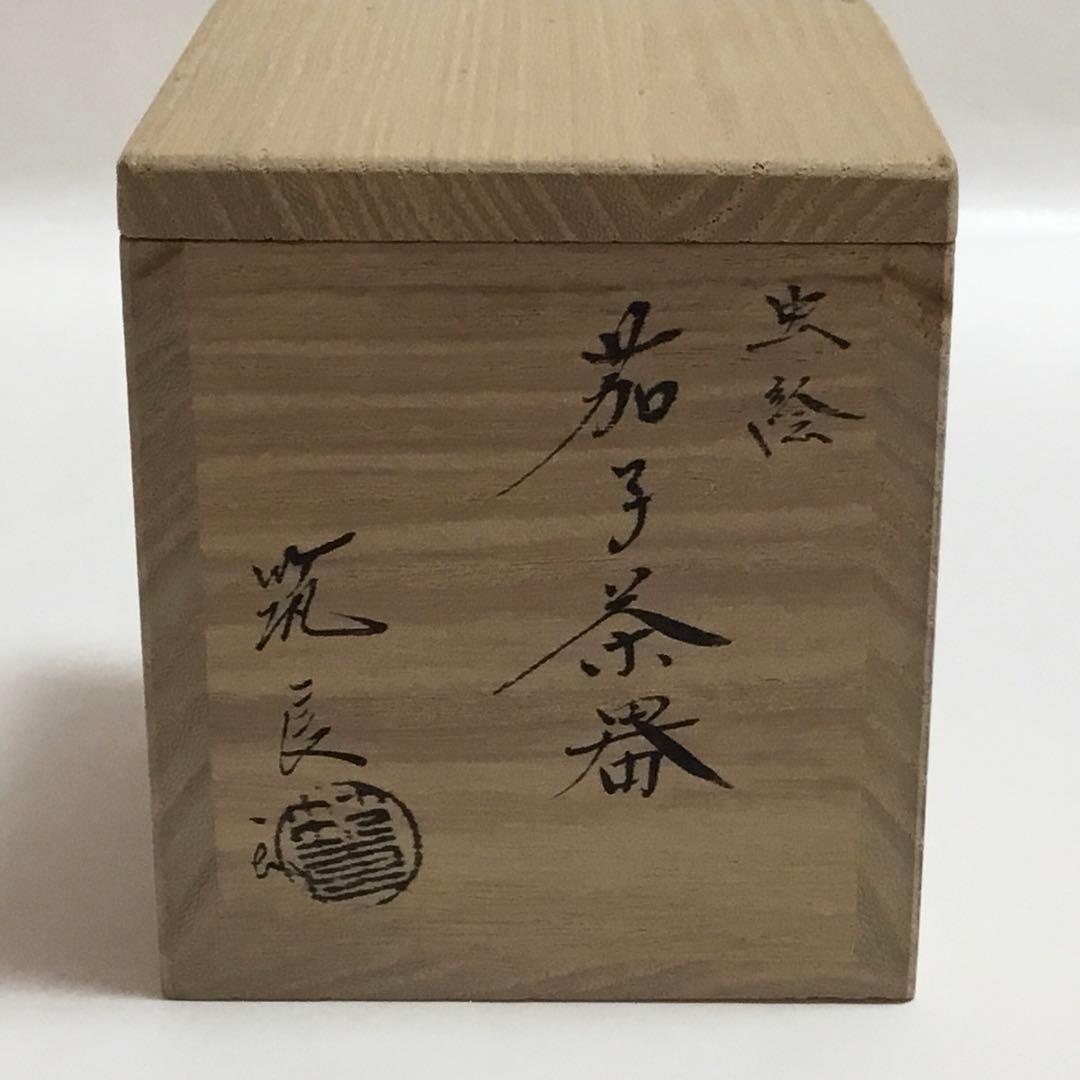
• Storage: Original Tomobako wooden box with ink inscription "忠陰 茄子茶器 筑良" and artist's seal
• Condition: Very good antique condition; lacquer surface shows consistent gloss with age-appropriate depth; no chips or cracks observed
• Origin: Japan
🔹 [ CULTURAL & ARTISTIC INSIGHT ]
The bell cricket does not appear — it arrives.
In Japanese seasonal aesthetics, the suzumushi holds a singular place among autumn sounds. Its call — a thin, silvered thread of sound drawn through the night air — has been a subject of poetry since the Man'yōshū, the eighth-century anthology that first gathered the Japanese emotional landscape into written form. To paint the suzumushi on a tea utensil is not decoration. It is an act of listening made permanent.
The Nasu-gata (eggplant form) is one of the oldest and most culturally weighted shapes in Japanese lacquerware. Its swelling base and narrowing shoulder echo the silhouette of a ripe nasu — a form that appears in classical literature as a symbol of fullness, quietude, and the passage of summer into autumn. In the chanoyu tradition, the Nasu-gata chaki has been associated with deep, interior seasons: tea gatherings held when the air has just begun to cool, when the garden insects begin their final songs.
Chikuryō's execution here is restrained in the manner of accomplished maki-e artists who have understood that emptiness is not absence. The suzumushi is drawn with minimal strokes — the wing venation rendered with a single hair-width line, the legs barely implied, the surrounding grasses offering just enough context to locate the creature in its habitat. The black lacquer ground does not compete; it holds the motif the way silence holds sound.
🔹 [ DEEP-DIVE COMMENTARY ]
The form itself carries precedent. The original Nasu-gata chaki — a Chinese lacquer piece known as Tsukumogami no Nasu — became one of the most storied utensils in the history of Japanese tea. Owned successively by Ashikaga Yoshimasa and later Oda Nobunaga, it was lost in the flames of Honnōji in 1582. That loss became part of the object's meaning: a tea container so esteemed that its destruction in the most consequential political violence of the Sengoku period transformed it into legend. Subsequent Nasu-gata pieces exist in the shadow and inheritance of that original, each one implicitly engaging with the question of what an object survives.
The technique visible on this piece is traditional maki-e in its most disciplined form. Maki-e — literally "sprinkled picture" — involves applying metallic powders (here, gold kinpun and silver ginpun) to wet lacquer with a brush and then sprinkling through a fine tube to build the image. The line quality on the suzumushi's body and wing suggests a practiced hand, one accustomed to working at scale in miniature. On a surface measuring only 6.3 cm across, the insect reads with anatomical clarity without ever becoming a scientific illustration. This is the essential balance: precision in service of presence, not precision as an end in itself.
The wooden lid deserves separate attention. In Japanese lacquerware, the contrast between the organic warmth of natural wood and the mineral depth of urushi lacquer is an intentional aesthetic dialogue, not a compromise. The lid here has been turned from a single piece of fine-grained hardwood — the grain swirls concentrically when viewed from above, as though the wood itself is in slow motion. The dark wood knob, slightly worn at the grip point, suggests the object has been used, lifted, placed — that it has participated in the tea practice it was made to serve.
The Tomobako (original wooden storage box) adds a layer of documentary integrity that significantly increases the object's collectible interest. The ink inscription identifies the piece as "Chūin Nasu Chaki Chikuryō" — the artist's chosen name rendered alongside the object's formal title. The seal impression below the brushwork provides an additional authentication mark. Tomobako in this condition, with this clarity of inscription, are not incidental to the piece; they are part of what the piece is.
For the collector building a seasonal tea utensil collection, this chaki speaks precisely to the autumn shelf. Paired with an appropriate chakin, a bamboo chasen with autumn hue, or displayed with a single stem of susuki grass in a bud vase, the suzumushi motif activates the wider poetic environment. It does not need context to be understood — but it rewards the collector who provides it.
🔹 [ 日本語解説 ]
筑良作・黒漆地鈴虫蒔絵茄子形茶器です。金銀の細線で描かれた鈴虫と秋草が、深みのある黒漆の器面に静かに宿っています。茄子形は日本の漆器の中でも最も由緒ある形状のひとつであり、茶道の世界では秋の茶席に用いられる格調ある薄茶器として知られています。
蓋は天然木の指物蓋。木目が渦を描き、落ち着いた色合いの摘みを持ちます。内側は鏡面仕上げの黒漆。本体の光沢は均一で、経年によるふくみがあり、状態は良好です。
共箱付き。箱書きに「忠陰 茄子茶器 筑良」と墨書きされ、落款が押されています。作者の確認ができる、記録として完結した一点です。茶道をたしなむ方、漆器コレクターの方、あるいは日本の秋の美意識を空間に持ち込みたい方に。
サイズ:高さ約7.2センチ、幅約6.3センチ
🔹 [ SHIPPING & PACKAGING ]
• Dispatch: Within 1-6 business days
• Carrier: Japan Post EMS / UPS (with tracking)
• Packaging: Carefully wrapped with protective materials
🔹 [ BASIC DETAILS ]
• Object: Nasu-gata Chaki (eggplant-form tea caddy / thin-tea container)
• Artist: Chikuryō (筑良) — lacquer artist, signed and sealed
• Technique: Black urushi lacquer body with gold and silver maki-e (sprinkled picture) decoration
• Motif: Suzumushi (鈴虫 / bell cricket) with autumn grasses, rendered in fine-line kinpun and ginpun
• Lid: Natural wood (turned and fitted), with visible grain and dark patina knob
• Interior: Deep mirror-finish black lacquer
• Dimensions: Approx. H 7.2 cm × W 6.3 cm (H 2.8" × W 2.5")
• Storage: Original Tomobako wooden box with ink inscription "忠陰 茄子茶器 筑良" and artist's seal
• Condition: Very good antique condition; lacquer surface shows consistent gloss with age-appropriate depth; no chips or cracks observed
• Origin: Japan
🔹 [ CULTURAL & ARTISTIC INSIGHT ]
The bell cricket does not appear — it arrives.
In Japanese seasonal aesthetics, the suzumushi holds a singular place among autumn sounds. Its call — a thin, silvered thread of sound drawn through the night air — has been a subject of poetry since the Man'yōshū, the eighth-century anthology that first gathered the Japanese emotional landscape into written form. To paint the suzumushi on a tea utensil is not decoration. It is an act of listening made permanent.
The Nasu-gata (eggplant form) is one of the oldest and most culturally weighted shapes in Japanese lacquerware. Its swelling base and narrowing shoulder echo the silhouette of a ripe nasu — a form that appears in classical literature as a symbol of fullness, quietude, and the passage of summer into autumn. In the chanoyu tradition, the Nasu-gata chaki has been associated with deep, interior seasons: tea gatherings held when the air has just begun to cool, when the garden insects begin their final songs.
Chikuryō's execution here is restrained in the manner of accomplished maki-e artists who have understood that emptiness is not absence. The suzumushi is drawn with minimal strokes — the wing venation rendered with a single hair-width line, the legs barely implied, the surrounding grasses offering just enough context to locate the creature in its habitat. The black lacquer ground does not compete; it holds the motif the way silence holds sound.
🔹 [ DEEP-DIVE COMMENTARY ]
The form itself carries precedent. The original Nasu-gata chaki — a Chinese lacquer piece known as Tsukumogami no Nasu — became one of the most storied utensils in the history of Japanese tea. Owned successively by Ashikaga Yoshimasa and later Oda Nobunaga, it was lost in the flames of Honnōji in 1582. That loss became part of the object's meaning: a tea container so esteemed that its destruction in the most consequential political violence of the Sengoku period transformed it into legend. Subsequent Nasu-gata pieces exist in the shadow and inheritance of that original, each one implicitly engaging with the question of what an object survives.
The technique visible on this piece is traditional maki-e in its most disciplined form. Maki-e — literally "sprinkled picture" — involves applying metallic powders (here, gold kinpun and silver ginpun) to wet lacquer with a brush and then sprinkling through a fine tube to build the image. The line quality on the suzumushi's body and wing suggests a practiced hand, one accustomed to working at scale in miniature. On a surface measuring only 6.3 cm across, the insect reads with anatomical clarity without ever becoming a scientific illustration. This is the essential balance: precision in service of presence, not precision as an end in itself.
The wooden lid deserves separate attention. In Japanese lacquerware, the contrast between the organic warmth of natural wood and the mineral depth of urushi lacquer is an intentional aesthetic dialogue, not a compromise. The lid here has been turned from a single piece of fine-grained hardwood — the grain swirls concentrically when viewed from above, as though the wood itself is in slow motion. The dark wood knob, slightly worn at the grip point, suggests the object has been used, lifted, placed — that it has participated in the tea practice it was made to serve.
The Tomobako (original wooden storage box) adds a layer of documentary integrity that significantly increases the object's collectible interest. The ink inscription identifies the piece as "Chūin Nasu Chaki Chikuryō" — the artist's chosen name rendered alongside the object's formal title. The seal impression below the brushwork provides an additional authentication mark. Tomobako in this condition, with this clarity of inscription, are not incidental to the piece; they are part of what the piece is.
For the collector building a seasonal tea utensil collection, this chaki speaks precisely to the autumn shelf. Paired with an appropriate chakin, a bamboo chasen with autumn hue, or displayed with a single stem of susuki grass in a bud vase, the suzumushi motif activates the wider poetic environment. It does not need context to be understood — but it rewards the collector who provides it.
🔹 [ 日本語解説 ]
筑良作・黒漆地鈴虫蒔絵茄子形茶器です。金銀の細線で描かれた鈴虫と秋草が、深みのある黒漆の器面に静かに宿っています。茄子形は日本の漆器の中でも最も由緒ある形状のひとつであり、茶道の世界では秋の茶席に用いられる格調ある薄茶器として知られています。
蓋は天然木の指物蓋。木目が渦を描き、落ち着いた色合いの摘みを持ちます。内側は鏡面仕上げの黒漆。本体の光沢は均一で、経年によるふくみがあり、状態は良好です。
共箱付き。箱書きに「忠陰 茄子茶器 筑良」と墨書きされ、落款が押されています。作者の確認ができる、記録として完結した一点です。茶道をたしなむ方、漆器コレクターの方、あるいは日本の秋の美意識を空間に持ち込みたい方に。
サイズ:高さ約7.2センチ、幅約6.3センチ
🔹 [ SHIPPING & PACKAGING ]
• Dispatch: Within 1-6 business days
• Carrier: Japan Post EMS / UPS (with tracking)
• Packaging: Carefully wrapped with protective materials
Quantity
Couldn't load pickup availability
Low stock: 1 left
View full details