1
/
of
8
Suzuki Jinshi Hida Takayama Ittobori Mandarin Duck Pair — Ichii Yew Wood, Oshidori Kogo, Tomobako
Suzuki Jinshi Hida Takayama Ittobori Mandarin Duck Pair — Ichii Yew Wood, Oshidori Kogo, Tomobako
Regular price
Dhs. 455.00 AED
Regular price
Sale price
Dhs. 455.00 AED
Taxes included.
Shipping calculated at checkout.
Two birds. One wood. A tradition from the mountain interior of Japan that refuses ornamentation.
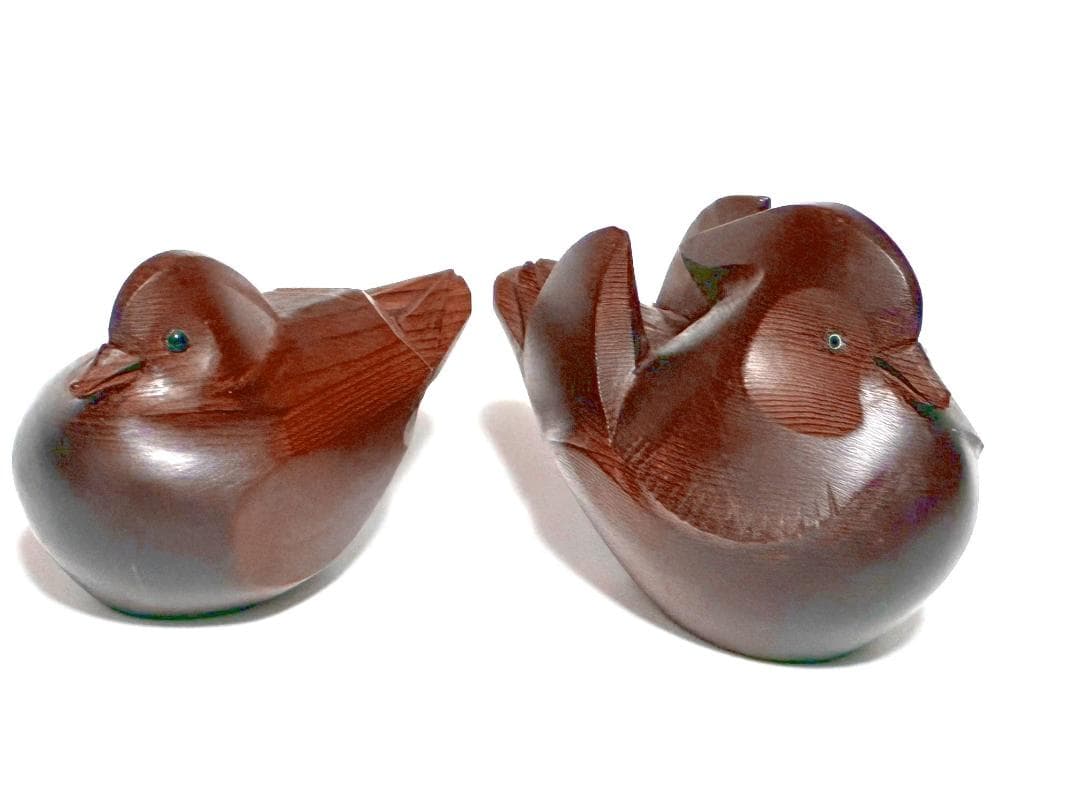
Suzuki Jinshi carved this oshidori pair in ichii — Japanese yew — using the ittobori technique of Hida Takayama: single decisive knife strokes, each cut visible, the surface retaining the evidence of its making. The deep reddish-brown of the ichii wood requires no stain; this is the tree's own color, stabilized by time and oil. The male duck holds elaborate wing detail in the faceted planes of the ittobori method. The female is quieter, her form resolved with fewer strokes. Black bead eyes observe everything equally. The carved bottoms carry the artist's seal.
The tomobako inscription reads 水鳥香合 — water bird incense container — though both pieces function equally well as sculptural objects for the tokonoma alcove or a display shelf.
Male: approximately beak to tail 6.5 cm, H 4.2 cm. Female: chest to tail 5.8 cm, H 3.5 cm.
Hida Takayama's ittobori tradition emerged in the mountain province of Hida, now Gifu Prefecture, where long winters and abundant yew created conditions for a carving practice that valued directness over refinement. Ittobori objects were originally folk implements and votive figures. Their elevation into the tea room is a twentieth-century acknowledgment that folk craft and chado aesthetics share a common preference for the unconcealed.
———
【一位一刀彫 水鳥(おしどり)香合 鈴木仁之作 飛騨高山】
飛騨高山の伝統工芸・一位一刀彫によるおしどりのつがい。一刀ごとの削り跡が残る技法が一位(イチイ)の深い赤褐色と相まって、独特の素朴な美しさを生みます。雄は翼の細工が精緻で、雌はより静謐な造形。共に底部に作家印あり。共箱銘「水鳥香合」。茶席の飾りや床の間の置物としても格調ある逸品です。
🔹 [ SHIPPING & PACKAGING ]
• Dispatch: Within 1-6 business days
• Carrier: Japan Post EMS / UPS (with tracking)
• Packaging: Carefully wrapped with protective materials
Suzuki Jinshi carved this oshidori pair in ichii — Japanese yew — using the ittobori technique of Hida Takayama: single decisive knife strokes, each cut visible, the surface retaining the evidence of its making. The deep reddish-brown of the ichii wood requires no stain; this is the tree's own color, stabilized by time and oil. The male duck holds elaborate wing detail in the faceted planes of the ittobori method. The female is quieter, her form resolved with fewer strokes. Black bead eyes observe everything equally. The carved bottoms carry the artist's seal.
The tomobako inscription reads 水鳥香合 — water bird incense container — though both pieces function equally well as sculptural objects for the tokonoma alcove or a display shelf.
Male: approximately beak to tail 6.5 cm, H 4.2 cm. Female: chest to tail 5.8 cm, H 3.5 cm.
Hida Takayama's ittobori tradition emerged in the mountain province of Hida, now Gifu Prefecture, where long winters and abundant yew created conditions for a carving practice that valued directness over refinement. Ittobori objects were originally folk implements and votive figures. Their elevation into the tea room is a twentieth-century acknowledgment that folk craft and chado aesthetics share a common preference for the unconcealed.
———
【一位一刀彫 水鳥(おしどり)香合 鈴木仁之作 飛騨高山】
飛騨高山の伝統工芸・一位一刀彫によるおしどりのつがい。一刀ごとの削り跡が残る技法が一位(イチイ)の深い赤褐色と相まって、独特の素朴な美しさを生みます。雄は翼の細工が精緻で、雌はより静謐な造形。共に底部に作家印あり。共箱銘「水鳥香合」。茶席の飾りや床の間の置物としても格調ある逸品です。
🔹 [ SHIPPING & PACKAGING ]
• Dispatch: Within 1-6 business days
• Carrier: Japan Post EMS / UPS (with tracking)
• Packaging: Carefully wrapped with protective materials
Quantity
Couldn't load pickup availability
Out of stock
View full details