1
/
of
10
Suzuki Hachiro Kare-no Chawan — Seto Ash-Glazed Tea Bowl with Iron Bamboo, Tomobako
Suzuki Hachiro Kare-no Chawan — Seto Ash-Glazed Tea Bowl with Iron Bamboo, Tomobako
Regular price
Dhs. 529.00 AED
Regular price
Sale price
Dhs. 529.00 AED
Taxes included.
Shipping calculated at checkout.
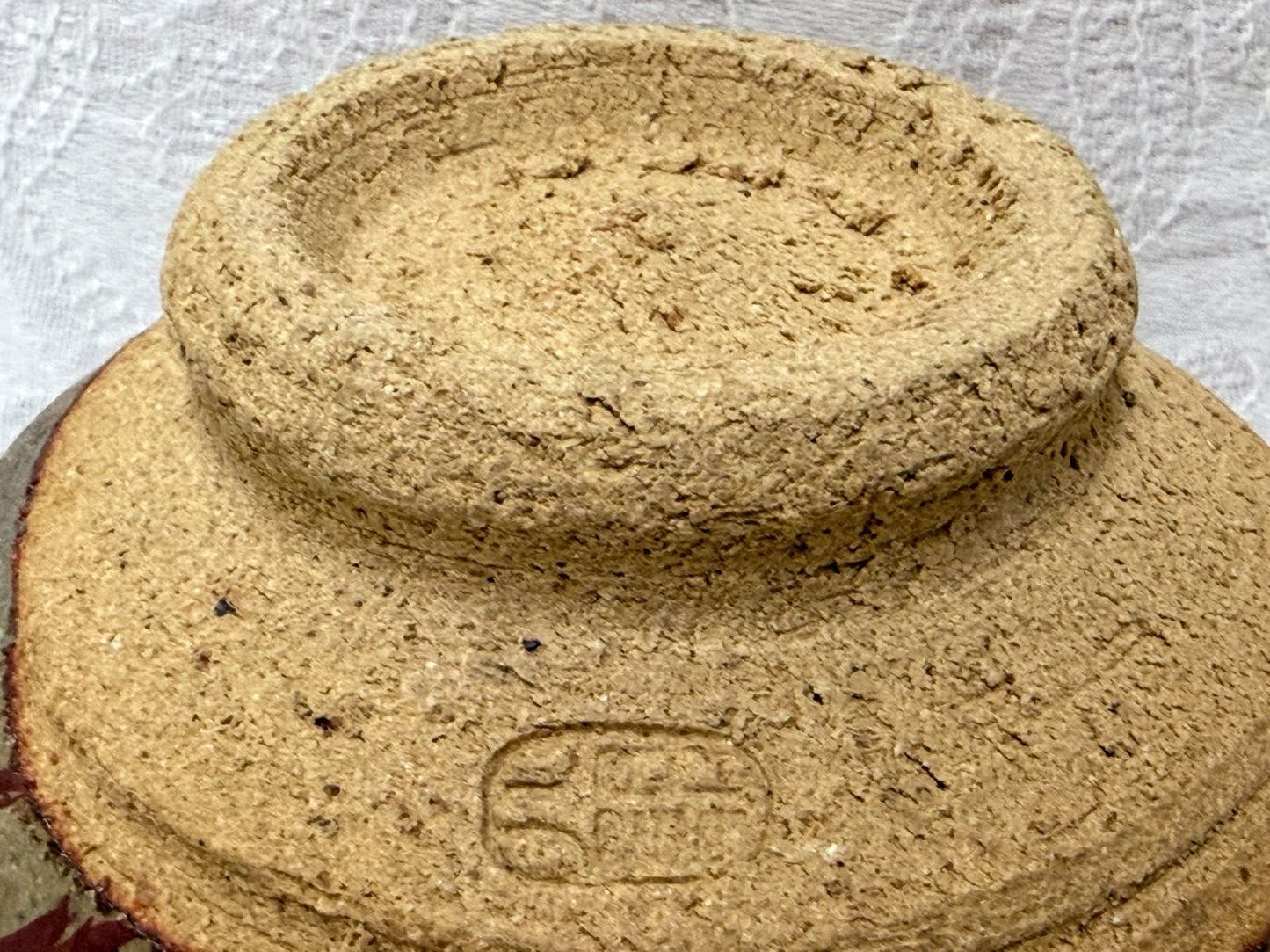
A chawan by Suzuki Hachiro of Taishi-gama, Seto — the body held in a muted olive-green ash glaze, its surface carrying the texture of ground and weather. Across the exterior, iron-painted bamboo (kare-no, withered fields) moves in two or three strokes: spare, unhesitating, settled into the glaze before firing fixed it there. The foot ring stands in unglazed warm clay, the contrast between earth and glaze marking the boundary the maker chose not to close.
🔹 [ BASIC DETAILS ]
• Artist: Suzuki Hachiro (鈴木八郎), Taishi-gama, Seto
• Technique: Ash glaze (hai-yu) with iron-oxide brushwork (tetsu-e)
• Motif: Kare-no (枯野) — withered bamboo
• Origin: Seto, Aichi Prefecture, Japan
• Dimensions: Diameter approx. 13.0 cm, Height approx. 7.0 cm
• Includes: Signed wooden box (tomobako), artist's biographical record (shiori / 栞), shared cloth bag (tomobuno)
• Condition: No notable chips, cracks, or repairs observed
🔹 [ CULTURAL & ARTISTIC INSIGHT ]
Seto (瀬戸) is one of the oldest ceramic centers in Japan, its kilns producing glazed stoneware from at least the Kamakura period — the origin of the word 瀬戸物 (setomono), which became the common noun for ceramic ware in everyday Japanese speech. Taishi-gama sits within this lineage, and Suzuki Hachiro trained under Fujii Enkichi, entering the National Ceramics Exhibition (全国陶芸展) nine times and exhibiting through the Contemporary Ceramics Exhibition and metropolitan galleries across central Japan.
The ash glaze here — a matte, particulate olive that shifts between green and grey depending on light — belongs to a tradition of wood-fired naturalism. Ash glazes form from plant ash applied or settled on the surface during firing; the silica content melts and flows, creating irregularity no brush can replicate. On this bowl, that irregularity is allowed to remain visible: small variations in surface density, subtle pooling at the foot.
The iron-painted bamboo (tetsu-e) is drawn with economy. Kare-no — the withered field, a poetic word from classical Japanese verse associated with late autumn and early winter — implies absence as much as presence. The bamboo is not lush; it is stripped, standing. In chanoyu, such a motif is chosen for its resonance with the season and with the wabi sensibility: the beauty that arrives after fullness has passed.
Poetic line: "The bamboo does not reach the rim — it stops, mid-gesture, as all things in November do."
🔹 [ DEEP-DIVE COMMENTARY ]
Seto-yaki encompasses a wide range of ceramic traditions, but the ash-glaze lineage — often called ko-Seto (古瀬戸, old Seto) in its medieval form — is among the most historically significant. Medieval ko-Seto pieces, fired in anagama kilns with natural ash glaze, were used in early Japanese tea ceremony before the aesthetics of wabi-cha codified in the sixteenth century. The modern Seto tradition draws on this history while producing work in a range of styles; Suzuki Hachiro's chawan represents a quieter, more contemplative end of that range.
Hai-yu (灰釉, ash glaze) is achieved by applying ash — often from rice straw, wood, or specific plant materials — to the clay body before firing, or by allowing kiln ash to naturally deposit during long wood firings. The silica in ash melts at kiln temperatures and flows; iron content in both the clay body and the glaze application produces the warm, particulate quality visible here. The result is a surface that holds memory of the fire without dramatizing it.
Tetsu-e (鉄絵) brushwork — painting with iron-oxide slip or pigment before or under the glaze — requires confidence. The mark cannot be corrected once the clay accepts it. The bamboo on this chawan shows that confidence: two or three strokes, a node, angled leaves, and silence. The kare-no (枯野) motif is drawn from Man'yōshū and classical waka tradition, where the withered field is a landscape of quiet feeling — melancholy, spaciousness, the sound of wind with nothing left to resist it.
The tomobako (共箱) carries Suzuki Hachiro's brushed inscription and two red seals. The shiori (栞) is a printed biographical record — a document that gives the bowl a traceable authorship, unusual at this price point and a direct indicator of how the maker and original owner understood the work's status.
For the collector, this chawan functions across multiple registers: as a seasonal object (suitable for winter temae given the kare-no motif), as a legible example of modern Seto hai-yu, and as a document of a regional craft lineage trained in direct transmission from an established master.
---
【日本語解説】
瀬戸・太子窯の鈴木八郎による茶碗。胴は灰釉をまとい、オリーブ色と灰色の間を静かに漂う、粒子感ある表面をもつ。外側には鉄絵で竹が描かれている——枯野、すなわち晩秋から初冬の野の情景。筆は二、三本の線で止まり、釉薬の中に固定されたまま動かない。高台は無釉の土肌をあらわに残し、釉と地の境界が、作者の選択として刻まれている。
鈴木八郎は藤井遠吉先生に師事し、全国陶芸展へ九回入選。現代陶芸展、名古屋・東京等の展覧会にも出品した記録が栞(履歴書)に明記されている。
灰釉(はいゆ)は植物の灰を素地に施すか、窯内の降灰が自然に溶けることで生まれる。鉄分を含む土と釉が重なり、焔の記憶を静かにとどめた表面となる。鉄絵(てつえ)の竹は修正の効かない一発の筆で描かれる。枯野の竹は、万葉以来の和歌の情景——満ちた後の静けさ、風だけが通る空白の美——を体に刻んでいる。
詩的な一句:「竹は口縁まで届かない。十一月のすべてのものと同じように、その途中で、静かに止まる。」
共箱には八郎自筆の書と朱印が入り、栞(履歴書)は作家の来歴を記した文書として付属する。季節の茶(冬の点前)に用いるにふさわしい枯野の景色、灰釉の肌、そして系譜の確かさ——三つが重なる茶碗。
---
🔹 [ SHIPPING & PACKAGING ]
• Dispatch: Within 1-6 business days
• Carrier: Japan Post EMS / UPS / FedEx (with tracking)
• Packaging: Carefully wrapped with protective materials
🔹 [ BASIC DETAILS ]
• Artist: Suzuki Hachiro (鈴木八郎), Taishi-gama, Seto
• Technique: Ash glaze (hai-yu) with iron-oxide brushwork (tetsu-e)
• Motif: Kare-no (枯野) — withered bamboo
• Origin: Seto, Aichi Prefecture, Japan
• Dimensions: Diameter approx. 13.0 cm, Height approx. 7.0 cm
• Includes: Signed wooden box (tomobako), artist's biographical record (shiori / 栞), shared cloth bag (tomobuno)
• Condition: No notable chips, cracks, or repairs observed
🔹 [ CULTURAL & ARTISTIC INSIGHT ]
Seto (瀬戸) is one of the oldest ceramic centers in Japan, its kilns producing glazed stoneware from at least the Kamakura period — the origin of the word 瀬戸物 (setomono), which became the common noun for ceramic ware in everyday Japanese speech. Taishi-gama sits within this lineage, and Suzuki Hachiro trained under Fujii Enkichi, entering the National Ceramics Exhibition (全国陶芸展) nine times and exhibiting through the Contemporary Ceramics Exhibition and metropolitan galleries across central Japan.
The ash glaze here — a matte, particulate olive that shifts between green and grey depending on light — belongs to a tradition of wood-fired naturalism. Ash glazes form from plant ash applied or settled on the surface during firing; the silica content melts and flows, creating irregularity no brush can replicate. On this bowl, that irregularity is allowed to remain visible: small variations in surface density, subtle pooling at the foot.
The iron-painted bamboo (tetsu-e) is drawn with economy. Kare-no — the withered field, a poetic word from classical Japanese verse associated with late autumn and early winter — implies absence as much as presence. The bamboo is not lush; it is stripped, standing. In chanoyu, such a motif is chosen for its resonance with the season and with the wabi sensibility: the beauty that arrives after fullness has passed.
Poetic line: "The bamboo does not reach the rim — it stops, mid-gesture, as all things in November do."
🔹 [ DEEP-DIVE COMMENTARY ]
Seto-yaki encompasses a wide range of ceramic traditions, but the ash-glaze lineage — often called ko-Seto (古瀬戸, old Seto) in its medieval form — is among the most historically significant. Medieval ko-Seto pieces, fired in anagama kilns with natural ash glaze, were used in early Japanese tea ceremony before the aesthetics of wabi-cha codified in the sixteenth century. The modern Seto tradition draws on this history while producing work in a range of styles; Suzuki Hachiro's chawan represents a quieter, more contemplative end of that range.
Hai-yu (灰釉, ash glaze) is achieved by applying ash — often from rice straw, wood, or specific plant materials — to the clay body before firing, or by allowing kiln ash to naturally deposit during long wood firings. The silica in ash melts at kiln temperatures and flows; iron content in both the clay body and the glaze application produces the warm, particulate quality visible here. The result is a surface that holds memory of the fire without dramatizing it.
Tetsu-e (鉄絵) brushwork — painting with iron-oxide slip or pigment before or under the glaze — requires confidence. The mark cannot be corrected once the clay accepts it. The bamboo on this chawan shows that confidence: two or three strokes, a node, angled leaves, and silence. The kare-no (枯野) motif is drawn from Man'yōshū and classical waka tradition, where the withered field is a landscape of quiet feeling — melancholy, spaciousness, the sound of wind with nothing left to resist it.
The tomobako (共箱) carries Suzuki Hachiro's brushed inscription and two red seals. The shiori (栞) is a printed biographical record — a document that gives the bowl a traceable authorship, unusual at this price point and a direct indicator of how the maker and original owner understood the work's status.
For the collector, this chawan functions across multiple registers: as a seasonal object (suitable for winter temae given the kare-no motif), as a legible example of modern Seto hai-yu, and as a document of a regional craft lineage trained in direct transmission from an established master.
---
【日本語解説】
瀬戸・太子窯の鈴木八郎による茶碗。胴は灰釉をまとい、オリーブ色と灰色の間を静かに漂う、粒子感ある表面をもつ。外側には鉄絵で竹が描かれている——枯野、すなわち晩秋から初冬の野の情景。筆は二、三本の線で止まり、釉薬の中に固定されたまま動かない。高台は無釉の土肌をあらわに残し、釉と地の境界が、作者の選択として刻まれている。
鈴木八郎は藤井遠吉先生に師事し、全国陶芸展へ九回入選。現代陶芸展、名古屋・東京等の展覧会にも出品した記録が栞(履歴書)に明記されている。
灰釉(はいゆ)は植物の灰を素地に施すか、窯内の降灰が自然に溶けることで生まれる。鉄分を含む土と釉が重なり、焔の記憶を静かにとどめた表面となる。鉄絵(てつえ)の竹は修正の効かない一発の筆で描かれる。枯野の竹は、万葉以来の和歌の情景——満ちた後の静けさ、風だけが通る空白の美——を体に刻んでいる。
詩的な一句:「竹は口縁まで届かない。十一月のすべてのものと同じように、その途中で、静かに止まる。」
共箱には八郎自筆の書と朱印が入り、栞(履歴書)は作家の来歴を記した文書として付属する。季節の茶(冬の点前)に用いるにふさわしい枯野の景色、灰釉の肌、そして系譜の確かさ——三つが重なる茶碗。
---
🔹 [ SHIPPING & PACKAGING ]
• Dispatch: Within 1-6 business days
• Carrier: Japan Post EMS / UPS / FedEx (with tracking)
• Packaging: Carefully wrapped with protective materials
Quantity
Couldn't load pickup availability
Low stock: 1 left
View full details