1
/
of
18
Suzu-gata Kogo Incense Container by Koshu, Authenticated by Hisada Soya Jingyu-sai, Signed Box
Suzu-gata Kogo Incense Container by Koshu, Authenticated by Hisada Soya Jingyu-sai, Signed Box
Regular price
Dhs. 1,270.00 AED
Regular price
Sale price
Dhs. 1,270.00 AED
Taxes included.
Shipping calculated at checkout.
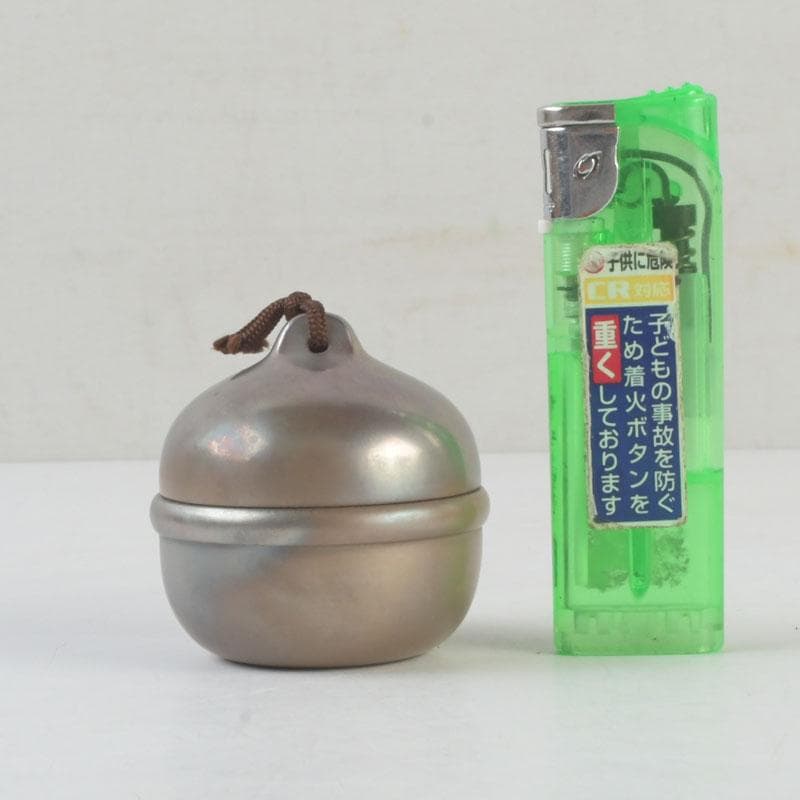
Experience Authentic Japanese Tea Ceremony Art with this Japanese Incense Container. This Suzu-gata Kogo serves as a Tea Ceremony Accessory and Collector Kogo, featuring Lacquer Metalwork and Iemoto Authentication—a must-have for any Art Collector seeking Vintage Japanese Tea Art and Traditional Tea Utensils.
🔹 [ BASIC DETAILS ]
• Artist: Koshu (古秋) — metalwork / lacquer artist
• Form: Suzu-gata (鈴形 / bell-shaped) kogo — incense container
• Technique: Silvered metal construction with lacquer finish; fitted lid with braided cord handle (kumihimo)
• Dimensions: Height approx. 4.5 cm, Width approx. 4.8 cm, Weight approx. 22 g
• Authentication: Signed kiribako (paulownia wood box) with inscription by Hisada Sōya (久田宗也), 16th iemoto of Hisada-ryū, Omotesenke lineage — posthumously known as Jingyu-sai (尋牛斎)
• Condition: Very good; fine silvered surface with gentle age patina; braided cord handle intact; no cracks or chips
• Provenance: Japan; sold with original cloth bag (shifuku-style)
🔹 [ CULTURAL & ARTISTIC INSIGHT ]
The bell form — suzu — carries deep resonance in Japanese culture. Worn at shrines, hung at altars, and carried by priests in procession, the suzu holds both sacred sound and sacred silence. As a kogo (香合, incense container), it does not ring. Instead it seals. What it holds — a fragment of burned wood, resin, or pressed incense — will rise as smoke into the ceremony's air, marking the moment between entry and tea.
Koshu rendered this form not in ceramic, which is more common for kogo, but in metal with a lacquer surface — a choice that gives the piece its particular weight and hush. The silvered finish across the dome is neither bright nor dull. It sits in the in-between: a surface that catches light without seeking attention. The braided cord handle (kumihimo) threads through the apex in rich brown, its tight weave a miniature craft in itself — each loop precise, the frayed ends deliberate.
The fitted wooden box carries the inscription of Hisada Sōya (久田宗也), 16th headmaster of the Hisada lineage within the Omotesenke tradition of the Urasenke-adjacent schools. His name in tea circles carries the weight of eight generations — not merely a signature, but a declaration of provenance and cultural placement. Jingyu-sai, his posthumous name, means "searching for the ox" — an allusion to the Zen parable of enlightenment sought through patient return.
Poetic Line: "A bell that does not ring holds more silence than one that does."
🔹 [ DEEP-DIVE COMMENTARY ]
The suzu-gata kogo occupies a particular place in the world of chabōgu (茶道具, tea ceremony utensils). While most kogo are formed in ceramic — particularly raku, Karatsu, or lacquered wood — metal examples represent a more specialized tradition, often associated with metalworkers who trained alongside lacquer artists in Kyoto workshops during the modern period (Meiji through Showa eras). Koshu worked in this intersection, producing small-format tea utensils that drew on the precision of metalwork without sacrificing the warmth that tea demands.
The suzu form itself — a hemispheric dome atop a rounded base, divided at the equator into a lid and body — mimics the traditional shrine bell in miniature, but repurposes its resonance for the stillness of the tea room. In the context of Omotesenke-style temae, the kogo is placed on the tatami before the guests, opened to reveal a single piece of incense, and then removed before the preparation of usucha or koicha. Its visual presence is brief; its contribution to the gathering's atmosphere is lasting.
Hisada Sōya's authentication adds a dimension that separates this kogo from workshop production. In the world of Japanese tea utensils, iemoto (home/school headmaster) authentication — called gokibako or kirimei — is not decorative. It represents the headmaster's personal assessment of the object's lineage, quality, and fitness for use within the school's tradition. The Hisada-ryū, as a sub-school of Omotesenke, carries its own distinguished certification practice; an inscription by the 16th headmaster carries institutional weight accumulated across nearly four centuries of the school's history.
For collectors, the combination of a strong artistic form, a skilled metalwork execution, and a first-rank iemoto authentication creates an object that functions on multiple levels: as a usable tea utensil, as a scholarly artifact of authentication practice, and as a work of object-based art. The small scale — fitting within the palm — is characteristic of the kogo genre: objects meant to be held, examined, returned to their box. Each handling is a brief ceremony.
[ JAPANESE DESCRIPTION / 日本語解説 ]
🔹 [ 基本情報 ]
• 作家: 古秋(こしゅう)— 金工・漆芸作家
• 形状: 鈴形香合
• 技法: 銀色金属製、漆仕上げ。蓋には組紐のつまみ
• 寸法: 高さ約4.5cm、幅約4.8cm、重さ約22g
• 極め: 久田宗也(尋牛斎)筆による桐箱の極め書き付き。表千家久田流第十六世家元
• 状態: 非常に良好。銀色の地に経年の趣あり、組紐つまみ健全、傷・欠けなし
• 付属品: 仕覆様式の布袋付き
🔹 [ 文化的・芸術的考察 ]
鈴という形は、日本文化において特別な響きを持つ。社に揺れ、祭礼に鳴り、神職の手にさがる鈴は、聖なる音と聖なる静寂の双方を宿す。香合として用いられるとき、この鈴は鳴らない。ただ封をする。中に納められた香の欠片は、やがて煙となって茶の間の空気に溶け込み、入席と点前の狭間の時間を刻む。
古秋はこの形を、香合として一般的な陶磁器ではなく、漆を纏った金属で表現した。その選択が、この作品に独特の重みと静けさを与えている。丸みを帯びたドームを覆う銀色の面は、輝くでもなく、くすむでもなく——光を受け取りながら主張しない、その間合いに置かれている。頂に通された組紐は茶色く、精緻な組の目が小さな工芸としての存在感を示す。
桐箱には久田宗也(尋牛斎)の筆による極め書きがある。尋牛斎の名は禅の公案「十牛図」を思わせ、静かな帰還による悟りを示唆する。その極めは装飾ではなく、由来と文化的位置の宣言である。
詩的な一文: 鳴らない鈴は、鳴る鈴よりも深い沈黙を持つ。
🔹 [ 専門的解説 ]
鈴形香合は茶道具の中でも特殊な位置を占める。多くの香合が楽焼・唐津・漆器などの素材で作られるなか、金工による香合は、明治から昭和にかけて京都の工房で漆芸家と並走した金工職人たちの伝統の中に位置づけられる。古秋はその交点に立ち、金工の精密さと茶が求める温かみを両立させた小品を制作した。
鈴の形そのもの——半球形の蓋と丸みある台が赤道で出会う構造——は神社の鈴を茶の間の寸法へと移し替えたものだが、その共鳴を静けさのために転用している。表千家流の点前において香合は客前の畳に置かれ、蓋を開けて香木の断片を示し、薄茶・濃茶の準備に先んじて引き下げられる。その存在は短く、しかし茶席の雰囲気への寄与は長く残る。
久田宗也家元による極め書きは、箱書きという実践の中においても格別の意味を持つ。家元の極めは個人的な鑑識眼の表明であると同時に、流儀の伝統における位置づけの宣言である。久田流は表千家の分派として独自の由緒ある認定慣行を持ち、十六世家元の筆が持つ重みは四百年近い歴史に裏付けられている。
この香合は、手のひらに収まる寸法の中に、使える茶道具・鑑識の証・造形としての小品という三つの次元を持つ。手に取り、眺め、箱に返す。それぞれの所作が、短い茶の儀礼そのものである。
🔹 [ SHIPPING & PACKAGING ]
• Dispatch: Within 1-6 business days
• Carrier: Japan Post EMS / UPS (with tracking)
• Packaging: Carefully wrapped with protective materials
🔹 [ BASIC DETAILS ]
• Artist: Koshu (古秋) — metalwork / lacquer artist
• Form: Suzu-gata (鈴形 / bell-shaped) kogo — incense container
• Technique: Silvered metal construction with lacquer finish; fitted lid with braided cord handle (kumihimo)
• Dimensions: Height approx. 4.5 cm, Width approx. 4.8 cm, Weight approx. 22 g
• Authentication: Signed kiribako (paulownia wood box) with inscription by Hisada Sōya (久田宗也), 16th iemoto of Hisada-ryū, Omotesenke lineage — posthumously known as Jingyu-sai (尋牛斎)
• Condition: Very good; fine silvered surface with gentle age patina; braided cord handle intact; no cracks or chips
• Provenance: Japan; sold with original cloth bag (shifuku-style)
🔹 [ CULTURAL & ARTISTIC INSIGHT ]
The bell form — suzu — carries deep resonance in Japanese culture. Worn at shrines, hung at altars, and carried by priests in procession, the suzu holds both sacred sound and sacred silence. As a kogo (香合, incense container), it does not ring. Instead it seals. What it holds — a fragment of burned wood, resin, or pressed incense — will rise as smoke into the ceremony's air, marking the moment between entry and tea.
Koshu rendered this form not in ceramic, which is more common for kogo, but in metal with a lacquer surface — a choice that gives the piece its particular weight and hush. The silvered finish across the dome is neither bright nor dull. It sits in the in-between: a surface that catches light without seeking attention. The braided cord handle (kumihimo) threads through the apex in rich brown, its tight weave a miniature craft in itself — each loop precise, the frayed ends deliberate.
The fitted wooden box carries the inscription of Hisada Sōya (久田宗也), 16th headmaster of the Hisada lineage within the Omotesenke tradition of the Urasenke-adjacent schools. His name in tea circles carries the weight of eight generations — not merely a signature, but a declaration of provenance and cultural placement. Jingyu-sai, his posthumous name, means "searching for the ox" — an allusion to the Zen parable of enlightenment sought through patient return.
Poetic Line: "A bell that does not ring holds more silence than one that does."
🔹 [ DEEP-DIVE COMMENTARY ]
The suzu-gata kogo occupies a particular place in the world of chabōgu (茶道具, tea ceremony utensils). While most kogo are formed in ceramic — particularly raku, Karatsu, or lacquered wood — metal examples represent a more specialized tradition, often associated with metalworkers who trained alongside lacquer artists in Kyoto workshops during the modern period (Meiji through Showa eras). Koshu worked in this intersection, producing small-format tea utensils that drew on the precision of metalwork without sacrificing the warmth that tea demands.
The suzu form itself — a hemispheric dome atop a rounded base, divided at the equator into a lid and body — mimics the traditional shrine bell in miniature, but repurposes its resonance for the stillness of the tea room. In the context of Omotesenke-style temae, the kogo is placed on the tatami before the guests, opened to reveal a single piece of incense, and then removed before the preparation of usucha or koicha. Its visual presence is brief; its contribution to the gathering's atmosphere is lasting.
Hisada Sōya's authentication adds a dimension that separates this kogo from workshop production. In the world of Japanese tea utensils, iemoto (home/school headmaster) authentication — called gokibako or kirimei — is not decorative. It represents the headmaster's personal assessment of the object's lineage, quality, and fitness for use within the school's tradition. The Hisada-ryū, as a sub-school of Omotesenke, carries its own distinguished certification practice; an inscription by the 16th headmaster carries institutional weight accumulated across nearly four centuries of the school's history.
For collectors, the combination of a strong artistic form, a skilled metalwork execution, and a first-rank iemoto authentication creates an object that functions on multiple levels: as a usable tea utensil, as a scholarly artifact of authentication practice, and as a work of object-based art. The small scale — fitting within the palm — is characteristic of the kogo genre: objects meant to be held, examined, returned to their box. Each handling is a brief ceremony.
[ JAPANESE DESCRIPTION / 日本語解説 ]
🔹 [ 基本情報 ]
• 作家: 古秋(こしゅう)— 金工・漆芸作家
• 形状: 鈴形香合
• 技法: 銀色金属製、漆仕上げ。蓋には組紐のつまみ
• 寸法: 高さ約4.5cm、幅約4.8cm、重さ約22g
• 極め: 久田宗也(尋牛斎)筆による桐箱の極め書き付き。表千家久田流第十六世家元
• 状態: 非常に良好。銀色の地に経年の趣あり、組紐つまみ健全、傷・欠けなし
• 付属品: 仕覆様式の布袋付き
🔹 [ 文化的・芸術的考察 ]
鈴という形は、日本文化において特別な響きを持つ。社に揺れ、祭礼に鳴り、神職の手にさがる鈴は、聖なる音と聖なる静寂の双方を宿す。香合として用いられるとき、この鈴は鳴らない。ただ封をする。中に納められた香の欠片は、やがて煙となって茶の間の空気に溶け込み、入席と点前の狭間の時間を刻む。
古秋はこの形を、香合として一般的な陶磁器ではなく、漆を纏った金属で表現した。その選択が、この作品に独特の重みと静けさを与えている。丸みを帯びたドームを覆う銀色の面は、輝くでもなく、くすむでもなく——光を受け取りながら主張しない、その間合いに置かれている。頂に通された組紐は茶色く、精緻な組の目が小さな工芸としての存在感を示す。
桐箱には久田宗也(尋牛斎)の筆による極め書きがある。尋牛斎の名は禅の公案「十牛図」を思わせ、静かな帰還による悟りを示唆する。その極めは装飾ではなく、由来と文化的位置の宣言である。
詩的な一文: 鳴らない鈴は、鳴る鈴よりも深い沈黙を持つ。
🔹 [ 専門的解説 ]
鈴形香合は茶道具の中でも特殊な位置を占める。多くの香合が楽焼・唐津・漆器などの素材で作られるなか、金工による香合は、明治から昭和にかけて京都の工房で漆芸家と並走した金工職人たちの伝統の中に位置づけられる。古秋はその交点に立ち、金工の精密さと茶が求める温かみを両立させた小品を制作した。
鈴の形そのもの——半球形の蓋と丸みある台が赤道で出会う構造——は神社の鈴を茶の間の寸法へと移し替えたものだが、その共鳴を静けさのために転用している。表千家流の点前において香合は客前の畳に置かれ、蓋を開けて香木の断片を示し、薄茶・濃茶の準備に先んじて引き下げられる。その存在は短く、しかし茶席の雰囲気への寄与は長く残る。
久田宗也家元による極め書きは、箱書きという実践の中においても格別の意味を持つ。家元の極めは個人的な鑑識眼の表明であると同時に、流儀の伝統における位置づけの宣言である。久田流は表千家の分派として独自の由緒ある認定慣行を持ち、十六世家元の筆が持つ重みは四百年近い歴史に裏付けられている。
この香合は、手のひらに収まる寸法の中に、使える茶道具・鑑識の証・造形としての小品という三つの次元を持つ。手に取り、眺め、箱に返す。それぞれの所作が、短い茶の儀礼そのものである。
🔹 [ SHIPPING & PACKAGING ]
• Dispatch: Within 1-6 business days
• Carrier: Japan Post EMS / UPS (with tracking)
• Packaging: Carefully wrapped with protective materials
Quantity
Couldn't load pickup availability
Low stock: 1 left
View full details