1
/
of
12
Susudake Chashaku Tea Scoop — Named 'Buji' by Zen Master Fujii Seido, Carved by Soryo | Smoked Bamboo, Tomobako
Susudake Chashaku Tea Scoop — Named 'Buji' by Zen Master Fujii Seido, Carved by Soryo | Smoked Bamboo, Tomobako
Regular price
Dhs. 1,028.00 AED
Regular price
Sale price
Dhs. 1,028.00 AED
Taxes included.
Shipping calculated at checkout.
A tea scoop that carries two authorial presences: the hand of the carver, and the mind of a Zen master.
🔹 [ BASIC DETAILS ]
• Artist: Soryo (carver) / Fujii Seido, Mae-Daitoku (Zen master inscription)
• Origin: Kyoto, Japan
• Material: Smoked bamboo (susudake)
• Motif: Buji (無事 — Zen equanimity, non-grasping)
• Era: 1970_1979
• Box: Tomobako (artist's wooden presentation box)
• Condition: Good, carefully inspected
🔹 [ Cultural & Artistic Insight ]
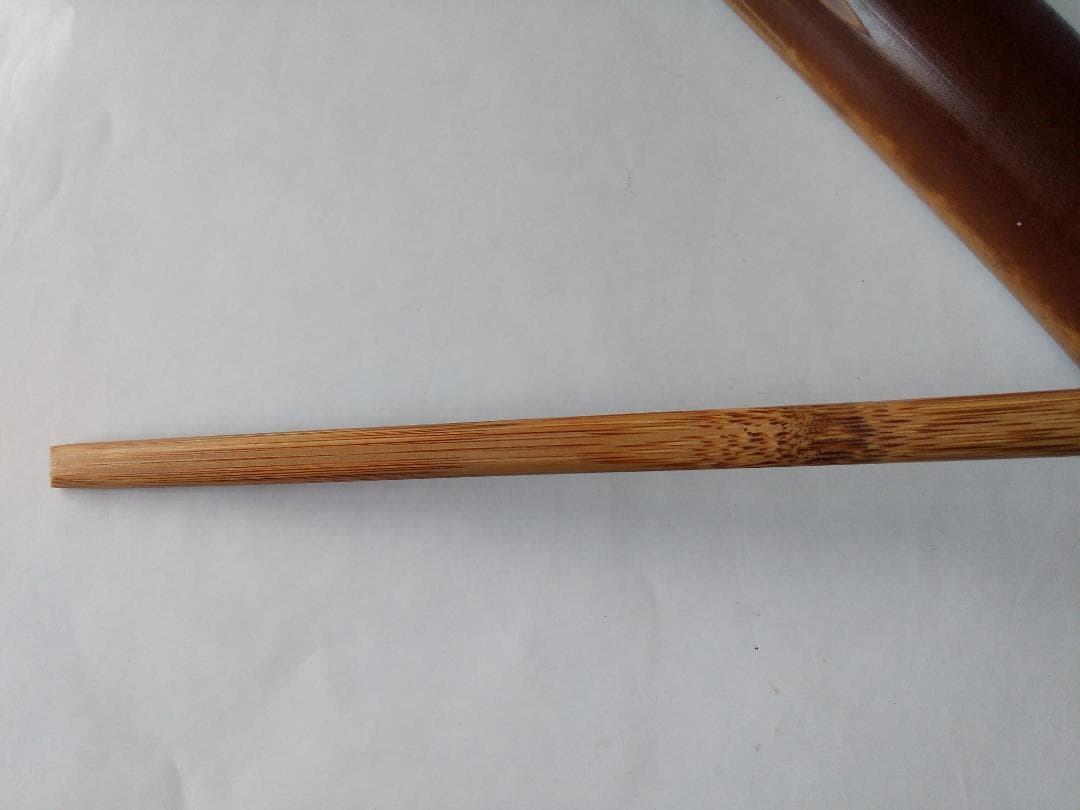
Carved by Soryo, a specialist chashaku craftsman working in the classical tradition, this scoop is formed from susudake — smoked bamboo recovered from old farmhouse rafters, where decades of hearth smoke have driven the color deep into the grain. The surface reads as a single continuous tone: a rich, warm reddish-brown that moves toward amber at the curved tip, darkening toward the cut end. There is no lacquer, no applied finish. What you see is time made material.
The form is restrained and assured. The scoop's curve rises gently, the tip thinned to a controlled delicacy. The node sits at mid-shaft, slightly asymmetric — the kind of detail that a craftsman preserves rather than corrects, because it marks where the bamboo lived. The cutting edge is clean and squared. In the hand, the scoop is light and warm.
The inscription on the inner box lid reads: 銘 無事 — Mei: Buji.
The calligraphy is by Fujii Seido, who held the title Mae-Daitoku — a distinction granted by Daitokuji, the great Rinzai Zen monastery in Kyoto that has stood at the center of Japanese tea culture since the sixteenth century. To receive this title is to be recognized as a figure of genuine spiritual authority within that lineage.
🔹 [ Deep-Dive Commentary ]
Buji (無事) is one of the most direct phrases in the Zen lexicon — and one of the most easily misread. It does not mean 'uneventful' or 'safe.' In Rinzai usage, traced through masters such as Linji Yixuan (Rinzai Gigen), buji names the condition of the person who has ceased to seek completion outside themselves. The character 無 (mu) negates; 事 (ji) means matter, affair, event, contrivance. Together: the absence of grasping. Not emptiness, but the freedom that comes when nothing is forced.
In a tea ceremony context, buji is the quality of the host who has prepared everything and then stepped aside — present without agenda, available without performance. A bowl is placed. Water is poured. The scoop moves. Nothing is added.
To use this scoop in that spirit is to participate in a conversation that has been ongoing for centuries — between carvers and calligraphers, between form and silence, between the bamboo's particular life and the hand that holds it now.
[ DETAILS ]
• Object: Chashaku (matcha tea scoop)
• Material: Susudake (smoked bamboo / hearth-seasoned bamboo)
• Carver: Soryo (chashaku specialist craftsman)
• Named inscription (mei): Buji (無事 — Zen equanimity, non-grasping)
• Inscriber: Fujii Seido, Mae-Daitoku (Former Daitokuji Senior Monk)
• Tomobako (original wooden box) included — double-box presentation
• Box inscription: Mei Buji / Mae-Daitoku Fujii Seido
• Condition: Excellent — no chips, cracks, or significant wear
• Approximate length: approx. 18 cm (standard chashaku)
• Origin: Japan
[ SUITABILITY ]
For practitioners of chado (the way of tea) who understand the weight of a named utensil. For collectors of Zen-inscribed tea objects. For those who keep a quiet shelf.
🔹 [ 日本語解説 ]
茶杓師宗陵による煤竹茶杓。煤竹特有の深みある赤褐色が全体に乗り、節の位置と掬い部分の薄さに職人の判断が宿る。銘「無事」は前大徳・藤井誠堂による墨書。禅語としての「無事」とは、求めることをやめた者の静けさ——臨済禅の核心語のひとつ。大徳寺の墨跡がある茶道具として、稽古・飾り棚いずれの用途にも応じる。共箱(二重箱)付き、美品。
🔹 [ SHIPPING & PACKAGING ]
• Dispatch: Within 1-6 business days
• Carrier: Japan Post EMS / UPS (with tracking)
• Packaging: Carefully wrapped with protective materials
🔹 [ BASIC DETAILS ]
• Artist: Soryo (carver) / Fujii Seido, Mae-Daitoku (Zen master inscription)
• Origin: Kyoto, Japan
• Material: Smoked bamboo (susudake)
• Motif: Buji (無事 — Zen equanimity, non-grasping)
• Era: 1970_1979
• Box: Tomobako (artist's wooden presentation box)
• Condition: Good, carefully inspected
🔹 [ Cultural & Artistic Insight ]
Carved by Soryo, a specialist chashaku craftsman working in the classical tradition, this scoop is formed from susudake — smoked bamboo recovered from old farmhouse rafters, where decades of hearth smoke have driven the color deep into the grain. The surface reads as a single continuous tone: a rich, warm reddish-brown that moves toward amber at the curved tip, darkening toward the cut end. There is no lacquer, no applied finish. What you see is time made material.
The form is restrained and assured. The scoop's curve rises gently, the tip thinned to a controlled delicacy. The node sits at mid-shaft, slightly asymmetric — the kind of detail that a craftsman preserves rather than corrects, because it marks where the bamboo lived. The cutting edge is clean and squared. In the hand, the scoop is light and warm.
The inscription on the inner box lid reads: 銘 無事 — Mei: Buji.
The calligraphy is by Fujii Seido, who held the title Mae-Daitoku — a distinction granted by Daitokuji, the great Rinzai Zen monastery in Kyoto that has stood at the center of Japanese tea culture since the sixteenth century. To receive this title is to be recognized as a figure of genuine spiritual authority within that lineage.
🔹 [ Deep-Dive Commentary ]
Buji (無事) is one of the most direct phrases in the Zen lexicon — and one of the most easily misread. It does not mean 'uneventful' or 'safe.' In Rinzai usage, traced through masters such as Linji Yixuan (Rinzai Gigen), buji names the condition of the person who has ceased to seek completion outside themselves. The character 無 (mu) negates; 事 (ji) means matter, affair, event, contrivance. Together: the absence of grasping. Not emptiness, but the freedom that comes when nothing is forced.
In a tea ceremony context, buji is the quality of the host who has prepared everything and then stepped aside — present without agenda, available without performance. A bowl is placed. Water is poured. The scoop moves. Nothing is added.
To use this scoop in that spirit is to participate in a conversation that has been ongoing for centuries — between carvers and calligraphers, between form and silence, between the bamboo's particular life and the hand that holds it now.
[ DETAILS ]
• Object: Chashaku (matcha tea scoop)
• Material: Susudake (smoked bamboo / hearth-seasoned bamboo)
• Carver: Soryo (chashaku specialist craftsman)
• Named inscription (mei): Buji (無事 — Zen equanimity, non-grasping)
• Inscriber: Fujii Seido, Mae-Daitoku (Former Daitokuji Senior Monk)
• Tomobako (original wooden box) included — double-box presentation
• Box inscription: Mei Buji / Mae-Daitoku Fujii Seido
• Condition: Excellent — no chips, cracks, or significant wear
• Approximate length: approx. 18 cm (standard chashaku)
• Origin: Japan
[ SUITABILITY ]
For practitioners of chado (the way of tea) who understand the weight of a named utensil. For collectors of Zen-inscribed tea objects. For those who keep a quiet shelf.
🔹 [ 日本語解説 ]
茶杓師宗陵による煤竹茶杓。煤竹特有の深みある赤褐色が全体に乗り、節の位置と掬い部分の薄さに職人の判断が宿る。銘「無事」は前大徳・藤井誠堂による墨書。禅語としての「無事」とは、求めることをやめた者の静けさ——臨済禅の核心語のひとつ。大徳寺の墨跡がある茶道具として、稽古・飾り棚いずれの用途にも応じる。共箱(二重箱)付き、美品。
🔹 [ SHIPPING & PACKAGING ]
• Dispatch: Within 1-6 business days
• Carrier: Japan Post EMS / UPS (with tracking)
• Packaging: Carefully wrapped with protective materials
Quantity
Couldn't load pickup availability
Low stock: 1 left
View full details