1
/
of
7
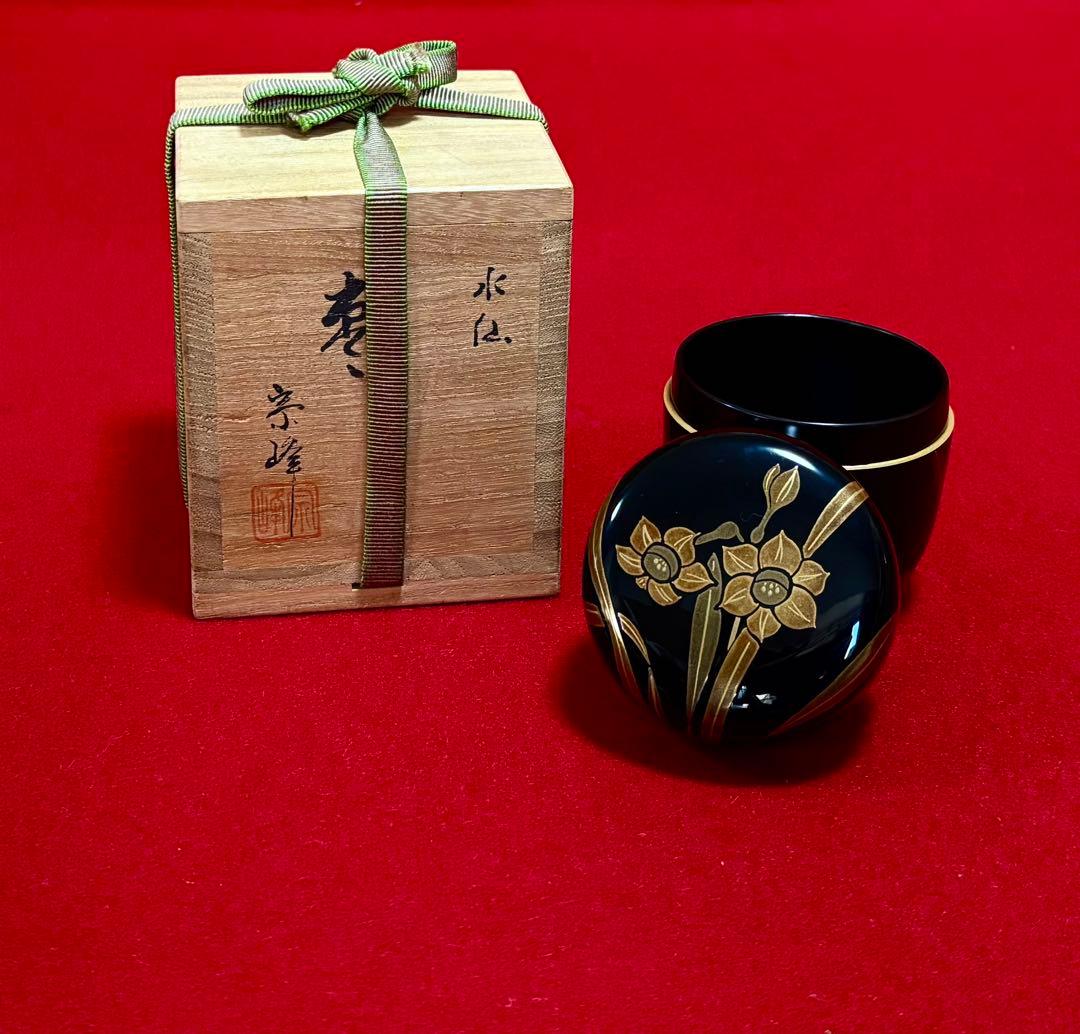
Suisen Narcissus Gold Maki-e Natsume Tea Caddy by Soho | Tame-nuri Lacquer | Signed Tomobako | Japanese Chado
Suisen Narcissus Gold Maki-e Natsume Tea Caddy by Soho | Tame-nuri Lacquer | Signed Tomobako | Japanese Chado
Regular price
Dhs. 791.00 AED
Regular price
Sale price
Dhs. 791.00 AED
Taxes included.
Shipping calculated at checkout.
Experience Authentic Japan Art with this Japanese Maki-e Tea Caddy. This Lacquer Natsume serves as a Chado Tea Ceremony Utensil and Collector Gift, featuring Narcissus Maki-e Gold Lacquer and Tame-nuri Lacquer—a must-have for any Art Collector seeking a Signed Tomobako Japanese Antique, Vintage Lacquerware Japan, or a Zen Interior Decor piece with genuine Urushi Lacquer craftsmanship.
🔹 [ BASIC DETAILS ]
• Artist: Soho (宗峰) — signed on tomobako lid with red artist seal
• Technique: Tame-nuri base lacquer (deep amber-black ground) with raised gold maki-e depicting narcissus (suisen) in full bloom
• Era: Before 2007 (mid-to-late Showa period estimated)
• Origin: Japan (Kyoto lacquer tradition)
• Dimensions: Approx. Height 7 cm, Diameter 6 cm
• Box: Original signed wooden tomobako (共箱) — lid inscribed 水仙 / 棗, signed 宗峰 with red seal, tied with green silk cord
• Condition: Excellent — no chips, no wear, no use marks on interior; photographed with white gloves, unused appearance throughout
🔹 [ CULTURAL & ARTISTIC INSIGHT ]
The narcissus — suisen (水仙), literally "water hermit" — is one of the three auspicious flowers of the new year in Japanese aesthetics, alongside the plum and camellia. It blooms in the cold, close to the ground, its fragrance quiet and persistent. In tea ceremony culture, the suisen natsume carries the feeling of early spring: a season not yet arrived, perceived only through silence and anticipation.
The tame-nuri ground used by Soho is a technique of exceptional difficulty. Layers of transparent lacquer (ki-urushi) are applied over a rich base, building depth until the surface achieves that characteristic amber-dark color — neither pure black nor brown, but a warm luminous darkness that seems to hold light within it. Against this ground, the gold maki-e narcissus blooms with restrained precision: the three-petaled crown flowers rendered in togidashi detail, the long strap leaves sweeping in a single arc from lid to shoulder — continuous, unbroken, alive.
*The gold line does not stop at the lid seam. It crosses it. The flower does not know where the boundary is — only the maker does.*
🔹 [ DEEP-DIVE COMMENTARY ]
The natsume (棗) — its name derived from the date fruit it resembles — is the quintessential thin-lacquer tea caddy of the Japanese chanoyu tradition. Used to hold koicha (thick tea) or usucha (thin tea) powder, it sits at the heart of the temae sequence, handled more intimately than almost any other utensil. The quality of its lacquer, the tightness of its lid, the way it sits in the palm: all are perceived by a practiced host and a discerning guest.
Tame-nuri (溜塗) belongs to the highest tier of Japanese lacquer techniques. The term refers to the method of layering dilute, transparent ki-urushi over a prepared base — the transparency "pools" and deepens through each successive coat. The result is a ground that oxidizes with age into richer, warmer tones, meaning a well-cared-for tame-nuri piece genuinely improves over decades. Unlike black roiro lacquer, which closes and recedes, tame-nuri opens — it draws the viewer inward.
Maki-e (蒔絵), or "sprinkled picture," encompasses several sub-techniques. The narcissus on this natsume exhibits characteristics of both hira-maki-e (flat gold application) and togidashi-maki-e (polished-through maki-e), where gold dust is applied, lacquered over, and then carefully polished back to flush — creating a surface where image and ground are one continuous skin. The result has none of the raised texture of taka-maki-e; instead, the gold seems to emerge from within the lacquer itself.
Soho (宗峰) works within a tradition that values anonymity of technique over celebrity of name. The presence of a signed tomobako with a red carved seal indicates a maker confident enough in the work to document it formally — a practice associated with recognized artisans whose pieces circulate among tea practitioners and collectors rather than the general souvenir market. The box inscription follows correct chado nomenclature: motif first (水仙), category second (棗), signature last — the standard form for documenting utensils intended for tea use.
For the collector, this piece offers a layered value: functional integrity (tight lid, clean interior, correct proportion for usucha), aesthetic integrity (continuous compositional design that does not break at the seam), material integrity (genuine urushi lacquer, not synthetic), and documentary integrity (signed tomobako establishing provenance and authorship). It is a working utensil that happens to be beautiful — which is precisely what the tea tradition asks of its objects.
---
【日本語解説】
🔹 【基本情報】
• 作家:宗峰(共箱蓋裏に署名・朱印あり)
• 技法:溜塗地に水仙金蒔絵(平蒔絵・研出蒔絵)
• 年代:昭和中後期以降と推定(2007年以前)
• 産地:日本(京都漆芸系統)
• 寸法:高さ約7cm、径約6cm
• 箱:共箱(蓋裏「水仙 棗 宗峰」銘、朱印、緑組紐)
• 状態:良好。内側に使用痕なし、白手袋着用撮影、未使用感。
🔹 【文化・美術的解説】
水仙は、松竹梅と並ぶ新春の花として日本の美意識に深く根付いている。その名「水の仙人」が示すように、冷気の中で静かに香り立つ姿は、茶の湯の世界においても格別の存在感を持つ。春の気配を感じさせるこの棗は、まだ見ぬ季節への期待を茶席に運んでくる。
溜塗は、透明度の高い生漆を重ね塗ることで、深く暖かな琥珀色に仕上げる技法である。黒一色に見えながら、角度によって琥珀の光が透けて見える奥行きは、時を経るにつれてさらに深みを増す。その地に描かれた金蒔絵の水仙は、花冠の三弁から細長い葉が一筆書きのように蓋から胴へと流れ、蓋の合わせ目を越えて連続する構図となっている。
*金線は、蓋と胴の境を知らない。ただ、咲いている。*
🔹 【深層解説】
棗は、日本茶道において薄茶・濃茶の抹茶を入れる蓋物で、ナツメの実に形が似ることからその名がついた。手のひらに収まる小さな器でありながら、点前の中で最も親密に扱われる道具のひとつである。漆の質、蓋の合い具合、手触りのすべてが、練達した目と手によって読み取られる。
溜塗の制作工程は、素地に下地を施した後、希釈した生漆を繰り返し重ね塗りする。塗り重ねるほどに奥行きが増し、仕上がった漆面は使い込むほどに艶と色味が増す——これが溜塗の最大の特性である。光を閉じ込める黒呂色と対照的に、溜塗は光を内側から滲ませるように見える。
本作の金蒔絵は、平蒔絵と研出蒔絵の両技法の特徴を示している。金粉を蒔いた後に上塗りし、研ぎ出すことで漆面と金が一体化した滑らかな肌に仕上げる研出蒔絵は、金が表面から浮き上がるのではなく、漆の中から現れてくるような印象を与える。
宗峰は共箱に署名と朱印を残した。これは茶道具として認識されるべき品として正式に記録する行為であり、一般の土産物とは一線を画す茶人向けの器であることを示す。共箱の記載様式も正統的で「水仙 棗 宗峰」という順序——図様、品目、作家——は茶道具の箱書きの正規の形式に従っている。
コレクターにとって本作は、機能的完全性(蓋の合い具合、内面の清潔さ、薄茶用として適切な寸法)、美的完全性(蓋と胴を貫く構図の連続性)、素材的完全性(本物の天然漆)、記録的完全性(共箱による作者・銘の記録)という四つの価値を兼ね備えた一点である。美しさを持つ実用品——それこそが茶の湯が道具に求めるものである。
🔹 [ SHIPPING & PACKAGING ]
• Dispatch: Within 1-6 business days
• Carrier: Japan Post EMS / UPS (with tracking)
• Packaging: Carefully wrapped with protective materials
🔹 [ BASIC DETAILS ]
• Artist: Soho (宗峰) — signed on tomobako lid with red artist seal
• Technique: Tame-nuri base lacquer (deep amber-black ground) with raised gold maki-e depicting narcissus (suisen) in full bloom
• Era: Before 2007 (mid-to-late Showa period estimated)
• Origin: Japan (Kyoto lacquer tradition)
• Dimensions: Approx. Height 7 cm, Diameter 6 cm
• Box: Original signed wooden tomobako (共箱) — lid inscribed 水仙 / 棗, signed 宗峰 with red seal, tied with green silk cord
• Condition: Excellent — no chips, no wear, no use marks on interior; photographed with white gloves, unused appearance throughout
🔹 [ CULTURAL & ARTISTIC INSIGHT ]
The narcissus — suisen (水仙), literally "water hermit" — is one of the three auspicious flowers of the new year in Japanese aesthetics, alongside the plum and camellia. It blooms in the cold, close to the ground, its fragrance quiet and persistent. In tea ceremony culture, the suisen natsume carries the feeling of early spring: a season not yet arrived, perceived only through silence and anticipation.
The tame-nuri ground used by Soho is a technique of exceptional difficulty. Layers of transparent lacquer (ki-urushi) are applied over a rich base, building depth until the surface achieves that characteristic amber-dark color — neither pure black nor brown, but a warm luminous darkness that seems to hold light within it. Against this ground, the gold maki-e narcissus blooms with restrained precision: the three-petaled crown flowers rendered in togidashi detail, the long strap leaves sweeping in a single arc from lid to shoulder — continuous, unbroken, alive.
*The gold line does not stop at the lid seam. It crosses it. The flower does not know where the boundary is — only the maker does.*
🔹 [ DEEP-DIVE COMMENTARY ]
The natsume (棗) — its name derived from the date fruit it resembles — is the quintessential thin-lacquer tea caddy of the Japanese chanoyu tradition. Used to hold koicha (thick tea) or usucha (thin tea) powder, it sits at the heart of the temae sequence, handled more intimately than almost any other utensil. The quality of its lacquer, the tightness of its lid, the way it sits in the palm: all are perceived by a practiced host and a discerning guest.
Tame-nuri (溜塗) belongs to the highest tier of Japanese lacquer techniques. The term refers to the method of layering dilute, transparent ki-urushi over a prepared base — the transparency "pools" and deepens through each successive coat. The result is a ground that oxidizes with age into richer, warmer tones, meaning a well-cared-for tame-nuri piece genuinely improves over decades. Unlike black roiro lacquer, which closes and recedes, tame-nuri opens — it draws the viewer inward.
Maki-e (蒔絵), or "sprinkled picture," encompasses several sub-techniques. The narcissus on this natsume exhibits characteristics of both hira-maki-e (flat gold application) and togidashi-maki-e (polished-through maki-e), where gold dust is applied, lacquered over, and then carefully polished back to flush — creating a surface where image and ground are one continuous skin. The result has none of the raised texture of taka-maki-e; instead, the gold seems to emerge from within the lacquer itself.
Soho (宗峰) works within a tradition that values anonymity of technique over celebrity of name. The presence of a signed tomobako with a red carved seal indicates a maker confident enough in the work to document it formally — a practice associated with recognized artisans whose pieces circulate among tea practitioners and collectors rather than the general souvenir market. The box inscription follows correct chado nomenclature: motif first (水仙), category second (棗), signature last — the standard form for documenting utensils intended for tea use.
For the collector, this piece offers a layered value: functional integrity (tight lid, clean interior, correct proportion for usucha), aesthetic integrity (continuous compositional design that does not break at the seam), material integrity (genuine urushi lacquer, not synthetic), and documentary integrity (signed tomobako establishing provenance and authorship). It is a working utensil that happens to be beautiful — which is precisely what the tea tradition asks of its objects.
---
【日本語解説】
🔹 【基本情報】
• 作家:宗峰(共箱蓋裏に署名・朱印あり)
• 技法:溜塗地に水仙金蒔絵(平蒔絵・研出蒔絵)
• 年代:昭和中後期以降と推定(2007年以前)
• 産地:日本(京都漆芸系統)
• 寸法:高さ約7cm、径約6cm
• 箱:共箱(蓋裏「水仙 棗 宗峰」銘、朱印、緑組紐)
• 状態:良好。内側に使用痕なし、白手袋着用撮影、未使用感。
🔹 【文化・美術的解説】
水仙は、松竹梅と並ぶ新春の花として日本の美意識に深く根付いている。その名「水の仙人」が示すように、冷気の中で静かに香り立つ姿は、茶の湯の世界においても格別の存在感を持つ。春の気配を感じさせるこの棗は、まだ見ぬ季節への期待を茶席に運んでくる。
溜塗は、透明度の高い生漆を重ね塗ることで、深く暖かな琥珀色に仕上げる技法である。黒一色に見えながら、角度によって琥珀の光が透けて見える奥行きは、時を経るにつれてさらに深みを増す。その地に描かれた金蒔絵の水仙は、花冠の三弁から細長い葉が一筆書きのように蓋から胴へと流れ、蓋の合わせ目を越えて連続する構図となっている。
*金線は、蓋と胴の境を知らない。ただ、咲いている。*
🔹 【深層解説】
棗は、日本茶道において薄茶・濃茶の抹茶を入れる蓋物で、ナツメの実に形が似ることからその名がついた。手のひらに収まる小さな器でありながら、点前の中で最も親密に扱われる道具のひとつである。漆の質、蓋の合い具合、手触りのすべてが、練達した目と手によって読み取られる。
溜塗の制作工程は、素地に下地を施した後、希釈した生漆を繰り返し重ね塗りする。塗り重ねるほどに奥行きが増し、仕上がった漆面は使い込むほどに艶と色味が増す——これが溜塗の最大の特性である。光を閉じ込める黒呂色と対照的に、溜塗は光を内側から滲ませるように見える。
本作の金蒔絵は、平蒔絵と研出蒔絵の両技法の特徴を示している。金粉を蒔いた後に上塗りし、研ぎ出すことで漆面と金が一体化した滑らかな肌に仕上げる研出蒔絵は、金が表面から浮き上がるのではなく、漆の中から現れてくるような印象を与える。
宗峰は共箱に署名と朱印を残した。これは茶道具として認識されるべき品として正式に記録する行為であり、一般の土産物とは一線を画す茶人向けの器であることを示す。共箱の記載様式も正統的で「水仙 棗 宗峰」という順序——図様、品目、作家——は茶道具の箱書きの正規の形式に従っている。
コレクターにとって本作は、機能的完全性(蓋の合い具合、内面の清潔さ、薄茶用として適切な寸法)、美的完全性(蓋と胴を貫く構図の連続性)、素材的完全性(本物の天然漆)、記録的完全性(共箱による作者・銘の記録)という四つの価値を兼ね備えた一点である。美しさを持つ実用品——それこそが茶の湯が道具に求めるものである。
🔹 [ SHIPPING & PACKAGING ]
• Dispatch: Within 1-6 business days
• Carrier: Japan Post EMS / UPS (with tracking)
• Packaging: Carefully wrapped with protective materials
Quantity
Couldn't load pickup availability
Low stock: 1 left
View full details