1
/
of
19
Suiho Morning Glory Maki-e Lacquer Tea Caddy Chaki with Tomobako
Regular price
Dhs. 1,065.00 AED
Regular price
Sale price
Dhs. 1,065.00 AED
Taxes included.
Shipping calculated at checkout.
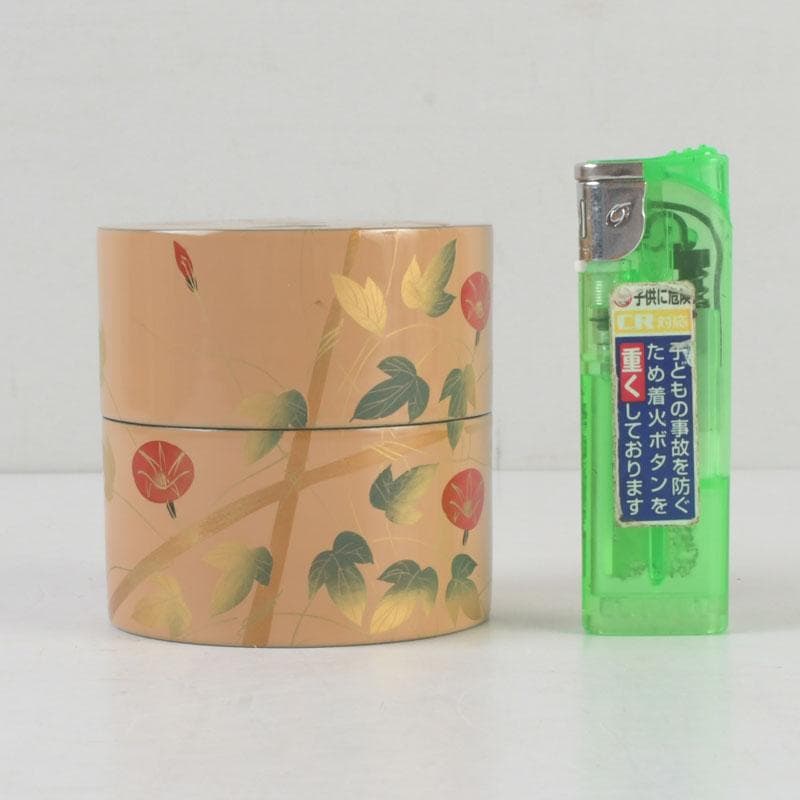
Morning glory maki-e on a lacquer tea caddy by Suiho lacquer master. Japanese lacquer shaped as a black lacquer vessel for usuchá — gold maki-e art tracing asagao motif tea ceremony presence. Japanese gold maki-e transforms this natsume tea caddy into a tea room seasonal archive. Maki-e lacquer art where urushi lacquerware holds summer's brevity in gold.
🔹 [ BASIC DETAILS ]
• Artist: Suiho (翠甫) — Nushi (塗師 / lacquer artisan)
• Dimensions: H 6.7 cm × Ø 6.7 cm
• Weight: Approx. 47 g
• Condition: Good condition with minor age-related wear
• Includes: Tomobako (artist-signed wooden box)
• SKU: 260227_a_2111
🔹 [ CULTURAL INSIGHT ]
The morning glory opens before dawn and closes by midday. In chanoyu, it signals summer's peak — a flower that exists fully in its brevity. To place asagao on a tea caddy is to hold that transience in lacquer.
Suiho, designated as nushi (塗師), carries the title of a recognized lacquer craftsman. The gold maki-e technique — sprinkling metallic powder into wet lacquer — creates imagery that lives beneath the surface. It does not sit on top. It emerges from within, the way memory does.
🔹 [ DEEP-DIVE: MAKI-E & THE ASAGAO ]
Maki-e is not painting. It is a dialogue between lacquer and metal — the artist works while the urushi is alive, before it sets. Gold powder meets resin in a window of minutes. The trailing vines of asagao require a steady hand and an understanding of organic rhythm.
The morning glory entered Japanese aesthetics through Chinese poetry and took root in tea culture as the embodiment of ichigo ichie — one moment, one meeting. Sen no Rikyū famously grew morning glories in his garden, then cut all but one for a tea gathering. The single bloom said everything.
---
【日本語説明】
塗師・翠甫作、朝顔蒔絵の茶器。黒漆地に金蒔絵で描かれた朝顔の蔓と花が、夏の一瞬の美を器に封じ込めています。薄茶用の茶器として、茶席に季節の風を運ぶ一品。共箱付き。朝顔は茶道において「一期一会」の精神を体現する花として特別な位置を占めています。
🔹 [ SHIPPING & PACKAGING ]
• Dispatch: Within 1-6 business days
• Carrier: Japan Post EMS / UPS (with tracking)
• Packaging: Carefully wrapped with protective materials
🔹 [ BASIC DETAILS ]
• Artist: Suiho (翠甫) — Nushi (塗師 / lacquer artisan)
• Dimensions: H 6.7 cm × Ø 6.7 cm
• Weight: Approx. 47 g
• Condition: Good condition with minor age-related wear
• Includes: Tomobako (artist-signed wooden box)
• SKU: 260227_a_2111
🔹 [ CULTURAL INSIGHT ]
The morning glory opens before dawn and closes by midday. In chanoyu, it signals summer's peak — a flower that exists fully in its brevity. To place asagao on a tea caddy is to hold that transience in lacquer.
Suiho, designated as nushi (塗師), carries the title of a recognized lacquer craftsman. The gold maki-e technique — sprinkling metallic powder into wet lacquer — creates imagery that lives beneath the surface. It does not sit on top. It emerges from within, the way memory does.
🔹 [ DEEP-DIVE: MAKI-E & THE ASAGAO ]
Maki-e is not painting. It is a dialogue between lacquer and metal — the artist works while the urushi is alive, before it sets. Gold powder meets resin in a window of minutes. The trailing vines of asagao require a steady hand and an understanding of organic rhythm.
The morning glory entered Japanese aesthetics through Chinese poetry and took root in tea culture as the embodiment of ichigo ichie — one moment, one meeting. Sen no Rikyū famously grew morning glories in his garden, then cut all but one for a tea gathering. The single bloom said everything.
---
【日本語説明】
塗師・翠甫作、朝顔蒔絵の茶器。黒漆地に金蒔絵で描かれた朝顔の蔓と花が、夏の一瞬の美を器に封じ込めています。薄茶用の茶器として、茶席に季節の風を運ぶ一品。共箱付き。朝顔は茶道において「一期一会」の精神を体現する花として特別な位置を占めています。
🔹 [ SHIPPING & PACKAGING ]
• Dispatch: Within 1-6 business days
• Carrier: Japan Post EMS / UPS (with tracking)
• Packaging: Carefully wrapped with protective materials
Quantity
Couldn't load pickup availability
Low stock: 1 left
View full details