1
/
of
10
Sometsuke Matcha Bowl by Tezuka Keiun — Kanjuji Kiln Blue White Porcelain with Fish Landscape Motif, Signed Tomobako
Sometsuke Matcha Bowl by Tezuka Keiun — Kanjuji Kiln Blue White Porcelain with Fish Landscape Motif, Signed Tomobako
Regular price
Dhs. 847.00 AED
Regular price
Sale price
Dhs. 847.00 AED
Taxes included.
Shipping calculated at checkout.
Experience Authentic Japan Art with this Kanjuji Kiln Blue White Porcelain Bowl. This Sometsuke Matcha Tea Bowl serves as a Japanese Porcelain Tea Bowl and Signed Artist Tea Ceremony Bowl, featuring Cobalt Blue Landscape Fish Motif and Tezuka Keiun Ceramic Art—a must-have for any collector of Hand Painted Blue White Chawan, Kanjuji Gama Pottery, and Scholarly Figure Mountain Scene Porcelain.
🔹 [ BASIC DETAILS ]
• Artist: Tezuka Keiun (手塚景雲), Kanjuji Kiln (勧修寺窯)
• Technique: Sometsuke (染付) — cobalt-blue underglaze hand painting on white porcelain
• Era: 1980s–2000s (Showa–Heisei period)
• Origin: Kanjuji Kiln, Kyoto, Japan
• Dimensions: Height approx. 6 cm, Diameter approx. 13.5 cm
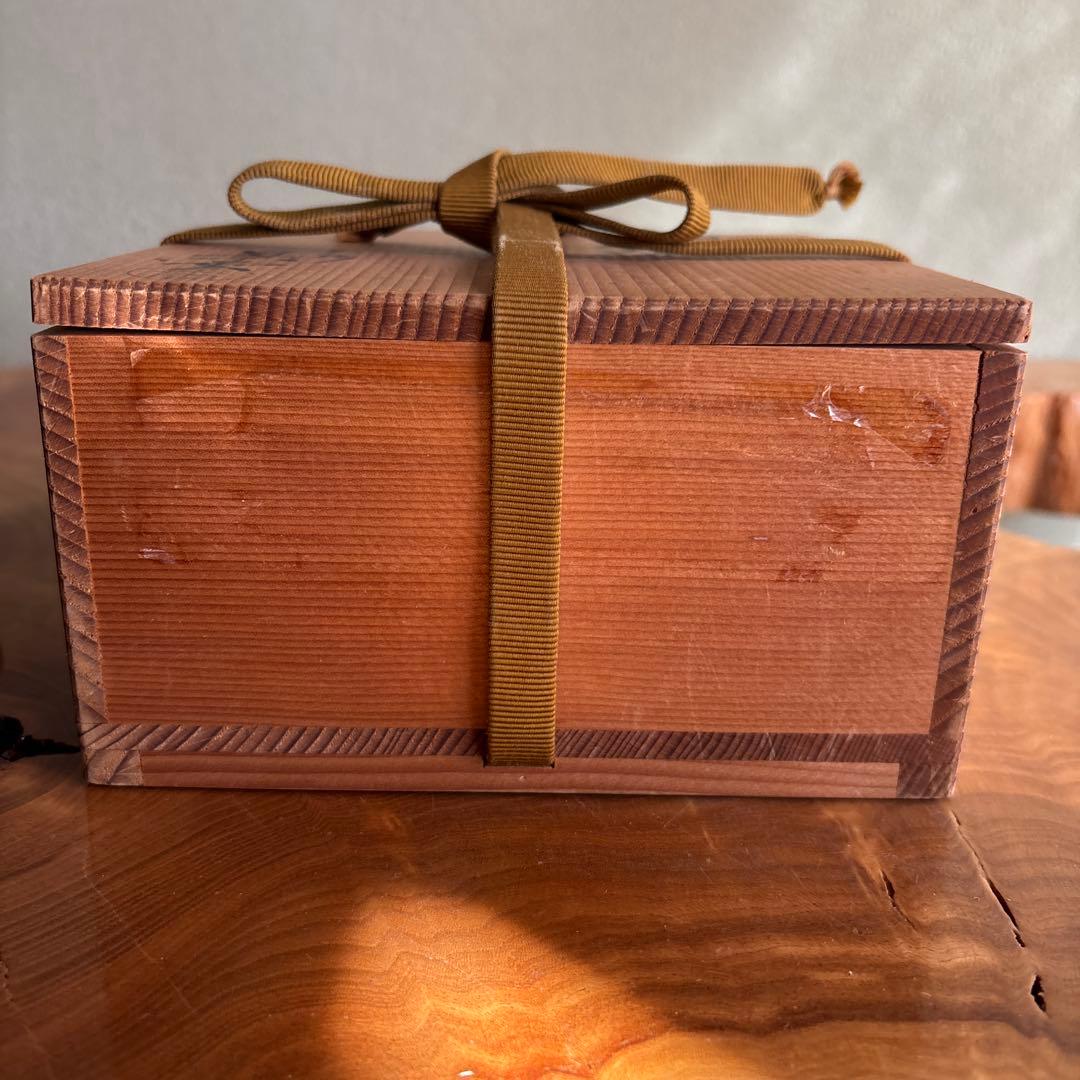
• Box: Signed tomobako (artist's own wooden box) with calligraphy inscription and seal
• Condition: Excellent — no chips or cracks; box shows light surface soiling
🔹 [ CULTURAL & ARTISTIC INSIGHT ]
The sometsuke tradition — cobalt oxide painted beneath a clear glaze and fired at high temperature — arrived in Japan via Korea and China during the Azuchi-Momoyama period and took deep root in Kyoto's refined ceramic culture. Kanjuji-gama (勧修寺窯) sits within the historic Yamashina district of eastern Kyoto, yards from the ancient Kanjuji temple founded in 900 CE. The kiln draws from this contemplative geography: its wares carry a stillness that mirrors the temple's mosaic garden ponds, where lotus and carp have moved through seasons for more than a thousand years.
Tezuka Keiun works within a lineage that prizes pictorial density alongside compositional restraint. On this chawan, two horizontal narrative registers encircle the body: the upper presents a sansui (mountain-water) panorama — distant peaks, pine groves, pavilions, and birds lifting from still water; the lower unfolds a gyoso (fish-and-weed) frieze — carp navigating aquatic grasses in languid arcs. A third register at the foot ring shows scrolling foliage, while the interior rim opens to a continuous miniature landscape seen from above, as if the drinker peers down into a mountain valley.
The cobalt is richly saturated — deep indigo at the drawn lines, fading to transparent wash in the distance — achieving the graduated tonal effect called bokashi, where atmosphere is painted rather than described. Against the brilliant white ground, each brushstroke declares its intention without apology.
*Blue water holds mountains. Fish move through ink the way thought moves through silence — without destination, without hurry.*
🔹 [ DEEP-DIVE COMMENTARY ]
Sometsuke (染付, lit. "dyed attachment") is the Japanese term for cobalt-blue underglaze porcelain, directly cognate with Chinese qinghua and Korean cheongwha. The technique requires the painter to work on raw, unfired clay — a surface that absorbs immediately and allows no correction. Every line is committed. The cobalt pigment is applied with brushes of varying firmness: stiff brushes for outlines, soft brushes for washes, with skilled potters able to achieve ten or more tonal gradations from a single pigment.
Kanjuji-gama occupies a distinctive position in Kyoto's ceramic ecology. Unlike the heavily ceremonial Raku lineage or the technically demanding Kiyomizu tradition, Kanjuji has historically favored pictorial narration — drawing from Chinese literati painting (bunjinga) and Japanese ink landscape (suiboku-ga) as source vocabularies. The scholarly figure wandering through mountains, the pavilion glimpsed through pine, the carp as symbol of vitality and perseverance: these motifs constitute a coherent visual philosophy rooted in Confucian and Zen ideals of contemplative withdrawal.
The jinbutsu sansui (figures in landscape) motif seen on this chawan — a solitary sage with a staff, ancient trees, mist-wrapped ridgelines — participates in a tradition stretching from Song dynasty Chinese painting through Edo-period Japanese literati art. In the context of tea ceremony (chado), such imagery invites the practitioner to inhabit the landscape imaginatively: to become, for the duration of a bowl of matcha, the scholar resting beneath a pine.
The gyoso (魚藻, fish-and-weed) register below draws from a different but equally ancient pictorial lineage — the carp as emblem of strength, perseverance, and transformation, particularly resonant in Zen Buddhist contexts where the sudden leap of a carp through a waterfall becomes a metaphor for enlightenment. The pairing of mountain-figure narrative above with fish-water imagery below creates a vertical cosmology: heaven and earth, mountain and sea, the sage's stillness and the carp's fluid motion.
Tezuka Keiun's signed tomobako confirms the work's authorship and situates it within the tradition of meiki — named works — that the Japanese art market and collector community recognize as carrying the artist's direct creative intention. For collectors of Japanese ceramics, the tomobako is not merely packaging; it is part of the object's biography, bearing the date, the name, and often a short poem or inscription that extends the work's meaning beyond the clay itself.
🔹 [ 日本語解説 ]
【基本詳細】
作家:手塚景雲(勧修寺窯)
技法:染付(コバルト顔料による下絵付け)
年代:昭和後期〜平成(1980〜2000年代)
産地:京都・勧修寺窯
寸法:高さ約6cm、口径約13.5cm
箱:共箱(作家自筆の署名・印・銘入り)
状態:本体は欠けやヒビなく良好。箱に表面的な汚れがございます。
【文化的・芸術的背景】
染付は、白磁の素地にコバルト顔料で絵付けをし、透明釉をかけて高温焼成する技法です。室町・桃山期に朝鮮・中国から伝わり、京都の洗練された陶芸文化のなかで独自の発展を遂げました。勧修寺窯は、平安時代創建の勧修寺に隣接する山科の地に開かれ、その静寂な地理的環境が作風に深く反映されています。
手塚景雲は絵画的密度と構図の簡潔さを両立させる作風で知られています。この茶碗では、胴部に二段の絵画的帯が展開しています。上段には人物山水——遠山、松林、楼閣、水面を離れる鳥——が広がり、下段には魚藻——水草のなかを泳ぐ鯉——が描かれています。見込みには連続する縮景が広がり、器を手にする者はまるで山上から谷を俯瞰するような感覚を覚えます。
コバルトの発色は深く豊か。輪郭線では濃藍、遠景では淡く滲む「暈かし」が用いられ、単一の顔料で十数段の濃淡が表現されています。純白の素地に対し、各筆致は迷いなく、しかし押しつけがましくなく置かれています。
*青い水が山を映す。墨の中を泳ぐ魚のように、思念は行き先も急ぎもなく、ただそこにある。*
【専門的解説】
染付とは、未焼成の素地に直接筆で絵を描く技法であり、描き直しが利かない一発勝負の芸術です。勧修寺窯はこの技法において、文人画・水墨山水画の語彙を積極的に取り入れ、儒教・禅の「静観」の美学を茶碗という形に凝縮してきた窯です。
人物山水(杖をついた隠者、霞にかすむ山稜)は、宋代中国絵画から江戸文人画へと連なる大きな伝統に根ざしています。茶道の文脈では、こうした図像は飲み手に景の中へ「入る」ことを促します。一服の抹茶を飲む間だけ、松の下で休む学者になることを。
下段の魚藻文は、鯉を強さ・忍耐・変革の象徴として描く古来の伝統に連なります。禅仏教では、滝を登る鯉は悟りへの飛躍の比喩とされてきました。上段の山水人物と下段の魚藻が組み合わさることで、天と地、山と海、静と動という垂直の宇宙観が茶碗一器に凝縮されます。
共箱には作家自身の署名と印が記され、この作品が「名器」——作家の創作意図を直接担う器——であることを示しています。日本陶芸の世界では、共箱は単なる容器ではなく、作品の来歴そのものであり、作家の言葉・日付・銘文が作品の意味を粘土の外へと拡張する重要な要素です。
🔹 [ SHIPPING & PACKAGING ]
• Dispatch: Within 1-6 business days
• Carrier: Japan Post EMS / UPS (with tracking)
• Packaging: Carefully wrapped with protective materials
🔹 [ BASIC DETAILS ]
• Artist: Tezuka Keiun (手塚景雲), Kanjuji Kiln (勧修寺窯)
• Technique: Sometsuke (染付) — cobalt-blue underglaze hand painting on white porcelain
• Era: 1980s–2000s (Showa–Heisei period)
• Origin: Kanjuji Kiln, Kyoto, Japan
• Dimensions: Height approx. 6 cm, Diameter approx. 13.5 cm
• Box: Signed tomobako (artist's own wooden box) with calligraphy inscription and seal
• Condition: Excellent — no chips or cracks; box shows light surface soiling
🔹 [ CULTURAL & ARTISTIC INSIGHT ]
The sometsuke tradition — cobalt oxide painted beneath a clear glaze and fired at high temperature — arrived in Japan via Korea and China during the Azuchi-Momoyama period and took deep root in Kyoto's refined ceramic culture. Kanjuji-gama (勧修寺窯) sits within the historic Yamashina district of eastern Kyoto, yards from the ancient Kanjuji temple founded in 900 CE. The kiln draws from this contemplative geography: its wares carry a stillness that mirrors the temple's mosaic garden ponds, where lotus and carp have moved through seasons for more than a thousand years.
Tezuka Keiun works within a lineage that prizes pictorial density alongside compositional restraint. On this chawan, two horizontal narrative registers encircle the body: the upper presents a sansui (mountain-water) panorama — distant peaks, pine groves, pavilions, and birds lifting from still water; the lower unfolds a gyoso (fish-and-weed) frieze — carp navigating aquatic grasses in languid arcs. A third register at the foot ring shows scrolling foliage, while the interior rim opens to a continuous miniature landscape seen from above, as if the drinker peers down into a mountain valley.
The cobalt is richly saturated — deep indigo at the drawn lines, fading to transparent wash in the distance — achieving the graduated tonal effect called bokashi, where atmosphere is painted rather than described. Against the brilliant white ground, each brushstroke declares its intention without apology.
*Blue water holds mountains. Fish move through ink the way thought moves through silence — without destination, without hurry.*
🔹 [ DEEP-DIVE COMMENTARY ]
Sometsuke (染付, lit. "dyed attachment") is the Japanese term for cobalt-blue underglaze porcelain, directly cognate with Chinese qinghua and Korean cheongwha. The technique requires the painter to work on raw, unfired clay — a surface that absorbs immediately and allows no correction. Every line is committed. The cobalt pigment is applied with brushes of varying firmness: stiff brushes for outlines, soft brushes for washes, with skilled potters able to achieve ten or more tonal gradations from a single pigment.
Kanjuji-gama occupies a distinctive position in Kyoto's ceramic ecology. Unlike the heavily ceremonial Raku lineage or the technically demanding Kiyomizu tradition, Kanjuji has historically favored pictorial narration — drawing from Chinese literati painting (bunjinga) and Japanese ink landscape (suiboku-ga) as source vocabularies. The scholarly figure wandering through mountains, the pavilion glimpsed through pine, the carp as symbol of vitality and perseverance: these motifs constitute a coherent visual philosophy rooted in Confucian and Zen ideals of contemplative withdrawal.
The jinbutsu sansui (figures in landscape) motif seen on this chawan — a solitary sage with a staff, ancient trees, mist-wrapped ridgelines — participates in a tradition stretching from Song dynasty Chinese painting through Edo-period Japanese literati art. In the context of tea ceremony (chado), such imagery invites the practitioner to inhabit the landscape imaginatively: to become, for the duration of a bowl of matcha, the scholar resting beneath a pine.
The gyoso (魚藻, fish-and-weed) register below draws from a different but equally ancient pictorial lineage — the carp as emblem of strength, perseverance, and transformation, particularly resonant in Zen Buddhist contexts where the sudden leap of a carp through a waterfall becomes a metaphor for enlightenment. The pairing of mountain-figure narrative above with fish-water imagery below creates a vertical cosmology: heaven and earth, mountain and sea, the sage's stillness and the carp's fluid motion.
Tezuka Keiun's signed tomobako confirms the work's authorship and situates it within the tradition of meiki — named works — that the Japanese art market and collector community recognize as carrying the artist's direct creative intention. For collectors of Japanese ceramics, the tomobako is not merely packaging; it is part of the object's biography, bearing the date, the name, and often a short poem or inscription that extends the work's meaning beyond the clay itself.
🔹 [ 日本語解説 ]
【基本詳細】
作家:手塚景雲(勧修寺窯)
技法:染付(コバルト顔料による下絵付け)
年代:昭和後期〜平成(1980〜2000年代)
産地:京都・勧修寺窯
寸法:高さ約6cm、口径約13.5cm
箱:共箱(作家自筆の署名・印・銘入り)
状態:本体は欠けやヒビなく良好。箱に表面的な汚れがございます。
【文化的・芸術的背景】
染付は、白磁の素地にコバルト顔料で絵付けをし、透明釉をかけて高温焼成する技法です。室町・桃山期に朝鮮・中国から伝わり、京都の洗練された陶芸文化のなかで独自の発展を遂げました。勧修寺窯は、平安時代創建の勧修寺に隣接する山科の地に開かれ、その静寂な地理的環境が作風に深く反映されています。
手塚景雲は絵画的密度と構図の簡潔さを両立させる作風で知られています。この茶碗では、胴部に二段の絵画的帯が展開しています。上段には人物山水——遠山、松林、楼閣、水面を離れる鳥——が広がり、下段には魚藻——水草のなかを泳ぐ鯉——が描かれています。見込みには連続する縮景が広がり、器を手にする者はまるで山上から谷を俯瞰するような感覚を覚えます。
コバルトの発色は深く豊か。輪郭線では濃藍、遠景では淡く滲む「暈かし」が用いられ、単一の顔料で十数段の濃淡が表現されています。純白の素地に対し、各筆致は迷いなく、しかし押しつけがましくなく置かれています。
*青い水が山を映す。墨の中を泳ぐ魚のように、思念は行き先も急ぎもなく、ただそこにある。*
【専門的解説】
染付とは、未焼成の素地に直接筆で絵を描く技法であり、描き直しが利かない一発勝負の芸術です。勧修寺窯はこの技法において、文人画・水墨山水画の語彙を積極的に取り入れ、儒教・禅の「静観」の美学を茶碗という形に凝縮してきた窯です。
人物山水(杖をついた隠者、霞にかすむ山稜)は、宋代中国絵画から江戸文人画へと連なる大きな伝統に根ざしています。茶道の文脈では、こうした図像は飲み手に景の中へ「入る」ことを促します。一服の抹茶を飲む間だけ、松の下で休む学者になることを。
下段の魚藻文は、鯉を強さ・忍耐・変革の象徴として描く古来の伝統に連なります。禅仏教では、滝を登る鯉は悟りへの飛躍の比喩とされてきました。上段の山水人物と下段の魚藻が組み合わさることで、天と地、山と海、静と動という垂直の宇宙観が茶碗一器に凝縮されます。
共箱には作家自身の署名と印が記され、この作品が「名器」——作家の創作意図を直接担う器——であることを示しています。日本陶芸の世界では、共箱は単なる容器ではなく、作品の来歴そのものであり、作家の言葉・日付・銘文が作品の意味を粘土の外へと拡張する重要な要素です。
🔹 [ SHIPPING & PACKAGING ]
• Dispatch: Within 1-6 business days
• Carrier: Japan Post EMS / UPS (with tracking)
• Packaging: Carefully wrapped with protective materials
Quantity
Couldn't load pickup availability
Low stock: 1 left
View full details