1
/
of
9
Sokuchusai Jisaku Chashaku Mei Tsuyu - 13th Omotesenke Grand Master Tea Scoop
Sokuchusai Jisaku Chashaku Mei Tsuyu - 13th Omotesenke Grand Master Tea Scoop
Regular price
Dhs. 8,393.00 AED
Regular price
Sale price
Dhs. 8,393.00 AED
Taxes included.
Shipping calculated at checkout.
A self-made tea scoop by Sokuchūsai, 13th Grand Master of Omotesenke, with poetic name Tsuyu (Dew). This jisaku chashaku carries the direct lineage of Sen no Rikyū through thirteen generations. Carved from Kuroda Shōgen bamboo with nijūbako double box presentation, this Japanese tea ceremony utensil holds the cultural weight of an unbroken tradition. A Zen tea scoop of singular authorship — bamboo aged to warm amber, stored in paulownia for decades. An omotesenke tea scoop and matcha tea utensil of undeniable presence. Archive-worthy.
🔹 [ Basic Details ]
• Artist: Sokuchūsai (即中斎, 1901–1979), 13th Generation Iemoto of Omotesenke (表千家)
• Bamboo Preparation: Kuroda Shōgen (黒田正玄) — hereditary bamboo craftsman to the Sen family
• Classification: Jisaku Chashaku (自作茶杓) — personally carved by the Grand Master
• Poetic Name (銘): Tsuyu / 露 (Dew)
• Era: Mid-Shōwa period, ca. 1960s
• Origin: Kyoto, Japan
• Material: Bamboo (take / 竹)
• Dimensions: Length approx. 18.2 cm
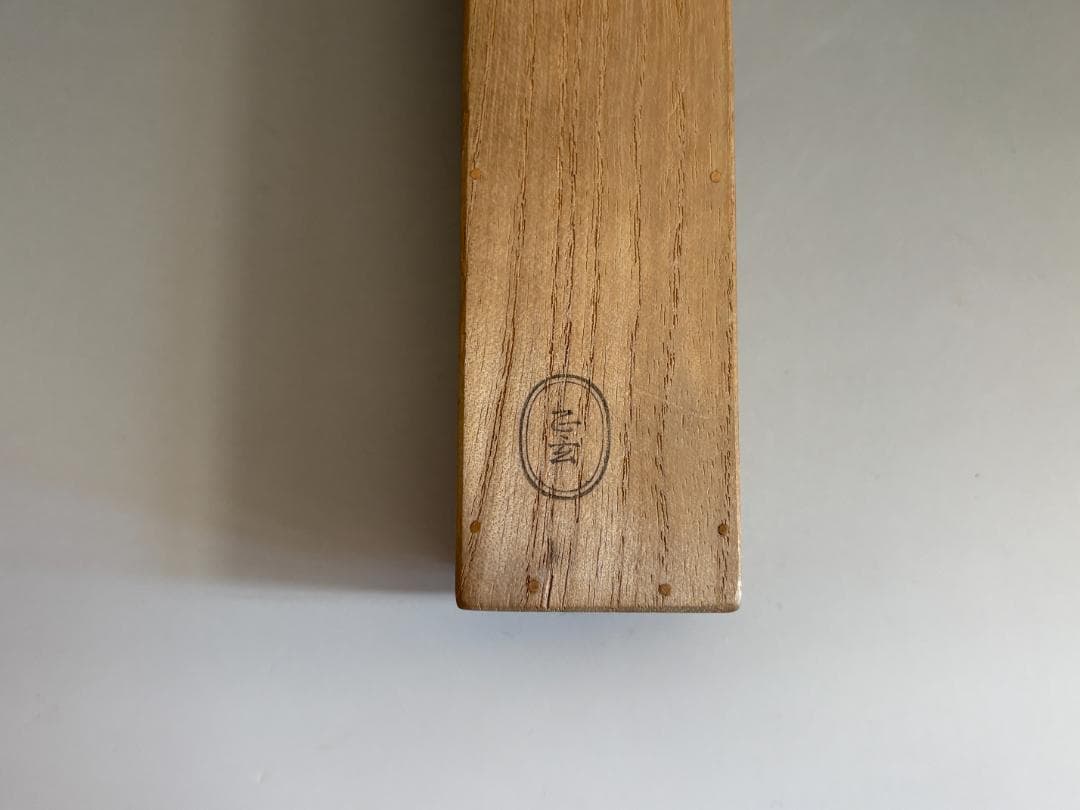
• Box: Nijūbako (二重箱) — black lacquered outer box with Shōgen seal; paulownia inner box inscribed 「自作茶杓 即中斎」
• Tube: Bamboo tube inscribed 「露」
• Condition: Excellent age-appropriate condition. Warm golden-amber patina from decades of careful paulownia storage. No damage.
🔹 [ Cultural & Artistic Insight ]
In the world of chanoyu, no object carries more intimate authority than a tea scoop carved by the iemoto's own hand. This is not craft. This is transmission.
The term jisaku (自作) distinguishes this scoop absolutely. Sokuchūsai did not merely inscribe a name upon bamboo prepared by another. He received the shimokesuri — the rough-carved blank — from Kuroda Shōgen, the hereditary bamboo artisan whose family has served the Sen schools for generations. From that prepared form, the Grand Master's hands shaped the final curve, the thinning of the tip, the precise relationship between node and scoop. Every gesture encoded.
The poetic name Tsuyu — Dew — speaks in the language of Zen and mono no aware. Dew appears at dawn, holds light for a moment, and is gone. It does not announce itself. It does not remain.
🔹 [ Deep-Dive Commentary ]
Sokuchūsai (born Sōsa Kakukakusai, 1901–1979) assumed leadership of Omotesenke in 1937, inheriting a lineage that traces directly and without interruption to Sen no Rikyū himself — founder of wabi-cha and the aesthetic conscience of Japanese culture. The thirteenth in this succession, Sokuchūsai guided Omotesenke through the devastation of World War II and into the post-war cultural renaissance, a period when tea ceremony became not merely tradition but a form of national healing.
His tenure as iemoto spanned over four decades. During this time, he deepened the philosophical foundations of Omotesenke practice while maintaining the austere simplicity that distinguishes it from other Sen family schools. His calligraphy, his choice of poetic names, his carving — all reflect a sensibility shaped by both pre-war classical training and the hard-won clarity that follows loss.
The collaboration between iemoto and Kuroda Shōgen is itself a subject worthy of study. The Kuroda family holds the title Shōgen as a hereditary professional name, passed through generations of bamboo artisans who work exclusively with the Sen family schools. The shimokesuri process — rough carving and preparation of the bamboo blank — requires mastery of material selection, seasoning, and initial shaping. The iemoto then completes the work, transforming functional craft into spiritual expression. This division of labor is not delegation. It is a dialogue between two lineages of knowledge, one of material and one of meaning.
The nijūbako presentation confirms the status of this piece within the hierarchy of tea utensils. A double box — black lacquered outer box bearing the Shōgen seal, paulownia inner box bearing the iemoto's inscription — is reserved for objects of the highest importance. It is not ornamentation. It is classification. The paulownia wood has performed its quiet function for decades, regulating humidity, protecting the bamboo, allowing the slow development of the warm amber patina visible on the scoop today.
The mei Tsuyu (露/Dew) places this scoop within a specific aesthetic register. In classical Japanese poetry, dew appears alongside images of morning grass, autumn fields, and the passage of seasons. In Zen understanding, dew is impermanence made visible — a single drop that contains, for one moment, the entire sky. Sokuchūsai chose this name not as decoration but as instruction. The scoop, held in the hand during temae, becomes a vehicle for contemplation. The tea practitioner who lifts this chashaku is invited to consider: what is held, and for how long.
For the serious collector or practicing tea person, a jisaku chashaku by an Omotesenke iemoto represents something beyond acquisition. It is the closest one can come to sitting across from the Grand Master in the tea room. The bamboo remembers.
[ JAPANESE DESCRIPTION / 日本語解説 ]
🔹 [ 基本情報 ]
• 作者:即中斎(そくちゅうさい、1901〜1979)、表千家十三代家元
• 下削:黒田正玄(くろだしょうげん)— 千家御用達の竹師
• 分類:自作茶杓(じさくちゃしゃく)— 家元御自ら削られた茶杓
• 銘:露(つゆ)
• 時代:昭和中期、1960年代頃
• 産地:京都
• 素材:竹
• 寸法:長さ約18.2cm
• 箱:二重箱 — 外箱は黒塗箱(正玄印あり)、内箱は桐箱(「自作茶杓 即中斎」の箱書)
• 筒:竹筒「露」の銘入り
• 状態:良好。数十年の桐箱保管による美しい飴色の古色。傷なし。
🔹 [ 文化的・芸術的解説 ]
茶の湯の世界において、家元が自ら削った茶杓ほど親密な権威を宿す道具はない。これは工芸ではない。伝承そのものである。
「自作」の二文字が、この茶杓の位置づけを決定的なものとしている。即中斎は、他者が準備した竹に銘を記しただけではない。千家代々の竹師である黒田正玄が下削りを施した竹を受け取り、家元御自身の手で最終的な姿を削り出された。櫂先の薄さ、節と茶溜の関係、一つひとつの所作が刻まれている。
銘「露」は、禅と物の哀れの言葉で語りかける。露は夜明けに現れ、一瞬の光を宿し、消える。自らを主張しない。留まることもない。
🔹 [ 深掘り解説 ]
即中斎(本名・千宗左、1901〜1979)は1937年に表千家家元を継承し、千利休から数えて十三代目、途切れることのない直系の血脈を受け継いだ。第二次世界大戦の荒廃から戦後の文化復興へと表千家を導き、茶道が単なる伝統ではなく、国民的な癒しの営みとなった時代を生きた。
家元としての在任期間は四十年以上に及ぶ。その間、他の千家流派と一線を画す質素な簡素さを守りながら、表千家の哲学的基盤を深められた。その書、銘の選び方、削りの所作——すべてに、戦前の古典的薫陶と、喪失を経た末の澄明な境地が映し出されている。
家元と黒田正玄の協働もまた、研究に値する主題である。正玄の号は代々受け継がれる世襲の職名であり、千家茶道のためだけに竹を扱う家系に伝わる。下削りの工程——竹材の選定、枯らし、粗削り——には素材に対する深い知見が求められる。その上で家元が仕上げの削りを施し、実用の工芸を精神の表現へと昇華させる。これは分業ではない。素材の知と意味の知、二つの系譜の対話である。
二重箱の仕立ては、茶道具の格付けにおけるこの茶杓の位置を裏付けている。黒塗外箱に正玄の印、桐内箱に家元の箱書——最も重要な道具にのみ許される様式である。装飾ではない。格の証明である。桐材は数十年にわたり静かにその役割を果たし、湿度を調え、竹を守り、今日見られる温かな飴色の古艶をゆっくりと育んできた。
銘「露」は、この茶杓を特定の美的世界に位置づける。古典和歌において、露は朝草、秋の野、季節の移ろいとともに詠まれてきた。禅の理解においては、露とは無常が目に見える姿をとったもの——一滴の中に空の全てを映し、一瞬で消える。即中斎がこの銘を選ばれたのは、飾りとしてではなく、教えとしてである。点前の中でこの茶杓を手に取る茶人は、問いかけられる——何を掬い、どれほどの間、手の中にあるのか、と。
真摯な蒐集家や茶道の実践者にとって、表千家家元の自作茶杓は、単なる入手を超えた意味を持つ。それは、茶室で家元と相対する体験に最も近いものである。竹は、覚えている。
🔹 [ SHIPPING & PACKAGING ]
• Dispatch: Within 1-6 business days
• Carrier: Japan Post EMS / UPS (with tracking)
• Packaging: Carefully wrapped with protective materials
🔹 [ Basic Details ]
• Artist: Sokuchūsai (即中斎, 1901–1979), 13th Generation Iemoto of Omotesenke (表千家)
• Bamboo Preparation: Kuroda Shōgen (黒田正玄) — hereditary bamboo craftsman to the Sen family
• Classification: Jisaku Chashaku (自作茶杓) — personally carved by the Grand Master
• Poetic Name (銘): Tsuyu / 露 (Dew)
• Era: Mid-Shōwa period, ca. 1960s
• Origin: Kyoto, Japan
• Material: Bamboo (take / 竹)
• Dimensions: Length approx. 18.2 cm
• Box: Nijūbako (二重箱) — black lacquered outer box with Shōgen seal; paulownia inner box inscribed 「自作茶杓 即中斎」
• Tube: Bamboo tube inscribed 「露」
• Condition: Excellent age-appropriate condition. Warm golden-amber patina from decades of careful paulownia storage. No damage.
🔹 [ Cultural & Artistic Insight ]
In the world of chanoyu, no object carries more intimate authority than a tea scoop carved by the iemoto's own hand. This is not craft. This is transmission.
The term jisaku (自作) distinguishes this scoop absolutely. Sokuchūsai did not merely inscribe a name upon bamboo prepared by another. He received the shimokesuri — the rough-carved blank — from Kuroda Shōgen, the hereditary bamboo artisan whose family has served the Sen schools for generations. From that prepared form, the Grand Master's hands shaped the final curve, the thinning of the tip, the precise relationship between node and scoop. Every gesture encoded.
The poetic name Tsuyu — Dew — speaks in the language of Zen and mono no aware. Dew appears at dawn, holds light for a moment, and is gone. It does not announce itself. It does not remain.
🔹 [ Deep-Dive Commentary ]
Sokuchūsai (born Sōsa Kakukakusai, 1901–1979) assumed leadership of Omotesenke in 1937, inheriting a lineage that traces directly and without interruption to Sen no Rikyū himself — founder of wabi-cha and the aesthetic conscience of Japanese culture. The thirteenth in this succession, Sokuchūsai guided Omotesenke through the devastation of World War II and into the post-war cultural renaissance, a period when tea ceremony became not merely tradition but a form of national healing.
His tenure as iemoto spanned over four decades. During this time, he deepened the philosophical foundations of Omotesenke practice while maintaining the austere simplicity that distinguishes it from other Sen family schools. His calligraphy, his choice of poetic names, his carving — all reflect a sensibility shaped by both pre-war classical training and the hard-won clarity that follows loss.
The collaboration between iemoto and Kuroda Shōgen is itself a subject worthy of study. The Kuroda family holds the title Shōgen as a hereditary professional name, passed through generations of bamboo artisans who work exclusively with the Sen family schools. The shimokesuri process — rough carving and preparation of the bamboo blank — requires mastery of material selection, seasoning, and initial shaping. The iemoto then completes the work, transforming functional craft into spiritual expression. This division of labor is not delegation. It is a dialogue between two lineages of knowledge, one of material and one of meaning.
The nijūbako presentation confirms the status of this piece within the hierarchy of tea utensils. A double box — black lacquered outer box bearing the Shōgen seal, paulownia inner box bearing the iemoto's inscription — is reserved for objects of the highest importance. It is not ornamentation. It is classification. The paulownia wood has performed its quiet function for decades, regulating humidity, protecting the bamboo, allowing the slow development of the warm amber patina visible on the scoop today.
The mei Tsuyu (露/Dew) places this scoop within a specific aesthetic register. In classical Japanese poetry, dew appears alongside images of morning grass, autumn fields, and the passage of seasons. In Zen understanding, dew is impermanence made visible — a single drop that contains, for one moment, the entire sky. Sokuchūsai chose this name not as decoration but as instruction. The scoop, held in the hand during temae, becomes a vehicle for contemplation. The tea practitioner who lifts this chashaku is invited to consider: what is held, and for how long.
For the serious collector or practicing tea person, a jisaku chashaku by an Omotesenke iemoto represents something beyond acquisition. It is the closest one can come to sitting across from the Grand Master in the tea room. The bamboo remembers.
[ JAPANESE DESCRIPTION / 日本語解説 ]
🔹 [ 基本情報 ]
• 作者:即中斎(そくちゅうさい、1901〜1979)、表千家十三代家元
• 下削:黒田正玄(くろだしょうげん)— 千家御用達の竹師
• 分類:自作茶杓(じさくちゃしゃく)— 家元御自ら削られた茶杓
• 銘:露(つゆ)
• 時代:昭和中期、1960年代頃
• 産地:京都
• 素材:竹
• 寸法:長さ約18.2cm
• 箱:二重箱 — 外箱は黒塗箱(正玄印あり)、内箱は桐箱(「自作茶杓 即中斎」の箱書)
• 筒:竹筒「露」の銘入り
• 状態:良好。数十年の桐箱保管による美しい飴色の古色。傷なし。
🔹 [ 文化的・芸術的解説 ]
茶の湯の世界において、家元が自ら削った茶杓ほど親密な権威を宿す道具はない。これは工芸ではない。伝承そのものである。
「自作」の二文字が、この茶杓の位置づけを決定的なものとしている。即中斎は、他者が準備した竹に銘を記しただけではない。千家代々の竹師である黒田正玄が下削りを施した竹を受け取り、家元御自身の手で最終的な姿を削り出された。櫂先の薄さ、節と茶溜の関係、一つひとつの所作が刻まれている。
銘「露」は、禅と物の哀れの言葉で語りかける。露は夜明けに現れ、一瞬の光を宿し、消える。自らを主張しない。留まることもない。
🔹 [ 深掘り解説 ]
即中斎(本名・千宗左、1901〜1979)は1937年に表千家家元を継承し、千利休から数えて十三代目、途切れることのない直系の血脈を受け継いだ。第二次世界大戦の荒廃から戦後の文化復興へと表千家を導き、茶道が単なる伝統ではなく、国民的な癒しの営みとなった時代を生きた。
家元としての在任期間は四十年以上に及ぶ。その間、他の千家流派と一線を画す質素な簡素さを守りながら、表千家の哲学的基盤を深められた。その書、銘の選び方、削りの所作——すべてに、戦前の古典的薫陶と、喪失を経た末の澄明な境地が映し出されている。
家元と黒田正玄の協働もまた、研究に値する主題である。正玄の号は代々受け継がれる世襲の職名であり、千家茶道のためだけに竹を扱う家系に伝わる。下削りの工程——竹材の選定、枯らし、粗削り——には素材に対する深い知見が求められる。その上で家元が仕上げの削りを施し、実用の工芸を精神の表現へと昇華させる。これは分業ではない。素材の知と意味の知、二つの系譜の対話である。
二重箱の仕立ては、茶道具の格付けにおけるこの茶杓の位置を裏付けている。黒塗外箱に正玄の印、桐内箱に家元の箱書——最も重要な道具にのみ許される様式である。装飾ではない。格の証明である。桐材は数十年にわたり静かにその役割を果たし、湿度を調え、竹を守り、今日見られる温かな飴色の古艶をゆっくりと育んできた。
銘「露」は、この茶杓を特定の美的世界に位置づける。古典和歌において、露は朝草、秋の野、季節の移ろいとともに詠まれてきた。禅の理解においては、露とは無常が目に見える姿をとったもの——一滴の中に空の全てを映し、一瞬で消える。即中斎がこの銘を選ばれたのは、飾りとしてではなく、教えとしてである。点前の中でこの茶杓を手に取る茶人は、問いかけられる——何を掬い、どれほどの間、手の中にあるのか、と。
真摯な蒐集家や茶道の実践者にとって、表千家家元の自作茶杓は、単なる入手を超えた意味を持つ。それは、茶室で家元と相対する体験に最も近いものである。竹は、覚えている。
🔹 [ SHIPPING & PACKAGING ]
• Dispatch: Within 1-6 business days
• Carrier: Japan Post EMS / UPS (with tracking)
• Packaging: Carefully wrapped with protective materials
Quantity
Couldn't load pickup availability
Low stock: 1 left
View full details