1
/
of
18
Sōkō Moon and Swallow Gold Maki-e Chu-Natsume with Kakitsuke Box
Regular price
Dhs. 1,795.00 AED
Regular price
Sale price
Dhs. 1,795.00 AED
Taxes included.
Shipping calculated at checkout.
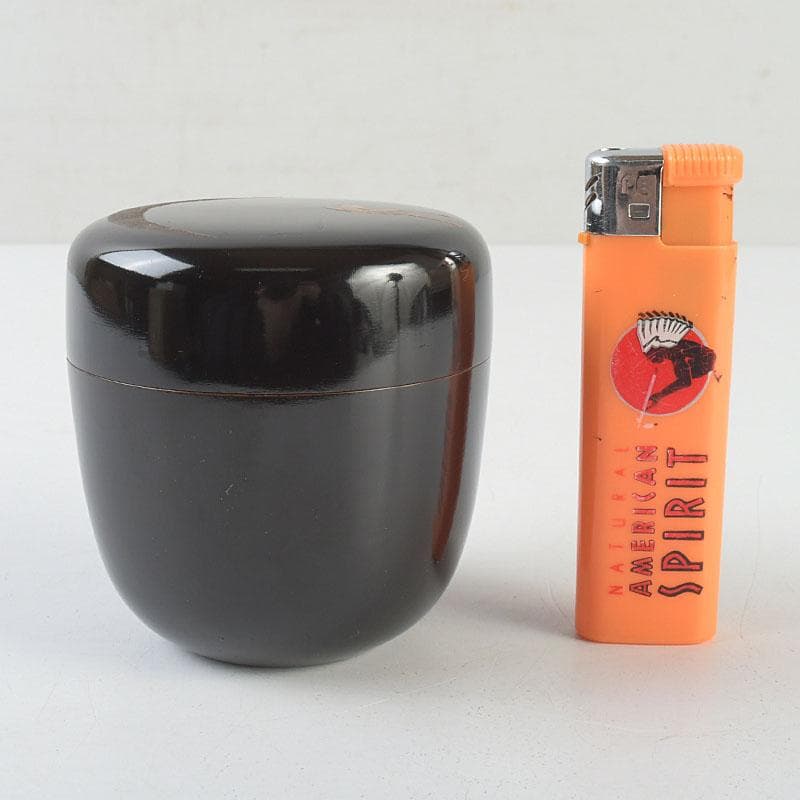
A japanese tea caddy shaped as a chu-natsume caddy in black lacquer caddy silence — Sōkō's gold maki-e natsume renders the moon swallow motif in gold against night. This maki-e lacquerware vessel belongs to chado tea ceremony lineage: a signed tea vessel bearing the artist's kaō cipher. The urushi lacquer art is restrained, the swallow maki-e art tracing flight paths beneath a crescent moon. Japanese lacquer at this level becomes tsubame moon art — seasonal, calligraphic, alive. A wabi sabi decor object that earns its place in the tearoom.
🔹 [ BASIC DETAILS ]
• Artist: Sōkō (宗衡) — with kaō (花押 / cipher mark)
• Type: Kuro chu-natsume (black medium tea caddy)
• Dimensions: H 7.0 cm × W 6.7 cm
• Exterior: Black urushi lacquer with gold maki-e
• Motif: Crescent moon with flying swallows (tsubame)
• Provenance: Kakitsuke (書付) inscription on tomobako
• Includes: Signed wooden storage box with inscription
• Condition: Excellent — consistent with careful use in tea practice
• SKU: 260227_a_2106
🔹 [ CULTURAL INSIGHT ]
The swallow arrives in Japan in late spring. By early summer it is everywhere — darting under eaves, skimming rice paddies at dusk. Paired with the crescent moon, tsubame become nocturnal travelers, their silhouettes cutting across a silver arc. This combination speaks to passage: the birds that cross oceans, the moon that wanes and returns.
In chanoyu, a host selects utensils that echo the season without announcing it. A tsubame-and-moon natsume enters the tearoom in May or June, when the evening air still holds the memory of spring.
🔹 [ DEEP-DIVE: THE WORK ]
Sōkō's authorship is confirmed by kaō — the personal cipher mark that functions as both signature and seal. The kakitsuke inscription on the tomobako adds a further layer of provenance, indicating recognition within a tea lineage. These are not decorative gestures; they are statements of accountability.
The maki-e composition is deliberately spare. A crescent moon occupies the upper body of the natsume, rendered in gold with a single clean arc. Below and around it, two or three swallows are caught in mid-flight — their wings angled, bodies compressed into quick gold strokes. The black lacquer ground does the rest, providing depth and atmosphere that the gold merely punctuates.
The chu-natsume form — slightly taller and narrower than the maru-natsume — gives the composition vertical space. The swallows gain altitude. The moon gains sky. At 7 cm tall, this is a vessel sized for koicha (thick tea) practice, where the natsume is handled with particular deliberation.
—
🔹 [ 日本語の説明 ]
宗衡作、月燕文蒔絵の黒中棗です。金蒔絵で三日月と飛翔する燕を描いた、晩春から初夏の茶席にふさわしい茶道具。花押あり、書付共箱付き。
高さ約7cm、幅約6.7cm。黒漆地に金で描かれた構図は抑制が利いています——三日月の弧は一筆で引かれ、燕は数筆の金で飛翔の瞬間を捉えています。中棗の縦長の形が構図に空間を与え、燕に高さを、月に空を与えます。花押と書付は茶の湯の系譜における作家の位置を示すものです。
🔹 [ SHIPPING & PACKAGING ]
• Dispatch: Within 1-6 business days
• Carrier: Japan Post EMS / UPS (with tracking)
• Packaging: Carefully wrapped with protective materials
🔹 [ BASIC DETAILS ]
• Artist: Sōkō (宗衡) — with kaō (花押 / cipher mark)
• Type: Kuro chu-natsume (black medium tea caddy)
• Dimensions: H 7.0 cm × W 6.7 cm
• Exterior: Black urushi lacquer with gold maki-e
• Motif: Crescent moon with flying swallows (tsubame)
• Provenance: Kakitsuke (書付) inscription on tomobako
• Includes: Signed wooden storage box with inscription
• Condition: Excellent — consistent with careful use in tea practice
• SKU: 260227_a_2106
🔹 [ CULTURAL INSIGHT ]
The swallow arrives in Japan in late spring. By early summer it is everywhere — darting under eaves, skimming rice paddies at dusk. Paired with the crescent moon, tsubame become nocturnal travelers, their silhouettes cutting across a silver arc. This combination speaks to passage: the birds that cross oceans, the moon that wanes and returns.
In chanoyu, a host selects utensils that echo the season without announcing it. A tsubame-and-moon natsume enters the tearoom in May or June, when the evening air still holds the memory of spring.
🔹 [ DEEP-DIVE: THE WORK ]
Sōkō's authorship is confirmed by kaō — the personal cipher mark that functions as both signature and seal. The kakitsuke inscription on the tomobako adds a further layer of provenance, indicating recognition within a tea lineage. These are not decorative gestures; they are statements of accountability.
The maki-e composition is deliberately spare. A crescent moon occupies the upper body of the natsume, rendered in gold with a single clean arc. Below and around it, two or three swallows are caught in mid-flight — their wings angled, bodies compressed into quick gold strokes. The black lacquer ground does the rest, providing depth and atmosphere that the gold merely punctuates.
The chu-natsume form — slightly taller and narrower than the maru-natsume — gives the composition vertical space. The swallows gain altitude. The moon gains sky. At 7 cm tall, this is a vessel sized for koicha (thick tea) practice, where the natsume is handled with particular deliberation.
—
🔹 [ 日本語の説明 ]
宗衡作、月燕文蒔絵の黒中棗です。金蒔絵で三日月と飛翔する燕を描いた、晩春から初夏の茶席にふさわしい茶道具。花押あり、書付共箱付き。
高さ約7cm、幅約6.7cm。黒漆地に金で描かれた構図は抑制が利いています——三日月の弧は一筆で引かれ、燕は数筆の金で飛翔の瞬間を捉えています。中棗の縦長の形が構図に空間を与え、燕に高さを、月に空を与えます。花押と書付は茶の湯の系譜における作家の位置を示すものです。
🔹 [ SHIPPING & PACKAGING ]
• Dispatch: Within 1-6 business days
• Carrier: Japan Post EMS / UPS (with tracking)
• Packaging: Carefully wrapped with protective materials
Quantity
Couldn't load pickup availability
Low stock: 1 left
View full details