1
/
of
13
Shunjū Maki-e Lacquer Hira-natsume by Takayu Kozo — Tea Caddy
Shunjū Maki-e Lacquer Hira-natsume by Takayu Kozo — Tea Caddy
Regular price
Dhs. 1,675.00 AED
Regular price
Sale price
Dhs. 1,675.00 AED
Taxes included.
Shipping calculated at checkout.
Experience authentic spring autumn makie in this hira natsume caddy. This gold makie lacquer features black urushi raden with seasonal flora makie and shell inlay lacquer—a signed tomobako art piece from the japan tea ceremony tradition, a tea caddy collector treasure with wisteria makie art and gold interior caddy artistry.
🔹 [ Basic Details ]
• Artist: Takayu Kozo (高秞厚三)
• Technique: Gold maki-e (蒔絵) with shell inlay (螺鈿) accents on black urushi lacquer; gold lacquer interior
• Era: Contemporary (Heisei–Reiwa period)
• Origin: Japan
• Dimensions: Height approx. 6.2 cm, Diameter approx. 8.6 cm
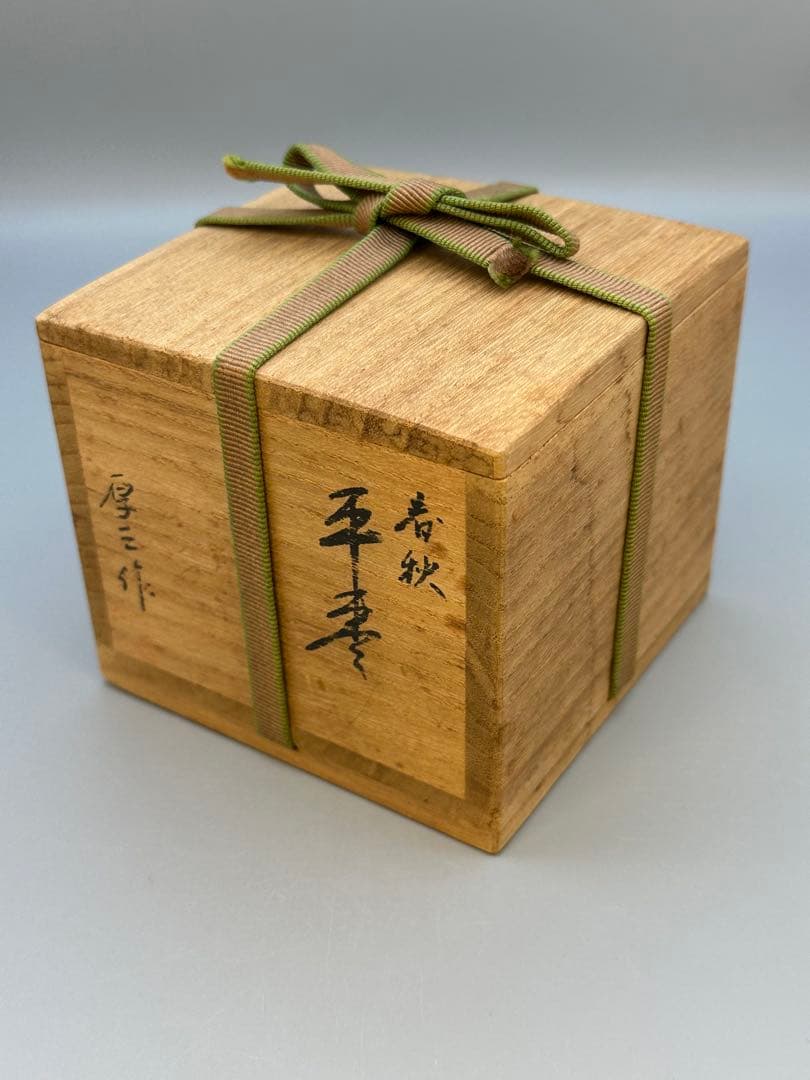
• Box: Signed tomobako (共箱) inscribed "春秋 平棗" (Shunjū Hira-natsume), signed 厚三作
• Condition: Excellent — no notable scratches, chips, or repairs. Pristine condition throughout.
🔹 [ Cultural & Artistic Insight ]
Shunjū (春秋, spring and autumn) is among the most ambitious thematic programs in Japanese lacquer art. It demands the artist render two opposing seasons within a single composition—the exuberance of spring growth and the contemplative richness of autumn decline—in harmonious coexistence.
Takayu Kozo achieves this with extraordinary density. Wisteria cascades from the lid in sweeping tendrils, its clusters rendered in raised gold. Fern fronds and spring grasses interweave with autumn chrysanthemums and maple leaves, while shell inlay flowers add iridescent purple-blue accents that no gold alone could provide. The decoration flows continuously from lid across the seam onto the body, creating a unified botanical landscape.
The hira-natsume (平棗) — a wide, flat tea caddy — offers an unusually generous surface for this ambitious program. Its low profile and broad diameter become a panoramic stage where the entire cycle of growth, bloom, and transformation unfolds.
The gold lacquer interior represents a level of craftsmanship reserved for the most considered works. Opening this vessel reveals warmth within depth.
"Spring and autumn share this vessel. Neither arrives. Neither leaves."
🔹 [ Deep-Dive Commentary ]
The shunjū theme (春秋蒔絵) carries philosophical weight beyond its decorative beauty. In Japanese aesthetics, the pairing of spring and autumn represents the full arc of time—renewal and reflection, beginning and culmination. Tea masters selecting a shunjū vessel acknowledge the impermanence embedded in every gathering.
The technical achievement in this hira-natsume is remarkable. Multiple maki-e techniques work in concert: taka-maki-e (raised maki-e) for the prominent wisteria clusters and large autumn leaves, hira-maki-e (flat maki-e) for finer stems and grasses, and togidashi-maki-e (burnished maki-e) for atmospheric transitions. Shell inlay (raden) provides chromatic contrast that extends the palette beyond gold tones into iridescent blue-violet.
The gold interior (金漆, kin-urushi) elevates this vessel beyond standard practice. Applying gold lacquer to the interior requires additional layers of preparation and finishing—a labor-intensive choice that signals the artist's commitment to completeness. When the lid is removed, the golden interior bathes the matcha powder in reflected warmth.
The hira-natsume form has particular associations with koicha (thick tea) preparation in certain tea traditions, though its use varies by school. The wide opening facilitates the measured scooping of dense powder.
【日本語解説】
🔹 [ 基本情報 ]
・作家:高秞厚三
・技法:金蒔絵(高蒔絵・平蒔絵・研出蒔絵)、螺鈿、黒漆塗、金漆内装
・時代:現代(平成・令和期)
・産地:日本
・寸法:高さ約6.2cm、径約8.6cm
・箱:共箱(「春秋 平棗」と墨書、厚三作)
・状態:極めて良好 — 目立つ傷や汚れなし。
🔹 [ 文化的・美術的解説 ]
春秋は日本漆芸における最も野心的な画題の一つである。春の生長の勢いと秋の沈潜する豊かさという対極の季節を一つの構図に調和させることを求める。
高秞厚三は驚嘆すべき密度でこれを達成する。蓋から藤が流麗な蔓で垂れ、羊歯と春草が秋菊・紅葉と絡み合い、螺鈿の花が金だけでは得られない虹色の青紫を添える。装飾は蓋から継ぎ目を越えて胴へ連続し、統一された植物風景を構成する。平棗の低い輪郭と広い径が全季節の展開する広大な舞台となる。
金漆の内装は最も熟考された作品にのみ許される工芸水準を表す。蓋を開けると内なる温もりが現れる。
🔹 [ 深掘り解説 ]
春秋蒔絵は装飾美を超えた哲学的重みを持つ。春と秋の対は時間の全弧——更新と省察、始まりと成就——を表し、茶人がこの器を選ぶとき、一期一会に宿る無常を認めることとなる。
本作では高蒔絵・平蒔絵・研出蒔絵が協奏し、螺鈿が金色調を超えた虹色の青紫へ色域を拡げる。金漆内装は追加の下地と仕上げの工程を要する労力を惜しまぬ選択であり、蓋を取ると金の内装が抹茶を温かな反射で包む。平棗は濃茶点前との関連を持ち、広い口が濃い粉の計量を容易にする。
🔹 [ SHIPPING & PACKAGING ]
• Dispatch: Within 1-6 business days
• Carrier: Japan Post EMS / UPS (with tracking)
• Packaging: Carefully wrapped with protective materials
🔹 [ Basic Details ]
• Artist: Takayu Kozo (高秞厚三)
• Technique: Gold maki-e (蒔絵) with shell inlay (螺鈿) accents on black urushi lacquer; gold lacquer interior
• Era: Contemporary (Heisei–Reiwa period)
• Origin: Japan
• Dimensions: Height approx. 6.2 cm, Diameter approx. 8.6 cm
• Box: Signed tomobako (共箱) inscribed "春秋 平棗" (Shunjū Hira-natsume), signed 厚三作
• Condition: Excellent — no notable scratches, chips, or repairs. Pristine condition throughout.
🔹 [ Cultural & Artistic Insight ]
Shunjū (春秋, spring and autumn) is among the most ambitious thematic programs in Japanese lacquer art. It demands the artist render two opposing seasons within a single composition—the exuberance of spring growth and the contemplative richness of autumn decline—in harmonious coexistence.
Takayu Kozo achieves this with extraordinary density. Wisteria cascades from the lid in sweeping tendrils, its clusters rendered in raised gold. Fern fronds and spring grasses interweave with autumn chrysanthemums and maple leaves, while shell inlay flowers add iridescent purple-blue accents that no gold alone could provide. The decoration flows continuously from lid across the seam onto the body, creating a unified botanical landscape.
The hira-natsume (平棗) — a wide, flat tea caddy — offers an unusually generous surface for this ambitious program. Its low profile and broad diameter become a panoramic stage where the entire cycle of growth, bloom, and transformation unfolds.
The gold lacquer interior represents a level of craftsmanship reserved for the most considered works. Opening this vessel reveals warmth within depth.
"Spring and autumn share this vessel. Neither arrives. Neither leaves."
🔹 [ Deep-Dive Commentary ]
The shunjū theme (春秋蒔絵) carries philosophical weight beyond its decorative beauty. In Japanese aesthetics, the pairing of spring and autumn represents the full arc of time—renewal and reflection, beginning and culmination. Tea masters selecting a shunjū vessel acknowledge the impermanence embedded in every gathering.
The technical achievement in this hira-natsume is remarkable. Multiple maki-e techniques work in concert: taka-maki-e (raised maki-e) for the prominent wisteria clusters and large autumn leaves, hira-maki-e (flat maki-e) for finer stems and grasses, and togidashi-maki-e (burnished maki-e) for atmospheric transitions. Shell inlay (raden) provides chromatic contrast that extends the palette beyond gold tones into iridescent blue-violet.
The gold interior (金漆, kin-urushi) elevates this vessel beyond standard practice. Applying gold lacquer to the interior requires additional layers of preparation and finishing—a labor-intensive choice that signals the artist's commitment to completeness. When the lid is removed, the golden interior bathes the matcha powder in reflected warmth.
The hira-natsume form has particular associations with koicha (thick tea) preparation in certain tea traditions, though its use varies by school. The wide opening facilitates the measured scooping of dense powder.
【日本語解説】
🔹 [ 基本情報 ]
・作家:高秞厚三
・技法:金蒔絵(高蒔絵・平蒔絵・研出蒔絵)、螺鈿、黒漆塗、金漆内装
・時代:現代(平成・令和期)
・産地:日本
・寸法:高さ約6.2cm、径約8.6cm
・箱:共箱(「春秋 平棗」と墨書、厚三作)
・状態:極めて良好 — 目立つ傷や汚れなし。
🔹 [ 文化的・美術的解説 ]
春秋は日本漆芸における最も野心的な画題の一つである。春の生長の勢いと秋の沈潜する豊かさという対極の季節を一つの構図に調和させることを求める。
高秞厚三は驚嘆すべき密度でこれを達成する。蓋から藤が流麗な蔓で垂れ、羊歯と春草が秋菊・紅葉と絡み合い、螺鈿の花が金だけでは得られない虹色の青紫を添える。装飾は蓋から継ぎ目を越えて胴へ連続し、統一された植物風景を構成する。平棗の低い輪郭と広い径が全季節の展開する広大な舞台となる。
金漆の内装は最も熟考された作品にのみ許される工芸水準を表す。蓋を開けると内なる温もりが現れる。
🔹 [ 深掘り解説 ]
春秋蒔絵は装飾美を超えた哲学的重みを持つ。春と秋の対は時間の全弧——更新と省察、始まりと成就——を表し、茶人がこの器を選ぶとき、一期一会に宿る無常を認めることとなる。
本作では高蒔絵・平蒔絵・研出蒔絵が協奏し、螺鈿が金色調を超えた虹色の青紫へ色域を拡げる。金漆内装は追加の下地と仕上げの工程を要する労力を惜しまぬ選択であり、蓋を取ると金の内装が抹茶を温かな反射で包む。平棗は濃茶点前との関連を持ち、広い口が濃い粉の計量を容易にする。
🔹 [ SHIPPING & PACKAGING ]
• Dispatch: Within 1-6 business days
• Carrier: Japan Post EMS / UPS (with tracking)
• Packaging: Carefully wrapped with protective materials
Quantity
Couldn't load pickup availability
Low stock: 1 left
View full details