1
/
of
9
Shoudai-yaki Matcha Bowl "Wa-Kumo" — Kumamoto Folk Kiln, Flowing Glaze, Signed Box
Shoudai-yaki Matcha Bowl "Wa-Kumo" — Kumamoto Folk Kiln, Flowing Glaze, Signed Box
Regular price
Dhs. 696.00 AED
Regular price
Sale price
Dhs. 696.00 AED
Taxes included.
Shipping calculated at checkout.
Experience Authentic Japan Art with this Shoudai Pottery Matcha Bowl. This Japanese Ceramic Tea Bowl serves as a Wabi Sabi Pottery piece and Chado Tea Ceremony Bowl, featuring Kumamoto Folk Kiln Tradition and Flowing Glaze Landscape—a must-have for any Art Collector.
🔹 [ BASIC DETAILS ]
• Artist: Unidentified artist of Shoudai-yaki (小岱焼), Kumamoto Prefecture
• Technique: Shoudai-yaki (小岱焼), wheel-thrown, layered slip and glaze firing
• Title: "Wa-Kumo" (わ雲 — Soft Cloud)
• Era: Contemporary (circa 2005, approximately 21 years old)
• Origin: Kumamoto Prefecture, Kyushu, Japan
• Dimensions: Approx. 14 cm diameter × 7.5 cm height
• Box: Signed tomobako (artist's own wooden box) with maker's seal
• Condition: No cracks or chips; excellent condition
🔹 [ Cultural & Artistic Insight ]
Shoudai-yaki is one of Kyushu's distinguished regional kiln traditions, rooted in the Higo Domain (present-day Kumamoto Prefecture) and active since the early Edo period. Unlike the polished aesthetics of Kyoto ceramics or the refined minimalism of Raku, Shoudai ware belongs to the mingei (folk craft) tradition—it is pottery of the land, shaped by the materials and firing conditions of Kyushu rather than by courtly taste or tea-master prescription.
The characteristic visual signature of Shoudai-yaki is its layered glaze landscape: an earth-toned base of brown iron slip overlaid with areas of flowing ash or feldspar glaze that pool and cascade unpredictably across the surface. This glaze movement, called nagashi (流し — flowing), is not applied for effect but arises from the interaction of glaze density, kiln temperature, and gravity during the firing. The result is a topographical surface that rewards extended looking—different areas of the bowl yielding different qualities of color and texture depending on viewing angle and light conditions.
The name given to this bowl, "Wa-Kumo" (わ雲 — Soft Cloud), is a poetic description of the flowing glaze pattern: the pale celadon-tinged glaze that drifts across the upper shoulder of the bowl, breaking the deep brown base like clouds passing across an autumn sky. The naming of a chawan is itself a practice rooted in the tea tradition, where the relationship between a bowl and its name deepens the contemplative experience of its use.
🔹 [ Deep-Dive Commentary ]
The exterior of this bowl presents a remarkable glaze landscape. The lower body is covered in a deep, matte iron-brown that speaks directly of Kyushu's iron-rich clay soils. Moving upward toward the shoulder, a flow of pale gray-green ash glaze cascades and pools in organic formations—in some areas settling into a smooth, pale sheet, in others breaking into smaller islands and rivulets. The boundary between the brown base and the flowing pale glaze is never a clean line but a gradual, atmospheric transition, like the edge of weather seen from a distance.
The interior of the bowl is glazed in the same pale ash-celadon tone that appears on the exterior shoulder—a deliberate visual connection between inside and outside that creates a sense of spatial continuity. Looking down into the bowl when preparing matcha, the practitioner sees the same soft cloud landscape that appears on the exterior, now as an intimate, private surface framing the green tea below.
At 14 cm diameter and 7.5 cm height, this is a generously proportioned bowl—wide-mouthed and substantial in the hands. The foot ring is hand-trimmed with the unhurried confidence characteristic of folk kiln work: functional, undecorated, but not rough. The wheel-throwing marks on the exterior base are left visible, another marker of the mingei aesthetic that values process over perfection.
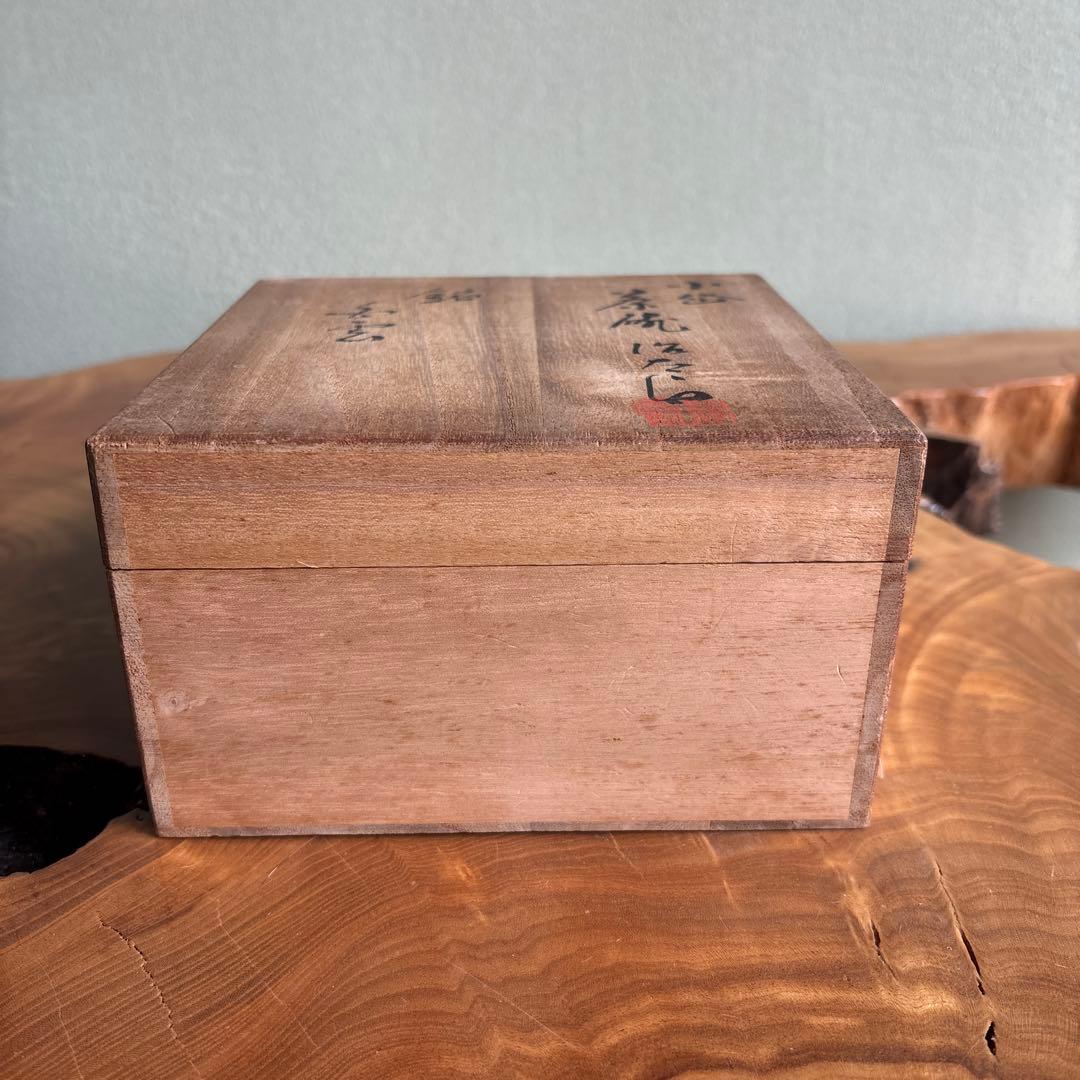
The tomobako is made from a warm reddish-brown hardwood rather than cedar—suggesting a regional wood tradition distinct from the standard Japanese craft packaging. The lid bears an inscription reading "小岱焼 茶碗" (Shoudai-yaki Tea Bowl) and the maker's seal, along with the name "わ雲" in the artist's hand. The wood-burned kanji visible on the box indicate a tradition of mark-making that treats the container as an extension of the work itself.
For collectors interested in Japanese folk ceramics, in mingei philosophy, or in the distinctive regional kiln traditions of Kyushu, this Shoudai-yaki bowl offers a grounded, honest introduction to a tradition that has shaped Japanese craft culture without seeking the spotlight that more celebrated wares enjoy.
━━━━━━━━━━━━━━━━━━━━━━
[ JAPANESE DESCRIPTION / 日本語解説 ]
━━━━━━━━━━━━━━━━━━━━━━
🔹 [ 基本情報 ]
• 作家:小岱焼 作家物(銘:わ雲)
• 技法:小岱焼、轆轤成形、鉄釉・流し灰釉
• 時代:現代作(約21年前、2005年頃)
• 産地:熊本県
• サイズ:直径約14cm × 高さ約7.5cm
• 付属:作家共箱(銘「わ雲」)
• 状態:ヒビ・カケなし、良好
🔹 [ 文化的背景・作品解説 ]
小岱焼は江戸時代初期から続く熊本の伝統窯で、肥後の土と炎が生み出す民藝的な景色が特徴である。京都の洗練や楽焼の精神性とは異なり、九州の土地の個性を正直に映し出すことを美の根拠とする。
この茶碗に施された流し釉は、濃い鉄釉の地の上を、灰色がかった青磁釉が重力と温度の作用によって自然に流れ下った結果である。人為的な制御を超えた釉薬の動きが、大地の景色——秋空を流れる雲——を器の表面に再現した。作家はこの景色に「わ雲」という銘を与え、茶碗と茶の湯の場に詩的な次元を付け加えた。
🔹 [ 深掘り解説 ]
外側の下部を覆う深い褐色の鉄釉と、肩から流れ下る淡い灰青釉の境界は、くっきりした線でなく天気の縁のような曖昧な移行帯をなす。内部は外側と同じ淡い灰青釉で仕上げられており、外と内が連続した景色を持つ設計になっている。抹茶を点てる際、内側を見下ろすと外側と同じ雲の景色が茶の緑を縁取る。
口径14cm・高さ7.5cmの大ぶりな形は両手でしっかりと受け止める量感があり、高台の削りは民藝的な機能本位の仕上げ。共箱は杉ではなく温かみのある赤茶色の広葉樹製で、蓋に「小岱焼 茶碗 わ雲」と認め、作家印が捺されている。
民藝の哲学と九州の地の力が凝縮した、静かに存在感のある一碗である。
🔹 [ SHIPPING & PACKAGING ]
• Dispatch: Within 1-6 business days
• Carrier: Japan Post EMS / UPS (with tracking)
• Packaging: Carefully wrapped with protective materials
🔹 [ BASIC DETAILS ]
• Artist: Unidentified artist of Shoudai-yaki (小岱焼), Kumamoto Prefecture
• Technique: Shoudai-yaki (小岱焼), wheel-thrown, layered slip and glaze firing
• Title: "Wa-Kumo" (わ雲 — Soft Cloud)
• Era: Contemporary (circa 2005, approximately 21 years old)
• Origin: Kumamoto Prefecture, Kyushu, Japan
• Dimensions: Approx. 14 cm diameter × 7.5 cm height
• Box: Signed tomobako (artist's own wooden box) with maker's seal
• Condition: No cracks or chips; excellent condition
🔹 [ Cultural & Artistic Insight ]
Shoudai-yaki is one of Kyushu's distinguished regional kiln traditions, rooted in the Higo Domain (present-day Kumamoto Prefecture) and active since the early Edo period. Unlike the polished aesthetics of Kyoto ceramics or the refined minimalism of Raku, Shoudai ware belongs to the mingei (folk craft) tradition—it is pottery of the land, shaped by the materials and firing conditions of Kyushu rather than by courtly taste or tea-master prescription.
The characteristic visual signature of Shoudai-yaki is its layered glaze landscape: an earth-toned base of brown iron slip overlaid with areas of flowing ash or feldspar glaze that pool and cascade unpredictably across the surface. This glaze movement, called nagashi (流し — flowing), is not applied for effect but arises from the interaction of glaze density, kiln temperature, and gravity during the firing. The result is a topographical surface that rewards extended looking—different areas of the bowl yielding different qualities of color and texture depending on viewing angle and light conditions.
The name given to this bowl, "Wa-Kumo" (わ雲 — Soft Cloud), is a poetic description of the flowing glaze pattern: the pale celadon-tinged glaze that drifts across the upper shoulder of the bowl, breaking the deep brown base like clouds passing across an autumn sky. The naming of a chawan is itself a practice rooted in the tea tradition, where the relationship between a bowl and its name deepens the contemplative experience of its use.
🔹 [ Deep-Dive Commentary ]
The exterior of this bowl presents a remarkable glaze landscape. The lower body is covered in a deep, matte iron-brown that speaks directly of Kyushu's iron-rich clay soils. Moving upward toward the shoulder, a flow of pale gray-green ash glaze cascades and pools in organic formations—in some areas settling into a smooth, pale sheet, in others breaking into smaller islands and rivulets. The boundary between the brown base and the flowing pale glaze is never a clean line but a gradual, atmospheric transition, like the edge of weather seen from a distance.
The interior of the bowl is glazed in the same pale ash-celadon tone that appears on the exterior shoulder—a deliberate visual connection between inside and outside that creates a sense of spatial continuity. Looking down into the bowl when preparing matcha, the practitioner sees the same soft cloud landscape that appears on the exterior, now as an intimate, private surface framing the green tea below.
At 14 cm diameter and 7.5 cm height, this is a generously proportioned bowl—wide-mouthed and substantial in the hands. The foot ring is hand-trimmed with the unhurried confidence characteristic of folk kiln work: functional, undecorated, but not rough. The wheel-throwing marks on the exterior base are left visible, another marker of the mingei aesthetic that values process over perfection.
The tomobako is made from a warm reddish-brown hardwood rather than cedar—suggesting a regional wood tradition distinct from the standard Japanese craft packaging. The lid bears an inscription reading "小岱焼 茶碗" (Shoudai-yaki Tea Bowl) and the maker's seal, along with the name "わ雲" in the artist's hand. The wood-burned kanji visible on the box indicate a tradition of mark-making that treats the container as an extension of the work itself.
For collectors interested in Japanese folk ceramics, in mingei philosophy, or in the distinctive regional kiln traditions of Kyushu, this Shoudai-yaki bowl offers a grounded, honest introduction to a tradition that has shaped Japanese craft culture without seeking the spotlight that more celebrated wares enjoy.
━━━━━━━━━━━━━━━━━━━━━━
[ JAPANESE DESCRIPTION / 日本語解説 ]
━━━━━━━━━━━━━━━━━━━━━━
🔹 [ 基本情報 ]
• 作家:小岱焼 作家物(銘:わ雲)
• 技法:小岱焼、轆轤成形、鉄釉・流し灰釉
• 時代:現代作(約21年前、2005年頃)
• 産地:熊本県
• サイズ:直径約14cm × 高さ約7.5cm
• 付属:作家共箱(銘「わ雲」)
• 状態:ヒビ・カケなし、良好
🔹 [ 文化的背景・作品解説 ]
小岱焼は江戸時代初期から続く熊本の伝統窯で、肥後の土と炎が生み出す民藝的な景色が特徴である。京都の洗練や楽焼の精神性とは異なり、九州の土地の個性を正直に映し出すことを美の根拠とする。
この茶碗に施された流し釉は、濃い鉄釉の地の上を、灰色がかった青磁釉が重力と温度の作用によって自然に流れ下った結果である。人為的な制御を超えた釉薬の動きが、大地の景色——秋空を流れる雲——を器の表面に再現した。作家はこの景色に「わ雲」という銘を与え、茶碗と茶の湯の場に詩的な次元を付け加えた。
🔹 [ 深掘り解説 ]
外側の下部を覆う深い褐色の鉄釉と、肩から流れ下る淡い灰青釉の境界は、くっきりした線でなく天気の縁のような曖昧な移行帯をなす。内部は外側と同じ淡い灰青釉で仕上げられており、外と内が連続した景色を持つ設計になっている。抹茶を点てる際、内側を見下ろすと外側と同じ雲の景色が茶の緑を縁取る。
口径14cm・高さ7.5cmの大ぶりな形は両手でしっかりと受け止める量感があり、高台の削りは民藝的な機能本位の仕上げ。共箱は杉ではなく温かみのある赤茶色の広葉樹製で、蓋に「小岱焼 茶碗 わ雲」と認め、作家印が捺されている。
民藝の哲学と九州の地の力が凝縮した、静かに存在感のある一碗である。
🔹 [ SHIPPING & PACKAGING ]
• Dispatch: Within 1-6 business days
• Carrier: Japan Post EMS / UPS (with tracking)
• Packaging: Carefully wrapped with protective materials
Quantity
Couldn't load pickup availability
Low stock: 1 left
View full details