1
/
of
9
Shino Ware Matcha Tea Bowl by Listed Artist — Feldspar White Glaze with Hiiro, Signed Tomobako
Shino Ware Matcha Tea Bowl by Listed Artist — Feldspar White Glaze with Hiiro, Signed Tomobako
Regular price
Dhs. 615.00 AED
Regular price
Sale price
Dhs. 615.00 AED
Taxes included.
Shipping calculated at checkout.
Experience Authentic Japan Art with this Shino Ware Matcha Tea Bowl. This Japanese Pottery Tea Bowl serves as a Wabi Sabi Ceramic and Mino Ware Tea Bowl, featuring Feldspar White Glaze and Signed Tomobako Box—a must-have for any Art Collector. This Artist Signed Chawan with Crackle Glaze Pottery exemplifies the Handmade Ceramic Tea Bowl tradition, offering both Vintage Japanese Tea Ceremony aesthetic and the quiet depth of a Collectible Studio Pottery piece.
🔹 [ BASIC DETAILS ]
• Artist: Japanese studio potter (signed; name rendered by seal on tomobako lid)
• Technique: Shino-yaki — thick feldspar (chōseki) glaze with nezumi-blue pooling, hiiro fire-blush, and fine kan'nyu crackle
• Era: 1990s–2000s (contemporary studio work in classical Momoyama Shino tradition)
• Origin: Mino, Gifu Prefecture, Japan
• Dimensions: Diameter approx. 12 cm, Height approx. 8 cm
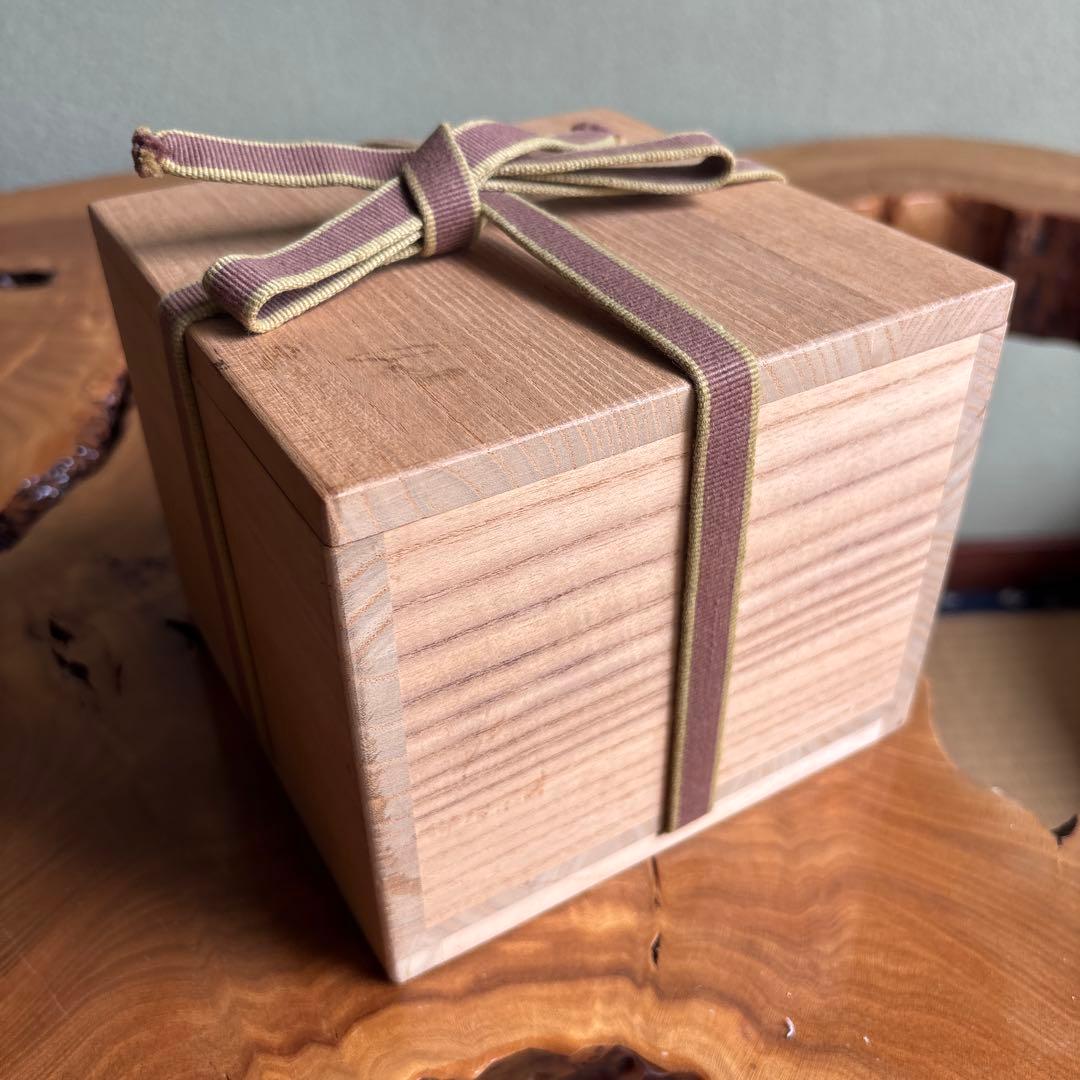
• Box: Original tomobako (signed wooden box) inscribed 「自作 茶碗」("jisaku chawan" — self-made tea bowl) with the artist's brush writing and red seal
• Condition: Excellent — no chips, no repairs, no cracks; natural glaze pinholes and crackle are intentional kiln characteristics
🔹 [ CULTURAL & ARTISTIC INSIGHT ]
Shino ware is the first distinctly Japanese ceramic glaze tradition — born in Mino Province (present-day Gifu Prefecture) during the late Momoyama period (late 16th century) at the height of the Japanese tea ceremony's cultural dominance. Unlike imported Chinese blue-and-white porcelain or Korean celadons that dominated earlier tea culture, Shino was conceived entirely from Japanese sensibility: earthy, thick, imperfect, and alive.
The glaze on this chawan achieves precisely what Shino masters sought — a deep, opaque feldspar white that holds breath within it. The nezumi (mouse-grey) pooling at the shoulder is not a flaw but a gift from the kiln: iron minerals in the clay body migrating upward through the thick glaze during firing, creating natural gradients impossible to plan. The constellation of pinholes — called "sunago" (sand-scatter) or kiln pores — appears where gases escaped during the melt, each dot a record of the fire's conversation with the clay.
At the foot and lower body, a warm hiiro (fire-color) blush of salmon-pink to terracotta warms the composition — the exposed Mino clay itself blushing from the kiln's heat. The fine crackle (kan'nyu) that maps the glaze surface is a natural consequence of the glaze contracting slightly faster than the clay body on cooling — over decades, it deepens into a soft patina that only age and use can impart.
The tomobako inscription 「自作 茶碗」captures something rare: a potter who signs not with pride of name alone, but with quiet acknowledgment — "this is a bowl I made myself." The red hanko seal affirms authorship without fanfare.
Poetic Line: "White like snow that has forgotten to fall — the glaze holds the heat of a long-extinguished fire, still warm to the touch."
🔹 [ DEEP-DIVE COMMENTARY ]
Shino ware (志野焼) is defined by its use of feldspar (chōseki) as the primary glaze material rather than ash or iron-based glazes common in other Japanese traditions. Ground and refined from the abundant feldspar deposits of the Mino region, the raw glaze is applied thickly — often 3 to 5 mm — and fired at cone 10 to 11 (approximately 1280–1300°C) in anagama or noborigama wood-fired kilns. The thick application causes the glaze to melt unevenly, pooling, dripping, and forming the distinctive pitted, textured surface that collectors prize.
The blue-grey nezumi quality observed on this bowl's shoulder results from iron particles suspended in the glaze layer interacting with the reduction atmosphere of the kiln — a zone of oxygen-starved fire that transforms iron's oxidation state, shifting warm orange tones toward cool blue-greys. This interplay of oxidation and reduction creates landscapes within the glaze that no two bowls share.
Historically, Shino is divided into several sub-types — Muji Shino (plain white), E-Shino (painted with iron underglaze), Nezumi Shino (overall grey), and Beni Shino (overall red) — this bowl most closely approaches Muji Shino with strong nezumi characteristics in the upper register, making it a particularly classic and versatile example for tea practice.
For collectors, the tomobako (共箱) is not merely packaging — it is documentation. When a potter inscribes and seals the box themselves, the chawan and its box become a unified art object. The box records intent, confirms authenticity, and provides the bowl's "name" (mei) within the tradition. In tea ceremony, the box is opened before guests with as much ceremony as the bowl itself.
Contemporary Shino potters working in this classical Momoyama idiom — thick white glaze, exposed clay foot, hand-pulled form with slight irregularity — position themselves in a lineage tracing through Toyozo Arakawa (Living National Treasure, 1894–1985), who rediscovered the original Momoyama Shino kiln sites at Ogaya in 1930. To work in true Shino is to participate in a continuous act of cultural memory.
🔹 [ 日本語解説 ]
【詳細スペック】
• 作家:落款印のある日本人陶芸家(共箱蓋に墨書・押印)
• 技法:志野焼 — 長石釉の白濁地に灰色の鼠志野調の流れ、火色、細やかな貫入
• 時代:1990年代〜2000年代(桃山志野の様式を継承した現代作品)
• 産地:岐阜県美濃
• 寸法:直径 約12cm、高さ 約8cm
• 付属:共箱(蓋に「自作 茶碗」墨書・落款印あり)
• 状態:良好 — ヒビ・欠けなし。釉薬の貫入・ピンホールは窯変によるもの
【文化・芸術的考察】
志野焼は、日本で初めて独自の表現を持った釉薬として誕生した焼き物です。桃山時代後期、茶の湯の文化が最も輝いていた時代に、美濃(現岐阜県)の窯元で生み出されました。輸入された中国・朝鮮の陶磁器とは一線を画し、日本人の感性そのものから生まれた焼き物——土くさく、厚く、不完全で、それでいて深く生きている。
この茶碗の釉薬は、志野が目指したものを見事に体現しています。白く濁った長石釉は内側に息を宿し、肩口に浮かぶ鼠色の景色は窯の贈り物です。土中の鉄分が厚い釉層を昇り、自然なグラデーションを形作る——計算では生まれない偶然の美。全体に散る無数のピンホールは「砂子」と呼ばれ、溶融した釉薬の中でガスが抜けた跡であり、火と土の対話の記録です。
胴下部と高台に広がる火色は、美濃の素地土が窯の炎に直接さらされた証。釉薬に覆われていない部分が赤みを帯び、白濁の釉薬と対比して深い景色を作り出します。表面を走る細かな貫入は、冷却時に釉と土が微妙に収縮する速度の差から生じる自然現象で、年月とともに深みを増す侘びの印です。
共箱の「自作 茶碗」という墨書には、名誉のためではなく「自分が作った」という静かな誠実さが宿っています。落款印は、誇示ではなく確認の行為です。
【ディープダイブ解説】
志野焼の最大の特徴は、釉薬の主成分が長石(チョウセキ)である点です。美濃地方に豊富に産出する長石を精製し、通常の釉薬の3〜5倍にあたる厚さで素地に施釉します。穴窯や登り窯での約1280〜1300℃の焼成で、厚い釉薬は不均一に熔融し、流れ、窪みを作りながら独特の景色を生み出します。
この茶碗の肩口に現れる鼠色の質感は、釉層に含まれる鉄分が還元焰(酸素が不足した状態の炎)と反応した結果です。酸化から還元へと鉄の状態が変化し、温かみのある橙色が冷たい青灰色へと転じます。酸化と還元が交互に訪れる焰の揺らぎが、どの茶碗とも異なる唯一無二の景色を刻みます。
志野の様式には「無地志野」「絵志野」「鼠志野」「紅志野」などがありますが、この茶碗は白濁した無地志野を基調としながら肩口に鼠の景色が強く現れており、最も古典的で茶の湯への親和性が高い姿をしています。
コレクターにとって共箱(ともばこ)は単なる梱包材ではなく、作品の一部です。作家自身が蓋に記し、押印した共箱は茶碗と一体の美術品として機能します。茶席では箱の開封も所作のひとつとなり、銘や作家の手跡が席の空気を整えます。
志野の現代作家がこの桃山様式——厚い白釉、露胎の高台、わずかな歪みを持つ手挽きの形——で仕事をすることは、1930年に荒川豊蔵(人間国宝、1894〜1985)が美濃の大萱で桃山時代の志野窯跡を発見して以来続く、文化的記憶の継承行為に他なりません。
🔹 [ SHIPPING & PACKAGING ]
• Dispatch: Within 1-6 business days
• Carrier: Japan Post EMS / UPS (with tracking)
• Packaging: Carefully wrapped with protective materials
🔹 [ BASIC DETAILS ]
• Artist: Japanese studio potter (signed; name rendered by seal on tomobako lid)
• Technique: Shino-yaki — thick feldspar (chōseki) glaze with nezumi-blue pooling, hiiro fire-blush, and fine kan'nyu crackle
• Era: 1990s–2000s (contemporary studio work in classical Momoyama Shino tradition)
• Origin: Mino, Gifu Prefecture, Japan
• Dimensions: Diameter approx. 12 cm, Height approx. 8 cm
• Box: Original tomobako (signed wooden box) inscribed 「自作 茶碗」("jisaku chawan" — self-made tea bowl) with the artist's brush writing and red seal
• Condition: Excellent — no chips, no repairs, no cracks; natural glaze pinholes and crackle are intentional kiln characteristics
🔹 [ CULTURAL & ARTISTIC INSIGHT ]
Shino ware is the first distinctly Japanese ceramic glaze tradition — born in Mino Province (present-day Gifu Prefecture) during the late Momoyama period (late 16th century) at the height of the Japanese tea ceremony's cultural dominance. Unlike imported Chinese blue-and-white porcelain or Korean celadons that dominated earlier tea culture, Shino was conceived entirely from Japanese sensibility: earthy, thick, imperfect, and alive.
The glaze on this chawan achieves precisely what Shino masters sought — a deep, opaque feldspar white that holds breath within it. The nezumi (mouse-grey) pooling at the shoulder is not a flaw but a gift from the kiln: iron minerals in the clay body migrating upward through the thick glaze during firing, creating natural gradients impossible to plan. The constellation of pinholes — called "sunago" (sand-scatter) or kiln pores — appears where gases escaped during the melt, each dot a record of the fire's conversation with the clay.
At the foot and lower body, a warm hiiro (fire-color) blush of salmon-pink to terracotta warms the composition — the exposed Mino clay itself blushing from the kiln's heat. The fine crackle (kan'nyu) that maps the glaze surface is a natural consequence of the glaze contracting slightly faster than the clay body on cooling — over decades, it deepens into a soft patina that only age and use can impart.
The tomobako inscription 「自作 茶碗」captures something rare: a potter who signs not with pride of name alone, but with quiet acknowledgment — "this is a bowl I made myself." The red hanko seal affirms authorship without fanfare.
Poetic Line: "White like snow that has forgotten to fall — the glaze holds the heat of a long-extinguished fire, still warm to the touch."
🔹 [ DEEP-DIVE COMMENTARY ]
Shino ware (志野焼) is defined by its use of feldspar (chōseki) as the primary glaze material rather than ash or iron-based glazes common in other Japanese traditions. Ground and refined from the abundant feldspar deposits of the Mino region, the raw glaze is applied thickly — often 3 to 5 mm — and fired at cone 10 to 11 (approximately 1280–1300°C) in anagama or noborigama wood-fired kilns. The thick application causes the glaze to melt unevenly, pooling, dripping, and forming the distinctive pitted, textured surface that collectors prize.
The blue-grey nezumi quality observed on this bowl's shoulder results from iron particles suspended in the glaze layer interacting with the reduction atmosphere of the kiln — a zone of oxygen-starved fire that transforms iron's oxidation state, shifting warm orange tones toward cool blue-greys. This interplay of oxidation and reduction creates landscapes within the glaze that no two bowls share.
Historically, Shino is divided into several sub-types — Muji Shino (plain white), E-Shino (painted with iron underglaze), Nezumi Shino (overall grey), and Beni Shino (overall red) — this bowl most closely approaches Muji Shino with strong nezumi characteristics in the upper register, making it a particularly classic and versatile example for tea practice.
For collectors, the tomobako (共箱) is not merely packaging — it is documentation. When a potter inscribes and seals the box themselves, the chawan and its box become a unified art object. The box records intent, confirms authenticity, and provides the bowl's "name" (mei) within the tradition. In tea ceremony, the box is opened before guests with as much ceremony as the bowl itself.
Contemporary Shino potters working in this classical Momoyama idiom — thick white glaze, exposed clay foot, hand-pulled form with slight irregularity — position themselves in a lineage tracing through Toyozo Arakawa (Living National Treasure, 1894–1985), who rediscovered the original Momoyama Shino kiln sites at Ogaya in 1930. To work in true Shino is to participate in a continuous act of cultural memory.
🔹 [ 日本語解説 ]
【詳細スペック】
• 作家:落款印のある日本人陶芸家(共箱蓋に墨書・押印)
• 技法:志野焼 — 長石釉の白濁地に灰色の鼠志野調の流れ、火色、細やかな貫入
• 時代:1990年代〜2000年代(桃山志野の様式を継承した現代作品)
• 産地:岐阜県美濃
• 寸法:直径 約12cm、高さ 約8cm
• 付属:共箱(蓋に「自作 茶碗」墨書・落款印あり)
• 状態:良好 — ヒビ・欠けなし。釉薬の貫入・ピンホールは窯変によるもの
【文化・芸術的考察】
志野焼は、日本で初めて独自の表現を持った釉薬として誕生した焼き物です。桃山時代後期、茶の湯の文化が最も輝いていた時代に、美濃(現岐阜県)の窯元で生み出されました。輸入された中国・朝鮮の陶磁器とは一線を画し、日本人の感性そのものから生まれた焼き物——土くさく、厚く、不完全で、それでいて深く生きている。
この茶碗の釉薬は、志野が目指したものを見事に体現しています。白く濁った長石釉は内側に息を宿し、肩口に浮かぶ鼠色の景色は窯の贈り物です。土中の鉄分が厚い釉層を昇り、自然なグラデーションを形作る——計算では生まれない偶然の美。全体に散る無数のピンホールは「砂子」と呼ばれ、溶融した釉薬の中でガスが抜けた跡であり、火と土の対話の記録です。
胴下部と高台に広がる火色は、美濃の素地土が窯の炎に直接さらされた証。釉薬に覆われていない部分が赤みを帯び、白濁の釉薬と対比して深い景色を作り出します。表面を走る細かな貫入は、冷却時に釉と土が微妙に収縮する速度の差から生じる自然現象で、年月とともに深みを増す侘びの印です。
共箱の「自作 茶碗」という墨書には、名誉のためではなく「自分が作った」という静かな誠実さが宿っています。落款印は、誇示ではなく確認の行為です。
【ディープダイブ解説】
志野焼の最大の特徴は、釉薬の主成分が長石(チョウセキ)である点です。美濃地方に豊富に産出する長石を精製し、通常の釉薬の3〜5倍にあたる厚さで素地に施釉します。穴窯や登り窯での約1280〜1300℃の焼成で、厚い釉薬は不均一に熔融し、流れ、窪みを作りながら独特の景色を生み出します。
この茶碗の肩口に現れる鼠色の質感は、釉層に含まれる鉄分が還元焰(酸素が不足した状態の炎)と反応した結果です。酸化から還元へと鉄の状態が変化し、温かみのある橙色が冷たい青灰色へと転じます。酸化と還元が交互に訪れる焰の揺らぎが、どの茶碗とも異なる唯一無二の景色を刻みます。
志野の様式には「無地志野」「絵志野」「鼠志野」「紅志野」などがありますが、この茶碗は白濁した無地志野を基調としながら肩口に鼠の景色が強く現れており、最も古典的で茶の湯への親和性が高い姿をしています。
コレクターにとって共箱(ともばこ)は単なる梱包材ではなく、作品の一部です。作家自身が蓋に記し、押印した共箱は茶碗と一体の美術品として機能します。茶席では箱の開封も所作のひとつとなり、銘や作家の手跡が席の空気を整えます。
志野の現代作家がこの桃山様式——厚い白釉、露胎の高台、わずかな歪みを持つ手挽きの形——で仕事をすることは、1930年に荒川豊蔵(人間国宝、1894〜1985)が美濃の大萱で桃山時代の志野窯跡を発見して以来続く、文化的記憶の継承行為に他なりません。
🔹 [ SHIPPING & PACKAGING ]
• Dispatch: Within 1-6 business days
• Carrier: Japan Post EMS / UPS (with tracking)
• Packaging: Carefully wrapped with protective materials
Quantity
Couldn't load pickup availability
Low stock: 1 left
View full details