1
/
of
7
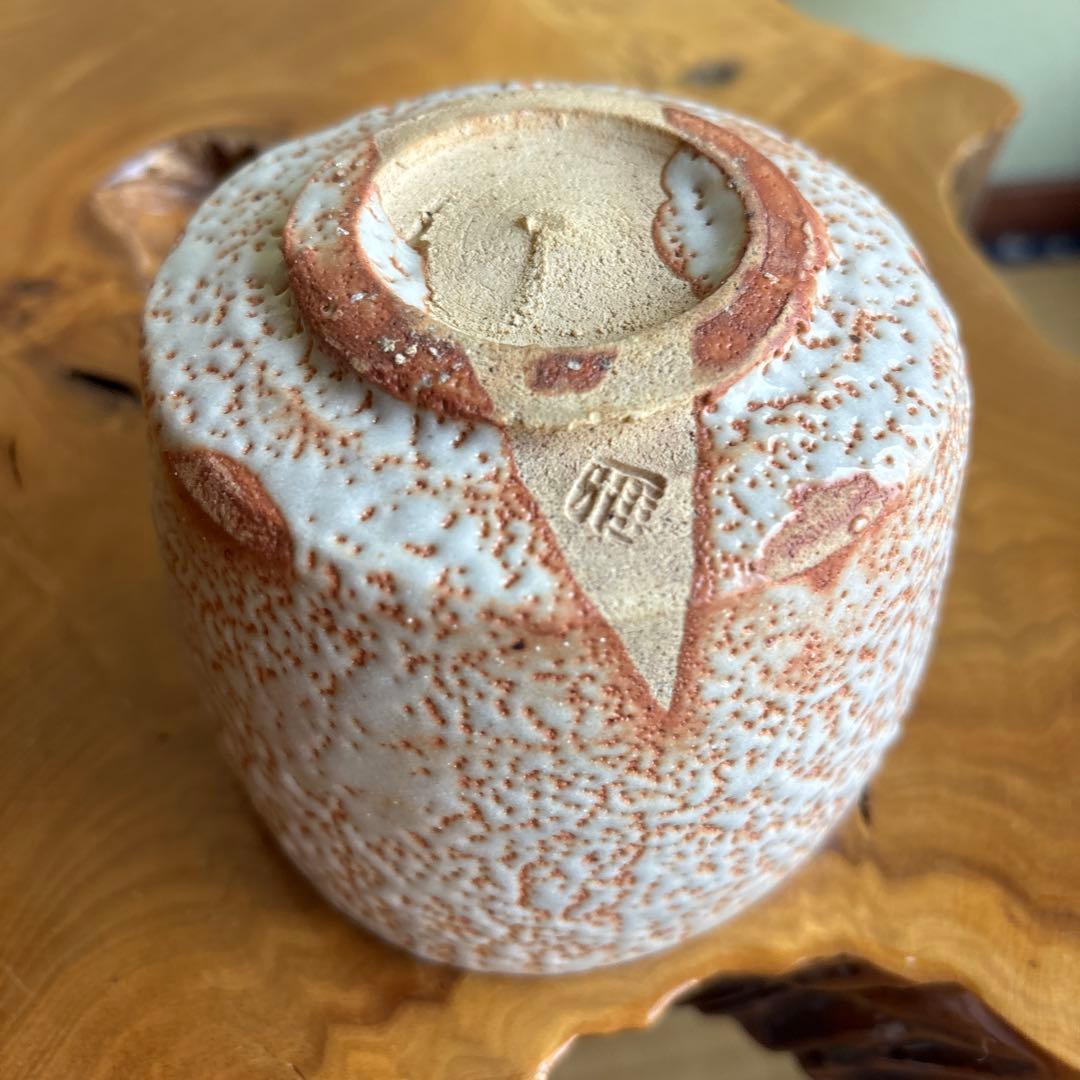
Shino Tea Bowl by Nakajima Masao | Gazan-gama Mino Ware | E-Shino Matcha Bowl with Iron-Painted Grass Motif | Signed Wooden Box
Shino Tea Bowl by Nakajima Masao | Gazan-gama Mino Ware | E-Shino Matcha Bowl with Iron-Painted Grass Motif | Signed Wooden Box
Regular price
Dhs. 610.00 AED
Regular price
Sale price
Dhs. 610.00 AED
Taxes included.
Shipping calculated at checkout.
Experience Authentic Japan Art with this Shino Tea Bowl. This Japanese Tea Bowl serves as a Mino Ware Matcha Bowl and E-Shino Pottery, featuring Iron Painted Grass Motif and White Feldspar Glaze—a must-have for any Art Collector. This Signed Pottery Work by Nakajima Masao embodies Handcrafted Japanese Ceramics and Japanese Wabi Sabi Aesthetic with quiet authority.
🔹 [ BASIC DETAILS ]
• Artist: Nakajima Masao (中島正雄), Gazan-gama kiln, Mino, Gifu Prefecture
• Technique: E-Shino (絵志野) — white feldspar glaze with iron-oxide grass sketch
• Era: 2000 – 2026 (contemporary studio work)
• Origin: Mino, Japan
• Dimensions: Diameter approx. 11.2 cm, Height approx. 8 cm
• Box: Signed wooden box (共箱), lid inscription in artist's hand
• Condition: Excellent — no chips, cracks, or restoration
🔹 [ CULTURAL & ARTISTIC INSIGHT ]
Shino is the first glaze Japan called its own.
Where most medieval Japanese ceramics borrowed from Song China, Shino emerged in the Mino kilns of Gifu as a deliberate act of local vision — a thick, porous white feldspathic glaze that breathes, blisters, and holds light differently in every season. The blush of hi-iro (緋色), the soft orange-red that blooms where the glaze thins near the foot, is not a flaw. It is the kiln's signature — a warmth written in fire.
E-Shino goes one step further. Before the glaze is applied, the potter draws in iron oxide on the raw clay. When fired, the brush strokes burn to a rust-ochre beneath the white, emerging as dim outlines — grass, reeds, mountain silhouettes — visible only when you hold the bowl and let your eyes settle. Nakajima Masao's grass motif follows this restrained tradition: a few strokes, nothing more. The drawing does not explain the landscape. It opens toward it.
The feldspar surface carries the texture of unpolished stone. In the hands around a bowl of matcha, that roughness is presence. The glaze does not reflect — it absorbs. The tea becomes quieter for it.
*"White that is not cold. Fire that left something behind."*
🔹 [ DEEP-DIVE COMMENTARY ]
Shino ware (志野焼) is classified under the broader category of Mino ware (美濃焼) and is distinguished primarily by its use of a thick white feldspar (長石) glaze applied to Momoyama-period stoneware clay. The style emerged in the late 16th century in the Toki and Kani districts of present-day Gifu Prefecture, at a moment when Japanese tea masters — particularly those in the lineage of Sen no Rikyu — were actively seeking vessels that embodied wabi: unforced, incomplete, close to the earth.
E-Shino (絵志野) is a subtype distinguished by underglaze iron painting applied before the white glaze. Unlike overglaze enamels that sit on the surface, iron-oxide work on Shino is absorbed into the body and seen through the glaze, giving motifs a softness closer to a shadow than a line. Common subjects are grasses (kusa), reeds (ashi), and abbreviated landscapes — imagery drawn from classical waka poetry. The potter commits to the brushstroke knowing exactly how much the fire will erase.
Gazan-gama (雅山窯) is Nakajima Masao's studio in the Mino region, where he has worked for several decades continuing the Momoyama-inspired tradition of E-Shino and Nezumi-Shino. His work is formally exhibited and collected within Japan and is known for consistent hi-iro development and confident, minimal brush work. A signed wooden tomobako (共箱) with the artist's own box inscription is the conventional authentication standard for contemporary Japanese studio ceramics.
For Western collectors, Shino is frequently the first encounter with Japanese pottery that does not feel decorative. The bowl does not perform — it occupies. That quality, combined with its direct utility in the tea ceremony, makes E-Shino among the most studied and sought-after styles in the living craft tradition.
🔹 [ JAPANESE DESCRIPTION / 日本語解説 ]
【基本情報】
• 作家: 中島正雄(雅山窯・美濃)
• 技法: 絵志野 — 長石白釉に鉄絵で草花を素描
• 産地: 岐阜県美濃
• 寸法: 直径約11.2cm、高さ約8cm
• 箱: 共箱(箱書あり)
• 状態: 良好 — 傷・割れ・補修なし
【文化的背景と技法】
志野は、日本が初めて「自分たちのもの」と呼べる釉薬を手にした焼物です。
長石を厚く掛けた白い表面には、火の中でのみ決まる景色があります。釉薬が薄くなる口縁や高台際に滲む緋色は、炎が残した体温です。絵志野では、施釉の前に素地に鉄絵を描きます。焼成後、その筆跡は釉薬の白越しに浮かぶ — 草、葦、山の輪郭 — 完全には見えないが、確かにそこにある。中島正雄の草文は、余計な線を持たない。描写ではなく、余白への入口として機能しています。
長石釉の手触りは、磨かれていない石のように粗く、温かい。抹茶椀として手に取るとき、その質感はそのまま静けさになります。
【作家・窯について】
美濃・雅山窯にて数十年にわたり制作を続ける中島正雄は、桃山期の絵志野・鼠志野の様式を現代に継承する作家として知られています。共箱・箱書は、作家自筆による正統な真作証明です。西洋のコレクターにとって志野は、装飾的でない日本陶芸との最初の出会いになることが多い — 自己主張せず、ただ「在る」器として。
🔹 [ SHIPPING & PACKAGING ]
• Dispatch: Within 1-6 business days
• Carrier: Japan Post EMS / UPS (with tracking)
• Packaging: Carefully wrapped with protective materials
🔹 [ BASIC DETAILS ]
• Artist: Nakajima Masao (中島正雄), Gazan-gama kiln, Mino, Gifu Prefecture
• Technique: E-Shino (絵志野) — white feldspar glaze with iron-oxide grass sketch
• Era: 2000 – 2026 (contemporary studio work)
• Origin: Mino, Japan
• Dimensions: Diameter approx. 11.2 cm, Height approx. 8 cm
• Box: Signed wooden box (共箱), lid inscription in artist's hand
• Condition: Excellent — no chips, cracks, or restoration
🔹 [ CULTURAL & ARTISTIC INSIGHT ]
Shino is the first glaze Japan called its own.
Where most medieval Japanese ceramics borrowed from Song China, Shino emerged in the Mino kilns of Gifu as a deliberate act of local vision — a thick, porous white feldspathic glaze that breathes, blisters, and holds light differently in every season. The blush of hi-iro (緋色), the soft orange-red that blooms where the glaze thins near the foot, is not a flaw. It is the kiln's signature — a warmth written in fire.
E-Shino goes one step further. Before the glaze is applied, the potter draws in iron oxide on the raw clay. When fired, the brush strokes burn to a rust-ochre beneath the white, emerging as dim outlines — grass, reeds, mountain silhouettes — visible only when you hold the bowl and let your eyes settle. Nakajima Masao's grass motif follows this restrained tradition: a few strokes, nothing more. The drawing does not explain the landscape. It opens toward it.
The feldspar surface carries the texture of unpolished stone. In the hands around a bowl of matcha, that roughness is presence. The glaze does not reflect — it absorbs. The tea becomes quieter for it.
*"White that is not cold. Fire that left something behind."*
🔹 [ DEEP-DIVE COMMENTARY ]
Shino ware (志野焼) is classified under the broader category of Mino ware (美濃焼) and is distinguished primarily by its use of a thick white feldspar (長石) glaze applied to Momoyama-period stoneware clay. The style emerged in the late 16th century in the Toki and Kani districts of present-day Gifu Prefecture, at a moment when Japanese tea masters — particularly those in the lineage of Sen no Rikyu — were actively seeking vessels that embodied wabi: unforced, incomplete, close to the earth.
E-Shino (絵志野) is a subtype distinguished by underglaze iron painting applied before the white glaze. Unlike overglaze enamels that sit on the surface, iron-oxide work on Shino is absorbed into the body and seen through the glaze, giving motifs a softness closer to a shadow than a line. Common subjects are grasses (kusa), reeds (ashi), and abbreviated landscapes — imagery drawn from classical waka poetry. The potter commits to the brushstroke knowing exactly how much the fire will erase.
Gazan-gama (雅山窯) is Nakajima Masao's studio in the Mino region, where he has worked for several decades continuing the Momoyama-inspired tradition of E-Shino and Nezumi-Shino. His work is formally exhibited and collected within Japan and is known for consistent hi-iro development and confident, minimal brush work. A signed wooden tomobako (共箱) with the artist's own box inscription is the conventional authentication standard for contemporary Japanese studio ceramics.
For Western collectors, Shino is frequently the first encounter with Japanese pottery that does not feel decorative. The bowl does not perform — it occupies. That quality, combined with its direct utility in the tea ceremony, makes E-Shino among the most studied and sought-after styles in the living craft tradition.
🔹 [ JAPANESE DESCRIPTION / 日本語解説 ]
【基本情報】
• 作家: 中島正雄(雅山窯・美濃)
• 技法: 絵志野 — 長石白釉に鉄絵で草花を素描
• 産地: 岐阜県美濃
• 寸法: 直径約11.2cm、高さ約8cm
• 箱: 共箱(箱書あり)
• 状態: 良好 — 傷・割れ・補修なし
【文化的背景と技法】
志野は、日本が初めて「自分たちのもの」と呼べる釉薬を手にした焼物です。
長石を厚く掛けた白い表面には、火の中でのみ決まる景色があります。釉薬が薄くなる口縁や高台際に滲む緋色は、炎が残した体温です。絵志野では、施釉の前に素地に鉄絵を描きます。焼成後、その筆跡は釉薬の白越しに浮かぶ — 草、葦、山の輪郭 — 完全には見えないが、確かにそこにある。中島正雄の草文は、余計な線を持たない。描写ではなく、余白への入口として機能しています。
長石釉の手触りは、磨かれていない石のように粗く、温かい。抹茶椀として手に取るとき、その質感はそのまま静けさになります。
【作家・窯について】
美濃・雅山窯にて数十年にわたり制作を続ける中島正雄は、桃山期の絵志野・鼠志野の様式を現代に継承する作家として知られています。共箱・箱書は、作家自筆による正統な真作証明です。西洋のコレクターにとって志野は、装飾的でない日本陶芸との最初の出会いになることが多い — 自己主張せず、ただ「在る」器として。
🔹 [ SHIPPING & PACKAGING ]
• Dispatch: Within 1-6 business days
• Carrier: Japan Post EMS / UPS (with tracking)
• Packaging: Carefully wrapped with protective materials
Quantity
Couldn't load pickup availability
Low stock: 1 left
View full details