1
/
of
10
Shino Matcha Tea Bowl by Takagi Norikatsu, Hirashō Kiln — Signed, Tomobako
Shino Matcha Tea Bowl by Takagi Norikatsu, Hirashō Kiln — Signed, Tomobako
Regular price
Dhs. 568.00 AED
Regular price
Sale price
Dhs. 568.00 AED
Taxes included.
Shipping calculated at checkout.
A Shino chawan by Takagi Norikatsu of Hirashō kiln — the body covered in a thick, granular ash-grey glaze scattered with dense iron speckling, the rim wrapped in a continuous band of rust-orange fire-color (hi-iro) that speaks of the kiln atmosphere directly. The form is wide and squat, slightly asymmetric, with a quiet authority in its proportions. Unused.
🔹 [ BASIC DETAILS ]
• Artist: Takagi Norikatsu (高木典利), Hirashō kiln (平正窯)
• Technique: Shino glaze (志野釉) on stoneware; dense iron speckling; hi-iro fire-color at rim
• Era: Contemporary (2010s–2020s)
• Origin: Mino ware tradition, Japan
• Dimensions: Height approx. 8.5 cm, Width approx. 12.5 cm
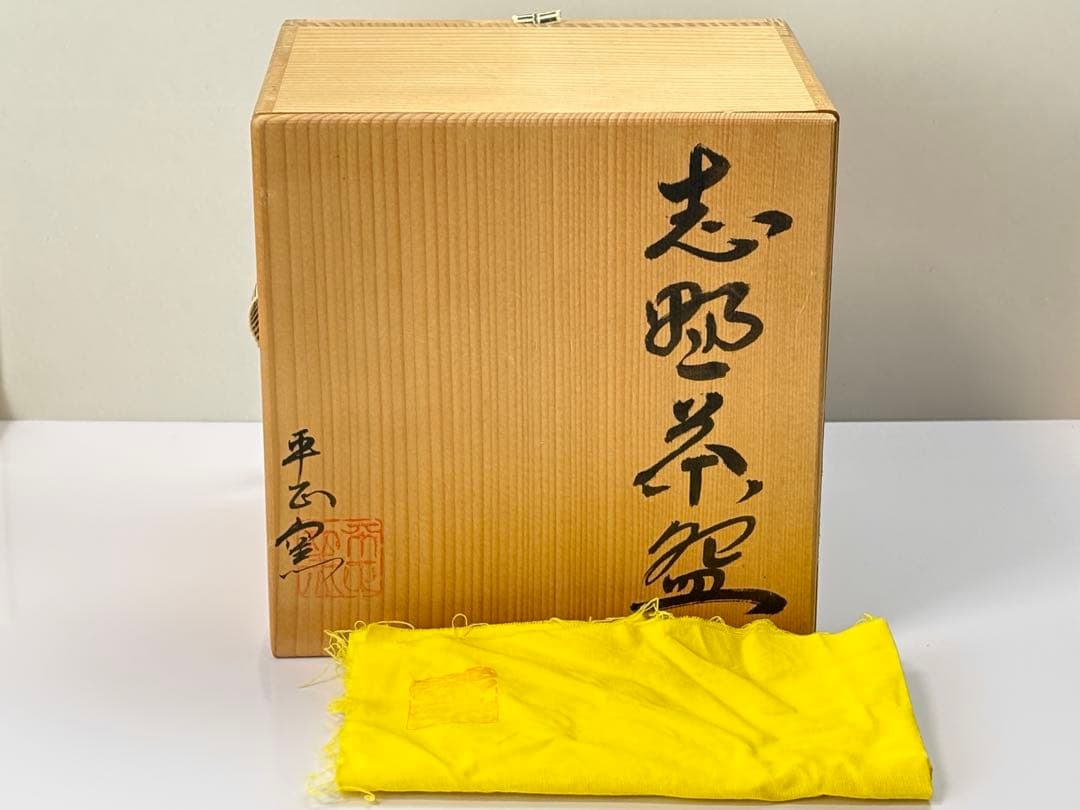
• Box: Signed wooden tomobako (共箱) — maker's inscription on lid
• Condition: Unused (未使用); signed (在銘); no chips, cracks, or repairs observed
🔹 [ CULTURAL & ARTISTIC INSIGHT ]
Shino is among the oldest of Japan's native glazes — developed in the Mino region (present-day Gifu Prefecture) in the late sixteenth century, it was the first Japanese glaze to break decisively from continental Chinese aesthetics. Where Chinese glazes tended toward precision and uniformity, Shino embraced irregularity: thick feldspathic application over iron-rich clay, fired in an anagama that left its own handwriting in hi-iro (fire-color), crawling, and pinholes. For Sen no Rikyū's contemporaries, Shino became the glaze of wabi-cha — the form that held impermanence in material.
In this bowl by Takagi Norikatsu, the speckling is not decoration but geology — iron oxide particles suspended in the feldspar glaze, surfacing under heat. The pale ash-grey ground shifts toward blue at the interior well, where glaze pools and cools differently. The rim's rust-orange band is genuine hi-iro: the clay body itself oxidizing at the surface where the glaze thins, a temperature record left by fire. These are not applied effects but events. The interior reveals a quiet swirling movement in the glaze surface, as if the bowl still carries the memory of the wheel.
Poetic line: Iron suspended in ash — each speck a moment the fire held, then released.
🔹 [ DEEP-DIVE COMMENTARY ]
Shino ware (志野焼) is defined by its use of long-stone (chōseki / feldspar) glaze — a thick, white-opaque application that was unprecedented in Japan when it emerged at Mino kilns in the Momoyama period (late 16th century). The glaze fires at high temperature to produce a characteristically rough, porous, slightly crawled surface quite unlike the smooth glazes that preceded it.
The iron speckling seen across this bowl results from iron particles in the clay body or glaze migrating to the surface during firing. In traditional Shino production, the clay used was high in iron — Mino's local kibushi or mogusa clay — and the speckling pattern is a direct expression of the material's mineral content meeting specific kiln conditions. The density and distribution of these iron spots is one of the primary points of connoisseurship in Shino.
Hi-iro (火色), the rust-red or orange fire-color at the rim and exposed clay areas, is among the most prized effects in Shino aesthetics. It occurs where the feldspathic glaze is thinnest — typically at the rim — allowing the iron in the clay body to oxidize visibly. On a well-fired Shino, hi-iro creates a tension between the cool grey-white glaze field and the warmth of the fire's direct mark. This contrast — grey ground, rust rim, dark iron specks — is the visual grammar of classic Shino.
Takagi Norikatsu works within this tradition at Hirashō kiln, maintaining the Mino heritage while producing pieces that serve the contemporary tea practice. This bowl is unusually coherent in its hi-iro distribution — the rust band wraps the full circumference of the rim without interruption, indicating consistent kiln placement and temperature control. The tomobako, with the maker's own inscription, confirms authorship and provenance — the standard of documentation expected in serious Japanese tea-ware collecting.
For the collector, a Shino chawan in unused condition with tomobako represents the full chain of integrity: maker's hand, kiln fire, and original wooden witness — all present.
[ JAPANESE DESCRIPTION / 日本語解説 ]
平正窯・高木典利による志野茶碗。灰白色の厚みある志野釉が全体を覆い、鉄粒が均密に散りばめられた景色の中、口縁には窯の炎が刻んだ火色が帯状に一周する。形は幅広く低く、わずかな歪みが手に収まる自然な重心を作っている。未使用。
【基本情報】
作者: 高木典利(平正窯)
技法: 志野釉(長石釉)、鉄粒散布、口縁の火色
時代: 現代(2010年代〜2020年代)
産地: 美濃焼の伝統(岐阜県)
寸法: 高さ約8.5cm、幅約12.5cm
箱: 共箱(作者自筆の銘入り)
状態: 未使用・在銘、傷・ひび・修復なし
【文化・芸術的考察】
志野焼は日本独自の釉薬の中で最も古い部類に属し、桃山時代後期に美濃(現・岐阜県)で生まれた。それ以前の日本陶磁が大陸の技術に従っていたのに対し、志野は初めて日本の感性で釉薬を語り始めた器形である。長石を厚く掛け、鉄分を含む土に焼成の火が触れることで生まれる火色・ひび・石はぜは、すべて「事前に作られた効果」ではなく「窯の中で起きた出来事」である。千利休の同時代人がこの焼き物に侘び茶の器を見出したのは、その偶然性と物質的な誠実さゆえだろう。
この茶碗の鉄粒は装飾ではない——釉中に浮遊する鉄酸化物が熱によって表面へ浮き出た、地質の記録である。内部の釉は口縁よりわずかに涼しく沈み、轆轤目の残影を湛えるように動く。口縁の火色は、釉が薄くなる部分で素地の鉄が直接酸化した「炎の跡」である。
詩的一文:灰の中に眠る鉄——点ひとつひとつに、炎が通った瞬間が宿る。
【深い解説】
志野焼の定義は長石釉にある。白濁した厚みのある長石釉は、桃山時代の美濃で初めて完成した技法で、それ以前の日本には存在しなかった。高温焼成によって生まれる粗面・多孔質・わずかな縮れは、この器の個性であり、均質な光沢釉との根本的な違いである。
鉄粒の散布は、粘土や釉中の鉄分が焼成中に表面へ析出した結果であり、美濃の土——黄伏せ土や木節粘土——の鉱物性質が直接表れる。鉄粒の密度と分布は志野における鑑賞の主要な基準のひとつである。
口縁の火色(hi-iro)は、長石釉が薄くなる箇所で素地の鉄が直接大気に触れて酸化することで生まれる。この茶碗では火色が口縁を一周し途切れることなく続いており、窯の中での安定した温度環境と正確な置き位置を示す。灰白の釉面と錆橙の縁、暗い鉄点——この三要素の対比が志野の視覚的文法である。
高木典利は平正窯において美濃の伝統を受け継ぎながら、現代の茶の湯に向けた作品を制作している。共箱には作者自筆の銘が入り、作品の出所と真正性を明確に伝える——本格的な茶碗収集において求められる証明の形式が整っている。
未使用・在銘・共箱が揃うこの茶碗は、作家の手、窯の炎、木箱の証言という三つの連鎖が損なわれていない状態で手元に届く。
🔹 [ SHIPPING & PACKAGING ]
• Dispatch: Within 1-6 business days
• Carrier: Japan Post EMS / UPS (with tracking)
• Packaging: Carefully wrapped with protective materials
🔹 [ BASIC DETAILS ]
• Artist: Takagi Norikatsu (高木典利), Hirashō kiln (平正窯)
• Technique: Shino glaze (志野釉) on stoneware; dense iron speckling; hi-iro fire-color at rim
• Era: Contemporary (2010s–2020s)
• Origin: Mino ware tradition, Japan
• Dimensions: Height approx. 8.5 cm, Width approx. 12.5 cm
• Box: Signed wooden tomobako (共箱) — maker's inscription on lid
• Condition: Unused (未使用); signed (在銘); no chips, cracks, or repairs observed
🔹 [ CULTURAL & ARTISTIC INSIGHT ]
Shino is among the oldest of Japan's native glazes — developed in the Mino region (present-day Gifu Prefecture) in the late sixteenth century, it was the first Japanese glaze to break decisively from continental Chinese aesthetics. Where Chinese glazes tended toward precision and uniformity, Shino embraced irregularity: thick feldspathic application over iron-rich clay, fired in an anagama that left its own handwriting in hi-iro (fire-color), crawling, and pinholes. For Sen no Rikyū's contemporaries, Shino became the glaze of wabi-cha — the form that held impermanence in material.
In this bowl by Takagi Norikatsu, the speckling is not decoration but geology — iron oxide particles suspended in the feldspar glaze, surfacing under heat. The pale ash-grey ground shifts toward blue at the interior well, where glaze pools and cools differently. The rim's rust-orange band is genuine hi-iro: the clay body itself oxidizing at the surface where the glaze thins, a temperature record left by fire. These are not applied effects but events. The interior reveals a quiet swirling movement in the glaze surface, as if the bowl still carries the memory of the wheel.
Poetic line: Iron suspended in ash — each speck a moment the fire held, then released.
🔹 [ DEEP-DIVE COMMENTARY ]
Shino ware (志野焼) is defined by its use of long-stone (chōseki / feldspar) glaze — a thick, white-opaque application that was unprecedented in Japan when it emerged at Mino kilns in the Momoyama period (late 16th century). The glaze fires at high temperature to produce a characteristically rough, porous, slightly crawled surface quite unlike the smooth glazes that preceded it.
The iron speckling seen across this bowl results from iron particles in the clay body or glaze migrating to the surface during firing. In traditional Shino production, the clay used was high in iron — Mino's local kibushi or mogusa clay — and the speckling pattern is a direct expression of the material's mineral content meeting specific kiln conditions. The density and distribution of these iron spots is one of the primary points of connoisseurship in Shino.
Hi-iro (火色), the rust-red or orange fire-color at the rim and exposed clay areas, is among the most prized effects in Shino aesthetics. It occurs where the feldspathic glaze is thinnest — typically at the rim — allowing the iron in the clay body to oxidize visibly. On a well-fired Shino, hi-iro creates a tension between the cool grey-white glaze field and the warmth of the fire's direct mark. This contrast — grey ground, rust rim, dark iron specks — is the visual grammar of classic Shino.
Takagi Norikatsu works within this tradition at Hirashō kiln, maintaining the Mino heritage while producing pieces that serve the contemporary tea practice. This bowl is unusually coherent in its hi-iro distribution — the rust band wraps the full circumference of the rim without interruption, indicating consistent kiln placement and temperature control. The tomobako, with the maker's own inscription, confirms authorship and provenance — the standard of documentation expected in serious Japanese tea-ware collecting.
For the collector, a Shino chawan in unused condition with tomobako represents the full chain of integrity: maker's hand, kiln fire, and original wooden witness — all present.
[ JAPANESE DESCRIPTION / 日本語解説 ]
平正窯・高木典利による志野茶碗。灰白色の厚みある志野釉が全体を覆い、鉄粒が均密に散りばめられた景色の中、口縁には窯の炎が刻んだ火色が帯状に一周する。形は幅広く低く、わずかな歪みが手に収まる自然な重心を作っている。未使用。
【基本情報】
作者: 高木典利(平正窯)
技法: 志野釉(長石釉)、鉄粒散布、口縁の火色
時代: 現代(2010年代〜2020年代)
産地: 美濃焼の伝統(岐阜県)
寸法: 高さ約8.5cm、幅約12.5cm
箱: 共箱(作者自筆の銘入り)
状態: 未使用・在銘、傷・ひび・修復なし
【文化・芸術的考察】
志野焼は日本独自の釉薬の中で最も古い部類に属し、桃山時代後期に美濃(現・岐阜県)で生まれた。それ以前の日本陶磁が大陸の技術に従っていたのに対し、志野は初めて日本の感性で釉薬を語り始めた器形である。長石を厚く掛け、鉄分を含む土に焼成の火が触れることで生まれる火色・ひび・石はぜは、すべて「事前に作られた効果」ではなく「窯の中で起きた出来事」である。千利休の同時代人がこの焼き物に侘び茶の器を見出したのは、その偶然性と物質的な誠実さゆえだろう。
この茶碗の鉄粒は装飾ではない——釉中に浮遊する鉄酸化物が熱によって表面へ浮き出た、地質の記録である。内部の釉は口縁よりわずかに涼しく沈み、轆轤目の残影を湛えるように動く。口縁の火色は、釉が薄くなる部分で素地の鉄が直接酸化した「炎の跡」である。
詩的一文:灰の中に眠る鉄——点ひとつひとつに、炎が通った瞬間が宿る。
【深い解説】
志野焼の定義は長石釉にある。白濁した厚みのある長石釉は、桃山時代の美濃で初めて完成した技法で、それ以前の日本には存在しなかった。高温焼成によって生まれる粗面・多孔質・わずかな縮れは、この器の個性であり、均質な光沢釉との根本的な違いである。
鉄粒の散布は、粘土や釉中の鉄分が焼成中に表面へ析出した結果であり、美濃の土——黄伏せ土や木節粘土——の鉱物性質が直接表れる。鉄粒の密度と分布は志野における鑑賞の主要な基準のひとつである。
口縁の火色(hi-iro)は、長石釉が薄くなる箇所で素地の鉄が直接大気に触れて酸化することで生まれる。この茶碗では火色が口縁を一周し途切れることなく続いており、窯の中での安定した温度環境と正確な置き位置を示す。灰白の釉面と錆橙の縁、暗い鉄点——この三要素の対比が志野の視覚的文法である。
高木典利は平正窯において美濃の伝統を受け継ぎながら、現代の茶の湯に向けた作品を制作している。共箱には作者自筆の銘が入り、作品の出所と真正性を明確に伝える——本格的な茶碗収集において求められる証明の形式が整っている。
未使用・在銘・共箱が揃うこの茶碗は、作家の手、窯の炎、木箱の証言という三つの連鎖が損なわれていない状態で手元に届く。
🔹 [ SHIPPING & PACKAGING ]
• Dispatch: Within 1-6 business days
• Carrier: Japan Post EMS / UPS (with tracking)
• Packaging: Carefully wrapped with protective materials
Quantity
Couldn't load pickup availability
Low stock: 1 left
View full details