1
/
of
10
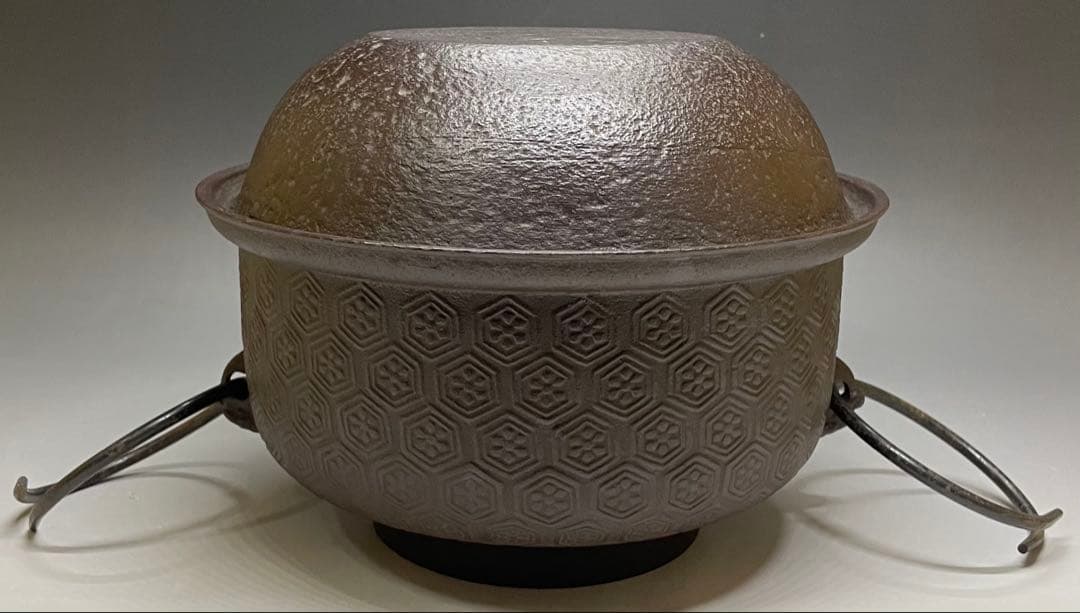
Shinnari Chagama Tea Kettle by Takahashi Keizan, Kikko Hanabishi, Signed Box
Shinnari Chagama Tea Kettle by Takahashi Keizan, Kikko Hanabishi, Signed Box
Regular price
Dhs. 2,166.00 AED
Regular price
Sale price
Dhs. 2,166.00 AED
Taxes included.
Shipping calculated at checkout.
A shinnari chagama by Takahashi Keizan — a cast-iron tea kettle for the sunken hearth, its shoulder wrapped in a tight kikko lattice packed with hanabishi blossoms, raised from the iron skin itself. The body settles into a wide hagama flange and a quiet, dark patina; above it sits a karakane lid with an openwork bud knob, and twin lugs carry their movable iron rings.
🔹 [ BASIC DETAILS ]
• Artist: Takahashi Keizan (Living National Treasure / Ningen Kokuho, Yamagata kama-shi)
• Technique: Cast iron (chagama), shinnari (true-form) hagama silhouette, kikko-hanabishi cast ground
• Era: Showa - Heisei period
• Origin: Yamagata, Japan
• Dimensions: Height approx. 18.5 cm, Mouth diameter approx. 10.5 cm, Base diameter approx. 10.8 cm
• Box: Original signed kiri-wood tomobako, inscribed "Shinnari Hagama, Kikko Jimon, Kama-shi Keizan saku" with the artist's seal
• Accessories: Karakane (copper-alloy) lid with openwork knob, pair of iron kan (rings)
• Condition: Good. Iron skin and cast ground both clean and well-kept
🔹 [ CULTURAL & ARTISTIC INSIGHT ]
The chagama is the heart of the chanoyu hearth — the iron vessel in which water is brought to the threshold of boiling, its sound, the matsukaze or "wind in the pines," counted among the quiet pleasures of the tea room. The shinnari form is the canonical "true shape": a rounded shoulder rising to a narrow mouth, broken by the horizontal hagama flange that marks a kettle made to rest in the ro, the sunken winter hearth.
Takahashi Keizan worked within the Yamagata casting tradition, a lineage of kettle-making that reaches back centuries in northern Japan. His designation as a Living National Treasure (Ningen Kokuho) places his hand among the recognized custodians of the craft — not as a claim of grandeur, but as a record of mastery acknowledged by the state. The kikko ground here, hexagonal cells each holding a hanabishi flower-diamond, is cast directly into the iron, a density of intention that reveals itself slowly as light moves across the surface.
The iron mottles where the heat once gathered, the rings sound faintly against their lugs, and the karakane lid cools to a soft brown. Stillness held in metal, waiting for the kettle to sing.
🔹 [ DEEP-DIVE COMMENTARY ]
A chagama is distinguished from a tetsubin (the spouted, handled iron pot of sencha) by its open mouth and its place in the formal hearth: it has no spout, and water is lifted from it with a bamboo ladle. The shinnari hagama, with its protruding flange, belongs specifically to the ro season, late autumn through early spring, when the hearth is opened in the tatami floor.
The casting is done in the traditional sand-mold method. A model is formed, the kikko-hanabishi pattern is impressed into the inner mold wall, and molten iron is poured to capture the relief in a single pour. The crispness of the lattice and the evenness of the ground are the marks of a practiced kama-shi; the pattern must read continuously around the curved shoulder without drift or seam.
For the collector, the value lies in the convergence of three things: a recognized maker's hand, an intact original tomobako that documents and authenticates the work in the artist's own inscription, and a complete fitting set — lid, knob, and movable kan. Kettles separated from their boxes lose both provenance and a measure of their meaning; this one remains whole.
Within the continuity of chanoyu, such a kettle is not a relic but an instrument still made and still used. Each winter it would return to the hearth, the same iron, the same wind in the pines.
🔹 [ JAPANESE DESCRIPTION / 日本語解説 ]
高橋敬典による真形羽釜 — 炉用の茶の湯釜。胴の肩には亀甲を詰めた地紋が巡り、その一つひとつに花菱が抱かれ、鉄肌そのものから立ち上がっている。胴は広い羽(はがま)の鍔へと落ち、静かで深い鉄味をたたえる。上には透かしの摘み付き唐銅蓋が据えられ、二つの鐶座が可動の鉄鐶を支えている。
茶釜は茶の湯の炉の心臓であり、湯を沸騰の手前へと運ぶ鉄の器である。その音、すなわち松風は、茶室の静かな悦びのひとつに数えられてきた。真形は釜の規範となる「真の形」— 丸い肩から細い口へと立ち上がり、横へ張り出す羽の鍔が、炉に据えるために作られた釜であることを告げる。
高橋敬典は山形鋳物の伝統のなかで仕事をした。これは北国に幾世紀も連なる釜づくりの系譜である。人間国宝としての認定は、その手を、国に認められた工芸の継承者のひとりに位置づける — 誇張としてではなく、修練が公に認められた記録として。ここに見る亀甲地紋は、六角の一室ごとに花菱を抱き、鉄に直接鋳込まれている。光が表面を移ろうにつれ、ゆっくりとその意図の密度をあらわす。
茶釜は、注ぎ口と弦を持つ煎茶の鉄瓶とは区別される。口は開き、湯は柄杓で汲み上げられる。羽の張り出した真形羽釜は、とりわけ炉の季節 — 晩秋から早春、畳に炉が切られる時期 — に属する。鋳造は伝統の砂型による。亀甲花菱の文様を型の内壁に写し、溶けた鉄を一度の湯流しで注ぎ、その浮き彫りを捉える。格子の鋭さと地の均一さは、熟達した釜師の証である。
コレクターにとっての価値は三つの収斂にある。認められた作家の手、作品を作者自身の箱書きで記録し裏づける完存の共箱、そして蓋・摘み・可動鐶のそろった一式である。箱を離れた釜は来歴と意味の一端を失う。この釜は、いまもひとつに保たれている。
🔹 [ SHIPPING & PACKAGING ]
• Dispatch: Within 1-6 business days
• Carrier: Japan Post EMS / UPS / FedEx (with tracking)
• Packaging: Carefully wrapped with protective materials
🔹 [ BASIC DETAILS ]
• Artist: Takahashi Keizan (Living National Treasure / Ningen Kokuho, Yamagata kama-shi)
• Technique: Cast iron (chagama), shinnari (true-form) hagama silhouette, kikko-hanabishi cast ground
• Era: Showa - Heisei period
• Origin: Yamagata, Japan
• Dimensions: Height approx. 18.5 cm, Mouth diameter approx. 10.5 cm, Base diameter approx. 10.8 cm
• Box: Original signed kiri-wood tomobako, inscribed "Shinnari Hagama, Kikko Jimon, Kama-shi Keizan saku" with the artist's seal
• Accessories: Karakane (copper-alloy) lid with openwork knob, pair of iron kan (rings)
• Condition: Good. Iron skin and cast ground both clean and well-kept
🔹 [ CULTURAL & ARTISTIC INSIGHT ]
The chagama is the heart of the chanoyu hearth — the iron vessel in which water is brought to the threshold of boiling, its sound, the matsukaze or "wind in the pines," counted among the quiet pleasures of the tea room. The shinnari form is the canonical "true shape": a rounded shoulder rising to a narrow mouth, broken by the horizontal hagama flange that marks a kettle made to rest in the ro, the sunken winter hearth.
Takahashi Keizan worked within the Yamagata casting tradition, a lineage of kettle-making that reaches back centuries in northern Japan. His designation as a Living National Treasure (Ningen Kokuho) places his hand among the recognized custodians of the craft — not as a claim of grandeur, but as a record of mastery acknowledged by the state. The kikko ground here, hexagonal cells each holding a hanabishi flower-diamond, is cast directly into the iron, a density of intention that reveals itself slowly as light moves across the surface.
The iron mottles where the heat once gathered, the rings sound faintly against their lugs, and the karakane lid cools to a soft brown. Stillness held in metal, waiting for the kettle to sing.
🔹 [ DEEP-DIVE COMMENTARY ]
A chagama is distinguished from a tetsubin (the spouted, handled iron pot of sencha) by its open mouth and its place in the formal hearth: it has no spout, and water is lifted from it with a bamboo ladle. The shinnari hagama, with its protruding flange, belongs specifically to the ro season, late autumn through early spring, when the hearth is opened in the tatami floor.
The casting is done in the traditional sand-mold method. A model is formed, the kikko-hanabishi pattern is impressed into the inner mold wall, and molten iron is poured to capture the relief in a single pour. The crispness of the lattice and the evenness of the ground are the marks of a practiced kama-shi; the pattern must read continuously around the curved shoulder without drift or seam.
For the collector, the value lies in the convergence of three things: a recognized maker's hand, an intact original tomobako that documents and authenticates the work in the artist's own inscription, and a complete fitting set — lid, knob, and movable kan. Kettles separated from their boxes lose both provenance and a measure of their meaning; this one remains whole.
Within the continuity of chanoyu, such a kettle is not a relic but an instrument still made and still used. Each winter it would return to the hearth, the same iron, the same wind in the pines.
🔹 [ JAPANESE DESCRIPTION / 日本語解説 ]
高橋敬典による真形羽釜 — 炉用の茶の湯釜。胴の肩には亀甲を詰めた地紋が巡り、その一つひとつに花菱が抱かれ、鉄肌そのものから立ち上がっている。胴は広い羽(はがま)の鍔へと落ち、静かで深い鉄味をたたえる。上には透かしの摘み付き唐銅蓋が据えられ、二つの鐶座が可動の鉄鐶を支えている。
茶釜は茶の湯の炉の心臓であり、湯を沸騰の手前へと運ぶ鉄の器である。その音、すなわち松風は、茶室の静かな悦びのひとつに数えられてきた。真形は釜の規範となる「真の形」— 丸い肩から細い口へと立ち上がり、横へ張り出す羽の鍔が、炉に据えるために作られた釜であることを告げる。
高橋敬典は山形鋳物の伝統のなかで仕事をした。これは北国に幾世紀も連なる釜づくりの系譜である。人間国宝としての認定は、その手を、国に認められた工芸の継承者のひとりに位置づける — 誇張としてではなく、修練が公に認められた記録として。ここに見る亀甲地紋は、六角の一室ごとに花菱を抱き、鉄に直接鋳込まれている。光が表面を移ろうにつれ、ゆっくりとその意図の密度をあらわす。
茶釜は、注ぎ口と弦を持つ煎茶の鉄瓶とは区別される。口は開き、湯は柄杓で汲み上げられる。羽の張り出した真形羽釜は、とりわけ炉の季節 — 晩秋から早春、畳に炉が切られる時期 — に属する。鋳造は伝統の砂型による。亀甲花菱の文様を型の内壁に写し、溶けた鉄を一度の湯流しで注ぎ、その浮き彫りを捉える。格子の鋭さと地の均一さは、熟達した釜師の証である。
コレクターにとっての価値は三つの収斂にある。認められた作家の手、作品を作者自身の箱書きで記録し裏づける完存の共箱、そして蓋・摘み・可動鐶のそろった一式である。箱を離れた釜は来歴と意味の一端を失う。この釜は、いまもひとつに保たれている。
🔹 [ SHIPPING & PACKAGING ]
• Dispatch: Within 1-6 business days
• Carrier: Japan Post EMS / UPS / FedEx (with tracking)
• Packaging: Carefully wrapped with protective materials
Quantity
Couldn't load pickup availability
Out of stock
View full details