1
/
of
11
Shimaoka Tatsuzo Jōmon Zōgan Guinomi with Aka-e Floral Medallion
Shimaoka Tatsuzo Jōmon Zōgan Guinomi with Aka-e Floral Medallion
Regular price
Dhs. 2,425.00 AED
Regular price
Sale price
Dhs. 2,425.00 AED
Taxes included.
Shipping calculated at checkout.
Experience Authentic Japanese Sake Culture with this Shimaoka Tatsuzo Jōmon Zōgan Guinomi. This Living National Treasure Sake Cup serves as a Mashiko Ware Masterwork and Jōmon Zōgan Inlay Art, featuring Aka-e Overglaze Enamel and Rope Impression Technique—a must-have for any Art Collector seeking National Treasure Pottery and Mingei Tradition.
━━━━━━━━━━━━━━━━━━━━
🔹 [ BASIC DETAILS ]
• Artist: Shimaoka Tatsuzo (島岡達三) — Living National Treasure (人間国宝), designated 1996
• Type: Guinomi (ぐい呑) — sake cup
• Technique: Jōmon zōgan (縄文象嵌) with aka-e (赤絵) overglaze enamel
• Glaze: Natural ash glaze over cream/grey stoneware body
• Approximate dimensions: Dia ~6.5 cm × H ~5 cm
• Condition: Excellent; no chips, cracks, or repairs
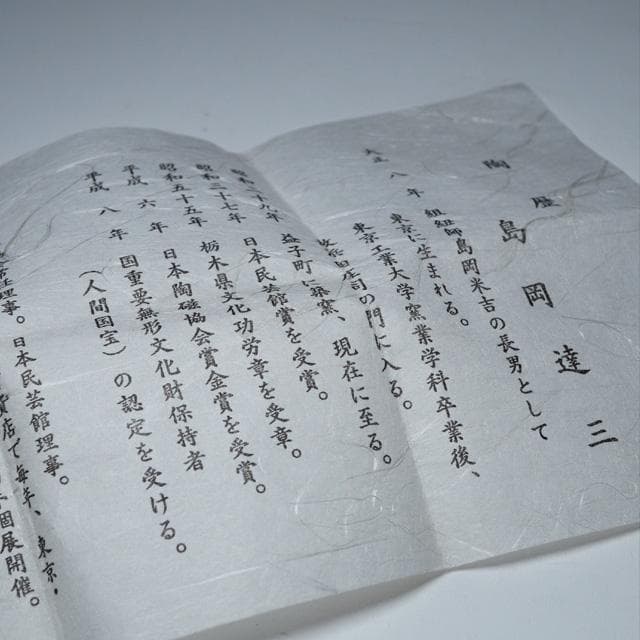
• Provenance: Comes with tomobako (signed wooden box), cloth wrapper, and pamphlet
• Kiln mark: "タ" incised on foot ring
━━━━━━━━━━━━━━━━━━━━
🔹 [ CULTURAL & ARTISTIC INSIGHT ]
Shimaoka Tatsuzo apprenticed under Hamada Shoji in Mashiko, absorbing the mingei philosophy that beauty arises from function and honest labor. Yet Shimaoka carved his own path. Where Hamada worked with bold, spontaneous brushwork, Shimaoka developed jōmon zōgan — pressing rope patterns into wet clay, filling the impressions with contrasting slip, then scraping away the excess to reveal geometric fields of quiet precision.
This guinomi layers that technique with aka-e overglaze enamel, a second firing that introduces a circular medallion of red and green florals at the center of the rope-impressed field. The combination is deliberately restrained: the organic geometry of the rope pattern meets the controlled ornament of the painted motif. Neither dominates. The iron-brown lip provides a grounding frame.
*"The rope remembers every turn of the hand. The clay remembers every press. What you see is not decoration — it is record."*
━━━━━━━━━━━━━━━━━━━━
🔹 [ DEEP-DIVE COMMENTARY ]
**Jōmon Zōgan as Living Archive**
The technique references Japan’s Jōmon period (14,000–300 BCE), when cord-marked pottery defined an entire civilization’s material culture. Shimaoka’s revival is not nostalgia — it is continuity. Each rope impression carries the physical memory of tension, twist, and pressure into fired permanence.
**Aka-e Integration**
Overglaze enamel on mingei stoneware is an unusual pairing. Shimaoka negotiated this tension deliberately: the folk-craft body accepts the painted medallion without becoming decorative ware. The floral motif functions as a quiet punctuation mark within the rope field, not as the purpose of the piece.
**Post-Designation Maturity**
Works produced after Shimaoka’s 1996 Living National Treasure designation carry a particular confidence. The hand is relaxed, the proportions settled. This guinomi shows no hesitation — every element occupies its necessary place.
**Mashiko Lineage**
Mashiko’s pottery tradition, energized by Hamada Shoji’s arrival in 1924, became the geographic heart of the mingei movement. Shimaoka’s workshop continued that legacy while introducing a technical vocabulary entirely his own. The jōmon zōgan technique is now inseparable from Mashiko’s identity.
━━━━━━━━━━━━━━━━━━━━
🔹 [ 日本語解説 ]
【基本情報】
作家:島岡達三(1919–2007)/人間国宝(1996年認定)
種類:ぐい呑(酒杯)
技法:縄文象嵌+赤絵上絵付
産地:栃木県益子
付属品:共箱・布・栞
【解説】
島岡達三は濱田庄司に師事し、益子の地で独自の縄文象嵌技法を確立しました。縄の圧痕を素地に押し付け、異なる化粧土を埋め込むことで生まれる幾何学的文様は、縄文時代の記憶を現代に繋ぐものです。本作はその象嵌文様の中央に赤絵草花文の丸紋を配し、民藝の温もりと装飾の節度を一つの杯に凝縮しています。人間国宝認定後の円熟期の作品であり、作家の到達点を掌に感じられる一品です。
━━━━━━━━━━━━━━━━━━━━
🔹 [ SHIPPING & PACKAGING ]
• Dispatch: Within 1-6 business days
• Carrier: Japan Post EMS / UPS (with tracking)
• Packaging: Carefully wrapped with protective materials
*A rope turned ten thousand years ago still speaks through clay. This cup holds that conversation.*
━━━━━━━━━━━━━━━━━━━━
🔹 [ BASIC DETAILS ]
• Artist: Shimaoka Tatsuzo (島岡達三) — Living National Treasure (人間国宝), designated 1996
• Type: Guinomi (ぐい呑) — sake cup
• Technique: Jōmon zōgan (縄文象嵌) with aka-e (赤絵) overglaze enamel
• Glaze: Natural ash glaze over cream/grey stoneware body
• Approximate dimensions: Dia ~6.5 cm × H ~5 cm
• Condition: Excellent; no chips, cracks, or repairs
• Provenance: Comes with tomobako (signed wooden box), cloth wrapper, and pamphlet
• Kiln mark: "タ" incised on foot ring
━━━━━━━━━━━━━━━━━━━━
🔹 [ CULTURAL & ARTISTIC INSIGHT ]
Shimaoka Tatsuzo apprenticed under Hamada Shoji in Mashiko, absorbing the mingei philosophy that beauty arises from function and honest labor. Yet Shimaoka carved his own path. Where Hamada worked with bold, spontaneous brushwork, Shimaoka developed jōmon zōgan — pressing rope patterns into wet clay, filling the impressions with contrasting slip, then scraping away the excess to reveal geometric fields of quiet precision.
This guinomi layers that technique with aka-e overglaze enamel, a second firing that introduces a circular medallion of red and green florals at the center of the rope-impressed field. The combination is deliberately restrained: the organic geometry of the rope pattern meets the controlled ornament of the painted motif. Neither dominates. The iron-brown lip provides a grounding frame.
*"The rope remembers every turn of the hand. The clay remembers every press. What you see is not decoration — it is record."*
━━━━━━━━━━━━━━━━━━━━
🔹 [ DEEP-DIVE COMMENTARY ]
**Jōmon Zōgan as Living Archive**
The technique references Japan’s Jōmon period (14,000–300 BCE), when cord-marked pottery defined an entire civilization’s material culture. Shimaoka’s revival is not nostalgia — it is continuity. Each rope impression carries the physical memory of tension, twist, and pressure into fired permanence.
**Aka-e Integration**
Overglaze enamel on mingei stoneware is an unusual pairing. Shimaoka negotiated this tension deliberately: the folk-craft body accepts the painted medallion without becoming decorative ware. The floral motif functions as a quiet punctuation mark within the rope field, not as the purpose of the piece.
**Post-Designation Maturity**
Works produced after Shimaoka’s 1996 Living National Treasure designation carry a particular confidence. The hand is relaxed, the proportions settled. This guinomi shows no hesitation — every element occupies its necessary place.
**Mashiko Lineage**
Mashiko’s pottery tradition, energized by Hamada Shoji’s arrival in 1924, became the geographic heart of the mingei movement. Shimaoka’s workshop continued that legacy while introducing a technical vocabulary entirely his own. The jōmon zōgan technique is now inseparable from Mashiko’s identity.
━━━━━━━━━━━━━━━━━━━━
🔹 [ 日本語解説 ]
【基本情報】
作家:島岡達三(1919–2007)/人間国宝(1996年認定)
種類:ぐい呑(酒杯)
技法:縄文象嵌+赤絵上絵付
産地:栃木県益子
付属品:共箱・布・栞
【解説】
島岡達三は濱田庄司に師事し、益子の地で独自の縄文象嵌技法を確立しました。縄の圧痕を素地に押し付け、異なる化粧土を埋め込むことで生まれる幾何学的文様は、縄文時代の記憶を現代に繋ぐものです。本作はその象嵌文様の中央に赤絵草花文の丸紋を配し、民藝の温もりと装飾の節度を一つの杯に凝縮しています。人間国宝認定後の円熟期の作品であり、作家の到達点を掌に感じられる一品です。
━━━━━━━━━━━━━━━━━━━━
🔹 [ SHIPPING & PACKAGING ]
• Dispatch: Within 1-6 business days
• Carrier: Japan Post EMS / UPS (with tracking)
• Packaging: Carefully wrapped with protective materials
*A rope turned ten thousand years ago still speaks through clay. This cup holds that conversation.*
Quantity
Couldn't load pickup availability
Low stock: 1 left
View full details