1
/
of
12
Shigaraki Stone-Mortar Kogo Incense Container by Takahashi Rakusai IV with Signed Tomobako
Shigaraki Stone-Mortar Kogo Incense Container by Takahashi Rakusai IV with Signed Tomobako
Regular price
Dhs. 871.00 AED
Regular price
Sale price
Dhs. 871.00 AED
Taxes included.
Shipping calculated at checkout.
Experience Authentic Japan Art with this Shigaraki Stone Mortar Kogo. This Takahashi Rakusai IV Incense Container serves as a Japanese Tea Ceremony Kogo and Shigaraki Ware Collector Piece, featuring Hi-iro Scarlet Flashing and Hai-kaburi Ash Dusting—a thoughtful find for any Japanese Pottery Collector seeking a Six Ancient Kilns Heritage Object with Signed Wooden Tomobako Box.
🔹 [ BASIC DETAILS ]
• Artist: Takahashi Rakusai IV (四代 高橋楽斎) — Shigaraki master lineage, descendant of the family designated bearer of the Shigaraki tradition
• Technique: Wood-fired Shigaraki stoneware, natural hi-iro (scarlet flashing) and hai-kaburi (ash-shower) effects
• Form: Ishi-usu (stone-mortar) kogo — a two-part incense container modeled after a hand stone mill, complete with a small protruding side lug suggesting the mill's wooden handle
• Era: Showa to Heisei period (mid-to-late 20th century)
• Origin: Shigaraki, Shiga Prefecture, Japan — one of the Six Ancient Kilns (Rokkoyō)
• Dimensions (approx.): Height ~4.5 cm, Diameter ~7 cm (please confirm via listing photos)
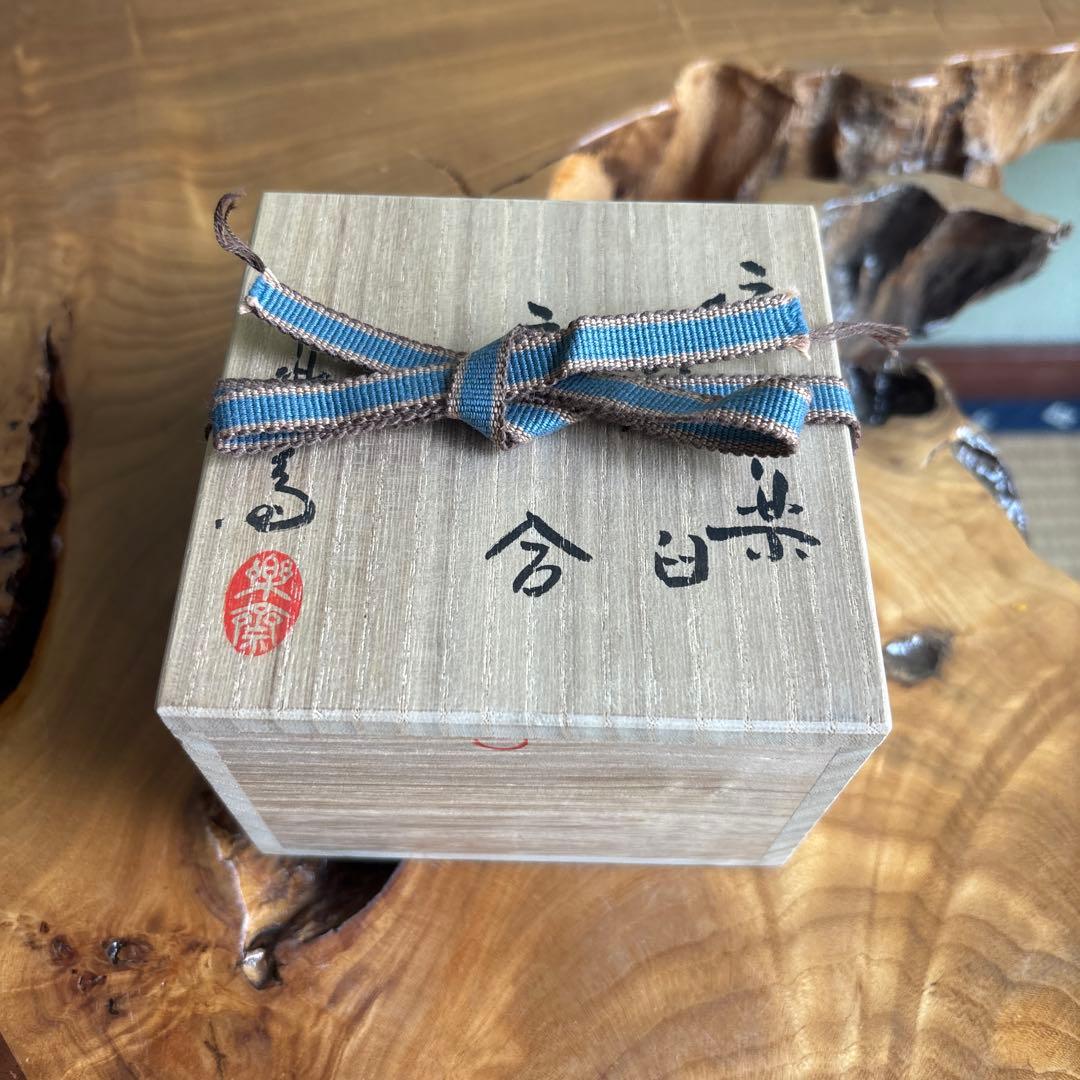
• Box: Original signed kiri-wood tomobako, brushed inscription "信楽 香合" and red 楽斎 (Rakusai) seal
• Condition: Excellent — no cracks, no chips, no restoration; light kiln-born surface character consistent with wood firing
🔹 [ CULTURAL & ARTISTIC INSIGHT ]
Shigaraki is one of the Rokkoyō, the Six Ancient Kilns of Japan, with continuous ceramic production traceable to the Kamakura period in the 13th century. Its clay, drawn from the ancient lakebed of Lake Biwa, is famously coarse and feldspar-rich; in the wood kiln this clay opens into the warm orange hi-iro flashing and the silver-grey hai-kaburi ash crust that define Shigaraki's signature surface.
The Takahashi Rakusai line is among the most respected Shigaraki houses, recognized for preserving traditional anagama and noborigama wood-firing through generations. Takahashi Rakusai IV inherited the studio in the late 20th century, continuing the family's emphasis on chajin (tea-person) sensibility — quiet form, generous fire-mark, and an unforced wabi character that tea masters have prized since Murata Jukō and Sen no Rikyū first elevated Shigaraki ware into the chanoyu lexicon.
The kogo (incense container) holds a singular place in tea ceremony: it carries the kneaded incense burned in the cold-season ro hearth and the warm-season furo brazier. Its small scale demands density of intention — every contour, every fire mark, every weight in the hand becomes amplified. To shape one as an ishi-usu, a hand stone mill, is to fold an entire agrarian memory into the tearoom: the rhythm of grinding tea, of grain, of patient daily work, miniaturized into incense ritual.
The surface here mirrors a winter hillside warmed at dawn — copper-red hi-iro running over ash-frosted ridges, quiet and alive.
🔹 [ DEEP-DIVE COMMENTARY ]
Shigaraki ware is defined by its raw, unglazed body and the conversation between clay, fire, and ash inside a wood kiln. Coarse feldspar inclusions burst at the surface as white speckle, while pine-ash carried by the flame settles and vitrifies into a natural glaze (shizen-yū). The orange hi-iro flashing visible across the lid and lower disc here is not painted but earned — the direct touch of oxidizing flame on iron-bearing clay.
The ishi-usu form is one of the more conceptually refined kogo shapes. A classical stone hand-mill consists of two stacked stone wheels and a side handle; this kogo translates that architecture into ceramic with disarming literalism — twin stacked discs, a small lug standing in for the wooden grip, all resting on a wider base plate that quotes the mill's lower stone. It is a quiet visual pun, the kind tea practitioners enjoy: rustic agrarian tool re-read as ritual vessel.
For the collector, the Rakusai lineage matters. The Takahashi family carries a continuous workshop tradition; their pieces appear regularly in tea utensil catalogues and are documented in the chashitsu of senior tea schools. A signed tomobako bearing the brushed title and the Rakusai seal authenticates the work and is itself considered part of the object — never to be discarded, always handled together with the ceramic.
Contemporary collectors of Japanese ceramics value Shigaraki kogo precisely because they sit at the meeting point of utility and aesthetic philosophy: small enough to be intimate, fired enough to be unrepeatable, formal enough to be tea-worthy, rustic enough to anchor a modern Zen interior. This piece, in excellent condition with original box, is a thoughtful entry point into the Rakusai lineage and a usable companion for serious chanoyu practice.
🔹 [ JAPANESE DESCRIPTION / 日本語解説 ]
【基本情報】
・作家:四代 高橋楽斎(信楽焼の名門・楽斎窯当主)
・技法:信楽焼/登窯・穴窯による薪焼成。緋色(ひいろ)と灰被り(はいかぶり)が自然に現れた景色
・形状:石臼香合(いしうす こうごう)。茶臼を模した二段の身蓋と側面に小さな取手、下部に受け皿状の台座を備える
・時代:昭和〜平成期
・産地:滋賀県信楽——六古窯のひとつ
・寸法(概寸):高さ約4.5cm、径約7cm
・付属:共箱(桐箱)に「信楽 香合」の墨書、朱の楽斎印あり
・状態:ヒビ・カケなし、良好。焼成時の自然な景色は健全な見どころとして残る
【文化的・美的解説】
信楽は鎌倉期から続く六古窯の一つで、琵琶湖古層に由来する長石分の多い粗い陶土が特徴です。薪窯のなかでこの土は、暖かな橙色の「緋色」と、灰が降り積もって自然釉となる「灰被り」を生み、信楽焼ならではの景色となります。
高橋楽斎家は信楽を代表する名門で、登窯・穴窯による伝統的な薪焼成を世代を超えて守り継いできました。四代楽斎はその伝統を継承し、村田珠光・千利休以来茶人に愛されてきた信楽の風韻——静かな形、惜しまぬ火色、力みのない侘の佇まい——を作品に映しています。
香合は炉と風炉の練香を納める小さな器ですが、その小ささゆえに、輪郭・火色・手取りのすべてが凝縮されて立ち上がります。これを石臼に見立てるという発想は、日々の労働の記憶——茶や穀物を挽く手の律——を、茶席のなかにそっと折りたたむ仕草でもあります。
【上級コレクター向け詳説】
信楽焼は無釉の素地と、薪窯のなかで生じる土・炎・灰の対話によって定義されます。長石の粒は焼成中に白く弾け、松の灰は炎に運ばれて器面で自然釉(自然釉・しぜんゆう)となります。本作の蓋面と下台に走る橙色の緋色は、絵付けではなく、鉄分を含む土に酸化炎が直接触れて生まれた痕跡そのものです。
石臼形は香合のなかでも特に造形意識の高い意匠で、二段の輪と側面の取手、受け皿状の下台が、農具としての石臼の構造を率直に陶へ翻訳しています。素朴な日用具を、茶席の道具として読み替える——これは茶人の好む見立ての遊びでもあります。
楽斎家の系譜は、現代茶道具の主要図録や、茶道各流派の茶室道具にも継続的に登場します。共箱に記された墨書と朱印は本作の真正性を保証するものであり、共箱そのものが作品の一部として扱われます。状態良好で共箱完備の本品は、楽斎家入門としても、また実用の点前道具としても、確かな選択となるはずです。
🔹 [ SHIPPING & PACKAGING ]
• Dispatch: Within 1-6 business days
• Carrier: Japan Post EMS / UPS (with tracking)
• Packaging: Carefully wrapped with protective materials
🔹 [ BASIC DETAILS ]
• Artist: Takahashi Rakusai IV (四代 高橋楽斎) — Shigaraki master lineage, descendant of the family designated bearer of the Shigaraki tradition
• Technique: Wood-fired Shigaraki stoneware, natural hi-iro (scarlet flashing) and hai-kaburi (ash-shower) effects
• Form: Ishi-usu (stone-mortar) kogo — a two-part incense container modeled after a hand stone mill, complete with a small protruding side lug suggesting the mill's wooden handle
• Era: Showa to Heisei period (mid-to-late 20th century)
• Origin: Shigaraki, Shiga Prefecture, Japan — one of the Six Ancient Kilns (Rokkoyō)
• Dimensions (approx.): Height ~4.5 cm, Diameter ~7 cm (please confirm via listing photos)
• Box: Original signed kiri-wood tomobako, brushed inscription "信楽 香合" and red 楽斎 (Rakusai) seal
• Condition: Excellent — no cracks, no chips, no restoration; light kiln-born surface character consistent with wood firing
🔹 [ CULTURAL & ARTISTIC INSIGHT ]
Shigaraki is one of the Rokkoyō, the Six Ancient Kilns of Japan, with continuous ceramic production traceable to the Kamakura period in the 13th century. Its clay, drawn from the ancient lakebed of Lake Biwa, is famously coarse and feldspar-rich; in the wood kiln this clay opens into the warm orange hi-iro flashing and the silver-grey hai-kaburi ash crust that define Shigaraki's signature surface.
The Takahashi Rakusai line is among the most respected Shigaraki houses, recognized for preserving traditional anagama and noborigama wood-firing through generations. Takahashi Rakusai IV inherited the studio in the late 20th century, continuing the family's emphasis on chajin (tea-person) sensibility — quiet form, generous fire-mark, and an unforced wabi character that tea masters have prized since Murata Jukō and Sen no Rikyū first elevated Shigaraki ware into the chanoyu lexicon.
The kogo (incense container) holds a singular place in tea ceremony: it carries the kneaded incense burned in the cold-season ro hearth and the warm-season furo brazier. Its small scale demands density of intention — every contour, every fire mark, every weight in the hand becomes amplified. To shape one as an ishi-usu, a hand stone mill, is to fold an entire agrarian memory into the tearoom: the rhythm of grinding tea, of grain, of patient daily work, miniaturized into incense ritual.
The surface here mirrors a winter hillside warmed at dawn — copper-red hi-iro running over ash-frosted ridges, quiet and alive.
🔹 [ DEEP-DIVE COMMENTARY ]
Shigaraki ware is defined by its raw, unglazed body and the conversation between clay, fire, and ash inside a wood kiln. Coarse feldspar inclusions burst at the surface as white speckle, while pine-ash carried by the flame settles and vitrifies into a natural glaze (shizen-yū). The orange hi-iro flashing visible across the lid and lower disc here is not painted but earned — the direct touch of oxidizing flame on iron-bearing clay.
The ishi-usu form is one of the more conceptually refined kogo shapes. A classical stone hand-mill consists of two stacked stone wheels and a side handle; this kogo translates that architecture into ceramic with disarming literalism — twin stacked discs, a small lug standing in for the wooden grip, all resting on a wider base plate that quotes the mill's lower stone. It is a quiet visual pun, the kind tea practitioners enjoy: rustic agrarian tool re-read as ritual vessel.
For the collector, the Rakusai lineage matters. The Takahashi family carries a continuous workshop tradition; their pieces appear regularly in tea utensil catalogues and are documented in the chashitsu of senior tea schools. A signed tomobako bearing the brushed title and the Rakusai seal authenticates the work and is itself considered part of the object — never to be discarded, always handled together with the ceramic.
Contemporary collectors of Japanese ceramics value Shigaraki kogo precisely because they sit at the meeting point of utility and aesthetic philosophy: small enough to be intimate, fired enough to be unrepeatable, formal enough to be tea-worthy, rustic enough to anchor a modern Zen interior. This piece, in excellent condition with original box, is a thoughtful entry point into the Rakusai lineage and a usable companion for serious chanoyu practice.
🔹 [ JAPANESE DESCRIPTION / 日本語解説 ]
【基本情報】
・作家:四代 高橋楽斎(信楽焼の名門・楽斎窯当主)
・技法:信楽焼/登窯・穴窯による薪焼成。緋色(ひいろ)と灰被り(はいかぶり)が自然に現れた景色
・形状:石臼香合(いしうす こうごう)。茶臼を模した二段の身蓋と側面に小さな取手、下部に受け皿状の台座を備える
・時代:昭和〜平成期
・産地:滋賀県信楽——六古窯のひとつ
・寸法(概寸):高さ約4.5cm、径約7cm
・付属:共箱(桐箱)に「信楽 香合」の墨書、朱の楽斎印あり
・状態:ヒビ・カケなし、良好。焼成時の自然な景色は健全な見どころとして残る
【文化的・美的解説】
信楽は鎌倉期から続く六古窯の一つで、琵琶湖古層に由来する長石分の多い粗い陶土が特徴です。薪窯のなかでこの土は、暖かな橙色の「緋色」と、灰が降り積もって自然釉となる「灰被り」を生み、信楽焼ならではの景色となります。
高橋楽斎家は信楽を代表する名門で、登窯・穴窯による伝統的な薪焼成を世代を超えて守り継いできました。四代楽斎はその伝統を継承し、村田珠光・千利休以来茶人に愛されてきた信楽の風韻——静かな形、惜しまぬ火色、力みのない侘の佇まい——を作品に映しています。
香合は炉と風炉の練香を納める小さな器ですが、その小ささゆえに、輪郭・火色・手取りのすべてが凝縮されて立ち上がります。これを石臼に見立てるという発想は、日々の労働の記憶——茶や穀物を挽く手の律——を、茶席のなかにそっと折りたたむ仕草でもあります。
【上級コレクター向け詳説】
信楽焼は無釉の素地と、薪窯のなかで生じる土・炎・灰の対話によって定義されます。長石の粒は焼成中に白く弾け、松の灰は炎に運ばれて器面で自然釉(自然釉・しぜんゆう)となります。本作の蓋面と下台に走る橙色の緋色は、絵付けではなく、鉄分を含む土に酸化炎が直接触れて生まれた痕跡そのものです。
石臼形は香合のなかでも特に造形意識の高い意匠で、二段の輪と側面の取手、受け皿状の下台が、農具としての石臼の構造を率直に陶へ翻訳しています。素朴な日用具を、茶席の道具として読み替える——これは茶人の好む見立ての遊びでもあります。
楽斎家の系譜は、現代茶道具の主要図録や、茶道各流派の茶室道具にも継続的に登場します。共箱に記された墨書と朱印は本作の真正性を保証するものであり、共箱そのものが作品の一部として扱われます。状態良好で共箱完備の本品は、楽斎家入門としても、また実用の点前道具としても、確かな選択となるはずです。
🔹 [ SHIPPING & PACKAGING ]
• Dispatch: Within 1-6 business days
• Carrier: Japan Post EMS / UPS (with tracking)
• Packaging: Carefully wrapped with protective materials
Quantity
Couldn't load pickup availability
Low stock: 1 left
View full details