1
/
of
10
Shigaraki Hanging Flower Vase by Minagawa Takashi, Tsuchi no Ko Kiln — Natural Ash Glaze Wabi-Sabi Ikebana Vessel with Original Box
Shigaraki Hanging Flower Vase by Minagawa Takashi, Tsuchi no Ko Kiln — Natural Ash Glaze Wabi-Sabi Ikebana Vessel with Original Box
Regular price
Dhs. 632.00 AED
Regular price
Sale price
Dhs. 632.00 AED
Taxes included.
Shipping calculated at checkout.
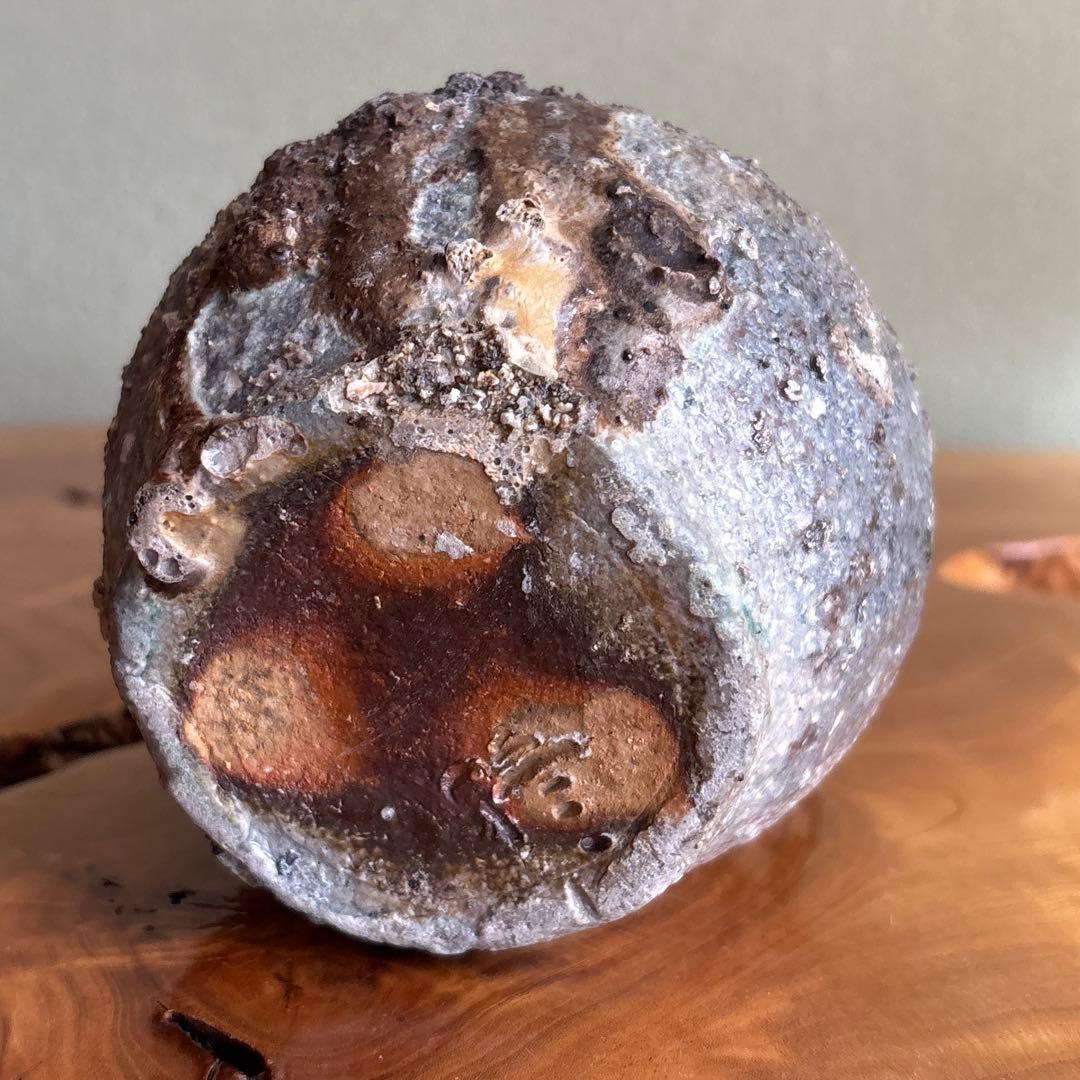
Experience Authentic Japan Art with this Shigaraki hanging flower vase. This natural ash glaze vase serves as a wabi-sabi ikebana vessel and Japanese ceramic flower holder, featuring heavy ash fall glaze and Tsuchi no Ko Kiln craftsmanship—a must-have for any Japanese pottery collector. This Minagawa Takashi hanging vase embodies Shigaraki stoneware tradition at its most elemental, with thick volcanic ash deposits and wabi-sabi wall decor presence that collectors of Japanese folk ceramics recognize immediately.
🔹 [ BASIC DETAILS ]
• Artist: Minagawa Takashi (皆川隆), Tsuchi no Ko Kiln (土の子窯)
• Technique: Shigaraki stoneware fired with natural wood ash, producing heavy natural ash fall glaze (hai-kaburi) across the entire surface
• Era: Contemporary (post-2007, active studio)
• Origin: Shigaraki, Shiga Prefecture, Japan — one of Japan's Six Ancient Kilns (Nihon Rokkoyo)
• Dimensions: Height approx. 10.5 cm; globular body with wide flat everted rim
• Hanging: Iron ring hook attached for wall suspension (kakehana style)
• Box: Original signed wooden box (共箱, tomobako) included with artist's brushwork inscription
• Condition: Excellent — no chips, cracks, or repairs; surface texture entirely intentional and kiln-born
🔹 [ CULTURAL & ARTISTIC INSIGHT ]
Shigaraki is among the oldest continuously active kiln traditions in Japan, tracing its lineage to the Nara period (eighth century) when its dense iron-bearing clay served imperial construction. Over centuries, potters discovered that the same clay — coarse, refractory, flecked with natural feldspar — produces surfaces of extraordinary complexity when subjected to long wood-fired anagama or noborigama kilns. The phenomenon seen on this vase, known as hai-kaburi (灰被り, literally "ash mantle"), occurs when wood ash from the firebox travels on convection currents and lands on unglazed surfaces at temperatures exceeding 1250°C. The silica in the ash fuses with the clay body, forming a natural glass of entirely unpredictable texture: here a crystalline white bloom, there a matte charcoal shadow, elsewhere a faint blue-grey iridescence where iron in the clay migrated toward the heat source.
Minagawa Takashi works from his Tsuchi no Ko Kiln — "kiln of earth's children" — honoring the animist relationship between potter, clay, and fire that defines Shigaraki's philosophical core. A hanging flower vase (掛花入, kake-hanaire) occupies a singular position in the tea ceremony room: suspended in the tokonoma alcove, it holds a single seasonal bloom at eye level, making the flower not a decoration but a presence — a focal point of contemplative attention. The act of selecting and placing a single flower in such a vessel is itself a form of wabi practice.
The rim of this vase is broad and deliberately uneven, folded and worked by hand so that no two points sit at the same height — the mouth opening is roughly oval, the lip textured. The body is squat and rounded, closer to earth than sky, grounded by its mass even as it will hang weightless against a wall. This tension between heaviness and suspension is precisely the quality tea masters have prized in hanging vessels for five centuries.
POETIC LINE: "The ash settled and became landscape — mountain shadow, winter fog — and the fire agreed to call it done."
🔹 [ DEEP-DIVE COMMENTARY ]
Shigaraki ware (信楽焼) is classified as one of Japan's Six Ancient Kilns (Nihon Rokkoyo, 日本六古窯), a designation granted to kiln sites with continuous production histories spanning the medieval period. Unlike the refined, controlled glazing traditions of Kyoto or Arita, Shigaraki aesthetics are founded on deliberate relinquishment of control — the potter shapes the clay, but the fire completes the object. This philosophical position aligns directly with core Zen and wabi-cha (侘び茶) values: the acceptance of impermanence and the discovery of beauty in accident.
The hai-kaburi effect visible on this vase is achieved through extended single-firing in a wood-burning kiln. The potter loads the vessel unglazed, relying entirely on natural ash accumulation during firing sessions that last multiple days. The density and distribution of the ash fall depends on the vessel's position in the kiln, the direction of flame travel, and the species of wood burned. Shigaraki potters traditionally use mixed hardwoods and pine, each contributing different mineral profiles to the deposited glass. The result on this piece is exceptionally thick — the surface is almost geological, resembling pumice or volcanic stone more than fired clay, with white crystalline formations (devitrified silica) creating a textural landscape across the dark iron-rich body.
For the advanced collector, Minagawa Takashi's Tsuchi no Ko Kiln represents a lineage of post-Mingei (民藝) studio practice in which the individual artist engages deeply with anonymous folk-craft traditions while maintaining a personal aesthetic identity. The tomobako (共箱) — the original wooden box inscribed in the artist's own hand — is both a certificate of authenticity and an object of beauty in its own right, the brushwork inscription naming the work and the artist's kiln seal.
The iron ring hook (金具) attached to the neck is hand-forged and minimal, consistent with the kake-hanaire form. In use, this vase would accept a single stem — a camellia in winter, a single wild grass in autumn — suspended against a plastered wall or wooden post in a tokonoma alcove. The vase itself becomes the landscape; the flower is its weather.
Contemporary collectors of wabi-sabi ceramics and Japanese folk art find in Shigaraki hanging vases an ideal bridge between studio practice and philosophical living. These vessels function equally as art objects, as working ikebana vessels, and as daily companions to contemplative domestic space.
🔹 [ 日本語解説 ]
【基本仕様】
作家:皆川隆(土の子窯)
技法:信楽焼・自然釉(灰被り)。木灰が焼成中に素地に降り積もり、1250℃以上の高温で溶融・ガラス化したもの。施釉なし、火の力のみによる景色。
時代:現代(2007年以降)
産地:滋賀県信楽町(日本六古窯のひとつ)
寸法:高さ約10.5cm。丸みを帯びた胴体、大きく平らに折り返された口縁部。
掛け具:鉄製リングフック付き(掛花入仕様)
箱:共箱(作家筆による箱書き・窯印あり)
状態:良好。ヒビ・カケなし。表面の凹凸は釉薬の景色であり、欠損ではない。
【文化・芸術的解説】
信楽は奈良時代(8世紀)に遡る日本最古の窯場のひとつであり、日本六古窯のなかでも特に力強い「土の景色」で知られます。信楽の土は鉄分を豊富に含む粗い炻器質で、長時間にわたる薪窯焼成によって、施釉なしのままでも複雑な表情を生み出します。この花入に見られる「灰被り」は、焚口から流れた木灰が素地に積もり、高温で自然ガラス化したもの。白い結晶の析出、炭色の影、青みを帯びた微妙な色調は、すべて炎と灰との対話のなかで生まれた偶然の産物です。
皆川隆氏は「土の子窯」を主宰し、信楽の民藝的精神を継承しながら個人の造形語法を追求しています。掛花入は茶室の床の間に吊るされ、一輪の花を季節の使者として迎える器。装飾ではなく、「存在」として花を据える行為そのものが、わびの実践です。
口縁は広く、手仕事による不均一な折り返し。胴は重厚に丸く、大地に根ざしながら壁に浮かぶ——その重さと浮遊の緊張が、五百年来の茶人たちが掛花入に求めてきた質感です。
【深い解説】
信楽焼は「日本六古窯」に数えられ、中世以来の連続する窯業史を持ちます。京都や有田とは異なり、信楽の美学は「制御の放棄」に基礎を置きます。陶工が形を与え、火が作品を完成させる——この哲学は、禅と侘び茶の核心と深く共鳴しています。
この花入の灰被りは、複数日にわたる薪窯の単一焼成によって達成されます。陶工は素焼きの器をそのまま窯入れし、自然な灰の降積に全面的に委ねる。灰の分布は、器の窯内での位置、炎の流れ方、燃料木の樹種によって決まります。この作品に見られる景色は特に厚く、表面は火山岩や軽石に近い質感を持ち、白い脱ガラス化シリカの結晶が暗い鉄質の素地上に地形のように広がっています。
共箱は真正性の証であるとともに、作家の筆跡による美的な存在そのものです。首部の鉄製リング金具は鍛造の簡素なもので、掛花入本来の姿に忠実です。使用時には一輪——冬なら椿、秋なら野草——を受け、漆喰壁や木柱を背景に、床の間という沈黙の舞台に立ちます。
現代のわび・さびコレクターや日本民藝愛好家にとって、信楽の掛花入は、工芸的実践と哲学的な生活との橋渡しをする理想的な器です。
🔹 [ SHIPPING & PACKAGING ]
• Dispatch: Within 1-6 business days
• Carrier: Japan Post EMS / UPS (with tracking)
• Packaging: Carefully wrapped with protective materials
🔹 [ BASIC DETAILS ]
• Artist: Minagawa Takashi (皆川隆), Tsuchi no Ko Kiln (土の子窯)
• Technique: Shigaraki stoneware fired with natural wood ash, producing heavy natural ash fall glaze (hai-kaburi) across the entire surface
• Era: Contemporary (post-2007, active studio)
• Origin: Shigaraki, Shiga Prefecture, Japan — one of Japan's Six Ancient Kilns (Nihon Rokkoyo)
• Dimensions: Height approx. 10.5 cm; globular body with wide flat everted rim
• Hanging: Iron ring hook attached for wall suspension (kakehana style)
• Box: Original signed wooden box (共箱, tomobako) included with artist's brushwork inscription
• Condition: Excellent — no chips, cracks, or repairs; surface texture entirely intentional and kiln-born
🔹 [ CULTURAL & ARTISTIC INSIGHT ]
Shigaraki is among the oldest continuously active kiln traditions in Japan, tracing its lineage to the Nara period (eighth century) when its dense iron-bearing clay served imperial construction. Over centuries, potters discovered that the same clay — coarse, refractory, flecked with natural feldspar — produces surfaces of extraordinary complexity when subjected to long wood-fired anagama or noborigama kilns. The phenomenon seen on this vase, known as hai-kaburi (灰被り, literally "ash mantle"), occurs when wood ash from the firebox travels on convection currents and lands on unglazed surfaces at temperatures exceeding 1250°C. The silica in the ash fuses with the clay body, forming a natural glass of entirely unpredictable texture: here a crystalline white bloom, there a matte charcoal shadow, elsewhere a faint blue-grey iridescence where iron in the clay migrated toward the heat source.
Minagawa Takashi works from his Tsuchi no Ko Kiln — "kiln of earth's children" — honoring the animist relationship between potter, clay, and fire that defines Shigaraki's philosophical core. A hanging flower vase (掛花入, kake-hanaire) occupies a singular position in the tea ceremony room: suspended in the tokonoma alcove, it holds a single seasonal bloom at eye level, making the flower not a decoration but a presence — a focal point of contemplative attention. The act of selecting and placing a single flower in such a vessel is itself a form of wabi practice.
The rim of this vase is broad and deliberately uneven, folded and worked by hand so that no two points sit at the same height — the mouth opening is roughly oval, the lip textured. The body is squat and rounded, closer to earth than sky, grounded by its mass even as it will hang weightless against a wall. This tension between heaviness and suspension is precisely the quality tea masters have prized in hanging vessels for five centuries.
POETIC LINE: "The ash settled and became landscape — mountain shadow, winter fog — and the fire agreed to call it done."
🔹 [ DEEP-DIVE COMMENTARY ]
Shigaraki ware (信楽焼) is classified as one of Japan's Six Ancient Kilns (Nihon Rokkoyo, 日本六古窯), a designation granted to kiln sites with continuous production histories spanning the medieval period. Unlike the refined, controlled glazing traditions of Kyoto or Arita, Shigaraki aesthetics are founded on deliberate relinquishment of control — the potter shapes the clay, but the fire completes the object. This philosophical position aligns directly with core Zen and wabi-cha (侘び茶) values: the acceptance of impermanence and the discovery of beauty in accident.
The hai-kaburi effect visible on this vase is achieved through extended single-firing in a wood-burning kiln. The potter loads the vessel unglazed, relying entirely on natural ash accumulation during firing sessions that last multiple days. The density and distribution of the ash fall depends on the vessel's position in the kiln, the direction of flame travel, and the species of wood burned. Shigaraki potters traditionally use mixed hardwoods and pine, each contributing different mineral profiles to the deposited glass. The result on this piece is exceptionally thick — the surface is almost geological, resembling pumice or volcanic stone more than fired clay, with white crystalline formations (devitrified silica) creating a textural landscape across the dark iron-rich body.
For the advanced collector, Minagawa Takashi's Tsuchi no Ko Kiln represents a lineage of post-Mingei (民藝) studio practice in which the individual artist engages deeply with anonymous folk-craft traditions while maintaining a personal aesthetic identity. The tomobako (共箱) — the original wooden box inscribed in the artist's own hand — is both a certificate of authenticity and an object of beauty in its own right, the brushwork inscription naming the work and the artist's kiln seal.
The iron ring hook (金具) attached to the neck is hand-forged and minimal, consistent with the kake-hanaire form. In use, this vase would accept a single stem — a camellia in winter, a single wild grass in autumn — suspended against a plastered wall or wooden post in a tokonoma alcove. The vase itself becomes the landscape; the flower is its weather.
Contemporary collectors of wabi-sabi ceramics and Japanese folk art find in Shigaraki hanging vases an ideal bridge between studio practice and philosophical living. These vessels function equally as art objects, as working ikebana vessels, and as daily companions to contemplative domestic space.
🔹 [ 日本語解説 ]
【基本仕様】
作家:皆川隆(土の子窯)
技法:信楽焼・自然釉(灰被り)。木灰が焼成中に素地に降り積もり、1250℃以上の高温で溶融・ガラス化したもの。施釉なし、火の力のみによる景色。
時代:現代(2007年以降)
産地:滋賀県信楽町(日本六古窯のひとつ)
寸法:高さ約10.5cm。丸みを帯びた胴体、大きく平らに折り返された口縁部。
掛け具:鉄製リングフック付き(掛花入仕様)
箱:共箱(作家筆による箱書き・窯印あり)
状態:良好。ヒビ・カケなし。表面の凹凸は釉薬の景色であり、欠損ではない。
【文化・芸術的解説】
信楽は奈良時代(8世紀)に遡る日本最古の窯場のひとつであり、日本六古窯のなかでも特に力強い「土の景色」で知られます。信楽の土は鉄分を豊富に含む粗い炻器質で、長時間にわたる薪窯焼成によって、施釉なしのままでも複雑な表情を生み出します。この花入に見られる「灰被り」は、焚口から流れた木灰が素地に積もり、高温で自然ガラス化したもの。白い結晶の析出、炭色の影、青みを帯びた微妙な色調は、すべて炎と灰との対話のなかで生まれた偶然の産物です。
皆川隆氏は「土の子窯」を主宰し、信楽の民藝的精神を継承しながら個人の造形語法を追求しています。掛花入は茶室の床の間に吊るされ、一輪の花を季節の使者として迎える器。装飾ではなく、「存在」として花を据える行為そのものが、わびの実践です。
口縁は広く、手仕事による不均一な折り返し。胴は重厚に丸く、大地に根ざしながら壁に浮かぶ——その重さと浮遊の緊張が、五百年来の茶人たちが掛花入に求めてきた質感です。
【深い解説】
信楽焼は「日本六古窯」に数えられ、中世以来の連続する窯業史を持ちます。京都や有田とは異なり、信楽の美学は「制御の放棄」に基礎を置きます。陶工が形を与え、火が作品を完成させる——この哲学は、禅と侘び茶の核心と深く共鳴しています。
この花入の灰被りは、複数日にわたる薪窯の単一焼成によって達成されます。陶工は素焼きの器をそのまま窯入れし、自然な灰の降積に全面的に委ねる。灰の分布は、器の窯内での位置、炎の流れ方、燃料木の樹種によって決まります。この作品に見られる景色は特に厚く、表面は火山岩や軽石に近い質感を持ち、白い脱ガラス化シリカの結晶が暗い鉄質の素地上に地形のように広がっています。
共箱は真正性の証であるとともに、作家の筆跡による美的な存在そのものです。首部の鉄製リング金具は鍛造の簡素なもので、掛花入本来の姿に忠実です。使用時には一輪——冬なら椿、秋なら野草——を受け、漆喰壁や木柱を背景に、床の間という沈黙の舞台に立ちます。
現代のわび・さびコレクターや日本民藝愛好家にとって、信楽の掛花入は、工芸的実践と哲学的な生活との橋渡しをする理想的な器です。
🔹 [ SHIPPING & PACKAGING ]
• Dispatch: Within 1-6 business days
• Carrier: Japan Post EMS / UPS (with tracking)
• Packaging: Carefully wrapped with protective materials
Quantity
Couldn't load pickup availability
Out of stock
View full details