1
/
of
7
Seto Ware Flat Matcha Bowl by Kato Gorobei — Plum Blossom Hira-Chawan with Tomobako
Seto Ware Flat Matcha Bowl by Kato Gorobei — Plum Blossom Hira-Chawan with Tomobako
Regular price
Dhs. 615.00 AED
Regular price
Sale price
Dhs. 615.00 AED
Taxes included.
Shipping calculated at checkout.
Experience Authentic Japan Art with this Seto Ware Flat Matcha Bowl. This Japanese Tea Ceremony Bowl serves as a Hira-Chawan Summer Tea Bowl and Signed Ceramic Art Gift, featuring Seika-en Kato Gorobei White Glaze and Iron Brushwork Motif—a must-have for any Art Collector seeking Seto Pottery with Original Wooden Box and Wabi Aesthetic Tea Ware.
🔹 [ BASIC DETAILS ]
• Artist: Kato Gorobei (加藤五郎兵衛), Seika-en (青華園) studio, Seto
• Technique: White feldspar glaze (shiro-yu) over Seto stoneware; iron-brush "mizu" (水) calligraphic motif; fired to vitrification with deliberate iron-spot surface
• Era: Before 2007
• Origin: Seto, Aichi Prefecture, Japan (Seto-yaki tradition)
• Dimensions: Diameter approx. 15 cm, Height approx. 5 cm
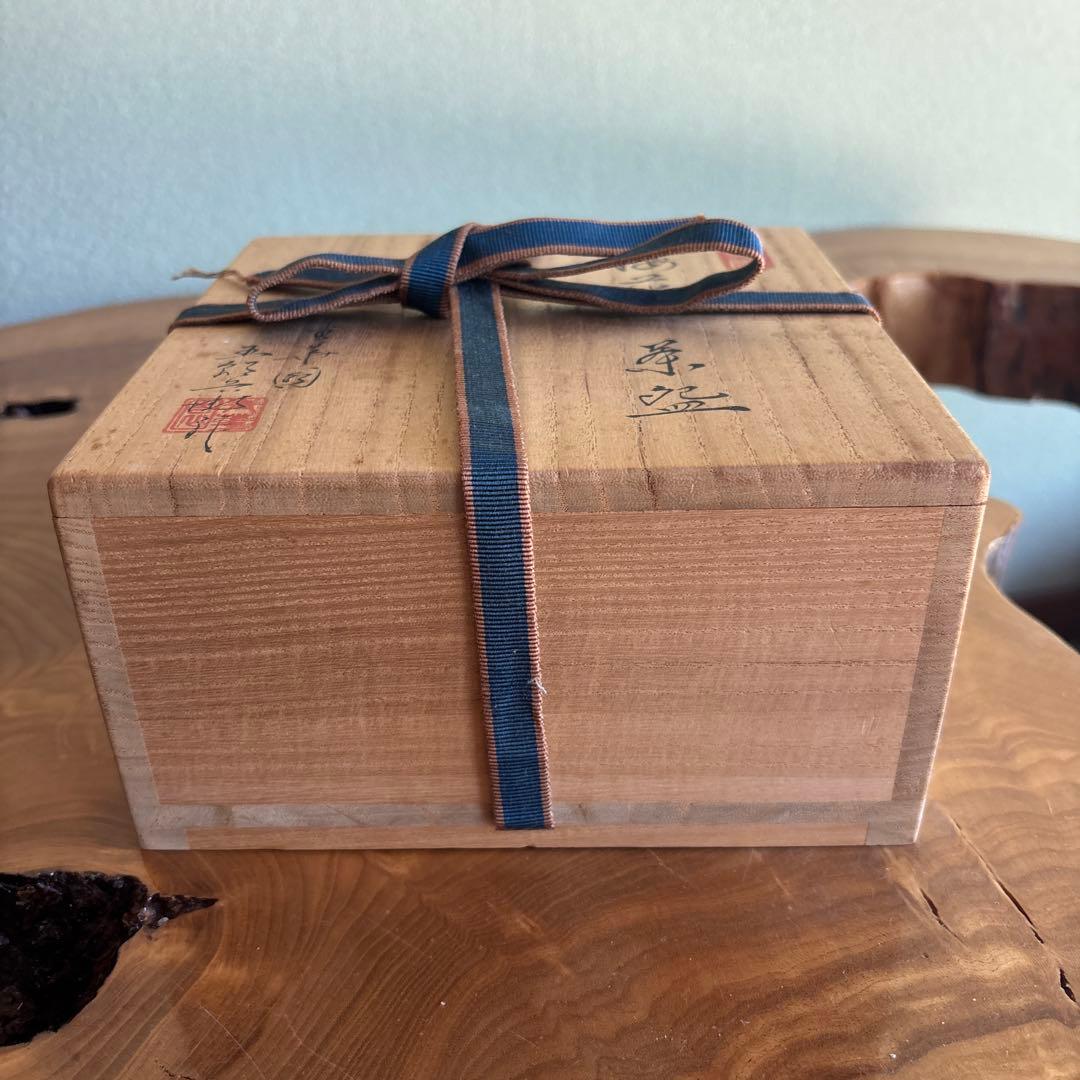
• Box: Tomobako (original signed wooden box) included; box lid bears brushwork inscription 「梅花 茶碗」(Plum Blossom Tea Bowl) with artist's red seal
• Condition: No cracks, no chips; minor staining on box lid only — bowl body pristine
🔹 [ CULTURAL & ARTISTIC INSIGHT ]
The hira-chawan — literally the "flat tea bowl" — is one of the most seasonally specific forms in Japanese tea ceremony. Wide and shallow, its broad surface allows the whisked matcha to cool quickly as summer heat settles over the tearoom. To serve tea in a hira-chawan in July or August is to declare an awareness of the season, a consciousness that pervades every choice in chado. Kato Gorobei's version carries this seasonal awareness into its very material: the white feldspar glaze is neither pristine nor stark, but softly speckled with iron-oxide inclusions that drift and bloom like watermarks on aged paper.
Across the interior, rendered in a single unhurried gesture, the character 「水」— water — appears in iron underglaze. This is a stroke of restrained literary wit. Water cools. Water flows. Water sustains. In the context of a summer tea bowl, the inscription is not decoration but climate — a single kanji that transforms functional ceramics into poetry. The tradition of literary calligraphic motifs on Seto ware dates to the Edo period, when literate potters and their scholarly patrons exchanged objects that were simultaneously useful and erudite.
The exterior glaze pools softly at the bowl's shoulder, revealing subtle variations in surface tension from the firing — pale cream fading to warm oatmeal, the grog-textured clay peeking through where the glaze thinned near the foot. The unglazed kodai (foot ring) is rough and sandy, the pure ochre-brown of Seto clay, honest and unadorned. This is wabi at its most direct: beauty found not in perfection but in the visible evidence of making.
"The character for water rests at the bowl's floor — not painted, but placed, like a word whispered before summer rain."
🔹 [ DEEP-DIVE COMMENTARY ]
Seto-yaki (Seto ware) is among Japan's oldest and most historically significant ceramic traditions. The city of Seto in Aichi Prefecture has been producing ceramics for over a thousand years, and its name — setomono (瀬戸物) — became the generic Japanese word for ceramics in general, a testament to its cultural dominance. From the Kamakura period onward, Seto potters developed a wide vocabulary of glazes and forms that shaped the aesthetic vocabulary of Japanese tea culture.
The shiro-yu (white glaze) tradition at Seto emerged in earnest during the Momoyama and early Edo periods, when tea masters sought surfaces that would contrast beautifully with the deep green of whisked matcha. Unlike the heavily manipulated glazes of Raku or the ash-glazed surfaces of Shigaraki, Seto white glazes tend toward clarity and refinement — a white that is never cold, always carrying warm undertones from the iron-rich clay beneath. The speckled iron inclusions visible in this bowl are not accidental but a controlled aesthetic: potters would add coarser clay or apply iron-bearing materials before glazing to achieve this dappled, naturalistic surface.
Kato Gorobei worked under the studio name Seika-en (青華園 — "Blue Blossom Garden"), a name that suggests both the garden aesthetic of classical Japanese culture and the blue-tinged quality of Seto's finest white glazes. Studio potters of this tradition typically operated within a lineage system, maintaining stylistic continuity across generations while contributing their own interpretive voice. The tomobako — the original wooden box hand-inscribed by the artist — is a marker of seriousness in the Japanese ceramic world: these boxes are not packaging but documentation, and a bowl with its original tomobako commands significantly more respect among collectors than one without.
The hira-chawan form itself demands technical skill that its simplicity conceals. The wide, low profile must be thrown or hand-built with careful attention to wall thickness consistency; an uneven wall will warp during firing. The kodai must be trimmed to support the weight of the broad rim without compromising stability. That this example has survived decades without any cracking or chipping speaks to the quality of both the clay body and the firing process. Collectors seeking functional summer tea ceremony ware will find this bowl as usable as it is beautiful — the wide interior is easy to whisk in, and the gentle slope of the walls guides the tea naturally toward the drinker.
🔹 [ 日本語解説 ]
■ 作品詳細
• 作家:加藤五郎兵衛(青華園)、瀬戸
• 技法:瀬戸白釉(白泥釉)に鉄絵で「水」の一字を描く。鉄粉の斑点が自然に散在し、侘びの趣を醸す
• 時代:2007年以前
• 産地:愛知県瀬戸市(瀬戸焼)
• 寸法:径約15cm、高さ約5cm
• 箱:共箱付き(蓋書き「梅花 茶碗」、作家落款・朱印入り)。箱蓋に軽微なシミあり、本体は無傷
• 状態:ヒビ・カケなし。本体は非常に良好なコンディション
■ 文化的・美術的解説
平茶碗は、日本の茶道において最も季節感の強い器のひとつです。その広く浅い形状は、夏の茶席において点て出しの抹茶が程よく冷めるよう設計されており、炉を閉じた夏期(風炉の時期)に用いる茶碗として古来珍重されてきました。七月・八月の茶席に平茶碗が登場するとき、それは茶人の季節への深い意識の表れです。
加藤五郎兵衛の本作において特筆すべきは、碗内に一筆で書かれた「水」の鉄絵です。冷やかさ、流れ、清潔さ——夏の茶碗にこの一字を置くことは、装飾ではなく気候の宣言です。江戸時代の瀬戸焼には、文人趣味の影響を受けた文字や詩句を器面に取り込む伝統があり、本作はその系譜を引き継いでいます。
外壁の白釉は肩部で自然に溜まり、クリーム色から温かみのあるオートミール色へと変化します。高台は無釉で、瀬戸の粘土そのままの黄土色が露わになっています。これは完璧さではなく、「作ること」の痕跡そのものを美とする侘びの精神の体現です。
■ 深層解説
瀬戸焼は日本最古の窯業地の一つであり、「瀬戸物」という言葉が陶磁器全般の代名詞となったほど、日本の陶芸文化に深く根ざした存在です。鎌倉時代以来、瀬戸の陶工たちは白釉・灰釉・鉄釉など多彩な釉薬を開発し、日本の茶道の美意識を形成する上で重要な役割を果たしてきました。
白泥釉(白釉)の伝統は桃山・江戸初期に大きく発展しました。茶人たちは深緑の抹茶が映える白い器肌を求め、瀬戸の白釉はその清潔な温もりによって広く愛されました。本作の表面に見られる鉄粉の斑点は偶然ではなく、粗粒の粘土や鉄分を含む素材を意図的に用いることで生み出された、自然の景色を思わせる美的効果です。
青華園(加藤五郎兵衛)は「青い花の園」を意味する雅号であり、瀬戸における白釉の青みがかった色調と日本庭園の審美眼を合わせ持つ名です。このような陶芸家は様式的な継承を守りながらも、個人の解釈を加えて伝統に深みをもたらします。付属する共箱は、陶芸界において単なる梱包材ではなく、作家による一次資料です。共箱があることで、作品の来歴と真正性が確かなものとなり、コレクターにとって重要な価値を持ちます。
平茶碗の制作は、その単純な外観が示す以上の技術を要します。広く低い形状は、成形段階から壁の均一性に細心の注意が必要で、少しでも偏りがあれば焼成時に歪みが生じます。本作が何十年もの時を経て無傷であることは、素地の質と焼成技術の確かさの証明です。夏の茶席で実際に使うことができ、広い内壁は茶筅を振りやすく、緩やかな傾斜が自然に茶を口へと誘います。
🔹 [ SHIPPING & PACKAGING ]
• Dispatch: Within 1-6 business days
• Carrier: Japan Post EMS / UPS (with tracking)
• Packaging: Carefully wrapped with protective materials
🔹 [ BASIC DETAILS ]
• Artist: Kato Gorobei (加藤五郎兵衛), Seika-en (青華園) studio, Seto
• Technique: White feldspar glaze (shiro-yu) over Seto stoneware; iron-brush "mizu" (水) calligraphic motif; fired to vitrification with deliberate iron-spot surface
• Era: Before 2007
• Origin: Seto, Aichi Prefecture, Japan (Seto-yaki tradition)
• Dimensions: Diameter approx. 15 cm, Height approx. 5 cm
• Box: Tomobako (original signed wooden box) included; box lid bears brushwork inscription 「梅花 茶碗」(Plum Blossom Tea Bowl) with artist's red seal
• Condition: No cracks, no chips; minor staining on box lid only — bowl body pristine
🔹 [ CULTURAL & ARTISTIC INSIGHT ]
The hira-chawan — literally the "flat tea bowl" — is one of the most seasonally specific forms in Japanese tea ceremony. Wide and shallow, its broad surface allows the whisked matcha to cool quickly as summer heat settles over the tearoom. To serve tea in a hira-chawan in July or August is to declare an awareness of the season, a consciousness that pervades every choice in chado. Kato Gorobei's version carries this seasonal awareness into its very material: the white feldspar glaze is neither pristine nor stark, but softly speckled with iron-oxide inclusions that drift and bloom like watermarks on aged paper.
Across the interior, rendered in a single unhurried gesture, the character 「水」— water — appears in iron underglaze. This is a stroke of restrained literary wit. Water cools. Water flows. Water sustains. In the context of a summer tea bowl, the inscription is not decoration but climate — a single kanji that transforms functional ceramics into poetry. The tradition of literary calligraphic motifs on Seto ware dates to the Edo period, when literate potters and their scholarly patrons exchanged objects that were simultaneously useful and erudite.
The exterior glaze pools softly at the bowl's shoulder, revealing subtle variations in surface tension from the firing — pale cream fading to warm oatmeal, the grog-textured clay peeking through where the glaze thinned near the foot. The unglazed kodai (foot ring) is rough and sandy, the pure ochre-brown of Seto clay, honest and unadorned. This is wabi at its most direct: beauty found not in perfection but in the visible evidence of making.
"The character for water rests at the bowl's floor — not painted, but placed, like a word whispered before summer rain."
🔹 [ DEEP-DIVE COMMENTARY ]
Seto-yaki (Seto ware) is among Japan's oldest and most historically significant ceramic traditions. The city of Seto in Aichi Prefecture has been producing ceramics for over a thousand years, and its name — setomono (瀬戸物) — became the generic Japanese word for ceramics in general, a testament to its cultural dominance. From the Kamakura period onward, Seto potters developed a wide vocabulary of glazes and forms that shaped the aesthetic vocabulary of Japanese tea culture.
The shiro-yu (white glaze) tradition at Seto emerged in earnest during the Momoyama and early Edo periods, when tea masters sought surfaces that would contrast beautifully with the deep green of whisked matcha. Unlike the heavily manipulated glazes of Raku or the ash-glazed surfaces of Shigaraki, Seto white glazes tend toward clarity and refinement — a white that is never cold, always carrying warm undertones from the iron-rich clay beneath. The speckled iron inclusions visible in this bowl are not accidental but a controlled aesthetic: potters would add coarser clay or apply iron-bearing materials before glazing to achieve this dappled, naturalistic surface.
Kato Gorobei worked under the studio name Seika-en (青華園 — "Blue Blossom Garden"), a name that suggests both the garden aesthetic of classical Japanese culture and the blue-tinged quality of Seto's finest white glazes. Studio potters of this tradition typically operated within a lineage system, maintaining stylistic continuity across generations while contributing their own interpretive voice. The tomobako — the original wooden box hand-inscribed by the artist — is a marker of seriousness in the Japanese ceramic world: these boxes are not packaging but documentation, and a bowl with its original tomobako commands significantly more respect among collectors than one without.
The hira-chawan form itself demands technical skill that its simplicity conceals. The wide, low profile must be thrown or hand-built with careful attention to wall thickness consistency; an uneven wall will warp during firing. The kodai must be trimmed to support the weight of the broad rim without compromising stability. That this example has survived decades without any cracking or chipping speaks to the quality of both the clay body and the firing process. Collectors seeking functional summer tea ceremony ware will find this bowl as usable as it is beautiful — the wide interior is easy to whisk in, and the gentle slope of the walls guides the tea naturally toward the drinker.
🔹 [ 日本語解説 ]
■ 作品詳細
• 作家:加藤五郎兵衛(青華園)、瀬戸
• 技法:瀬戸白釉(白泥釉)に鉄絵で「水」の一字を描く。鉄粉の斑点が自然に散在し、侘びの趣を醸す
• 時代:2007年以前
• 産地:愛知県瀬戸市(瀬戸焼)
• 寸法:径約15cm、高さ約5cm
• 箱:共箱付き(蓋書き「梅花 茶碗」、作家落款・朱印入り)。箱蓋に軽微なシミあり、本体は無傷
• 状態:ヒビ・カケなし。本体は非常に良好なコンディション
■ 文化的・美術的解説
平茶碗は、日本の茶道において最も季節感の強い器のひとつです。その広く浅い形状は、夏の茶席において点て出しの抹茶が程よく冷めるよう設計されており、炉を閉じた夏期(風炉の時期)に用いる茶碗として古来珍重されてきました。七月・八月の茶席に平茶碗が登場するとき、それは茶人の季節への深い意識の表れです。
加藤五郎兵衛の本作において特筆すべきは、碗内に一筆で書かれた「水」の鉄絵です。冷やかさ、流れ、清潔さ——夏の茶碗にこの一字を置くことは、装飾ではなく気候の宣言です。江戸時代の瀬戸焼には、文人趣味の影響を受けた文字や詩句を器面に取り込む伝統があり、本作はその系譜を引き継いでいます。
外壁の白釉は肩部で自然に溜まり、クリーム色から温かみのあるオートミール色へと変化します。高台は無釉で、瀬戸の粘土そのままの黄土色が露わになっています。これは完璧さではなく、「作ること」の痕跡そのものを美とする侘びの精神の体現です。
■ 深層解説
瀬戸焼は日本最古の窯業地の一つであり、「瀬戸物」という言葉が陶磁器全般の代名詞となったほど、日本の陶芸文化に深く根ざした存在です。鎌倉時代以来、瀬戸の陶工たちは白釉・灰釉・鉄釉など多彩な釉薬を開発し、日本の茶道の美意識を形成する上で重要な役割を果たしてきました。
白泥釉(白釉)の伝統は桃山・江戸初期に大きく発展しました。茶人たちは深緑の抹茶が映える白い器肌を求め、瀬戸の白釉はその清潔な温もりによって広く愛されました。本作の表面に見られる鉄粉の斑点は偶然ではなく、粗粒の粘土や鉄分を含む素材を意図的に用いることで生み出された、自然の景色を思わせる美的効果です。
青華園(加藤五郎兵衛)は「青い花の園」を意味する雅号であり、瀬戸における白釉の青みがかった色調と日本庭園の審美眼を合わせ持つ名です。このような陶芸家は様式的な継承を守りながらも、個人の解釈を加えて伝統に深みをもたらします。付属する共箱は、陶芸界において単なる梱包材ではなく、作家による一次資料です。共箱があることで、作品の来歴と真正性が確かなものとなり、コレクターにとって重要な価値を持ちます。
平茶碗の制作は、その単純な外観が示す以上の技術を要します。広く低い形状は、成形段階から壁の均一性に細心の注意が必要で、少しでも偏りがあれば焼成時に歪みが生じます。本作が何十年もの時を経て無傷であることは、素地の質と焼成技術の確かさの証明です。夏の茶席で実際に使うことができ、広い内壁は茶筅を振りやすく、緩やかな傾斜が自然に茶を口へと誘います。
🔹 [ SHIPPING & PACKAGING ]
• Dispatch: Within 1-6 business days
• Carrier: Japan Post EMS / UPS (with tracking)
• Packaging: Carefully wrapped with protective materials
Quantity
Couldn't load pickup availability
Low stock: 1 left
View full details