1
/
of
17
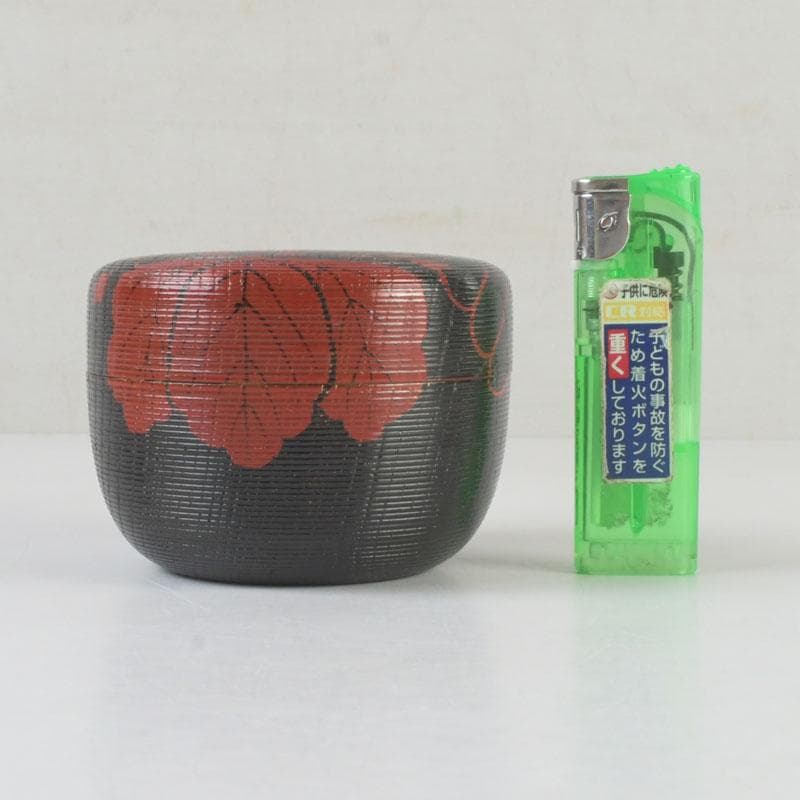
Senpo — Kikukiri Jurin Natsume | Chrysanthemum & Paulownia on Kenjo-Carved Black Lacquer | Tomobako
Senpo — Kikukiri Jurin Natsume | Chrysanthemum & Paulownia on Kenjo-Carved Black Lacquer | Tomobako
Regular price
Dhs. 1,256.00 AED
Regular price
Sale price
Dhs. 1,256.00 AED
Taxes included.
Shipping calculated at checkout.
A tea caddy that holds its silence like a sealed season.
🔹 [ BASIC DETAILS ]
• Artist: Senpo (泉帆)
• Origin: Japan
• Material: Urushi lacquer with kenjo-nuri carved ground
• Motif: Chrysanthemum and Paulownia (Kikukiri)
• Era: 2000_2024
• Box: Tomobako (artist's wooden presentation box)
• Condition: Good, carefully inspected
🔹 [ Cultural & Artistic Insight ]
The surface speaks before the eye can organize what it sees — a deep, carved black ground (kenjo-nuri) that fractures light into thousands of fine lines, and against it, chrysanthemum and paulownia rendered in cinnabar-red urushi. Not painted over the lacquer. Carved into the world beneath it, then filled with color that pulls upward through the texture.
This is the jurin-natsume form — low, broad, deliberate. A shape that belongs to formal temae, to the kind of tea ceremony where each object is chosen for what it says without speaking.
The motif carries weight beyond decoration. Chrysanthemum (kiku) denotes longevity and imperial cultivation. Paulownia (kiri) speaks of nobility, of the crest tradition — of objects made for people who understood what crests meant. Together as kikukiri, they have appeared on lacquerwork of significance for centuries.
Senpo, the lacquer artist (nuishi), signs the paulownia-wood tomobako in confident brushstroke. The tomobako seals with the original silk fukusa — deep amber-gold — folded as it was meant to be folded.
H approx. 6 cm / W approx. 8.5 cm / Weight approx. 69 g
Condition: Excellent. No chips, cracks, or significant wear. The kenjo ground is intact; the red lacquer motif is vivid and unretouched.
---
[ CULTURAL & ARTISTIC INSIGHT ]
Kenjo-nuri (献上塗) is a carved-ground lacquer technique in which fine parallel or concentric lines are incised across the lacquer surface before finishing. The result is a field of controlled texture — not smooth, not rough, but rhythmically dimensional — that gives depth to any design applied above or within it. When a motif is added in tsuikoku (carved lacquer relief) or filled-in urushi as here, the ground becomes an active participant: the red of the chrysanthemum and paulownia does not sit flat but vibrates slightly against the carved black, catching light differently at every angle.
🔹 [ Deep-Dive Commentary ]
The jurin-natsume (寿輪棗) is a specific form within natsume (棗, tea caddy) typology — distinguished by its wide, low silhouette and the gentle convex lid that meets the body in a clean horizontal seam. It is associated with mature, formal tea practice. In chado (the Way of Tea), the natsume holds the koicha or usucha matcha; its visual presence during temae is considered part of the tea's offering to the guest.
The kikukiri (菊桐) motif — chrysanthemum and paulownia combined — draws from both imperial and shogunal visual vocabularies. The chrysanthemum crest (kikumon) is the oldest continuous symbol of Japanese sovereignty; paulownia (kiri) was granted by the imperial court to the Toyotomi and later became the crest of the Japanese government itself. Lacquerware bearing this combined motif was historically associated with formal gift-giving and objects of ceremonial standing.
---
[ DEEP-DIVE COMMENTARY ]
What distinguishes this natsume within the tradition is the technical decision to use kenjo-nuri as the base — not as decorative afterthought, but as structural argument. Most kikukiri lacquerware uses a flat kuro-nuri (plain black) ground, allowing the motif to read cleanly. Senpo's choice inverts this: the ground itself becomes as textured as the motif, so the eye must navigate between the carved field and the raised design. This creates a visual tension that is unresolved in the best sense — you keep looking, keep adjusting, keep finding new relationships between the red lines and the black grid.
The chrysanthemum blooms are rendered with two languages simultaneously: solid red fills for the large petals, and delicate red line-work for the vein structures and the paulownia branches. This combination suggests a practitioner fluent in both tsuikoku-fu (filled carved lacquer) and chinkin (incised gold-line work, here adapted to red). The result is a surface that reads as one design but was executed in at least two technically distinct processes.
Senpo's signature on the tomobako is brushed in a hand that is confident without being ostentatious — the mark of a craftsperson who signs because the work requires a name, not because the name requires a work.
---
[ WHAT ARRIVES ]
The natsume, the original paulownia tomobako signed by the artist, the original tomobono (共布) silk fukusa in amber-gold.
---
🔹 [ 日本語解説 ]
彫込地(献上塗)の黒漆面に、朱漆で菊と桐を大胆に配した寿輪棗。細かく刻まれた彫り筋が光を分散させ、朱の文様が地と呼応するように浮かび上がる。菊桐文は格式ある文様として知られ、茶席に品格をもたらす一品。寿輪棗の低く安定した形は、正式な点前に相応しい。
🔹 [ SHIPPING & PACKAGING ]
• Dispatch: Within 1-6 business days
• Carrier: Japan Post EMS / UPS (with tracking)
• Packaging: Carefully wrapped with protective materials
🔹 [ BASIC DETAILS ]
• Artist: Senpo (泉帆)
• Origin: Japan
• Material: Urushi lacquer with kenjo-nuri carved ground
• Motif: Chrysanthemum and Paulownia (Kikukiri)
• Era: 2000_2024
• Box: Tomobako (artist's wooden presentation box)
• Condition: Good, carefully inspected
🔹 [ Cultural & Artistic Insight ]
The surface speaks before the eye can organize what it sees — a deep, carved black ground (kenjo-nuri) that fractures light into thousands of fine lines, and against it, chrysanthemum and paulownia rendered in cinnabar-red urushi. Not painted over the lacquer. Carved into the world beneath it, then filled with color that pulls upward through the texture.
This is the jurin-natsume form — low, broad, deliberate. A shape that belongs to formal temae, to the kind of tea ceremony where each object is chosen for what it says without speaking.
The motif carries weight beyond decoration. Chrysanthemum (kiku) denotes longevity and imperial cultivation. Paulownia (kiri) speaks of nobility, of the crest tradition — of objects made for people who understood what crests meant. Together as kikukiri, they have appeared on lacquerwork of significance for centuries.
Senpo, the lacquer artist (nuishi), signs the paulownia-wood tomobako in confident brushstroke. The tomobako seals with the original silk fukusa — deep amber-gold — folded as it was meant to be folded.
H approx. 6 cm / W approx. 8.5 cm / Weight approx. 69 g
Condition: Excellent. No chips, cracks, or significant wear. The kenjo ground is intact; the red lacquer motif is vivid and unretouched.
---
[ CULTURAL & ARTISTIC INSIGHT ]
Kenjo-nuri (献上塗) is a carved-ground lacquer technique in which fine parallel or concentric lines are incised across the lacquer surface before finishing. The result is a field of controlled texture — not smooth, not rough, but rhythmically dimensional — that gives depth to any design applied above or within it. When a motif is added in tsuikoku (carved lacquer relief) or filled-in urushi as here, the ground becomes an active participant: the red of the chrysanthemum and paulownia does not sit flat but vibrates slightly against the carved black, catching light differently at every angle.
🔹 [ Deep-Dive Commentary ]
The jurin-natsume (寿輪棗) is a specific form within natsume (棗, tea caddy) typology — distinguished by its wide, low silhouette and the gentle convex lid that meets the body in a clean horizontal seam. It is associated with mature, formal tea practice. In chado (the Way of Tea), the natsume holds the koicha or usucha matcha; its visual presence during temae is considered part of the tea's offering to the guest.
The kikukiri (菊桐) motif — chrysanthemum and paulownia combined — draws from both imperial and shogunal visual vocabularies. The chrysanthemum crest (kikumon) is the oldest continuous symbol of Japanese sovereignty; paulownia (kiri) was granted by the imperial court to the Toyotomi and later became the crest of the Japanese government itself. Lacquerware bearing this combined motif was historically associated with formal gift-giving and objects of ceremonial standing.
---
[ DEEP-DIVE COMMENTARY ]
What distinguishes this natsume within the tradition is the technical decision to use kenjo-nuri as the base — not as decorative afterthought, but as structural argument. Most kikukiri lacquerware uses a flat kuro-nuri (plain black) ground, allowing the motif to read cleanly. Senpo's choice inverts this: the ground itself becomes as textured as the motif, so the eye must navigate between the carved field and the raised design. This creates a visual tension that is unresolved in the best sense — you keep looking, keep adjusting, keep finding new relationships between the red lines and the black grid.
The chrysanthemum blooms are rendered with two languages simultaneously: solid red fills for the large petals, and delicate red line-work for the vein structures and the paulownia branches. This combination suggests a practitioner fluent in both tsuikoku-fu (filled carved lacquer) and chinkin (incised gold-line work, here adapted to red). The result is a surface that reads as one design but was executed in at least two technically distinct processes.
Senpo's signature on the tomobako is brushed in a hand that is confident without being ostentatious — the mark of a craftsperson who signs because the work requires a name, not because the name requires a work.
---
[ WHAT ARRIVES ]
The natsume, the original paulownia tomobako signed by the artist, the original tomobono (共布) silk fukusa in amber-gold.
---
🔹 [ 日本語解説 ]
彫込地(献上塗)の黒漆面に、朱漆で菊と桐を大胆に配した寿輪棗。細かく刻まれた彫り筋が光を分散させ、朱の文様が地と呼応するように浮かび上がる。菊桐文は格式ある文様として知られ、茶席に品格をもたらす一品。寿輪棗の低く安定した形は、正式な点前に相応しい。
🔹 [ SHIPPING & PACKAGING ]
• Dispatch: Within 1-6 business days
• Carrier: Japan Post EMS / UPS (with tracking)
• Packaging: Carefully wrapped with protective materials
Quantity
Couldn't load pickup availability
Low stock: 1 left
View full details