1
/
of
12
Sakurada Keishu — Young Pine Maki-e Natsume | Gold Nashiji Interior | Japanese Tea Caddy
Sakurada Keishu — Young Pine Maki-e Natsume | Gold Nashiji Interior | Japanese Tea Caddy
Regular price
Dhs. 1,481.00 AED
Regular price
Sale price
Dhs. 1,481.00 AED
Taxes included.
Shipping calculated at checkout.
Young pine in gold maki-e on black lacquer — a motif of endurance rendered at the moment before maturity. The interior opens to reveal red-gold nashiji with drifting kasumi mist, an interior world that the room will never see.
🔹 [ BASIC DETAILS ]
- Artist/Maker: Sakurada Keishu (桜田慶舟)
- Title: Young Pine Maki-e Natsume (若松蒔絵 棗)
- Dimensions: H approx. 7.4 cm, diameter approx. 7.3 cm
- Condition: Very good. Maki-e precise and undiminished. Interior in excellent state.
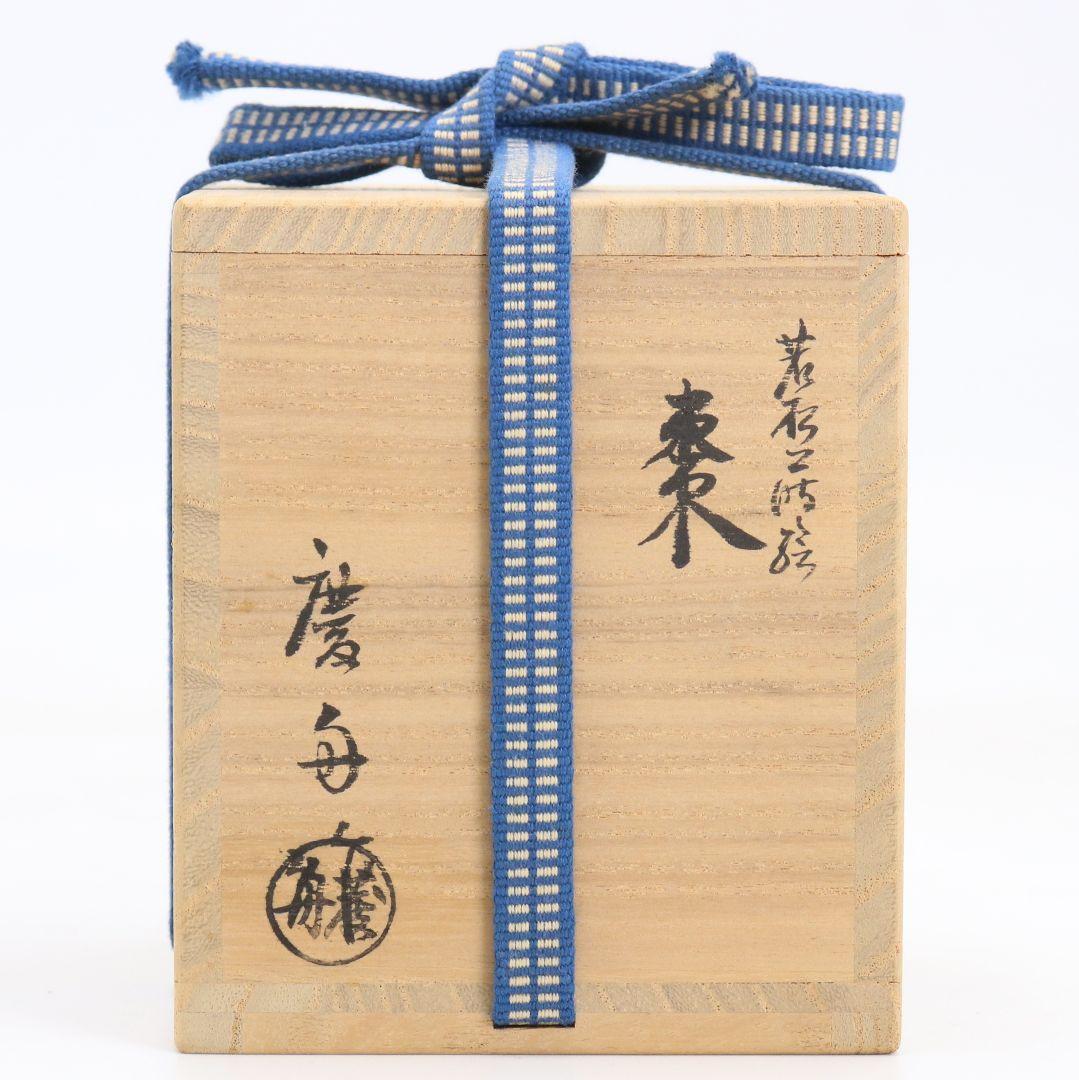
- Comes with: Tomobako (signed wooden storage box)
— Cultural Insight —
In chado, the pine is among the most enduring of symbolic presences — evergreen, unchanging through seasons, associated with longevity and constancy. The wakamatsu (young pine) is a specific register of this symbolism: not the gnarled ancient tree but the pine in its early years, when the needles are soft and the form is still finding itself. It is a motif of beginning held within a symbol of permanence.
Nashiji — the technique of scattering gold powder into lacquer to create a ground that resembles the inside of a pear (nashi) — is one of the most technically demanding finishes in Japanese lacquerwork. When nashiji appears on a lid interior, it is a gift meant only for the person who opens the box: a private opulence.
— Deep-Dive Observation —
The pine needles on this natsume are rendered with a precision that does not announce itself. Each needle is individually legible — not merged into texture but distinct in direction and weight. This quality of particularity in a motif so familiar requires control of the maki-e brush that is not common.
The interior contrast is deliberate and significant: the restrained gold exterior gives way to a red-gold nashiji interior with drifting kasumi patterns. The warmth of the interior against the cooler exterior creates a structural dialogue — surface and depth, public and private, composed and abundant. The tomobako holds this context in written form.
🔹 [ SHIPPING & PACKAGING ]
• Dispatch: Within 1-6 business days
• Carrier: Japan Post EMS / UPS (with tracking)
• Packaging: Carefully wrapped with protective materials
• Insurance: Included for all shipments
• Note: Import duties and taxes may apply depending on your country's regulations
---
桜田慶舟作の若松蒔絵棗。黒漆地に若松を金蒔絵で精密に描いた茶器です。松の一本一本の葉が丁寧に描き込まれ、蒔絵師の高い技術が伝わります。蓋裏は朱金梨子地に霞文様という贅沢な意匠で、表面の静謐な印象と対照的な内部の豊かさが特徴です。共箱付き。永続性と若さの象徴である若松が、茶の湯の世界観を静かに体現しています。
🔹 [ BASIC DETAILS ]
- Artist/Maker: Sakurada Keishu (桜田慶舟)
- Title: Young Pine Maki-e Natsume (若松蒔絵 棗)
- Dimensions: H approx. 7.4 cm, diameter approx. 7.3 cm
- Condition: Very good. Maki-e precise and undiminished. Interior in excellent state.
- Comes with: Tomobako (signed wooden storage box)
— Cultural Insight —
In chado, the pine is among the most enduring of symbolic presences — evergreen, unchanging through seasons, associated with longevity and constancy. The wakamatsu (young pine) is a specific register of this symbolism: not the gnarled ancient tree but the pine in its early years, when the needles are soft and the form is still finding itself. It is a motif of beginning held within a symbol of permanence.
Nashiji — the technique of scattering gold powder into lacquer to create a ground that resembles the inside of a pear (nashi) — is one of the most technically demanding finishes in Japanese lacquerwork. When nashiji appears on a lid interior, it is a gift meant only for the person who opens the box: a private opulence.
— Deep-Dive Observation —
The pine needles on this natsume are rendered with a precision that does not announce itself. Each needle is individually legible — not merged into texture but distinct in direction and weight. This quality of particularity in a motif so familiar requires control of the maki-e brush that is not common.
The interior contrast is deliberate and significant: the restrained gold exterior gives way to a red-gold nashiji interior with drifting kasumi patterns. The warmth of the interior against the cooler exterior creates a structural dialogue — surface and depth, public and private, composed and abundant. The tomobako holds this context in written form.
🔹 [ SHIPPING & PACKAGING ]
• Dispatch: Within 1-6 business days
• Carrier: Japan Post EMS / UPS (with tracking)
• Packaging: Carefully wrapped with protective materials
• Insurance: Included for all shipments
• Note: Import duties and taxes may apply depending on your country's regulations
---
桜田慶舟作の若松蒔絵棗。黒漆地に若松を金蒔絵で精密に描いた茶器です。松の一本一本の葉が丁寧に描き込まれ、蒔絵師の高い技術が伝わります。蓋裏は朱金梨子地に霞文様という贅沢な意匠で、表面の静謐な印象と対照的な内部の豊かさが特徴です。共箱付き。永続性と若さの象徴である若松が、茶の湯の世界観を静かに体現しています。
Quantity
Couldn't load pickup availability
Low stock: 1 left
View full details