1
/
of
9
Rosewood Incense Container Chrysanthemum Inlay Kogo Tomobako
Rosewood Incense Container Chrysanthemum Inlay Kogo Tomobako
Regular price
Dhs. 770.00 AED
Regular price
Sale price
Dhs. 770.00 AED
Taxes included.
Shipping calculated at checkout.
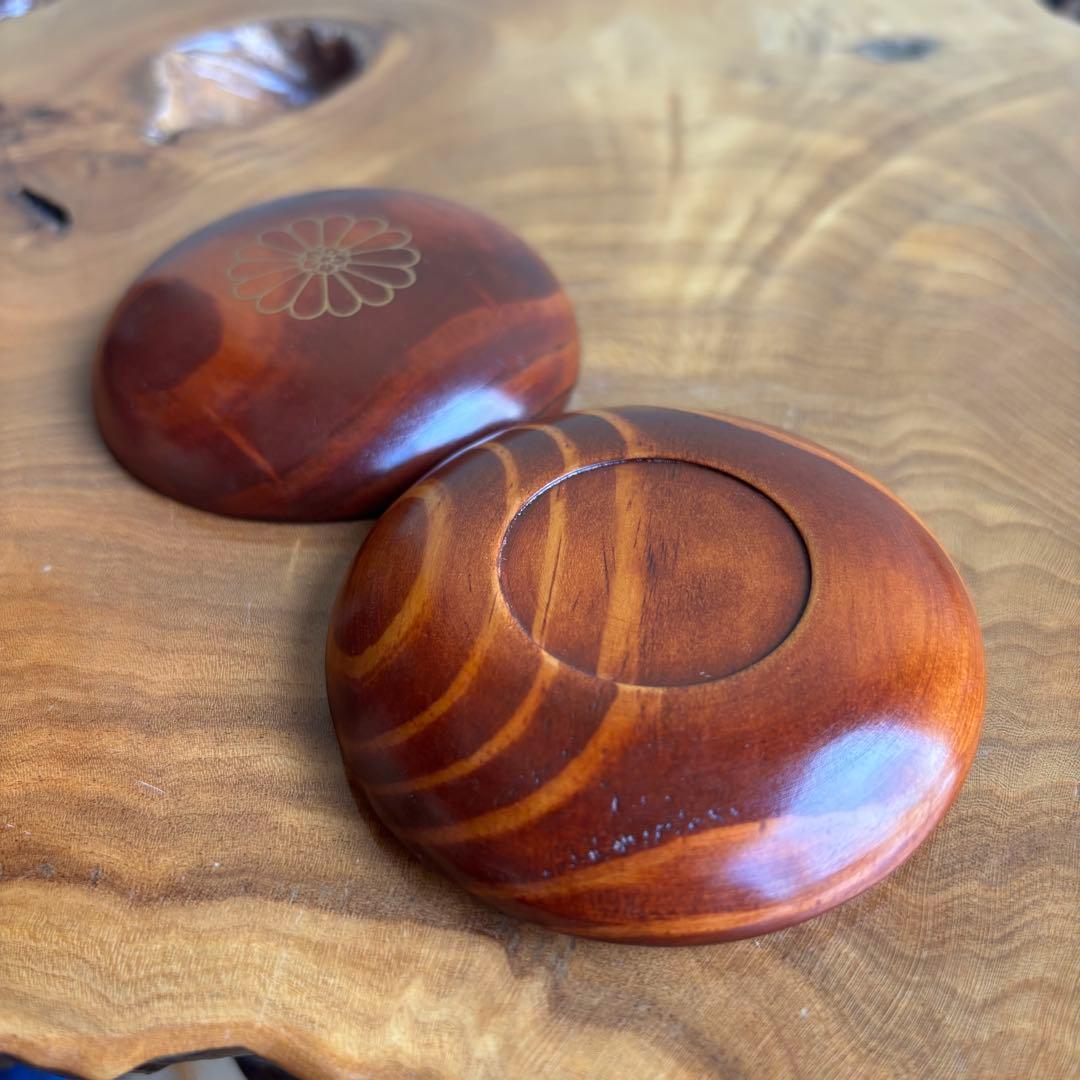
Experience Authentic Japan Art with this Wooden Incense Container. This Hardwood Chrysanthemum Kogo serves as a Japanese Tea Ceremony Tool and Collector Kogo Gift, featuring Rosewood Inlay Kiku Motif and Fine Hardwood Craftsmanship—a must-have for any Wabi Tea Collector. This Tomobako Signed Kogo presents the Crane Inscribed Box and imperial chrysanthemum design as a Japanese Art Gift of quiet nobility and presence.
🔹 [ Basic Details ]
• Artist: Unidentified (square seal on box base; box inscribed "鶴" / crane)
• Technique: Turned and polished hardwood (rosewood family) with gold-line chrysanthemum (kiku) inlay on lid surface
• Era: 20th century
• Origin: Japan
• Dimensions: Diameter approx. 7.5 cm, Height approx. 3 cm
• Box: Wooden box inscribed "鶴" (crane) with square seal on base
• Condition: No chips or cracks; wood surface polished and intact
🔹 [ Cultural & Artistic Insight ]
The lid of this kogo is crowned with a chrysanthemum rendered in fine gold inlay lines — sixteen petals arranged in the imperial pattern associated with the Chrysanthemum Throne. Against the warm rosewood-family grain, the kiku floats with the quiet authority of a family crest. The box inscription, 鶴 (tsuru / crane), signals the intended poetic register: crane and chrysanthemum together carry the meaning of longevity, noble character, and the endurance of beauty.
The turned form is precisely proportioned — a low disc that sits naturally in the palm, the lid fitting without play. The wood speaks for itself through grain and color; no lacquer mediates the material.
"Grain runs to the edge of the lid. The chrysanthemum rests where it has always rested."
🔹 [ Deep-Dive Commentary ]
Wooden kogo made from fine hardwoods occupy a quieter register within the tea ceremony utensil tradition than their lacquered or ceramic counterparts. Their appeal is material immediacy — the warmth of wood under the hand, the grain visible through the polish, the natural scent that lingers in the grain.
The rosewood family (紫檀 / shitan) has been prized in Japanese craft since the Nara period, when it arrived via the Silk Road. Its deep reddish-brown tones and fine, close grain make it ideal for turned objects, where the surface can be polished to a near-lustrous finish without lacquer. This kogo exploits those qualities fully.
The chrysanthemum inlay is executed in a fine-line technique, either as wire inlay or drawn in lacquer, creating the precise 16-petal imperial kiku that appears on everything from the imperial seal to Meiji-era ceramics. Its presence on a tea ceremony object connects the piece to Japan's highest aesthetic traditions.
The box seal and crane inscription suggest this kogo was made for presentation — possibly as a named piece for a tea gathering. The square artist seal is a form of authentication common to craft objects of the mid-20th century, when named artisans produced utensils for specific patrons or occasions.
【日本語解説】
🔹 [ 基本情報 ]
• 作家:不詳(箱底に方印)
• 技法:硬質木地(紫檀系)轆轤挽き・金線象嵌菊紋
• 年代:20世紀
• 産地:日本
• 寸法:直径約7.5cm、高さ約3cm
• 箱:「鶴」識書・方印入り木箱
• 状態:ヒビ・欠けなし。木地の艶良好
🔹 [ 文化・芸術的解説 ]
蓋上の菊文様は十六弁の皇室菊に連なる意匠で、紫檀系の温かみある赤褐色の地に静かな威厳を放っています。「鶴」の識書と菊の組み合わせは、長寿・高潔・美の永続という茶道的理想を表す詩的言語です。轆轤挽きによって生まれた精緻なプロポーションと、手に収まる低い形状が、実用と美の統合を示しています。
🔹 [ 深掘り解説 ]
紫檀は奈良時代にシルクロード経由で日本に伝わり、精密な工芸素材として珍重されてきました。漆を介さず木肌そのものの美しさを活かすこの香合は、素材への信頼と高度な木工技術の産物です。金線象嵌の菊紋は、皇室意匠から茶道具に降りてきた格式のある文様であり、贈答品・慶事用の器として選ばれたことが伺えます。
🔹 [ SHIPPING & PACKAGING ]
• Dispatch: Within 1-6 business days
• Carrier: Japan Post EMS / UPS (with tracking)
• Packaging: Carefully wrapped with protective materials
🔹 [ Basic Details ]
• Artist: Unidentified (square seal on box base; box inscribed "鶴" / crane)
• Technique: Turned and polished hardwood (rosewood family) with gold-line chrysanthemum (kiku) inlay on lid surface
• Era: 20th century
• Origin: Japan
• Dimensions: Diameter approx. 7.5 cm, Height approx. 3 cm
• Box: Wooden box inscribed "鶴" (crane) with square seal on base
• Condition: No chips or cracks; wood surface polished and intact
🔹 [ Cultural & Artistic Insight ]
The lid of this kogo is crowned with a chrysanthemum rendered in fine gold inlay lines — sixteen petals arranged in the imperial pattern associated with the Chrysanthemum Throne. Against the warm rosewood-family grain, the kiku floats with the quiet authority of a family crest. The box inscription, 鶴 (tsuru / crane), signals the intended poetic register: crane and chrysanthemum together carry the meaning of longevity, noble character, and the endurance of beauty.
The turned form is precisely proportioned — a low disc that sits naturally in the palm, the lid fitting without play. The wood speaks for itself through grain and color; no lacquer mediates the material.
"Grain runs to the edge of the lid. The chrysanthemum rests where it has always rested."
🔹 [ Deep-Dive Commentary ]
Wooden kogo made from fine hardwoods occupy a quieter register within the tea ceremony utensil tradition than their lacquered or ceramic counterparts. Their appeal is material immediacy — the warmth of wood under the hand, the grain visible through the polish, the natural scent that lingers in the grain.
The rosewood family (紫檀 / shitan) has been prized in Japanese craft since the Nara period, when it arrived via the Silk Road. Its deep reddish-brown tones and fine, close grain make it ideal for turned objects, where the surface can be polished to a near-lustrous finish without lacquer. This kogo exploits those qualities fully.
The chrysanthemum inlay is executed in a fine-line technique, either as wire inlay or drawn in lacquer, creating the precise 16-petal imperial kiku that appears on everything from the imperial seal to Meiji-era ceramics. Its presence on a tea ceremony object connects the piece to Japan's highest aesthetic traditions.
The box seal and crane inscription suggest this kogo was made for presentation — possibly as a named piece for a tea gathering. The square artist seal is a form of authentication common to craft objects of the mid-20th century, when named artisans produced utensils for specific patrons or occasions.
【日本語解説】
🔹 [ 基本情報 ]
• 作家:不詳(箱底に方印)
• 技法:硬質木地(紫檀系)轆轤挽き・金線象嵌菊紋
• 年代:20世紀
• 産地:日本
• 寸法:直径約7.5cm、高さ約3cm
• 箱:「鶴」識書・方印入り木箱
• 状態:ヒビ・欠けなし。木地の艶良好
🔹 [ 文化・芸術的解説 ]
蓋上の菊文様は十六弁の皇室菊に連なる意匠で、紫檀系の温かみある赤褐色の地に静かな威厳を放っています。「鶴」の識書と菊の組み合わせは、長寿・高潔・美の永続という茶道的理想を表す詩的言語です。轆轤挽きによって生まれた精緻なプロポーションと、手に収まる低い形状が、実用と美の統合を示しています。
🔹 [ 深掘り解説 ]
紫檀は奈良時代にシルクロード経由で日本に伝わり、精密な工芸素材として珍重されてきました。漆を介さず木肌そのものの美しさを活かすこの香合は、素材への信頼と高度な木工技術の産物です。金線象嵌の菊紋は、皇室意匠から茶道具に降りてきた格式のある文様であり、贈答品・慶事用の器として選ばれたことが伺えます。
🔹 [ SHIPPING & PACKAGING ]
• Dispatch: Within 1-6 business days
• Carrier: Japan Post EMS / UPS (with tracking)
• Packaging: Carefully wrapped with protective materials
Quantity
Couldn't load pickup availability
Low stock: 1 left
View full details