1
/
of
10
Raku Style Matcha Bowl with Boy and Pine Motif by Maruke Togyo — Japanese Tea Ceremony Chawan, Tomobako
Raku Style Matcha Bowl with Boy and Pine Motif by Maruke Togyo — Japanese Tea Ceremony Chawan, Tomobako
Regular price
Dhs. 495.00 AED
Regular price
Sale price
Dhs. 495.00 AED
Taxes included.
Shipping calculated at checkout.
Experience Authentic Japan Art with this Japanese Raku Style Chawan. This hand-painted matcha bowl serves as a Japanese Tea Ceremony Bowl and Wabi Sabi Pottery Gift, featuring a Doji Boy Pine Motif and Aka Raku Style Glaze—a must-have for any Ceramic Art Collector who values Handmade Japanese Stoneware and Japanese Folk Art Pottery.
🔹 [ BASIC DETAILS ]
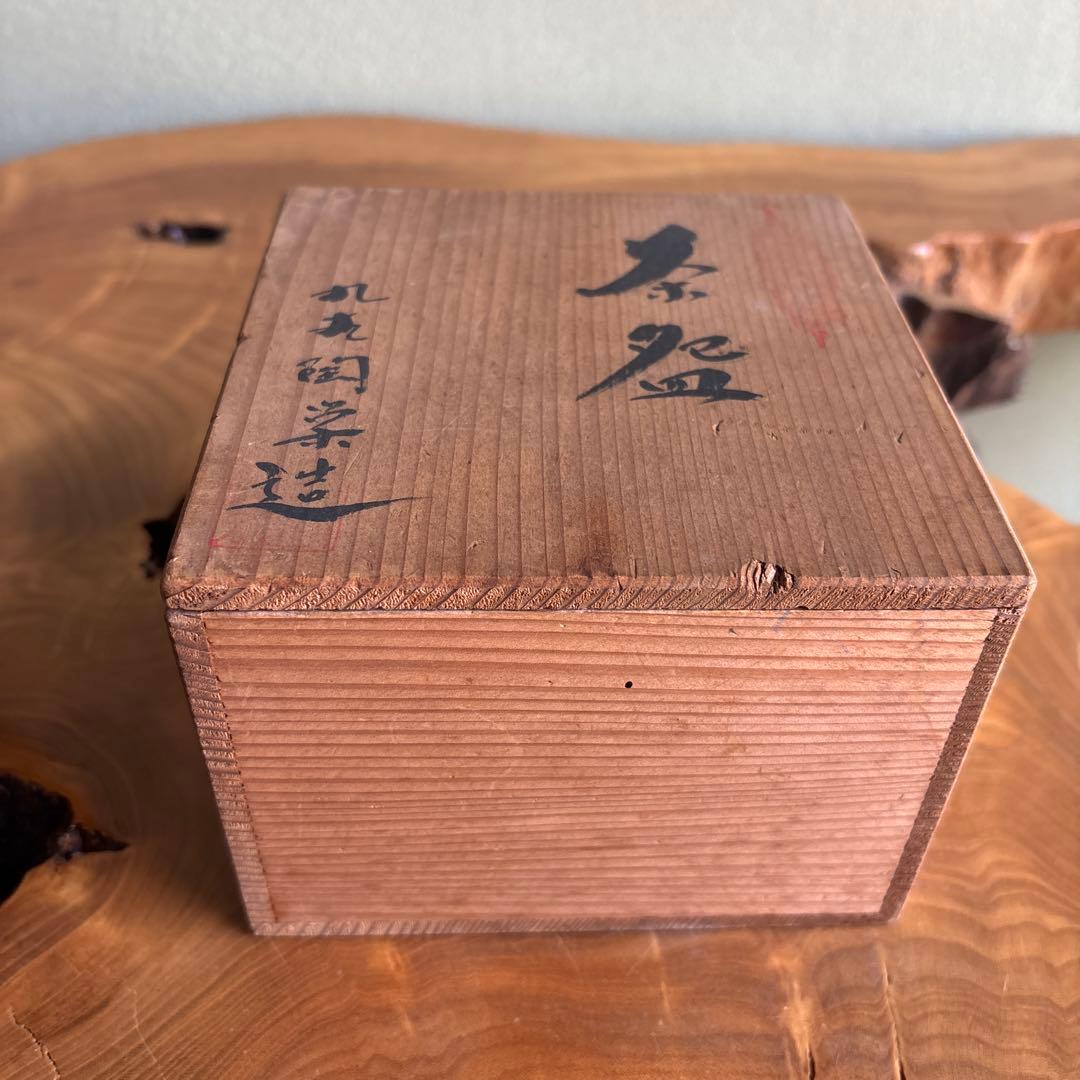
• Artist: Maruke Togyo (丸毛陶業造) — studio kiln attribution, inscription on tomobako lid
• Technique: Aka-Raku style — hand-formed stoneware with warm salmon-pink glaze body, matte black iron glaze wrapping upper rim and reverse; hand-painted doji boy and pine in iron pigment
• Era: Late Showa to early Heisei (estimated 1970s–1990s)
• Origin: Japan (studio kiln, Raku tradition-influenced)
• Dimensions: Height approx. 8.2 cm, Diameter approx. 11.5 cm
• Box: Tomobako (original wooden box) included; box exterior shows light soiling
• Condition: No cracks or chips; body in good condition; light soiling on box lid and foot ring — entirely consistent with age and use
🔹 [ CULTURAL & ARTISTIC INSIGHT ]
The doji figure — a bald, robed child holding a temari ball beneath an arching pine — is one of Japan's most enduring folk motifs. In ceramic tradition, the童子 (doji) represents innocence, auspicious play, and the unguarded moment before self-consciousness enters. Paired with the pine, symbol of longevity and constancy, the pairing speaks of time held lightly: youth beside permanence.
The body of this bowl draws from the aka-Raku lineage — the warm, salmon-pink surface achieved through deliberate fire and hand-shaping that lets natural variation remain visible. Where the black glaze descends from the rim and wraps the reverse, it carries a dry, granular texture that absorbs light rather than reflecting it. To hold this bowl is to feel that contrast directly in the palm: rough darkness, yielding warmth.
In the wabi aesthetic that governs the tea room, the irregularity of hand-painting and the soft flamework on the clay surface are not imperfections — they are the signature of encounter between maker, fire, and material. No two bowls emerge from the kiln with identical character. This one carries its own quiet history.
*The boy stands beneath the pine, ball in hand, utterly unhurried — the afternoon has nowhere else to go.*
🔹 [ DEEP-DIVE COMMENTARY ]
Raku ware (楽焼) originated in sixteenth-century Kyoto under the guidance of tea master Sen no Rikyu and the tile-maker Chojiro, whose hand-formed bowls became the canonical vessel for the wabi tea ceremony. What distinguishes Raku from wheel-thrown ceramics is the direct engagement of the maker's hands with the clay: the bowl is shaped by pinching and pressing rather than centrifugal force, which leaves an organic, slightly asymmetrical silhouette suited to the single-handed grip of the tea bowl.
The aka-Raku (red Raku) style refers to bowls fired at relatively lower temperatures, which allows the iron-rich clay to retain its warm terracotta-to-salmon coloration. The characteristic surface striations visible on this bowl result from the clay body's response to uneven heat distribution during the firing — they are not decorative marks applied by brush but the honest record of the kiln's interior atmosphere. This fire-painting, so to speak, is unrepeatable.
Maruke Togyo (丸毛陶業) operated as a ceramics studio producing work in established Japanese traditional styles. The tomobako — a wooden box made specifically for this piece, inscribed by the maker — represents the standard of archival presentation expected for tea utensils intended for the chado practitioner. In Japan's tea culture, the box is itself part of the object's biography; it records provenance and frames the bowl's identity for future owners.
The doji-and-pine pictorial tradition on tea ceramics draws from both Chinese literati painting and Japanese folk imagery. The童子 motif appears frequently in Edo-period ceramics as a symbol of carefree auspiciousness — associated with New Year celebrations and festive gatherings. On a tea bowl, the motif introduces a warmth that softens the severity of pure wabi aesthetics, creating what practitioners call the balance between sabi (solitude, age) and the human pulse within it.
For the contemporary collector, this bowl occupies a clear position: it is a functional tea bowl of genuine character, carrying folk-painting charm alongside Raku-tradition lineage. At this scale and weight it sits naturally in the palm, and the contrast between the luminous salmon-pink face and the matte black reverse gives the act of turning the bowl — a gesture that is part of temae (tea procedure) — a genuine visual reward.
🔹 [ 日本語解説 ]
■ 基本情報
• 作家:丸毛陶業造(共箱蓋裏に銘あり)
• 技法:赤楽風手づくね成形。素地はサーモンピンクの温かみある発色。口縁から胴裏にかけて鉄釉のマット黒が流れる。胴正面に鉄絵具による童子と松の手描き絵付。
• 年代:昭和後期〜平成初期(推定1970〜90年代)
• 産地:日本(楽焼伝統に倣う工房作)
• 寸法:高さ約8.2cm、直径約11.5cm
• 箱:共箱(木箱)付き。箱蓋に汚れあり。
• 状態:ヒビ・カケなし。本体良好。箱外側と高台に経年の汚れあり。使用感として自然の範囲内。
■ 文化・美術的解説
童子の図は、日本の陶磁器における福を呼ぶ絵柄のひとつです。まるで時間が止まったかのように、手毬を手に持つ童子が松の木の下にたたずむ姿は、無邪気さと長寿のふたつを同時に象徴します。松は常磐木として「変わらぬもの」の象徴であり、童子の「瞬間の無垢」と対を成します。
この茶碗の肌は赤楽の系譜に連なります。低温で焼かれた鉄分を含む素地が、炎の動きに従ってサーモンからピンク、淡いオレンジへと色を変えながら、焼き模様の縞を纏います。口縁から胴裏へと流れる黒釉は粗粒感のある静かなマット質感で、光を吸収するように沈んでいます。素地の温もりと黒釉の深さ——この対比を手のひらで感じることが、楽茶碗を持つことの根本的な喜びです。
■ 深掘り解説
楽焼は十六世紀の京都に始まります。茶人千利休の指導のもと、陶工長次郎が手びねりで成形した茶碗は、侘び茶の理想を体現するものとして高く評価されました。ろくろを使わず、両手で直接土を押し成形するため、碗は生命体のような微妙な非対称を持ちます。これが、片手で持つ茶碗という道具にとって本質的な「持ちやすさ」と「景色」を同時に生みます。
赤楽の発色は、焼成温度が比較的低いことにより、鉄分豊かな素地が還元を受けずにサーモン系の色を保つことで生まれます。表面の縦縞状の景色は、窯の中での熱の不均一な分布が素地に刻んだ「炎の痕跡」であり、作家が意図して描いたものではありません。この自然の痕跡こそが、楽焼の魅力の核心です。
丸毛陶業は日本の伝統陶磁の様式を継承する工房です。この茶碗に付属する共箱は、茶道具として正式に制作されたことを証明する記録物であり、将来の所蔵者への伝来の手がかりでもあります。茶の世界では、箱もまた作品の一部と見なされます。
童子と松の絵は、江戸時代の陶磁器にしばしば登場する吉祥文様で、正月や祝いの席に結びつく縁起柄です。茶碗に描かれることで、侘びの厳格さを柔らかく和らげ、「孤独の中の人の温もり」というバランスを実現します。現代のコレクターにとって、この碗は楽焼の伝統と民芸的な温かみを併せ持つ、実用と観賞の両立する一碗です。
🔹 [ SHIPPING & PACKAGING ]
• Dispatch: Within 1-6 business days
• Carrier: Japan Post EMS / UPS (with tracking)
• Packaging: Carefully wrapped with protective materials
🔹 [ BASIC DETAILS ]
• Artist: Maruke Togyo (丸毛陶業造) — studio kiln attribution, inscription on tomobako lid
• Technique: Aka-Raku style — hand-formed stoneware with warm salmon-pink glaze body, matte black iron glaze wrapping upper rim and reverse; hand-painted doji boy and pine in iron pigment
• Era: Late Showa to early Heisei (estimated 1970s–1990s)
• Origin: Japan (studio kiln, Raku tradition-influenced)
• Dimensions: Height approx. 8.2 cm, Diameter approx. 11.5 cm
• Box: Tomobako (original wooden box) included; box exterior shows light soiling
• Condition: No cracks or chips; body in good condition; light soiling on box lid and foot ring — entirely consistent with age and use
🔹 [ CULTURAL & ARTISTIC INSIGHT ]
The doji figure — a bald, robed child holding a temari ball beneath an arching pine — is one of Japan's most enduring folk motifs. In ceramic tradition, the童子 (doji) represents innocence, auspicious play, and the unguarded moment before self-consciousness enters. Paired with the pine, symbol of longevity and constancy, the pairing speaks of time held lightly: youth beside permanence.
The body of this bowl draws from the aka-Raku lineage — the warm, salmon-pink surface achieved through deliberate fire and hand-shaping that lets natural variation remain visible. Where the black glaze descends from the rim and wraps the reverse, it carries a dry, granular texture that absorbs light rather than reflecting it. To hold this bowl is to feel that contrast directly in the palm: rough darkness, yielding warmth.
In the wabi aesthetic that governs the tea room, the irregularity of hand-painting and the soft flamework on the clay surface are not imperfections — they are the signature of encounter between maker, fire, and material. No two bowls emerge from the kiln with identical character. This one carries its own quiet history.
*The boy stands beneath the pine, ball in hand, utterly unhurried — the afternoon has nowhere else to go.*
🔹 [ DEEP-DIVE COMMENTARY ]
Raku ware (楽焼) originated in sixteenth-century Kyoto under the guidance of tea master Sen no Rikyu and the tile-maker Chojiro, whose hand-formed bowls became the canonical vessel for the wabi tea ceremony. What distinguishes Raku from wheel-thrown ceramics is the direct engagement of the maker's hands with the clay: the bowl is shaped by pinching and pressing rather than centrifugal force, which leaves an organic, slightly asymmetrical silhouette suited to the single-handed grip of the tea bowl.
The aka-Raku (red Raku) style refers to bowls fired at relatively lower temperatures, which allows the iron-rich clay to retain its warm terracotta-to-salmon coloration. The characteristic surface striations visible on this bowl result from the clay body's response to uneven heat distribution during the firing — they are not decorative marks applied by brush but the honest record of the kiln's interior atmosphere. This fire-painting, so to speak, is unrepeatable.
Maruke Togyo (丸毛陶業) operated as a ceramics studio producing work in established Japanese traditional styles. The tomobako — a wooden box made specifically for this piece, inscribed by the maker — represents the standard of archival presentation expected for tea utensils intended for the chado practitioner. In Japan's tea culture, the box is itself part of the object's biography; it records provenance and frames the bowl's identity for future owners.
The doji-and-pine pictorial tradition on tea ceramics draws from both Chinese literati painting and Japanese folk imagery. The童子 motif appears frequently in Edo-period ceramics as a symbol of carefree auspiciousness — associated with New Year celebrations and festive gatherings. On a tea bowl, the motif introduces a warmth that softens the severity of pure wabi aesthetics, creating what practitioners call the balance between sabi (solitude, age) and the human pulse within it.
For the contemporary collector, this bowl occupies a clear position: it is a functional tea bowl of genuine character, carrying folk-painting charm alongside Raku-tradition lineage. At this scale and weight it sits naturally in the palm, and the contrast between the luminous salmon-pink face and the matte black reverse gives the act of turning the bowl — a gesture that is part of temae (tea procedure) — a genuine visual reward.
🔹 [ 日本語解説 ]
■ 基本情報
• 作家:丸毛陶業造(共箱蓋裏に銘あり)
• 技法:赤楽風手づくね成形。素地はサーモンピンクの温かみある発色。口縁から胴裏にかけて鉄釉のマット黒が流れる。胴正面に鉄絵具による童子と松の手描き絵付。
• 年代:昭和後期〜平成初期(推定1970〜90年代)
• 産地:日本(楽焼伝統に倣う工房作)
• 寸法:高さ約8.2cm、直径約11.5cm
• 箱:共箱(木箱)付き。箱蓋に汚れあり。
• 状態:ヒビ・カケなし。本体良好。箱外側と高台に経年の汚れあり。使用感として自然の範囲内。
■ 文化・美術的解説
童子の図は、日本の陶磁器における福を呼ぶ絵柄のひとつです。まるで時間が止まったかのように、手毬を手に持つ童子が松の木の下にたたずむ姿は、無邪気さと長寿のふたつを同時に象徴します。松は常磐木として「変わらぬもの」の象徴であり、童子の「瞬間の無垢」と対を成します。
この茶碗の肌は赤楽の系譜に連なります。低温で焼かれた鉄分を含む素地が、炎の動きに従ってサーモンからピンク、淡いオレンジへと色を変えながら、焼き模様の縞を纏います。口縁から胴裏へと流れる黒釉は粗粒感のある静かなマット質感で、光を吸収するように沈んでいます。素地の温もりと黒釉の深さ——この対比を手のひらで感じることが、楽茶碗を持つことの根本的な喜びです。
■ 深掘り解説
楽焼は十六世紀の京都に始まります。茶人千利休の指導のもと、陶工長次郎が手びねりで成形した茶碗は、侘び茶の理想を体現するものとして高く評価されました。ろくろを使わず、両手で直接土を押し成形するため、碗は生命体のような微妙な非対称を持ちます。これが、片手で持つ茶碗という道具にとって本質的な「持ちやすさ」と「景色」を同時に生みます。
赤楽の発色は、焼成温度が比較的低いことにより、鉄分豊かな素地が還元を受けずにサーモン系の色を保つことで生まれます。表面の縦縞状の景色は、窯の中での熱の不均一な分布が素地に刻んだ「炎の痕跡」であり、作家が意図して描いたものではありません。この自然の痕跡こそが、楽焼の魅力の核心です。
丸毛陶業は日本の伝統陶磁の様式を継承する工房です。この茶碗に付属する共箱は、茶道具として正式に制作されたことを証明する記録物であり、将来の所蔵者への伝来の手がかりでもあります。茶の世界では、箱もまた作品の一部と見なされます。
童子と松の絵は、江戸時代の陶磁器にしばしば登場する吉祥文様で、正月や祝いの席に結びつく縁起柄です。茶碗に描かれることで、侘びの厳格さを柔らかく和らげ、「孤独の中の人の温もり」というバランスを実現します。現代のコレクターにとって、この碗は楽焼の伝統と民芸的な温かみを併せ持つ、実用と観賞の両立する一碗です。
🔹 [ SHIPPING & PACKAGING ]
• Dispatch: Within 1-6 business days
• Carrier: Japan Post EMS / UPS (with tracking)
• Packaging: Carefully wrapped with protective materials
Quantity
Couldn't load pickup availability
Low stock: 1 left
View full details