1
/
of
7
Raku Chawan Tea Bowl by Sasaki Waraku | Red Raku with Black Kiln Marks | Tomobako
Raku Chawan Tea Bowl by Sasaki Waraku | Red Raku with Black Kiln Marks | Tomobako
Regular price
Dhs. 610.00 AED
Regular price
Sale price
Dhs. 610.00 AED
Taxes included.
Shipping calculated at checkout.
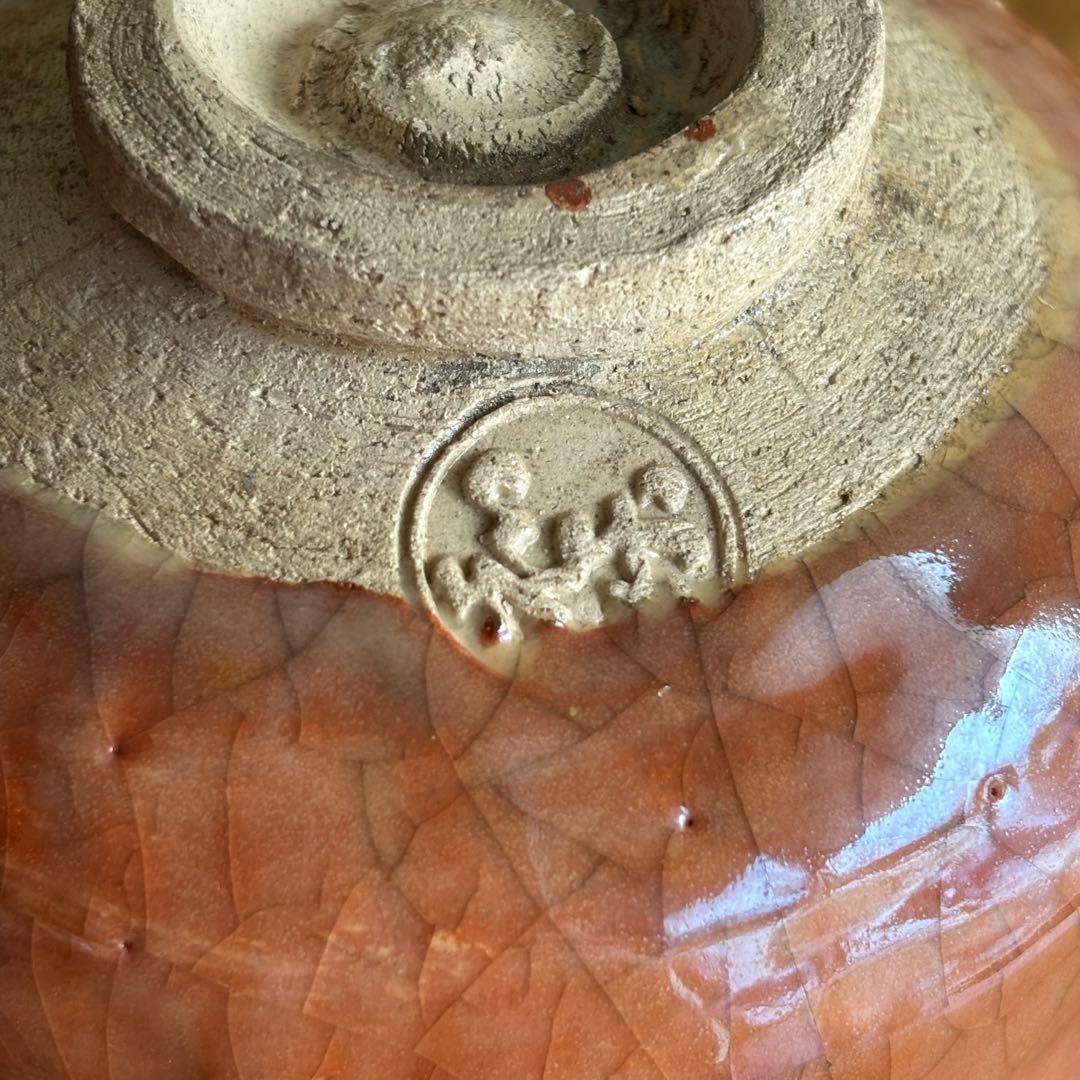
The red does not simply exist on this bowl — it asserts. Deep crimson moves through orange and then yields suddenly to black, the keshiki (kiln scenery) arriving without negotiation. This is what the anagama gives and does not explain. The hand that shaped it left the evidence of its decisions in the clay.
🔹 [ BASIC DETAILS ]
- Artist/Maker: 佐々木和楽 (Sasaki Waraku)
- Title: 赤楽茶碗 (Aka-Raku Chawan)
- Dimensions: Diameter approx. 11 cm, H. approx. 8.5 cm
- Condition: No chips or repairs; natural crackle glaze
- Comes with: Tomobako (signed wooden storage box)
— Cultural Insight —
Raku ware (楽焼) is the ceramic tradition most closely identified with the Japanese tea ceremony — developed in the late sixteenth century under the influence of tea master Sen no Rikyu and the potter Chojiro in Kyoto. What defines Raku is not merely the low-fire technique or the characteristic thick walls, but a fundamental commitment to hand-building (tezukune) rather than wheel-throwing — a choice that refuses the perfection of rotation in favor of the marks of individual intention.
Aka-raku (red Raku) achieves its color through the use of a red clay body and the particular temperature and atmosphere of the kiln. The dramatic variations — the keshiki that appear as black passages through the red — are not applied decoration but the record of the firing itself.
— Deep-Dive Observation —
This bowl holds its ground visually. The transition from deep crimson to orange across the exterior surface is not gradual in any calculated way — it moves with the authority of a material process that was attended but not controlled. The black keshiki areas are stark, arriving at the surface with a directness that the red field makes more emphatic by contrast.
The interior shows the spiral marks of the hand-building process — the trace of the fingers as the form was worked upward. The crackle throughout the surface is fine and consistent, distributing light in the manner characteristic of Raku glaze. The form has an intentional irregularity, the slight asymmetry that comes from a body shaped without a wheel and not corrected afterward.
🔹 [ SHIPPING & PACKAGING ]
• Dispatch: Within 1-6 business days
• Carrier: Japan Post EMS / UPS (with tracking)
• Packaging: Carefully wrapped with protective materials
• Insurance: Included for all shipments
• Note: Import duties and taxes may apply depending on your country's regulations
---
佐々木和楽造の赤楽茶碗です。赤から橙へ、そして黒の景色(窯変)へと展開する釉調が力強く、手づくね成形の痕跡が高台内部に残ります。楽焼は轆轤を使わず手で直接成形することで、個人の意図の痕跡を形に残す技法であり、千利休の美意識と深く結びついた茶陶の筆頭です。貫入も美しく、共箱付きで保存状態良好。
🔹 [ BASIC DETAILS ]
- Artist/Maker: 佐々木和楽 (Sasaki Waraku)
- Title: 赤楽茶碗 (Aka-Raku Chawan)
- Dimensions: Diameter approx. 11 cm, H. approx. 8.5 cm
- Condition: No chips or repairs; natural crackle glaze
- Comes with: Tomobako (signed wooden storage box)
— Cultural Insight —
Raku ware (楽焼) is the ceramic tradition most closely identified with the Japanese tea ceremony — developed in the late sixteenth century under the influence of tea master Sen no Rikyu and the potter Chojiro in Kyoto. What defines Raku is not merely the low-fire technique or the characteristic thick walls, but a fundamental commitment to hand-building (tezukune) rather than wheel-throwing — a choice that refuses the perfection of rotation in favor of the marks of individual intention.
Aka-raku (red Raku) achieves its color through the use of a red clay body and the particular temperature and atmosphere of the kiln. The dramatic variations — the keshiki that appear as black passages through the red — are not applied decoration but the record of the firing itself.
— Deep-Dive Observation —
This bowl holds its ground visually. The transition from deep crimson to orange across the exterior surface is not gradual in any calculated way — it moves with the authority of a material process that was attended but not controlled. The black keshiki areas are stark, arriving at the surface with a directness that the red field makes more emphatic by contrast.
The interior shows the spiral marks of the hand-building process — the trace of the fingers as the form was worked upward. The crackle throughout the surface is fine and consistent, distributing light in the manner characteristic of Raku glaze. The form has an intentional irregularity, the slight asymmetry that comes from a body shaped without a wheel and not corrected afterward.
🔹 [ SHIPPING & PACKAGING ]
• Dispatch: Within 1-6 business days
• Carrier: Japan Post EMS / UPS (with tracking)
• Packaging: Carefully wrapped with protective materials
• Insurance: Included for all shipments
• Note: Import duties and taxes may apply depending on your country's regulations
---
佐々木和楽造の赤楽茶碗です。赤から橙へ、そして黒の景色(窯変)へと展開する釉調が力強く、手づくね成形の痕跡が高台内部に残ります。楽焼は轆轤を使わず手で直接成形することで、個人の意図の痕跡を形に残す技法であり、千利休の美意識と深く結びついた茶陶の筆頭です。貫入も美しく、共箱付きで保存状態良好。
Quantity
Couldn't load pickup availability
Low stock: 1 left
View full details