1
/
of
9
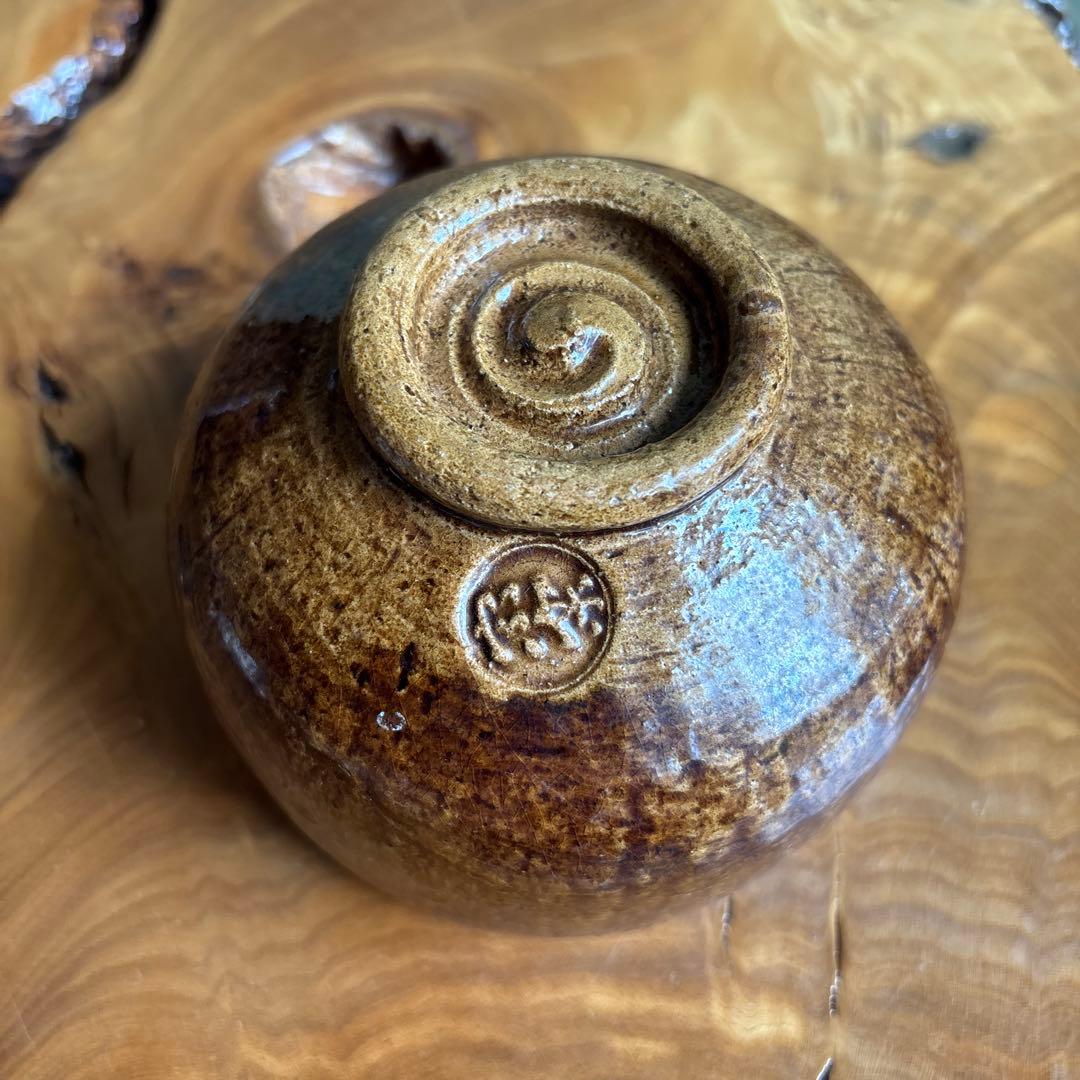
Raku Chawan, Amber Ame-Yu Glaze, Soraku Workshop, Signed Tomobako
Raku Chawan, Amber Ame-Yu Glaze, Soraku Workshop, Signed Tomobako
Regular price
Dhs. 842.00 AED
Regular price
Sale price
Dhs. 842.00 AED
Taxes included.
Shipping calculated at checkout.
The glaze sits low and warm, an amber that recalls candy held to light. This is raku ware, hand-formed rather than thrown, its surface uneven in the way only a hand can leave it. The tomobako carries the seal of Soraku, workshop lineage associated with Yoshimura Soraku, and the bowl inside holds a low, compact foot built for two palms rather than one. Nothing about it asks for attention. It simply sits in amber.
🔹 [ BASIC DETAILS ]
• Artist: Soraku (宗楽), signed tomobako — workshop attribution, associated with the Yoshimura Soraku lineage
• Technique: Raku-yaki (raku-fired), hand-formed
• Era: Contemporary production, traditional raku method
• Origin: Japan
• Dimensions: Height approx. 9 cm, Diameter approx. 11.5 cm
• Box: Signed wooden tomobako with "宗楽" seal; box carries a minor stain mark, noted honestly
• Condition: Bowl excellent, no cracks or chips; box has a discoloration mark, does not affect the bowl
🔹 [ CULTURAL & ARTISTIC INSIGHT ]
Raku ware entered tea practice in sixteenth-century Kyoto, shaped alongside Sen no Rikyu's understanding of what a tea bowl should be. The amber glaze here, ame-yu, is one of raku's oldest surface languages — warm, faintly uneven, closer to something poured than painted.
The bowl does not perform. It waits to be held.
🔹 [ DEEP-DIVE COMMENTARY ]
Raku-yaki was founded in Kyoto during the late sixteenth century, developed under the direct influence of Sen no Rikyu, the tea master who redefined the aesthetics of chanoyu around restraint and presence over ornament. The first raku potters worked by hand, rejecting the wheel in favor of forms shaped through pressure and touch alone.
This hand-forming is not a stylistic choice — it is structural to what raku is. A wheel-thrown bowl carries the memory of rotation; a hand-formed raku bowl carries the memory of grip. The slight asymmetry, the soft variance in wall thickness, the compact foot — these come from fingers, not tools.
Raku is also a low-fired ware, pulled from the kiln at peak heat rather than left to cool slowly inside it. This method produces glazes that behave unlike almost anything else in ceramics — the ame-yu amber seen here is a direct product of that abrupt thermal shift, its warmth and soft irregularity a record of the firing itself.
Why this matters to tea practice is simple: raku bowls were built to be warm in the hand, unpretentious in the eye, and fully present in use. Rikyu's tea aesthetic prized the object that disappears into the moment rather than commands it. A raku chawan does not compete with the tea being served — it holds it.
That continuity persists today. Workshops carrying names like Soraku continue the hand-forming, low-firing tradition largely unchanged in method, a living link to a four-hundred-year-old discipline rather than a revival of one.
[ JAPANESE DESCRIPTION / 日本語解説 ]
飴色の釉薬が低く、温かく広がっている。飴を光にかざしたときのような色合いである。これは楽焼、轆轤を使わず手で形づくられた茶碗であり、その表情の揺らぎは手仕事にしか残せないものだ。共箱には「宗楽」の銘があり、吉村宗楽の系譜に連なる窯元による作と考えられる。碗の高台は低く、締まっており、両手で受け止めるための形をしている。何かを主張することはない。ただ、飴色の中に静かに在る。
🔹 [ 基本情報 ]
• 作家: 宗楽(共箱銘)— 窯元帰属、吉村宗楽の系譜と関連
• 技法: 楽焼、手捏ね成形
• 時代: 現代制作、伝統的楽焼技法
• 産地: 日本
• サイズ: 高さ約9cm、直径約11.5cm
• 箱: 「宗楽」銘の共箱。箱にシミ・変色が見られる(正直に記載)
• 状態: 碗本体は良好、ひび・欠けなし。箱にシミがあるが碗自体には影響なし
🔹 [ 文化的・芸術的背景 ]
楽焼は十六世紀の京都で、千利休の茶の湯観と共に茶道に取り入れられた。ここに見る飴釉は、楽焼が持つ最も古い釉薬表現のひとつであり、塗られたというより注がれたような温かさと揺らぎを帯びている。
碗は自らを語らない。ただ、手に取られるのを待っている。
🔹 [ 詳細解説 ]
楽焼は十六世紀後半、京都で千利休の直接的な影響のもとに確立された。利休は茶の湯の美意識を、装飾よりも簡素と存在感へと再定義した茶人である。初期の楽焼の作り手たちは轆轤を用いず、圧力と手の感覚のみで形をつくった。
この手捏ね成形は様式上の選択ではなく、楽焼という技法そのものの構造的な特徴である。轆轤挽きの碗には回転の痕跡が残るが、手捏ねの楽茶碗には握りの痕跡が残る。わずかな非対称、壁の厚みの揺らぎ、締まった高台——これらはすべて道具ではなく指先から生まれている。
楽焼はまた低温焼成の焼き物であり、ゆっくり窯内で冷ますのではなく、最高温度から直接引き出される。この製法により、他の陶芸技法とは異なる釉薬の表情が生まれる。ここに見る飴釉の温かみとやわらかな不均一さも、この急激な温度変化が焼き付けた記録である。
これが茶の湯にとって重要である理由は明快だ。楽茶碗は手の中で温かく、目には慎ましく、使用の瞬間に完全に「在る」ようにつくられている。利休の美意識は、場を支配する器ではなく、場に溶け込む器を尊んだ。楽茶碗は点てられた茶と競わない。ただそれを受け止める。
その連続性は今も続いている。宗楽のような窯号を継ぐ工房は、手捏ねと低温焼成という方法をほぼそのままに継承しており、四百年続く技法の再現ではなく、その生きた延長線上にある。
🔹 [ SHIPPING & PACKAGING ]
• Dispatch: Within 1-6 business days
• Carrier: Japan Post EMS / UPS / FedEx (with tracking)
• Packaging: Carefully wrapped with protective materials
Quantity
Couldn't load pickup availability
Low stock: 1 left
View full details