1
/
of
11
Phoenix Mother-of-Pearl Lacquer Tea Caddy by Min Jong-tae — Korean Raden O-Natsume
Phoenix Mother-of-Pearl Lacquer Tea Caddy by Min Jong-tae — Korean Raden O-Natsume
Regular price
Dhs. 2,938.00 AED
Regular price
Sale price
Dhs. 2,938.00 AED
Taxes included.
Shipping calculated at checkout.
Experience Authentic Korean Art with this Mother-of-Pearl Tea Caddy. This Korean Lacquer Natsume serves as a Japanese Tea Ceremony Container and Raden Lacquerware Collectible, featuring Aogai Shell Inlay and Phoenix Motif Design—a must-have for any Asian Art Collector. Handcrafted by Min Jong-tae (闔鍾泰), this Matcha Tea Caddy stands as a Korean Najeon Masterwork of iridescent blue-green-purple abalone shell on mirror-black lacquer, complete with Artist Signed Tomobako.
🔹 [ Basic Details ]
• Artist: Min Jong-tae (闔鍾泰)
• Technique: Aogai (blue shell) raden — mother-of-pearl inlay on black lacquer
• Era: Contemporary
• Origin: Korea
• Dimensions: Height approx. 8 cm, Diameter approx. 7.2 cm
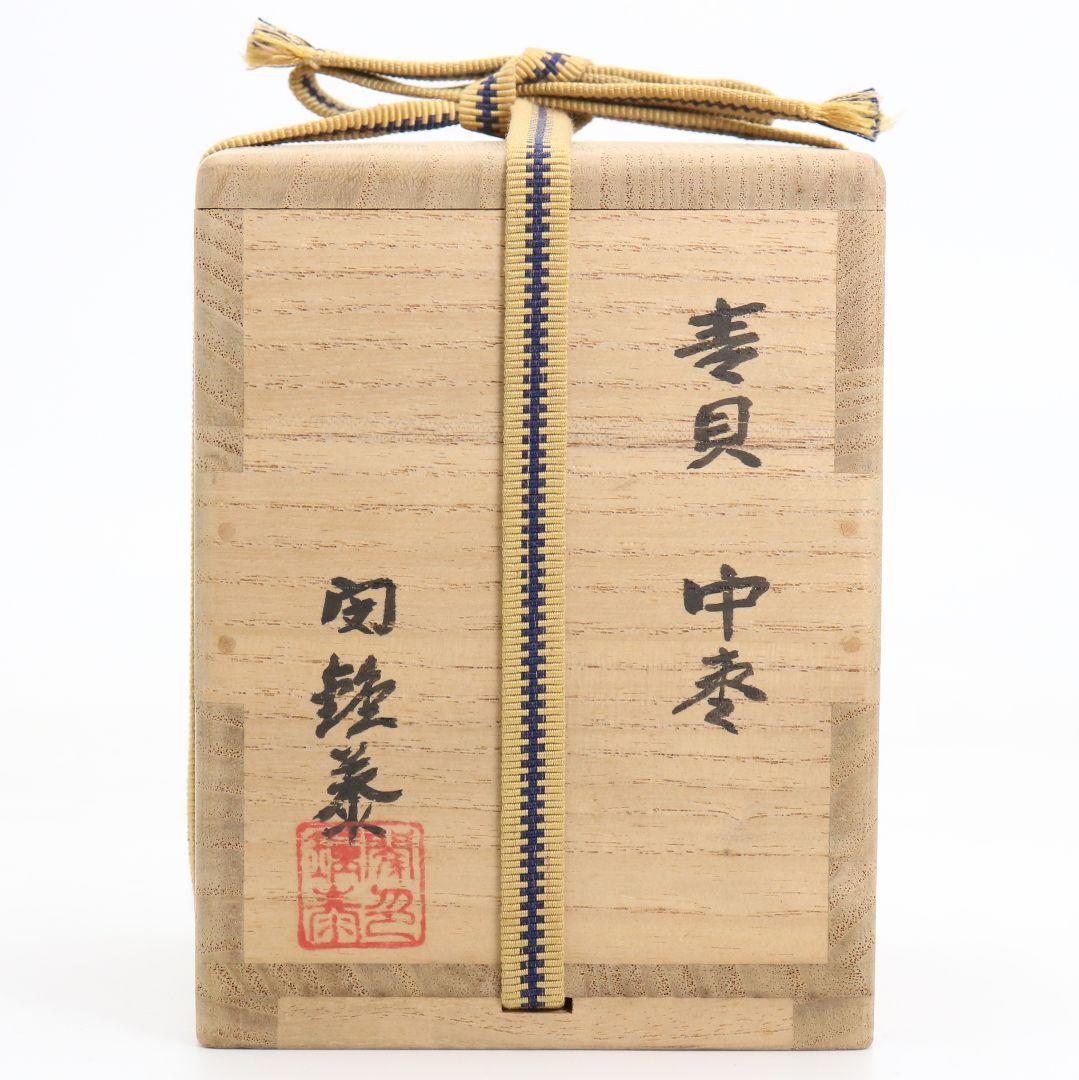
• Box: Tomobako (artist-signed wooden box with red seal)
• Condition: Excellent — mirror-bright lacquer, raden fully intact, no losses or crazing
🔹 [ Cultural & Artistic Insight ]
The art of raden (螺鈿) — embedding thin-cut mother-of-pearl into lacquer — traces a lineage across East Asia spanning over a millennium. In Korea, the tradition of najeonchilgi (螺鈿漆器) carries particular cultural weight, recognized as an Intangible Cultural Heritage technique where artisans slice abalone shell into filaments thinner than a human hair and set them into urushi lacquer with absolute precision.
The phoenix (鳳凰, bonghwang in Korean, hōō in Japanese) is the king of all birds in East Asian cosmology. It appears only in times of peace and prosperity, embodying renewal, virtue, and the union of yin and yang. On this tea caddy, two phoenixes ascend through stylized clouds on the lid, each feather individually rendered in iridescent shell — a declaration of mastery that requires no annotation.
The O-natsume (大棗) is the larger form of the natsume tea caddy, used in Japanese tea ceremony to hold matcha (powdered green tea). Its rounded silhouette — named for the jujube fruit it resembles — invites the hands to cradle it during the meditative rhythm of temae (tea preparation). In the quiet of a tea room, the shifting colors of this raden surface become a conversation between light and intention.
Where language ends, this shell begins to speak — blue into green into violet, a silence that carries the weight of centuries.
🔹 [ Deep-Dive Commentary ]
Min Jong-tae works within the Korean aogai tradition, where the emphasis falls on blue-spectrum abalone shell (철패, cheongpae) rather than the warmer gold-and-red tones favored in much Japanese raden. The result is a cooler, more atmospheric palette — the kind of iridescence that recalls deep water or the interior of a twilight sky. This chromatic signature distinguishes Korean najeon work from its Japanese and Chinese counterparts and gives this tea caddy its unmistakable visual identity.
Korean lacquer art has historically occupied a distinct position within East Asian craft. While Japanese maki-e developed toward painterly expression using gold and silver powder, Korean najeonchilgi pursued a different density — covering entire surfaces with interlocking shell fragments to create fields of shifting light. This total-surface approach, visible across the body and lid of this O-natsume, transforms the object from a container into an environment. Every angle offers a different color. Every rotation reveals a new relationship between shell and ground.
The phoenix iconography here follows classical East Asian conventions while carrying a distinctly Korean sensibility. The tail feathers sweep in long, rhythmic arcs across the body, their curves echoing the rounded form of the natsume itself. On the lid, the paired phoenixes — symbols of conjugal harmony and auspicious beginnings — are rendered with a precision that rewards close examination. Individual barbs of each feather catch light independently, creating a micro-landscape of color within the broader composition.
For collectors, this piece represents a convergence of several significant currents: the living Korean najeon tradition, the cross-cultural vocabulary of the tea ceremony, and the enduring presence of phoenix symbolism across East Asian art. The tomobako — inscribed "青貝 中棗" with the artist's red seal — provides provenance and confirms the artist's direct authorship. Objects of this caliber carry their own continuity. They do not require explanation; they require attention.
🔹 [ 日本語解説 ]
🔹 [ 基本情報 ]
• 作家:闔鍾泰(ミン・ジョンテ)
• 技法:青貝(アオガイ)螺鈿 — 黒漆地に鮑貝の薄片を嵌入
• 時代:現代
• 産地:韓国
• 寸法:高さ 約8cm、径 約7.2cm
• 付属:共箱(「青貝 中棗」の箱書・朱印あり)
• 状態:優良 — 漆面は鏡面仕上げを保ち、螺鈿の剥離・欠損なし
🔹 [ 文化的・芸術的背景 ]
螺鈿(らでん)の技法は、東アジアにおいて千年を超える歴史を持つ。とりわけ韓国の螺鈿漆器(ナジョンチルギ)は無形文化遺産に認定された技術であり、鮑貝を髪の毛よりも薄く裁断し、漆地に寸分の狂いなく嵌め込む精綻な手仕事である。
鳳凰(봉황/ほうおう)は東アジアの宇宙観において百鳥の王とされ、太平の世にのみ姿を現すとされる。再生・徳・陰陽の調和を象徴するこの霊鳥が、蓋表に二羽、翼を広げ瑞雲の間を翔ける。一枚一枚の羽が個別に螺鈿で表現され、光の角度により青から緑、紫へと移ろう虹彩は、言葉を超えた作家の宣言である。
大棗(おおなつめ)は、茶道において抹茶を入れる棗の大型形。棗の実に似た丸みを帯びた輪郭は、点前の静謐なリズムの中で掌に収まるよう設計されている。茶室の静寂の中、この螺鈿の表面に映る移ろう色彩は、光と意図の対話となる。
言葉の届かぬところから、この貝は語り始める——青から緑へ、緑から紫へ。幾世紀の重みを宿した沈黙として。
🔹 [ 専門的解説 ]
闔鍾泰は韓国の青貝伝統の中で制作を続ける作家であり、日本の螺鈿に多い金赤系の温かい色調とは対照的に、青系統の鮑貝(철패)を主軸とする。その結果生まれる冷涼で大気的な色彩——深海や薄暮の空の内側を想起させる虹彩——が、韓国螺鈿の独自性を際立たせている。
韓国漆芸は東アジアの工芸において独自の位置を占める。日本の蒔絵が金銀粉による絵画的表現へ向かったのに対し、韓国の螺鈿漆器は異なる密度を追求した——器面全体を貝片で覆い尽くし、移ろう光の場を生み出す全面螺鈿の手法である。この大棗の胴部から蓋にかけて見られるこの手法は、容器を一つの「環境」へと変容させる。
鳳凰の図様は東アジアの古典的規範に従いながら、韓国的な感性を宿す。尾羽は長く律動的な弧を描いて胴部を巡り、棗自体の丸みと呼応する。蓋上の双鳳——和合と吉祥の象徴——は、近接して初めてその精綻さが了解される精度で仕上げられている。
収集家にとって本作は、韓国螺鈿の生きた伝統、茶道という文化横断的語彙、そして東アジア美術における鳳凰図像という複数の重要な潮流の交差点に位置する。共箱の箱書と朱印は作家の直接的な作行を証する。この水準の器物は、それ自体の連続性を内包している。説明を必要としない。必要なのは、注視である。
🔹 [ SHIPPING & PACKAGING ]
• Dispatch: Within 1-6 business days
• Carrier: Japan Post EMS / UPS (with tracking)
• Packaging: Carefully wrapped with protective materials
🔹 [ Basic Details ]
• Artist: Min Jong-tae (闔鍾泰)
• Technique: Aogai (blue shell) raden — mother-of-pearl inlay on black lacquer
• Era: Contemporary
• Origin: Korea
• Dimensions: Height approx. 8 cm, Diameter approx. 7.2 cm
• Box: Tomobako (artist-signed wooden box with red seal)
• Condition: Excellent — mirror-bright lacquer, raden fully intact, no losses or crazing
🔹 [ Cultural & Artistic Insight ]
The art of raden (螺鈿) — embedding thin-cut mother-of-pearl into lacquer — traces a lineage across East Asia spanning over a millennium. In Korea, the tradition of najeonchilgi (螺鈿漆器) carries particular cultural weight, recognized as an Intangible Cultural Heritage technique where artisans slice abalone shell into filaments thinner than a human hair and set them into urushi lacquer with absolute precision.
The phoenix (鳳凰, bonghwang in Korean, hōō in Japanese) is the king of all birds in East Asian cosmology. It appears only in times of peace and prosperity, embodying renewal, virtue, and the union of yin and yang. On this tea caddy, two phoenixes ascend through stylized clouds on the lid, each feather individually rendered in iridescent shell — a declaration of mastery that requires no annotation.
The O-natsume (大棗) is the larger form of the natsume tea caddy, used in Japanese tea ceremony to hold matcha (powdered green tea). Its rounded silhouette — named for the jujube fruit it resembles — invites the hands to cradle it during the meditative rhythm of temae (tea preparation). In the quiet of a tea room, the shifting colors of this raden surface become a conversation between light and intention.
Where language ends, this shell begins to speak — blue into green into violet, a silence that carries the weight of centuries.
🔹 [ Deep-Dive Commentary ]
Min Jong-tae works within the Korean aogai tradition, where the emphasis falls on blue-spectrum abalone shell (철패, cheongpae) rather than the warmer gold-and-red tones favored in much Japanese raden. The result is a cooler, more atmospheric palette — the kind of iridescence that recalls deep water or the interior of a twilight sky. This chromatic signature distinguishes Korean najeon work from its Japanese and Chinese counterparts and gives this tea caddy its unmistakable visual identity.
Korean lacquer art has historically occupied a distinct position within East Asian craft. While Japanese maki-e developed toward painterly expression using gold and silver powder, Korean najeonchilgi pursued a different density — covering entire surfaces with interlocking shell fragments to create fields of shifting light. This total-surface approach, visible across the body and lid of this O-natsume, transforms the object from a container into an environment. Every angle offers a different color. Every rotation reveals a new relationship between shell and ground.
The phoenix iconography here follows classical East Asian conventions while carrying a distinctly Korean sensibility. The tail feathers sweep in long, rhythmic arcs across the body, their curves echoing the rounded form of the natsume itself. On the lid, the paired phoenixes — symbols of conjugal harmony and auspicious beginnings — are rendered with a precision that rewards close examination. Individual barbs of each feather catch light independently, creating a micro-landscape of color within the broader composition.
For collectors, this piece represents a convergence of several significant currents: the living Korean najeon tradition, the cross-cultural vocabulary of the tea ceremony, and the enduring presence of phoenix symbolism across East Asian art. The tomobako — inscribed "青貝 中棗" with the artist's red seal — provides provenance and confirms the artist's direct authorship. Objects of this caliber carry their own continuity. They do not require explanation; they require attention.
🔹 [ 日本語解説 ]
🔹 [ 基本情報 ]
• 作家:闔鍾泰(ミン・ジョンテ)
• 技法:青貝(アオガイ)螺鈿 — 黒漆地に鮑貝の薄片を嵌入
• 時代:現代
• 産地:韓国
• 寸法:高さ 約8cm、径 約7.2cm
• 付属:共箱(「青貝 中棗」の箱書・朱印あり)
• 状態:優良 — 漆面は鏡面仕上げを保ち、螺鈿の剥離・欠損なし
🔹 [ 文化的・芸術的背景 ]
螺鈿(らでん)の技法は、東アジアにおいて千年を超える歴史を持つ。とりわけ韓国の螺鈿漆器(ナジョンチルギ)は無形文化遺産に認定された技術であり、鮑貝を髪の毛よりも薄く裁断し、漆地に寸分の狂いなく嵌め込む精綻な手仕事である。
鳳凰(봉황/ほうおう)は東アジアの宇宙観において百鳥の王とされ、太平の世にのみ姿を現すとされる。再生・徳・陰陽の調和を象徴するこの霊鳥が、蓋表に二羽、翼を広げ瑞雲の間を翔ける。一枚一枚の羽が個別に螺鈿で表現され、光の角度により青から緑、紫へと移ろう虹彩は、言葉を超えた作家の宣言である。
大棗(おおなつめ)は、茶道において抹茶を入れる棗の大型形。棗の実に似た丸みを帯びた輪郭は、点前の静謐なリズムの中で掌に収まるよう設計されている。茶室の静寂の中、この螺鈿の表面に映る移ろう色彩は、光と意図の対話となる。
言葉の届かぬところから、この貝は語り始める——青から緑へ、緑から紫へ。幾世紀の重みを宿した沈黙として。
🔹 [ 専門的解説 ]
闔鍾泰は韓国の青貝伝統の中で制作を続ける作家であり、日本の螺鈿に多い金赤系の温かい色調とは対照的に、青系統の鮑貝(철패)を主軸とする。その結果生まれる冷涼で大気的な色彩——深海や薄暮の空の内側を想起させる虹彩——が、韓国螺鈿の独自性を際立たせている。
韓国漆芸は東アジアの工芸において独自の位置を占める。日本の蒔絵が金銀粉による絵画的表現へ向かったのに対し、韓国の螺鈿漆器は異なる密度を追求した——器面全体を貝片で覆い尽くし、移ろう光の場を生み出す全面螺鈿の手法である。この大棗の胴部から蓋にかけて見られるこの手法は、容器を一つの「環境」へと変容させる。
鳳凰の図様は東アジアの古典的規範に従いながら、韓国的な感性を宿す。尾羽は長く律動的な弧を描いて胴部を巡り、棗自体の丸みと呼応する。蓋上の双鳳——和合と吉祥の象徴——は、近接して初めてその精綻さが了解される精度で仕上げられている。
収集家にとって本作は、韓国螺鈿の生きた伝統、茶道という文化横断的語彙、そして東アジア美術における鳳凰図像という複数の重要な潮流の交差点に位置する。共箱の箱書と朱印は作家の直接的な作行を証する。この水準の器物は、それ自体の連続性を内包している。説明を必要としない。必要なのは、注視である。
🔹 [ SHIPPING & PACKAGING ]
• Dispatch: Within 1-6 business days
• Carrier: Japan Post EMS / UPS (with tracking)
• Packaging: Carefully wrapped with protective materials
Quantity
Couldn't load pickup availability
Low stock: 1 left
View full details