1
/
of
8
Oriemon Kitaoka Shuji Shippo Maki-e Natsume Gold Cloisonne Pattern Tea Caddy
Oriemon Kitaoka Shuji Shippo Maki-e Natsume Gold Cloisonne Pattern Tea Caddy
Regular price
Dhs. 1,013.00 AED
Regular price
Sale price
Dhs. 1,013.00 AED
Taxes included.
Shipping calculated at checkout.
A natsume (tea caddy) by Oriemon — the craft name of Kitaoka Shuji (北岡周治) — featuring a shippo (七宝, Seven Treasures) pattern in gold maki-e against deep black lacquer. The interlocking circles of the shippo motif wrap the body in geometric precision, while a single centered shippo medallion crowns the lid. A vessel where mathematics becomes meditation. Accompanied by signed tomobako.
━━━━━━━━━━━━━━━━━━━━
🔹 [ BASIC DETAILS ]
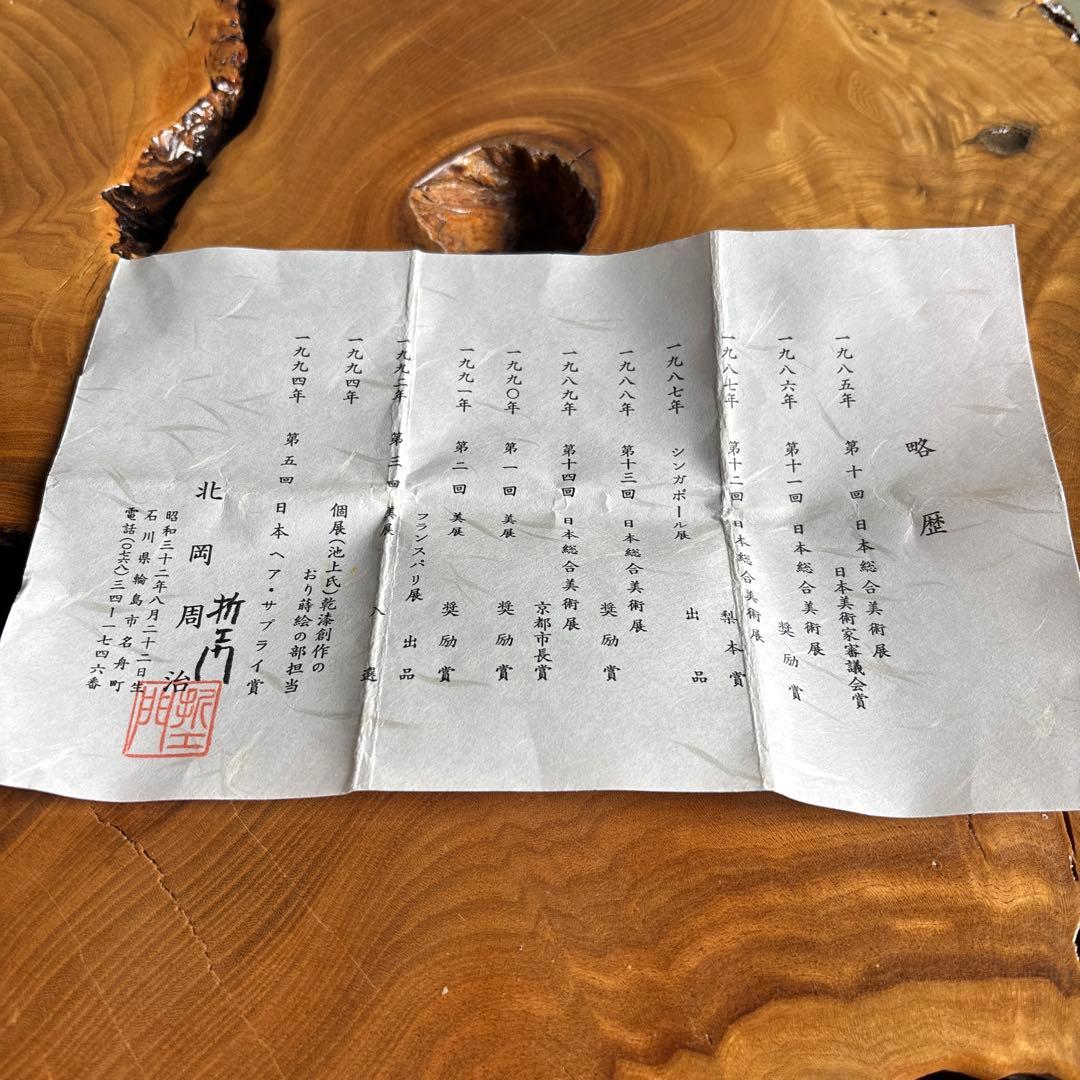
• Artist: Oriemon / Kitaoka Shuji (折ェ門 / 北岡周治)
• Technique: Gold maki-e (蒔絵) on black urushi lacquer
• Era: Showa–Heisei period
• Origin: Japan
• Dimensions: 6.3 cm diameter × 6.5 cm height (2.5" dia × 2.6" h)
• Box: Tomobako (signed wooden box) — "七宝蒔絵 棗 折ェ門造"
• Interior: Signed "折ェ門" in gold lacquer on base interior
• Condition: Excellent — no cracks, chips, or repairs; gold maki-e crisp and intact
━━━━━━━━━━━━━━━━━━━━
🔹 [ CULTURAL & ARTISTIC INSIGHT ]
The shippo pattern is one of the oldest continuous geometric motifs in Japanese visual culture. Its name — Seven Treasures — references the seven precious materials of Buddhist tradition: gold, silver, lapis lazuli, crystal, agate, coral, and pearl. But the pattern's power lies not in its symbolism alone. The interlocking circles create a visual field that has no beginning and no end, each circle's circumference forming the center of its neighbors. Infinity rendered through repetition. Continuity through overlap.
Oriemon's execution on this natsume demonstrates the discipline that geometric maki-e demands. Each circle must maintain consistent diameter. Each intersection must align precisely with its counterparts. The gold powder must be sprinkled with uniform density so that no circle appears heavier or lighter than another. Unlike figural maki-e — where brushwork variation contributes to expression — geometric maki-e is unforgiving. Any inconsistency is immediately visible. The pattern either works or it does not.
This natsume works. The shippo band encircling the body is executed with the steadiness of a compass — each overlapping arc creating the flower-like intersections (hana-shippo) that emerge naturally when circles of equal diameter overlap at the correct spacing. The lid carries a single centered shippo medallion, a distillation of the body's repeating pattern into one definitive statement. Together, lid and body create a dialogue between the singular and the infinite.
The black lacquer ground is deep and even — the kind of kuro-urushi that absorbs light rather than reflecting it, giving the gold maki-e a floating quality, as though the pattern hovers above the surface rather than sitting on it. The proportions of the natsume itself — slightly taller than wide — carry a vertical emphasis that gives the form a quiet dignity.
*"Circles that share their edges become something no single circle could be. The shippo pattern is geometry's argument for community."*
━━━━━━━━━━━━━━━━━━━━
🔹 [ DEEP-DIVE COMMENTARY ]
**Shippo (七宝) — Geometry as Cosmology**: The shippo pattern appears across Japanese art in every medium: textiles, metalwork, ceramics, architecture, and lacquer. Its universality speaks to something fundamental in its structure — the idea that connection creates beauty. Each circle exists only in relation to its neighbors. Remove one, and the entire field collapses. This is not mere pattern-making. It is a visual philosophy: interdependence as the foundational condition of existence. In Buddhist thought, this resonates with pratityasamutpada — dependent origination — the principle that nothing exists independently.
**Hana-Shippo (花七宝) — The Flower Intersections**: When shippo circles overlap at the correct spacing, their intersections form four-pointed shapes that read as stylized flowers. This emergent form — hana-shippo — is itself considered auspicious, representing beauty that arises naturally from correct structure. Oriemon's execution reveals these flower forms with clarity, the gold intersections catching light differently from the curved arcs, creating a subtle textural variation within the geometric regularity.
**Maki-e Technique for Geometric Pattern**: Gold maki-e on geometric designs follows a demanding process. The artist first draws the pattern in urushi lacquer using a fine brush, then sprinkles gold powder (kin-fun) onto the wet lacquer surface. After drying, the excess gold is brushed away and the surface is sealed with a thin lacquer coat. For shippo, this process requires exceptional brush control — the circles must be drawn freehand with the consistency of a mechanical instrument. The fact that Oriemon achieves this consistency across the entire curved surface of a three-dimensional natsume speaks to deep technical fluency.
**Oriemon / Kitaoka Shuji**: The presence of the craftsman's signature both inside the base (in gold lacquer) and on the tomobako provides clear documentation of authorship. The dual naming — Oriemon as craft name, Kitaoka Shuji as given name — follows the tradition of Japanese artisan nomenclature where the craft name carries the lineage's identity while the personal name anchors the individual.
**Natsume in Chanoyu**: The standard natsume holds usucha (thin tea) and appears in the majority of tea gatherings. Its form — round, with a flush-fitting lid that creates a seamless silhouette — is one of the most refined shapes in the tea utensil vocabulary. The choice of decoration on a natsume communicates seasonal awareness and thematic intention. Shippo, as an all-season pattern associated with harmony and interconnection, makes this natsume versatile across gatherings — suitable for formal occasions, seasonal celebrations, and everyday practice alike.
━━━━━━━━━━━━━━━━━━━━
🔹 [ 日本語解説 ]
【基本情報】
• 作家:折ェ門(北岡周治)
• 技法:金蒔絵(黒漆地)
• 意匠:七宝文(しっぽうもん)
• 時代:昭和〜平成期
• 産地:日本
• 寸法:直径約6.3cm × 高さ約6.5cm
• 付属:共箱(「七宝蒔絵 棗 折ェ門造」銘)
• 内底:金漆「折ェ門」銘
• 状態:良好 — ヒビ・カケなし、金蒔絵は鮮明
【解説】
折ェ門(北岡周治)作、七宝蒔絵の棗。深い黒漆の地に金蒔絵で七宝繋ぎの文様が胴を巡り、蓋には七宝の単独文が配されています。
七宝文は仏教の七宝(金・銀・瑠璃・玻璃・硨磲・赤珠・瑪瑙)に由来する吉祥文様で、等間隔に配された円が互いの縁を共有しながら無限に連続する幾何学文です。一つの円は隣接する円との関係においてのみ成立し、孤立しては存在し得ない——相互依存を可視化した文様ともいえます。
蒔絵による幾何学文様は、絵画的な蒔絵以上に精度を要求されます。円の大きさ、間隔、金粉の密度に少しでもばらつきがあれば、目は即座にそれを感知します。本作の七宝文は、曲面上にもかかわらず一貫した精緻さを保っており、折ェ門の技術的な確かさを物語っています。
通年使用可能な吉祥文であるため、季節を問わず茶席に取り合わせやすい実用性も備えた棗です。共箱付、内底に「折ェ門」金漆銘あり。
━━━━━━━━━━━━━━━━━━━━
🔹 [ SHIPPING & PACKAGING ]
• Dispatch: Within 1-6 business days
• Carrier: Japan Post EMS / UPS (with tracking)
• Packaging: Carefully wrapped with protective materials
*Circles share their edges. Flowers appear where they overlap. The shippo pattern has no beginning — only continuity.*
━━━━━━━━━━━━━━━━━━━━
🔹 [ BASIC DETAILS ]
• Artist: Oriemon / Kitaoka Shuji (折ェ門 / 北岡周治)
• Technique: Gold maki-e (蒔絵) on black urushi lacquer
• Era: Showa–Heisei period
• Origin: Japan
• Dimensions: 6.3 cm diameter × 6.5 cm height (2.5" dia × 2.6" h)
• Box: Tomobako (signed wooden box) — "七宝蒔絵 棗 折ェ門造"
• Interior: Signed "折ェ門" in gold lacquer on base interior
• Condition: Excellent — no cracks, chips, or repairs; gold maki-e crisp and intact
━━━━━━━━━━━━━━━━━━━━
🔹 [ CULTURAL & ARTISTIC INSIGHT ]
The shippo pattern is one of the oldest continuous geometric motifs in Japanese visual culture. Its name — Seven Treasures — references the seven precious materials of Buddhist tradition: gold, silver, lapis lazuli, crystal, agate, coral, and pearl. But the pattern's power lies not in its symbolism alone. The interlocking circles create a visual field that has no beginning and no end, each circle's circumference forming the center of its neighbors. Infinity rendered through repetition. Continuity through overlap.
Oriemon's execution on this natsume demonstrates the discipline that geometric maki-e demands. Each circle must maintain consistent diameter. Each intersection must align precisely with its counterparts. The gold powder must be sprinkled with uniform density so that no circle appears heavier or lighter than another. Unlike figural maki-e — where brushwork variation contributes to expression — geometric maki-e is unforgiving. Any inconsistency is immediately visible. The pattern either works or it does not.
This natsume works. The shippo band encircling the body is executed with the steadiness of a compass — each overlapping arc creating the flower-like intersections (hana-shippo) that emerge naturally when circles of equal diameter overlap at the correct spacing. The lid carries a single centered shippo medallion, a distillation of the body's repeating pattern into one definitive statement. Together, lid and body create a dialogue between the singular and the infinite.
The black lacquer ground is deep and even — the kind of kuro-urushi that absorbs light rather than reflecting it, giving the gold maki-e a floating quality, as though the pattern hovers above the surface rather than sitting on it. The proportions of the natsume itself — slightly taller than wide — carry a vertical emphasis that gives the form a quiet dignity.
*"Circles that share their edges become something no single circle could be. The shippo pattern is geometry's argument for community."*
━━━━━━━━━━━━━━━━━━━━
🔹 [ DEEP-DIVE COMMENTARY ]
**Shippo (七宝) — Geometry as Cosmology**: The shippo pattern appears across Japanese art in every medium: textiles, metalwork, ceramics, architecture, and lacquer. Its universality speaks to something fundamental in its structure — the idea that connection creates beauty. Each circle exists only in relation to its neighbors. Remove one, and the entire field collapses. This is not mere pattern-making. It is a visual philosophy: interdependence as the foundational condition of existence. In Buddhist thought, this resonates with pratityasamutpada — dependent origination — the principle that nothing exists independently.
**Hana-Shippo (花七宝) — The Flower Intersections**: When shippo circles overlap at the correct spacing, their intersections form four-pointed shapes that read as stylized flowers. This emergent form — hana-shippo — is itself considered auspicious, representing beauty that arises naturally from correct structure. Oriemon's execution reveals these flower forms with clarity, the gold intersections catching light differently from the curved arcs, creating a subtle textural variation within the geometric regularity.
**Maki-e Technique for Geometric Pattern**: Gold maki-e on geometric designs follows a demanding process. The artist first draws the pattern in urushi lacquer using a fine brush, then sprinkles gold powder (kin-fun) onto the wet lacquer surface. After drying, the excess gold is brushed away and the surface is sealed with a thin lacquer coat. For shippo, this process requires exceptional brush control — the circles must be drawn freehand with the consistency of a mechanical instrument. The fact that Oriemon achieves this consistency across the entire curved surface of a three-dimensional natsume speaks to deep technical fluency.
**Oriemon / Kitaoka Shuji**: The presence of the craftsman's signature both inside the base (in gold lacquer) and on the tomobako provides clear documentation of authorship. The dual naming — Oriemon as craft name, Kitaoka Shuji as given name — follows the tradition of Japanese artisan nomenclature where the craft name carries the lineage's identity while the personal name anchors the individual.
**Natsume in Chanoyu**: The standard natsume holds usucha (thin tea) and appears in the majority of tea gatherings. Its form — round, with a flush-fitting lid that creates a seamless silhouette — is one of the most refined shapes in the tea utensil vocabulary. The choice of decoration on a natsume communicates seasonal awareness and thematic intention. Shippo, as an all-season pattern associated with harmony and interconnection, makes this natsume versatile across gatherings — suitable for formal occasions, seasonal celebrations, and everyday practice alike.
━━━━━━━━━━━━━━━━━━━━
🔹 [ 日本語解説 ]
【基本情報】
• 作家:折ェ門(北岡周治)
• 技法:金蒔絵(黒漆地)
• 意匠:七宝文(しっぽうもん)
• 時代:昭和〜平成期
• 産地:日本
• 寸法:直径約6.3cm × 高さ約6.5cm
• 付属:共箱(「七宝蒔絵 棗 折ェ門造」銘)
• 内底:金漆「折ェ門」銘
• 状態:良好 — ヒビ・カケなし、金蒔絵は鮮明
【解説】
折ェ門(北岡周治)作、七宝蒔絵の棗。深い黒漆の地に金蒔絵で七宝繋ぎの文様が胴を巡り、蓋には七宝の単独文が配されています。
七宝文は仏教の七宝(金・銀・瑠璃・玻璃・硨磲・赤珠・瑪瑙)に由来する吉祥文様で、等間隔に配された円が互いの縁を共有しながら無限に連続する幾何学文です。一つの円は隣接する円との関係においてのみ成立し、孤立しては存在し得ない——相互依存を可視化した文様ともいえます。
蒔絵による幾何学文様は、絵画的な蒔絵以上に精度を要求されます。円の大きさ、間隔、金粉の密度に少しでもばらつきがあれば、目は即座にそれを感知します。本作の七宝文は、曲面上にもかかわらず一貫した精緻さを保っており、折ェ門の技術的な確かさを物語っています。
通年使用可能な吉祥文であるため、季節を問わず茶席に取り合わせやすい実用性も備えた棗です。共箱付、内底に「折ェ門」金漆銘あり。
━━━━━━━━━━━━━━━━━━━━
🔹 [ SHIPPING & PACKAGING ]
• Dispatch: Within 1-6 business days
• Carrier: Japan Post EMS / UPS (with tracking)
• Packaging: Carefully wrapped with protective materials
*Circles share their edges. Flowers appear where they overlap. The shippo pattern has no beginning — only continuity.*
Quantity
Couldn't load pickup availability
Low stock: 1 left
View full details